
Imagine a virtual world that doesn't just sit there waiting for a developer to update it, but actually learns from you and changes its own shape based on how you behave. That is the core promise of SecondLive is an AI-driven, self-evolving world model platform that merges artificial intelligence with blockchain to create intelligent virtual environments. Unlike older virtual worlds that feel like static video games, this platform uses deep learning to ensure the environment evolves autonomously.
If you've seen the LIVE token popping up in your crypto feed, you're looking at the fuel for this ecosystem. It isn't just a speculative coin; it's the governance tool for a project that wants to bridge the gap between how we live in the real world and how we interact in digital spaces. But since the metaverse space is crowded with giants and newcomers, it's worth asking: does this AI approach actually offer something new, or is it just more hype?
The Tech Behind the Magic: World Models and AIGC
At its heart, SecondLive doesn't rely on manual 3D modeling for everything. It uses what it calls a World Model Engine. This system uses generative AI and reinforcement learning to predict and simulate user behavior, meaning the world reacts to you in real-time. To make this happen, the platform integrates some of the biggest names in AI, including GPT-4, a multimodal large language model developed by OpenAI and Claude, an advanced AI assistant created by Anthropic . These models handle the "brains" of the world, while tools like Stable Diffusion, a deep learning text-to-image model help generate the visuals.
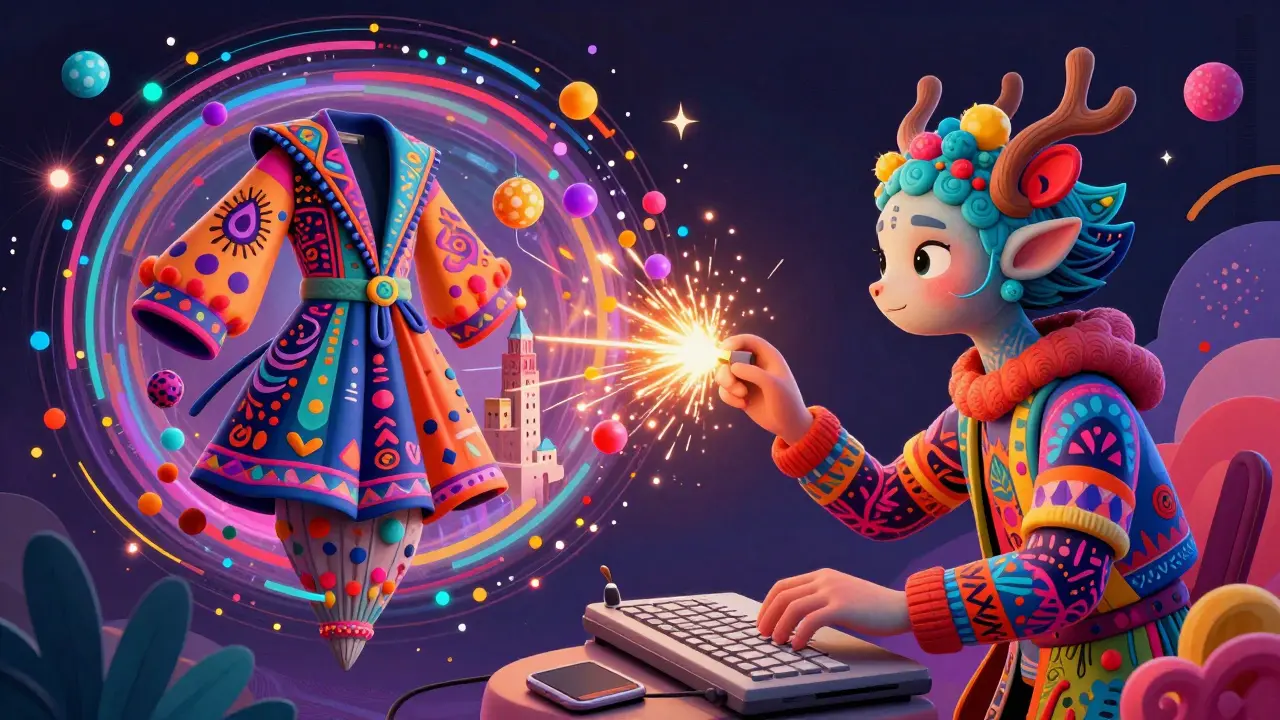
For the people actually building in this world, the platform provides an AI-generated content (AIGC) toolkit. These aren't your typical complex design programs. For example, they have Calzone, a text-to-3D generator that allows users to create entire scenes just by typing descriptions . Another tool, Gobetti, a wearable NFT editor specifically for virtual fashion , lets users design clothes without needing a degree in digital art. One user on Reddit mentioned that creating a space with Calzone took about 23 minutes, whereas traditional 3D tools would have taken over 8 hours. That is a massive leap in productivity for creators.
Understanding the LIVE and BEAN Tokens
The economy of SecondLive is split between two different tokens to keep things balanced. You can't treat them the same because they serve completely different purposes within the ecosystem.
First, there is the LIVE token, the primary governance and utility token of the SecondLive ecosystem . If you hold LIVE, you have a say in how the platform evolves. It's used for governance and as a medium of exchange for high-value assets in the decentralized marketplace. As of early 2025, the total supply is capped at 1 billion tokens, though only about 12.2% was circulating at the time, which is a point some analysts watch closely for potential volatility.
Then there is BEAN, the incentive token used to reward users for their engagement and activity within the world . Think of BEAN as the "participation trophy" that actually has value. It encourages people to explore, create, and interact, ensuring the world stays active while the LIVE token handles the heavy-duty financial and administrative side of the house.
| Feature | SecondLive | Decentraland / The Sandbox |
|---|---|---|
| Environment | Self-evolving AI models | Static virtual real estate |
| Content Creation | Text-to-3D (Calzone/Gobetti) | Manual 3D building tools |
| Tech Stack | Multi-chain (Ethereum, BNB, TON, etc.) | Primarily Ethereum/Polygon |
| User Experience | Dynamic, reactive spaces | Pre-defined, fixed locations |
Cross-Chain Flexibility and Infrastructure
One of the smartest moves the team made was avoiding the "single chain trap." Instead of locking themselves into one network, SecondLive operates across Ethereum, the leading smart-contract platform , BNB Chain , Arbitrum , Polygon , and TON . This means users don't have to switch their entire financial life over to one specific network just to participate.
They've also pushed into the NVIDIA Omniverse, a platform for creating and operating metaverse applications in real-time ecosystem. By partnering with NVIDIA, they are optimizing how their AI worlds are rendered, which helps solve one of the biggest complaints: that AI-generated 3D models can sometimes look "glitchy" or lack the photorealistic detail found in high-end gaming engines.
The Pros and Cons: A Reality Check
It's easy to get swept up in the AI hype, but there are real trade-offs here. On the plus side, the ability to create a virtual concert that adapts to the crowd's mood in real-time is something you just can't do in a static metaverse. It lowers the barrier to entry; you don't need to be a master of Blender or Maya to build a cool space.
However, the risks are just as real. Because the platform relies heavily on proprietary AI models like GPT-4 and Claude, some critics argue it's not truly decentralized. If the AI provider changes their terms or goes down, the "brain" of the metaverse could be affected. Additionally, while the tools are powerful, the learning curve is still there. Some new users have reported that the documentation is a bit too technical, leaving non-coders feeling a bit lost at first.
Market-wise, SecondLive is a David fighting Goliaths. Compared to the billion-dollar market caps of Decentraland or The Sandbox, SecondLive is a niche player. But that also means it has more room to grow if it can capture the emerging AI-metaverse market, which is projected to grow significantly by 2027.
How to Get Started with SecondLive
If you're looking to jump in, you generally have three paths depending on your skill level:
- The Creator: Use the Calzone and Gobetti tools to build spaces and fashion. Expect to spend about 8 to 12 hours practicing before you feel truly proficient.
- The Participant: Explore existing worlds, attend AI-driven events, and earn BEAN tokens by engaging with the community.
- The Developer: Use the platform's API to build custom integrations. This is the steepest climb, usually requiring 40 to 60 hours of study to master the SDK.
Pro tip: If your AI generations look weird, don't give up. The community recommends using the "AI Prompt Optimization Guide" found in their knowledge base to get more accurate 3D results from the text-to-3D tools.
What is the main difference between LIVE and BEAN tokens?
LIVE is the governance and utility token used for voting on platform decisions and high-value trading. BEAN is an incentive token designed to reward users for their activity and engagement within the virtual world.
Which blockchains does SecondLive support?
The platform is multi-chain and supports Ethereum, BNB Chain, Arbitrum, Polygon, and TON, providing broad accessibility across different wallet ecosystems.
Can anyone create 3D objects in SecondLive?
Yes, through AIGC tools like Calzone (text-to-3D) and Gobetti (AI fashion editor), users can create assets using text prompts rather than manual 3D modeling software.
Is SecondLive completely decentralized?
While it uses blockchain for assets and governance, it relies on centralized AI models (like those from OpenAI and Anthropic) to power its world-building, which some experts view as a centralization risk.
How long does it take to learn the creation tools?
Most users take between 8 and 12 hours to become proficient with basic creation tools, while developers may need 40 to 60 hours to master the full SDK.

19 Comments
text-to-3d is definitely the game changer here. honestly if you can cut build time from 8 hours to 20 mins that changes everything for indie creators who dont have a huge budget or a team of artists. it's basically democratizing the whole process of building virtual spaces
Oh sure, because relying on OpenAI and Anthropic is the peak of "decentralization." Pure comedy. 🙄
This actually looks pretty chill. I like that it's multi-chain too, way less of a headache for the average user.
We are essentially building digital mirrors of our own cognitive limitations. If the AI just predicts our behavior, it isn't evolving; it's just echoing our own flaws back at us in 3D. 🌀 Truly a hollow pursuit of a synthetic utopia. 💅
The distinction between the governance token and the incentive token is a sound architectural choice to prevent inflation from killing the primary asset's value.
Too much jargon. Just sounds like another way to lose money in a digital wasteland.
Imagine the sheer poetry of a world that breathes and shifts because we exist within it! It's not just tech; it's a digital consciousness evolving in real-time. This is the kind of frontier that makes you realize how small our physical constraints really are. We aren't just users; we're the architects of a living dream! ✨
SICK!!! 🚀 I bet those wearable NFTs are gonna look wild. Imagine wearing a flaming sword as a hat lol 🤣🔥
The fact that they are targeting a 2027 growth projection is just a classic move to keep investors blindly hopeful while the tech is still glitchy and fragmented. It's practically predatory to promise this level of "evolution" when you're just wrapping existing LLMs in a 3D skin. We've seen this movie before with every other failed metaverse project and the ending is always a crash. It's honestly exhausting to see the same cycle of hype over substance. There is no moral core here, just a race for liquidity.
You guys can do this! 🌟 Just start with the Prompt Optimization Guide and don't let the weird generations discourage you. Keep grinding! 💪
I completely agree with the point about productivity!!! The time savings are just incredible!!!
The "self-evolving" claim is a massive stretch. It's just scripted responses based on prompts. Groundbreaking? Hardly. Just fancy marketing for a glorified chatbot in a box.
An utterly pedestrian attempt at innovation. This plebeian obsession with "text-to-3D" merely highlights the atrophy of actual artistic skill in the digital age. How quaint. 🙄
It is quite promising to see such diverse chain support. It really helps in making the platform more inclusive for everyone regardless of their preferred wallet.
Pretty cool.
The integration with NVIDIA Omniverse is a strategic decision that should significantly mitigate the visual artifacts common in generative 3D environments.
The duality of the LIVE and BEAN tokens reflects a deeper need for stability versus incentive. It's an interesting experiment in virtual sociology.
For those coming from a traditional dev background, the SDK might seem daunting, but the multi-chain flexibility is definitely a strong point for the ecosystem.
Let's all jump in and try the Calzone tool! We could even collaborate on a community hub. It would be awesome to see what we can build together using these AI tools. Who's in?