
You’ve probably seen the buzz around Katana and assumed it’s another new place to buy and sell Bitcoin. If you’re looking for a traditional exchange like Coinbase or Binance where you can trade with a credit card, you might be in for a surprise. Katana isn’t an exchange in the way most people think. It is a specialized Layer-2 blockchain built specifically for decentralized finance (DeFi). Understanding this distinction is crucial because trying to use Katana as a simple trading app will lead to frustration. Instead, it functions as a high-performance engine for generating yield across different blockchains.
The confusion is understandable. The name sounds sleek, and the marketing talks about "liquidity" and "assets," which are terms often associated with exchanges. However, Katana was developed by the Katana Foundation in collaboration with heavyweights like Polygon and GSR. Its mainnet launched on June 30, 2024, not to facilitate retail spot trading, but to solve a massive problem in the crypto world: fragmented liquidity. When you deposit money into Katana, you aren't just parking it; you are participating in a complex system designed to earn sustainable yields through cross-chain strategies.
What Exactly Is Katana?
To get straight to the point, Katana is a DeFi-focused layer-2 blockchain platform that acts as a deep liquidity hub for cross-chain yield generation. Unlike general-purpose chains like Ethereum or Solana, Katana has a singular mission: to concentrate liquidity so that capital works harder for users. It was incubated by Polygon Labs and emerged from their Agglayer Breakout Program. This means it is technically part of the Polygon ecosystem, leveraging Polygon's technology to ensure fast transactions and low fees while maintaining compatibility with Ethereum.
The core innovation here is the concept of "productive TVL" (Total Value Locked). In many DeFi protocols, billions of dollars sit idle, earning nothing. Katana measures success by how much capital is actively deployed in yield-generating strategies. According to data cited by CoinDesk, Katana accumulated $232 million in pre-deposits within just four weeks of its public announcement. This wasn't hype; it was institutional and sophisticated retail interest in a platform that promises real returns rather than inflationary token emissions.
How Katana Generates Yield: The Technology
If you are wondering how your assets actually make money on Katana, you need to understand two key technologies: VaultBridge and Chain-Owned Liquidity (CoL). These are not just buzzwords; they are the mechanical gears of the platform.
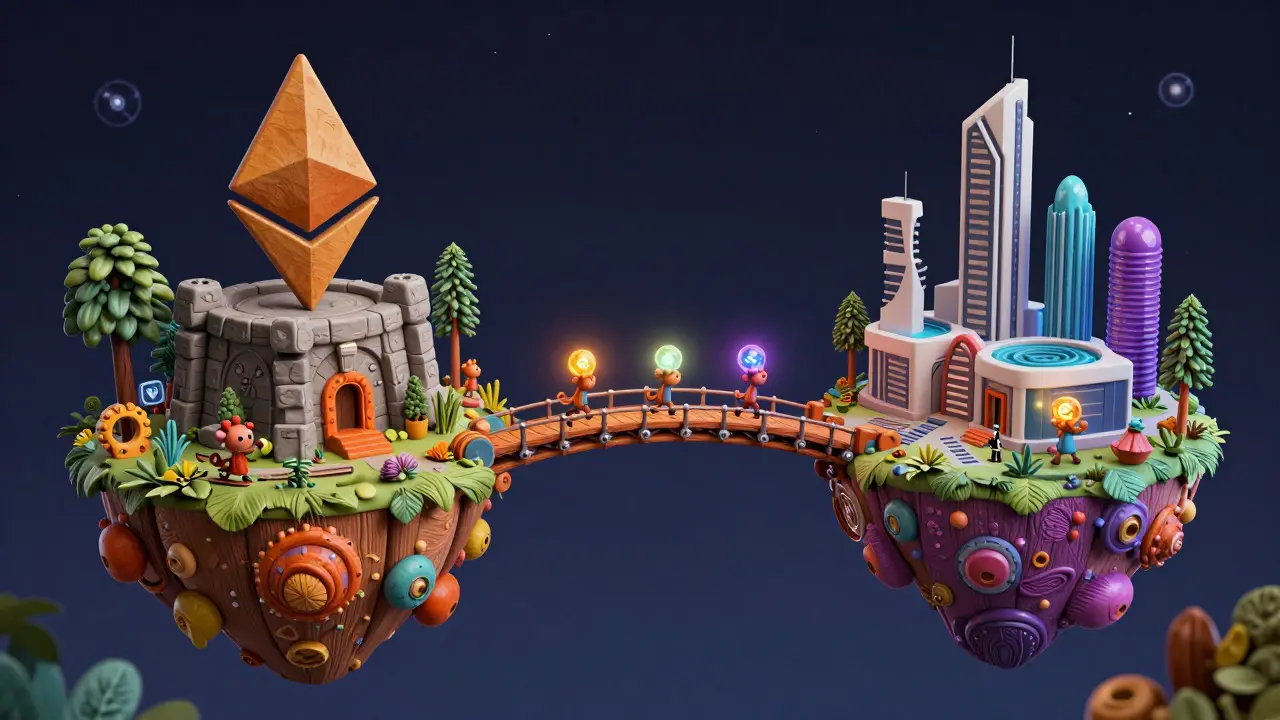
VaultBridge is the bridge that connects Katana to other ecosystems. When you deposit assets, VaultBridge deploys them into overcollateralized lending strategies on Ethereum via Morpho. Think of it like this: instead of your ETH sitting in a wallet, it is lent out securely on Ethereum to earn interest. That interest is then routed back to Katana and compounded. This allows you to earn Ethereum-based yields without manually managing bridges or dealing with the complexity of multiple chains.
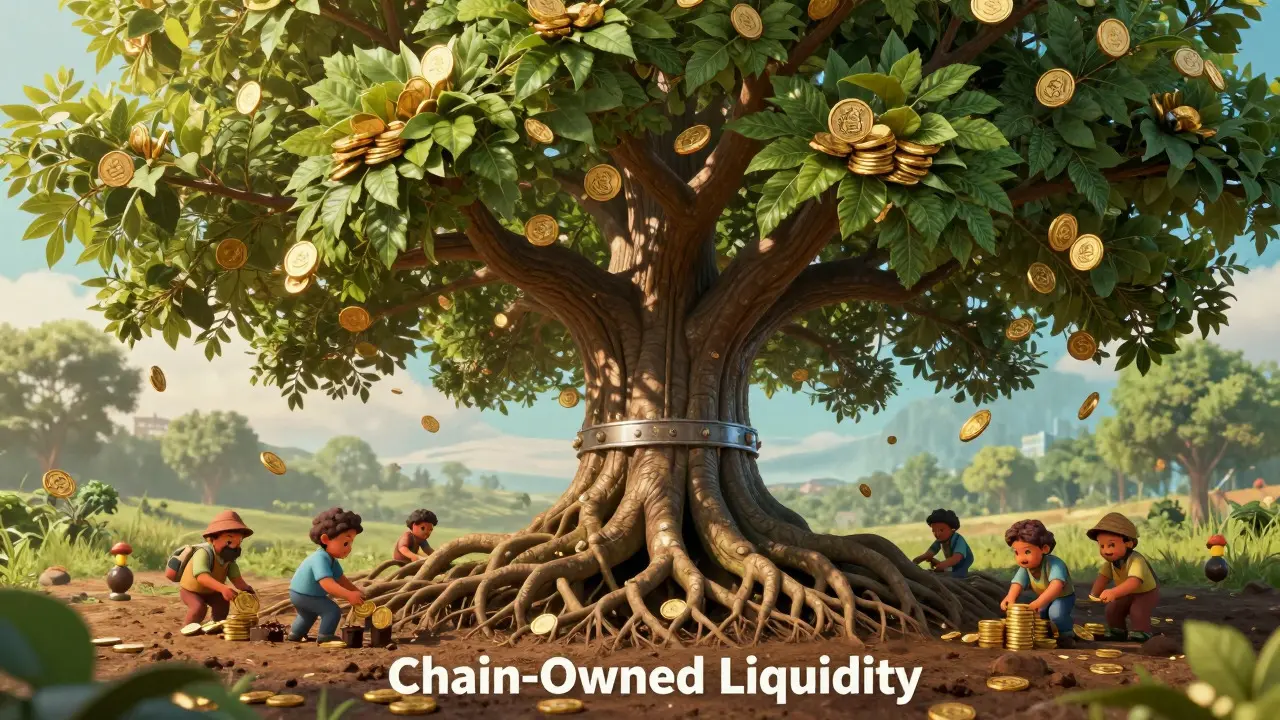
Chain-Owned Liquidity (CoL) is perhaps even more revolutionary. Most blockchains burn fees or distribute them to validators. Katana converts sequencer fees into liquidity reserves. A portion of application revenue is reinvested back into the ecosystem. For example, if Katana supplies 20% of the total vault deposits, it receives 20% of the yield generated. This creates a self-sustaining cycle where the network becomes richer and more stable over time, reducing reliance on external token incentives that often crash in value.
Katana vs. Traditional Exchanges and Other L2s
Let’s clear up the comparison. If you compare Katana to a traditional exchange like Kraken or Coinbase, the difference is stark. On Coinbase, you pay fees to trade. On Katana, you pay fees to access yield infrastructure. There is no order book for buying BTC with USD directly on Katana. You connect a Web3 wallet, deposit crypto, and allocate it to strategies.
When compared to other Layer-2 solutions, Katana also stands apart. Here is a breakdown of how it stacks up against major competitors:
| Feature | Katana | Arbitrum | Optimism |
|---|---|---|---|
| Primary Focus | DeFi Yield Concentration | General Purpose Scaling | General Purpose Scaling |
| Liquidity Model | Chain-Owned Liquidity (CoL) | Market-Driven Pools | Market-Driven Pools |
| Ecosystem Type | Curated (High-Quality DeFi) | Permissionless (All dApps) | Permissionless (All dApps) |
| Cross-Chain Tech | Polygon AggLayer / VaultBridge | Arbitrum Orbit | Superchain |
| TVL Strategy | Productive TVL (Active Yield) | Total TVL (Includes Idle) | Total TVL (Includes Idle) |
As you can see, Arbitrum and Optimism are like big cities with everything from casinos to libraries. Katana is like a specialized financial district. It doesn't try to host every type of app. It only hosts high-quality financial applications like Sushi (for trading), Morpho (for lending), and specific futures platforms. This curated approach reduces risk but limits diversity. If you want to play NFT games, Katana isn't for you. If you want optimized yield, it is.
Pros and Cons of Using Katana
No platform is perfect. Before you connect your wallet, weigh these factors carefully.
The Pros:
- Sustainable Yields: By using productive TVL and CoL, Katana aims to provide returns that don't rely solely on printing more tokens, which devalues your holdings.
- Cross-Chain Efficiency: VaultBridge automates the tedious process of moving assets between chains to find the best rates.
- Institutional Backing: Being backed by Polygon Labs and GSR adds a layer of credibility and technical robustness that many smaller projects lack.
- Security: As an Ethereum Layer-2, it inherits Ethereum's security model, making it significantly safer than standalone chains with weaker consensus mechanisms.
The Cons:
- Not for Beginners: You need a Web3 wallet (like MetaMask) and a basic understanding of gas fees, slippage, and smart contract risks. There is no "Buy Now" button.
- Limited App Selection: With only four core apps at launch, you have fewer choices than on larger ecosystems.
- Dependency Risks: Since it relies on Ethereum for finality and Morpho for lending, any major congestion or bug on those networks could impact Katana.
- Regulatory Uncertainty: Like all DeFi, the regulatory landscape is shifting. While Katana is compliant-friendly, the broader sector faces scrutiny.
Who Is Katana For?
Katana is not for the casual investor who wants to buy $50 worth of Dogecoin and forget about it. It is designed for sophisticated retail users and institutional investors who already participate in DeFi. If you are tired of manually bridging assets between Uniswap, Aave, and Curve to chase 5% APY, Katana offers a streamlined alternative. It is ideal for those who understand the concept of impermanent loss, smart contract risk, and yield farming.
For institutions, the "productive TVL" metric is a game-changer. It provides transparency on how capital is being used, addressing a common complaint among large funds that DeFi metrics are often inflated by idle cash. VanEck research suggests that specialized infrastructure like Katana could capture a significant portion of the cross-chain DeFi market if it maintains its yield efficiency.
Getting Started on Katana
If you decide to proceed, here is what the experience looks like. First, ensure you have an EVM-compatible wallet installed. MetaMask is the standard choice. Next, visit the official Katana interface. You will need to add the Katana network to your wallet settings to interact with it properly.
- Connect Wallet: Link your MetaMask or similar wallet to the Katana dashboard.
- Bridge Assets: Use the integrated bridge to move ETH or supported tokens from Ethereum Mainnet or other compatible chains onto Katana. This transaction is fast and cheap due to the Layer-2 architecture.
- Select Strategy: Choose between the available options, such as lending via Morpho or providing liquidity on Sushi. Each option will display the estimated APY based on current market conditions.
- Deposit: Approve the transaction in your wallet. Your assets are now deployed into the VaultBridge strategy.
- Monitor: Track your earnings on the dashboard. Note that yields fluctuate based on market demand for lending and liquidity.
Expect a learning curve. Documentation is available on katana.so, but it assumes some prior knowledge. If you get stuck, their Discord community is active, with moderators typically responding within a few hours. Just remember to verify links carefully to avoid phishing scams, which are rampant in the DeFi space.
Future Outlook and Risks
Katana’s roadmap is ambitious. Phase 2 includes advanced cross-chain swaps, aiming to make moving assets even smoother. By Q4 2024, they plan to integrate institutional custody solutions, which would open the door for traditional finance players to enter the ecosystem. Expansion beyond Ethereum and Solana is planned for early 2025.
However, risks remain. The curated ecosystem approach, while safe, may struggle against the permissionless nature of DeFi where new innovations pop up daily. If Katana fails to onboard enough high-quality protocols, users may migrate back to generalist chains. Additionally, the success of the CoL model depends on sustained usage. If volume drops, fee generation drops, and the sustainability of yields could be questioned. Analysts like Laura Martin from Needham & Company have warned that curated models face stiff competition from open-source innovation.
Despite these challenges, the $232 million in early deposits signals strong confidence. In a market where trust is scarce, Katana’s alignment with Polygon and GSR provides a sturdy foundation. Whether it becomes the dominant liquidity hub or remains a niche player will depend on its ability to deliver consistent, transparent yields without compromising security.
Is Katana a centralized or decentralized exchange?
Katana is neither. It is a decentralized Layer-2 blockchain. It does not operate as an exchange where you trade assets against an order book. Instead, it is an infrastructure layer that hosts decentralized applications (dApps) for lending and liquidity provision.
Can I buy Katana tokens with a credit card?
Not directly on the Katana platform. Since Katana is a blockchain, not a fiat on-ramp exchange, you cannot use a credit card there. You would need to buy ETH or USDC on a traditional exchange like Coinbase or Binance, transfer it to a Web3 wallet, and then bridge it to Katana.
What is the minimum amount to start using Katana?
There is no strict minimum set by the protocol, but practical minimums apply. You need enough ETH to cover gas fees for bridging and interacting with smart contracts. Typically, starting with at least $100-$200 worth of assets ensures that fees do not eat up your entire investment.
How does Katana differ from Yearn Finance?
Yearn Finance is a yield aggregator that operates primarily on single chains (like Ethereum). Katana is a dedicated Layer-2 chain that uses VaultBridge to aggregate yield across multiple chains natively. Katana also features Chain-Owned Liquidity, which Yearn does not have, creating a more self-sustaining economic model.
Is Katana secure?
Katana inherits security from Ethereum via its Layer-2 architecture and is built on Polygon's AggLayer technology. It has been audited by leading firms and is backed by Polygon Labs and GSR. However, as with all DeFi, users face smart contract risk and should only invest what they can afford to lose.
When did Katana launch?
Katana officially launched its mainnet on June 30, 2024. Prior to this, it raised significant attention during its pre-deposit phase in June 2024, accumulating $232 million in assets.
What wallets work with Katana?
Any EVM-compatible wallet works with Katana. The most popular options include MetaMask, Rabby, and Coinbase Wallet. You will need to configure your wallet to recognize the Katana network parameters.
Does Katana support NFTs?
Currently, Katana is focused exclusively on DeFi applications like lending and liquidity pools. It does not prioritize NFT marketplaces or gaming applications, unlike general-purpose Layer-2s like Arbitrum or Base.