CHIHUA Token Airdrop Details: Reality Check, Risks, and Eligibility for 2026
Investigate the CHIHUA Token airdrop claims, clarifying the confusion with HUAHUA, analyzing zero-supply risks, and providing safety checks for 2026.
When you hear cryptocurrency, a digital form of money that runs on decentralized networks without banks or central control. Also known as crypto, it lets people send value directly to each other across the world in minutes—not days. It’s not magic. It’s code, consensus, and sometimes pure community energy. But not all crypto is the same. Some are built to replace banks. Others are jokes turned into billion-dollar trends. And some? They’re barely alive after their hype dies.
Behind every crypto project, there’s something driving it: a crypto exchange, a platform where people buy, sell, or trade digital assets. Also known as crypto trading platform, it’s where most people actually interact with cryptocurrency. But not all exchanges are real. Some have no website, no team, no history—just a name and a promise. Then there’s the crypto airdrop, a free distribution of tokens to build a user base. Also known as token giveaway, it’s how new projects try to get attention. People jump in for free coins, but 90% never use them again. And then there are the memecoin, a type of cryptocurrency created as a joke, with no real utility but strong community support. Also known as internet money, it survives on memes, not whitepapers. DogWifNoHat isn’t a company. It’s a meme with a wallet. And in crypto, that’s enough—for now.
Regulations don’t wait for consensus. In places like Ecuador, you can own crypto, but your bank will block every transaction. Taxes apply to profits, even if you never cashed out. That’s the reality: crypto isn’t banned everywhere—it’s just made hard to use. The people who still trade there aren’t tech fans. They’re people trying to protect their money from inflation. And that’s the real story behind most crypto use today—not speculation, but survival.
What you’ll find below isn’t a list of coins to buy. It’s a look at what actually happened. The airdrop that faded. The exchange that vanished. The memecoin that laughed all the way to $100 million. And the country where crypto lives in the shadows. This isn’t theory. It’s what people did, lost, or learned the hard way.
Investigate the CHIHUA Token airdrop claims, clarifying the confusion with HUAHUA, analyzing zero-supply risks, and providing safety checks for 2026.
The KALATA X CoinMarketCap airdrop offered 20,000 KALA tokens in 2021 to build a community for synthetic asset trading. Learn how it worked, what happened after, and why most participants lost interest.
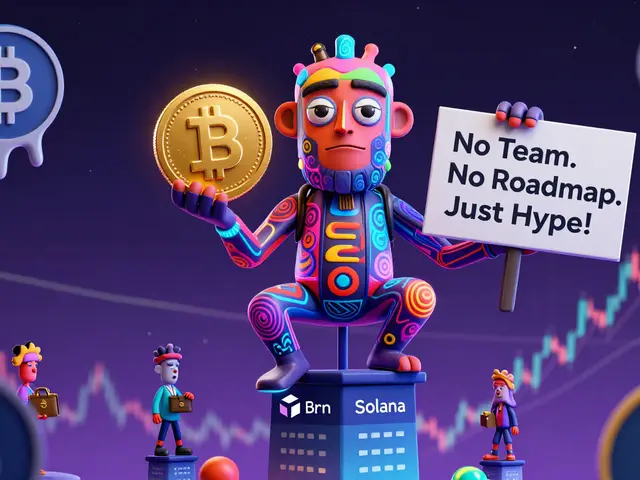
DogWifNoHat (NOHAT) is a Solana-based memecoin launched in January 2024 as a parody of Dogwifhat (WIF). With no team or utility, it survives on humor and community. Here's what you need to know about its price, supply, and whether it's worth buying.
CanBit crypto exchange has no verifiable presence online. This review exposes it as a likely scam and lists real, regulated alternatives like Coinbase, Kraken, and Bybit that you can trust in 2025.
Ecuador doesn't ban cryptocurrency, but banks block all transactions, taxes apply to profits, and only 2.73% of people use it. Learn how crypto works in this restrictive dollarized economy.