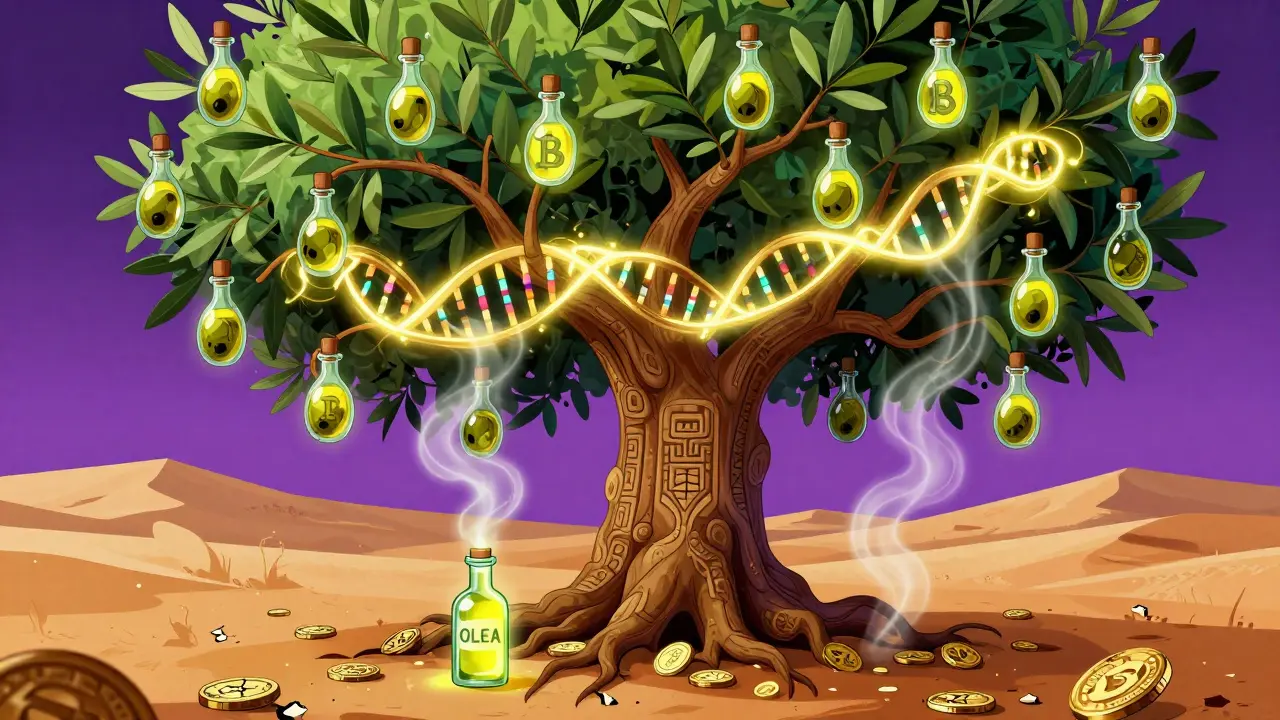

When you hear about a cryptocurrency that uses DNA molecules stored in olive oil, your first thought might be: is this real? Or is this art? Olea Token (OLEA) sits at the edge of both. Launched in July 2022, it wasn’t built to be the next Bitcoin or Ethereum. It was built to be a statement - a fusion of biotechnology, environmental art, and blockchain. But here’s the hard truth: as of March 2026, OLEA doesn’t function like a real cryptocurrency. It exists more as a digital ghost than a working asset.
What is Olea Token (OLEA)?
Olea Token (OLEA) is an ERC-20 token built on the Ethereum blockchain. Its contract address is 0xc6Cc3d07C705E39D11c7f60d8836C7C78D4aC5f1. That part is real. You can look it up on Etherscan. But the project’s core idea? That’s where things get strange.
The creators claim the smart contract is physically encoded into DNA molecules - and those molecules are embedded into bottles of olive oil. This isn’t just marketing fluff. It’s presented as a literal art installation. The concept? The olive tree symbolizes peace, sustainability, and life. By tying the token to olive oil, they say they’re honoring the Earth and supporting sustainable agriculture. But here’s the catch: there’s no proof this DNA-in-oil system does anything for the blockchain. No one can scan the oil and trigger a transaction. No one can verify ownership by analyzing the bottle. It’s a symbolic gesture, not a technical innovation.
How Does OLEA Work? (Spoiler: It Doesn’t)
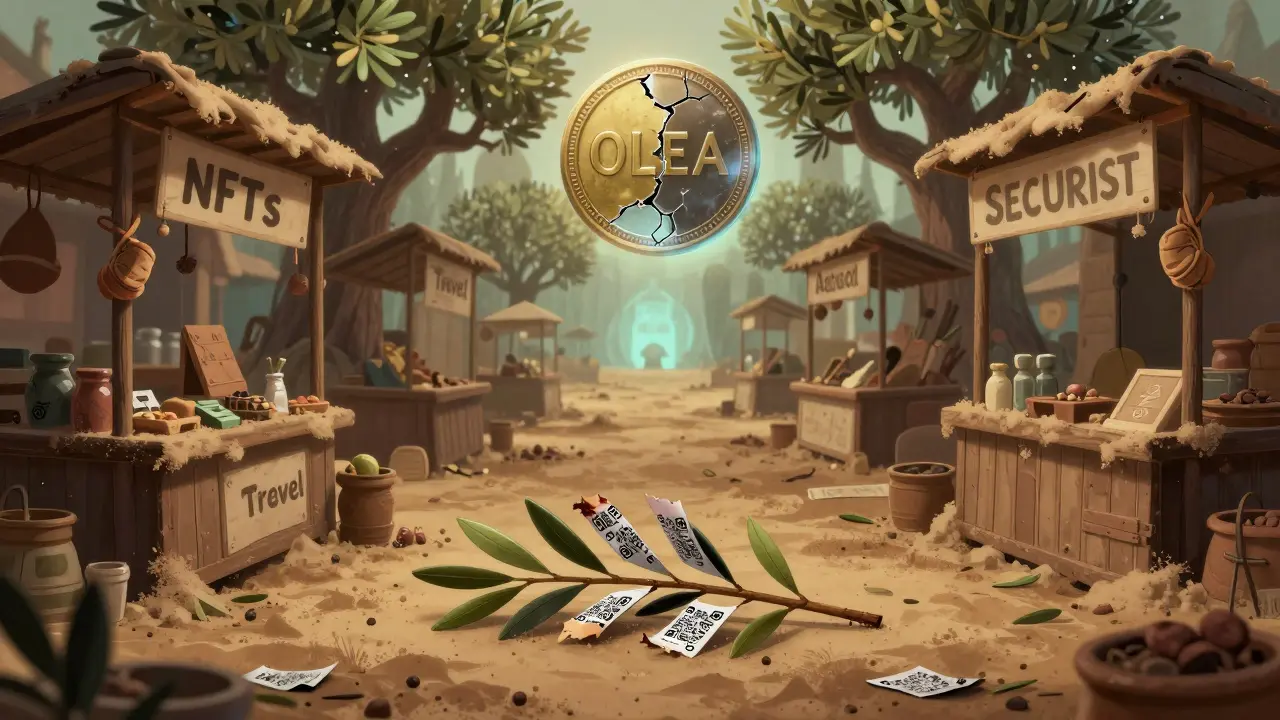
On paper, OLEA has a long list of uses. According to the official website, you can use it to:
- Pay for services from Aegisecu (a security firm linked to the project)
- Buy NFTs from the Athena Returns collection
- Access travel, dining, and event platforms
- Apply for SECURIST certificates
- Use it as a business or job platform currency
But none of these things are real. No one is using OLEA to buy a coffee. No marketplace accepts it. No wallet shows OLEA as a spendable balance. The project’s website lists these features like a brochure from 2022 - but since then, there’s been zero progress. No updates. No new features. No developer activity.
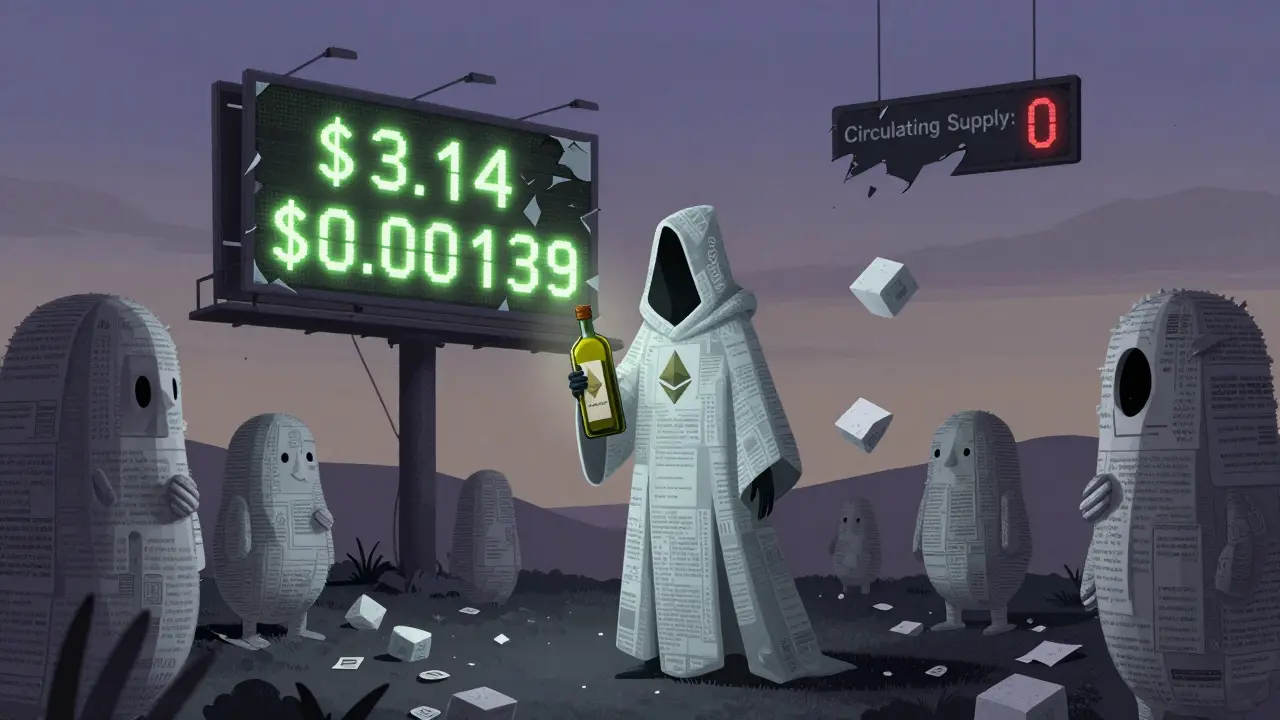
And here’s the biggest red flag: Binance lists OLEA but reports a circulating supply of 0 tokens. That’s impossible for a live cryptocurrency. If no tokens are circulating, then no one owns them. No one can trade them. And yet, some sites say the price is $0.000139. Others say $0.000028. One even claims an all-time high of $3.14. How can a token have a price if no one is buying it? The answer? The numbers are either fake, outdated, or manipulated.
Market Data: A Mess of Contradictions
Let’s look at what the data says - if you can trust it.
| Platform | Price (USD) | 24h Volume | Market Cap | Rank |
|---|---|---|---|---|
| LiveCoinWatch | $0.000631 | $2,300 | N/A | #4626 |
| Binance | $0.000139 | $321.86 | $0 | #5662 |
| Crypto.com | $0.00002896 | Unknown | Unknown | Not listed |
| BeInCrypto | $0.0001 | $0 | $0 | Not ranked |
These numbers don’t match. One site says the trading volume is $2,300. Another says $321. Another says $0. Market cap is listed as $0 on Binance - which makes no sense if the token has a price. The all-time high varies between $2.78 and $3.14. That’s not just inconsistency - that’s chaos.
The truth? OLEA has no real market. There’s no liquidity. No buyers. No sellers. The tiny volume you see is likely from bots or one-off trades between the same wallets. It’s not a functioning market - it’s a mirror.
Why No One Talks About OLEA
Go to Reddit. Go to Twitter. Go to CoinMarketCap forums. Search for “Olea Token.” You’ll find almost nothing. No discussions. No complaints. No success stories. No memes. No influencers talking about it. That’s not normal. Even the most obscure tokens have a small group of believers. OLEA has none.
The project’s website is barely updated. The last real post was in 2022. The contact page lists a Korean phone number - 02-6953-1535 - but no email, no live chat, no support team. If you have a question, you’re out of luck.
And here’s the kicker: CoinGecko explicitly states that OLEA is unavailable to trade on any exchange listed on their platform. That means you can’t buy it on Coinbase, Kraken, Binance, or any major platform. The only way to get it is through obscure, unregulated decentralized exchanges - and even there, no one is selling.
Is OLEA a Scam?
It’s not a classic scam. There’s no fake team. No anonymous devs. The creators are tied to the Athena Returns NFT project, which has some public presence. But that doesn’t make it legitimate. This is what experts call a “zombie project” - something that launched with hype, then vanished.
The DNA-in-olive-oil idea sounds cool. But without real utility, it’s just performance art. And art doesn’t pay bills. It doesn’t move markets. It doesn’t create value.
There’s no evidence OLEA supports agriculture. No partnerships with olive farmers. No carbon offset programs. No blockchain verification of oil sourcing. Just a pretty story.
What You Should Do
If you’re thinking of buying OLEA: don’t.
It’s not a bad investment because it’s risky. It’s a bad investment because it doesn’t exist as a functional asset. You can’t spend it. You can’t sell it. You can’t store it safely. Even if you buy a few tokens, you’re holding digital dust.
And if you already own OLEA? You’re likely holding a token with no market. The price you see is meaningless. The value? Zero. The only thing left is the story - and stories don’t pay for gas.
OLEA was never meant to be a currency. It was meant to be a conversation starter. And in that, it succeeded. But as a cryptocurrency? It’s dead.
What’s Next for Olea Token?
There’s no roadmap. No team updates. No GitHub activity. No community events. The project hasn’t moved in over two years.
Unless the team suddenly reappears with a real product, real partnerships, and real exchange listings, OLEA will remain a footnote in crypto history - a cautionary tale about how far creativity can go before it becomes delusion.
The olive tree symbolizes life. But OLEA? It’s withering.
Is Olea Token (OLEA) a real cryptocurrency?
Technically, yes - it’s an ERC-20 token on Ethereum with a verifiable contract address. But functionally, no. It has no trading volume, no exchange listings, no user adoption, and no utility. It exists only as a symbolic project with no real-world use.
Can I buy Olea Token on Binance or Coinbase?
No. CoinGecko confirms OLEA is unavailable on all major exchanges listed on their platform. Binance lists it but reports a circulating supply of 0 tokens, meaning it can’t be traded. You won’t find it on Coinbase, Kraken, or any reputable exchange.
Why does OLEA have different prices on different sites?
Because there’s no real market. The tiny trading volumes you see are likely from bots or isolated trades between the same wallets. The prices are either outdated, manipulated, or based on zero-liquidity order books. There’s no consensus - which is why some sites report $0.000028 and others $0.000710.
Is the DNA-in-olive-oil concept real?
Yes, the project claims DNA molecules are embedded into olive oil as part of its smart contract concept. But this is purely symbolic. There’s no technology that links the physical oil to blockchain transactions. It’s an artistic statement, not a functional innovation.
Does Olea Token support sustainable agriculture?
No. Despite claims of supporting agricultural production, there’s zero evidence of partnerships with farmers, olive producers, or any environmental initiative. The project uses sustainability as a narrative, not as a real-world program.
Should I invest in Olea Token?
No. OLEA has no market, no utility, no community, and no future development. Even if you buy it, you won’t be able to sell it. It’s not a risky investment - it’s a dead one.
OLEA isn’t the future of crypto. It’s a relic of a time when people confused symbolism with substance. And in crypto, that’s the fastest way to disappear.
13 Comments
This isn't crypto. This is performance art by people who think olive oil is blockchain. They're not building anything. They're just slapping a smart contract on a bottle and calling it innovation. Zero volume, zero utility, zero future. If you're holding this, you're holding a digital paperweight.
Let's be real. The DNA-in-olive-oil thing is the most pretentious thing I've seen since that guy who claimed his NFT was encoded in a single grain of sand. This isn't innovation. It's a middle finger to anyone who actually understands how blockchains work. The fact that Binance lists it with zero circulating supply says everything. They're just collecting listing fees while pretending it's real.
I don't know if I'm more amused or saddened by this. The idea of tying crypto to olive oil - something so grounded, so human, so ancient - is kind of beautiful in a weird way. Like, imagine a farmer in Tuscany holding a bottle that's somehow linked to a blockchain. It's poetic. Even if it doesn't work. Even if it's just a story. Sometimes that's all we need. A story that reminds us tech doesn't have to be cold.
AMERICA NEEDS TO STOP LETTING THIS KIND OF NONSENSE GET A FOOTHOLD. THIS ISN'T CRYPTO. THIS IS A FOREIGN CULTURAL PERFORMANCE PIECE THAT SOMEONE THOUGHT WOULD LOOK COOL ON A WEBSITE. IF YOU'RE BUYING THIS, YOU'RE NOT INVESTING - YOU'RE DONATING TO A TIKTOK ART PROJECT. WE HAVE REAL CRYPTO IN THIS COUNTRY. STOP LETTING THIS GARBAGE POLLUTE THE MARKET.
I get why people are skeptical. But let's not throw the baby out with the bathwater. The fact that someone tried to merge biology, art, and blockchain? That's bold. Maybe it didn't work. Maybe the execution was garbage. But the *intent*? That's worth something. We need more projects that ask weird questions - even if they don't have answers yet. This isn't dead. It's just sleeping. And sometimes the quietest ideas take the longest to grow.
I think people are missing the point. It's not about whether you can trade it. It's about whether it makes you think. Most crypto is just gambling with fancy names. This? This makes you wonder. What if value wasn't just about price? What if it was about meaning? I don't own any. But I respect the quiet rebellion of it.
No market no value no future just stop wasting time
If you're looking at OLEA and wondering if it's worth investing in - don't. But if you're curious about how crypto projects can fail so spectacularly while still sounding profound? This is a textbook case. The team didn't scam you. They just stopped caring. No updates. No community. No GitHub commits. No exchange support. That's not fraud. That's abandonment. And it's more dangerous than fraud because you don't even realize you're being ignored. If you bought this, you're not holding a token. You're holding a monument to wishful thinking.
Actually I think this is genius. Everyone else is so obsessed with utility and returns they forget crypto was supposed to be about decentralization and weird ideas. This is the most decentralized thing I've seen - a token with no buyers, no sellers, no value, no team - just a story. That's pure crypto. The fact that it's useless is the point. It's crypto as anti-crypto.
In India we have many such projects. People get excited by the idea not the execution. This is not unique. The DNA in olive oil? Sounds like a marketing trick to attract western audiences. But honestly, if no one is using it, then it's just noise. I would not risk my money on this.
I've seen a lot of weird crypto ideas. But this one? It feels like someone took a TED Talk, mixed it with a wine bottle label, and called it a blockchain. The olive tree is a symbol. That's beautiful. But symbols don't move markets. People do. And no one is moving here. The price differences? That's not market data. That's someone's Excel sheet from 2022. If you're holding OLEA, you're not an investor. You're a museum curator.
The fact that Binance lists it with a circulating supply of 0 is the most damning evidence. That's not a mistake. That's a red flag. They're listing it to collect fees. They know it's dead. They're monetizing the illusion. This isn't a project. It's a graveyard with a ticker symbol. And the DNA-in-oil? That's not innovation. That's a cult leader's pitch deck. If you're still believing in this, you're not naive. You're being manipulated.
This is exactly why I refuse to engage with anything that sounds like a Silicon Valley therapy session. You don't solve systemic economic problems by embedding DNA into olive oil. You solve them with code, with incentives, with transparency. This isn't art. It's a scam dressed up as a philosophy thesis. The creators are not visionaries. They're con artists who learned how to use Canva. The fact that anyone still believes this is proof that crypto's gullibility threshold has hit critical mass. And I'm not surprised. The entire industry is built on this exact kind of nonsense.