



Orca isn’t another crypto exchange you sign up for with an email and password. It’s a decentralized exchange built directly on Solana - no middleman, no custody, no waiting. If you’ve ever paid $5 in gas fees to swap two tokens on Ethereum, or sat through a 30-second confirmation timer, Orca feels like a breath of fresh air. It’s fast, cheap, and designed for people who want to trade crypto without the friction of older blockchains.
How Orca Works - No Account, Just a Wallet
Orca doesn’t hold your money. Ever. That’s the core idea behind every decentralized exchange (DEX). When you swap tokens on Orca, your assets move directly from your Solana wallet to the other person’s wallet. No deposit. No withdrawal. No waiting for KYC. You just need a Solana wallet - like Phantom or Solflare - and a little bit of SOL to cover network fees.The whole process takes under a second. That’s not marketing hype. Solana processes transactions in about 400 milliseconds, and Orca is built to use every bit of that speed. Compare that to Uniswap on Ethereum, where even Layer 2 solutions can take 5-15 seconds. Orca’s average transaction fee? Around $0.00001. You could swap 10,000 times and still spend less than a penny.
Orca uses an automated market maker (AMM) model, meaning trades happen against liquidity pools, not order books. But it’s smarter than most. Its "Fair Price Indicator" compares prices across CoinGecko and other sources to make sure you’re not getting ripped off. It also shows you the slippage upfront so you know exactly what you’re getting.
Why Orca Stands Out on Solana
Solana was built to fix Ethereum’s problems: slow speeds, high fees, and poor scalability. Orca leans into that. It’s not trying to be everything. It’s focused on being the best token swap tool on Solana.As of 2025, Orca handles about 0.8% of total DEX volume. That might sound small, but it’s the second-largest DEX on Solana - behind only Raydium. And while Uniswap still dominates with over 50% of the global DEX market, Orca’s niche is clear: speed and cost for Solana-native traders.
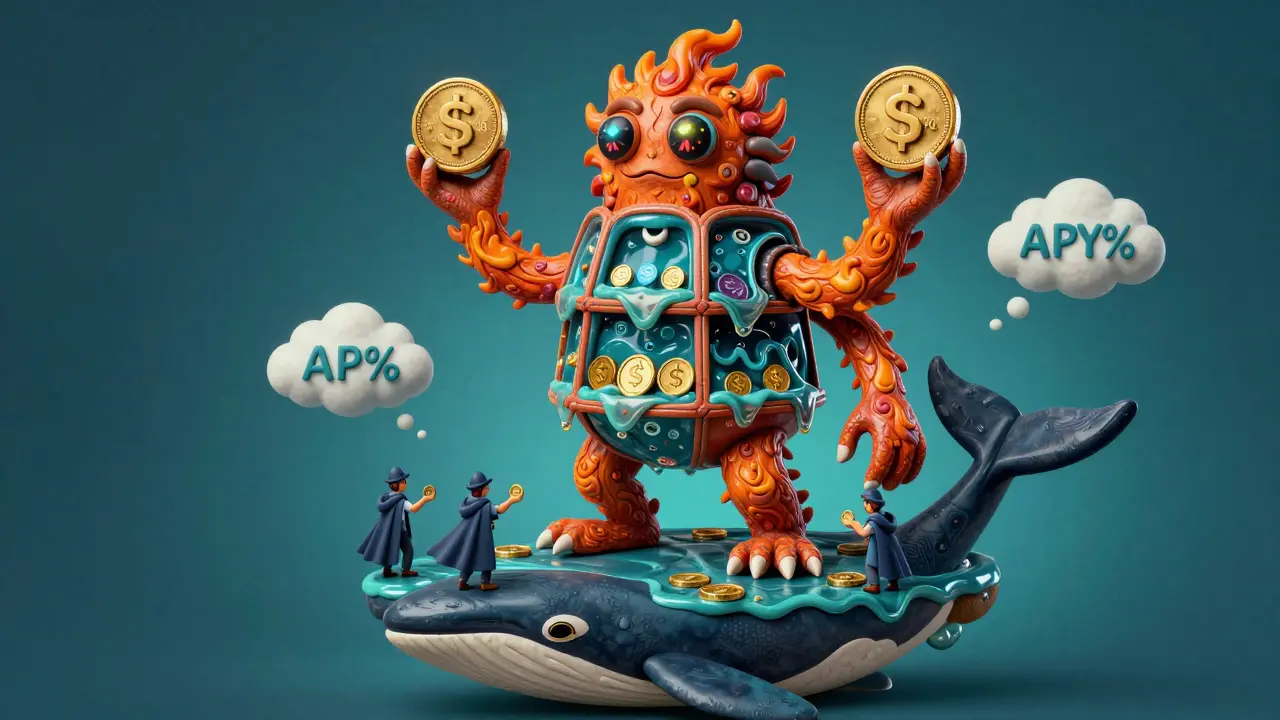
Its liquidity pools are active. Stablecoin pairs like USDC/SOL offer steady 5-7% APY. More volatile pairs like ORCA/SOL can hit 12-15% - but come with higher impermanent loss risk. Liquidity providers get a cut of every trade in their pool, and Orca’s interface makes it easy to add or remove liquidity with just a few clicks.
The ORCA Token - More Than Just a Utility
Orca’s native token, ORCA, isn’t just for paying fees. It’s used for governance, staking, and earning rewards. As of January 2026, ORCA trades around $1.26 with a market cap of $75.7 million and a circulating supply of 60.2 million tokens.Some analysts see long-term potential. CoinGape predicts ORCA could hit $2.11 by 2030 if DeFi adoption keeps growing. Others, like 3Commas, are more cautious, forecasting a slight dip to $1.25 by early 2026. The truth? ORCA’s value is tied to Solana’s success. If Solana keeps scaling, attracting developers, and handling real-world usage, ORCA rises with it. If Solana has another major outage like the one in June 2022 - when ORCA dropped to $0.35 - the token will feel the pain.
There’s also a growing number of wallets holding over 10,000 ORCA tokens - up 12.7% year-over-year in 2025. That’s a sign institutional and serious retail investors are starting to pay attention.
What You Can’t Do on Orca
Orca isn’t perfect. And knowing its limits is just as important as knowing its strengths.First, it’s Solana-only. You can’t swap Bitcoin, Ethereum, or Polygon tokens directly. You need to bridge them over first. That adds steps. If you’re used to multi-chain DEXs like 1inch or Matcha, Orca will feel limiting.
Second, no customer support. If you mess up a transaction, send funds to the wrong address, or lose your seed phrase - Orca can’t help you. That’s the trade-off for being non-custodial. You’re fully responsible. No phone line. No live chat. Just a Discord server with 45,000 users who might or might not reply.
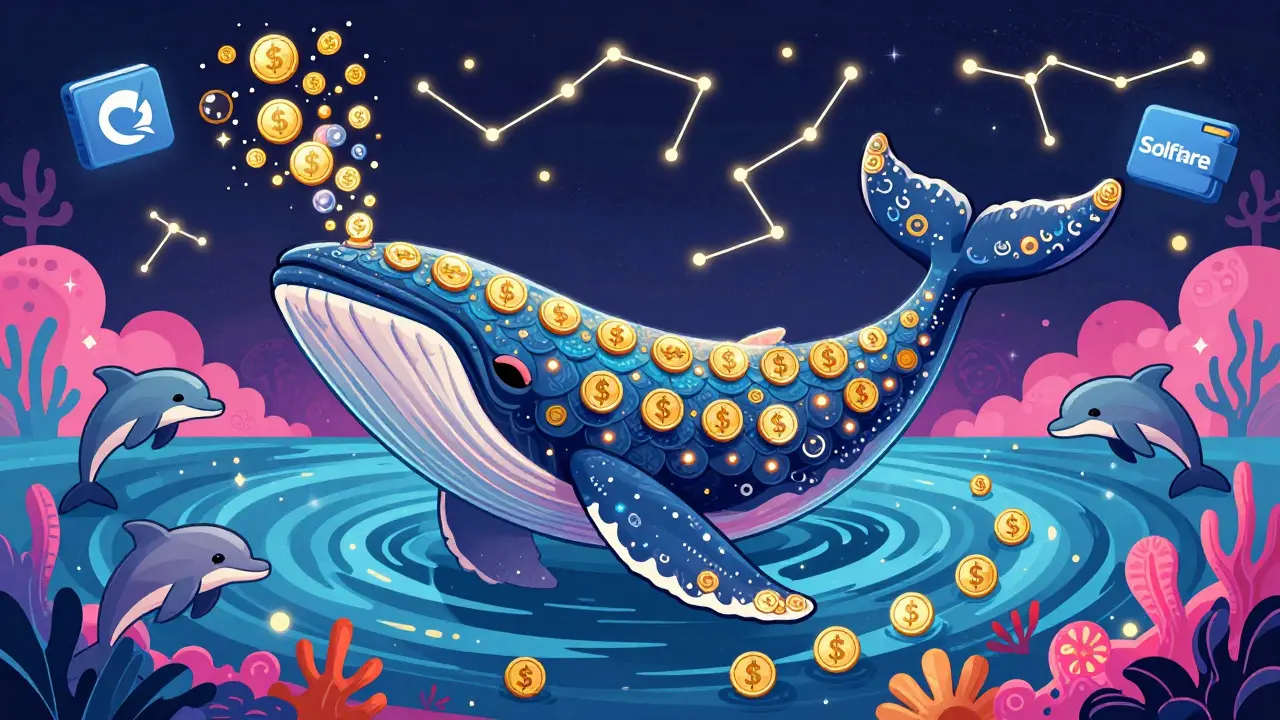
Third, the UI, while clean, has a marine theme. Whales, dolphins, coral - it’s cute. But some users find it distracting. It’s not a dealbreaker, but if you’re here to trade, not play a game, you might wish it was more minimal.
Who Is Orca For?
Orca is perfect for:- Traders who want instant swaps at near-zero cost
- Users already in the Solana ecosystem (holding SOL, SOL-based tokens, NFTs)
- Liquidity providers looking for decent APYs on stable or popular pairs
- People tired of Ethereum’s fees and slow speeds
It’s not for:
- Beginners who don’t understand wallets or private keys
- Those who want to trade Bitcoin or Ethereum directly
- People who expect customer service when things go wrong
- Investors betting on regulatory approval - Orca isn’t regulated anywhere
If you’re coming from Coinbase or Binance, the learning curve is real. You’ll need to set up a Solana wallet, buy SOL for fees, understand slippage, and learn how liquidity pools work. Most new users spend 15-30 minutes getting comfortable. After 2-5 swaps, it becomes second nature.

Future Roadmap - What’s Coming
Orca isn’t standing still. The team has announced key updates for 2025-2026:- Limit orders - launching Q4 2025. This is huge. Right now, you can only do market swaps. Limit orders will let you set buy/sell prices - a must-have for serious traders.
- Cross-chain bridging - expected Q2 2026. This will let users bring in assets from Ethereum, Polygon, and others without leaving the platform.
- Firedancer integration - Solana’s next-gen validator client. If it launches as planned, Orca could handle even more transactions, faster.
These aren’t vague promises. Orca’s GitHub shows 17.3 commits per week on average. That’s active, consistent development. They’re building, not just talking.
Final Verdict: Is Orca Worth It?
If you’re trading on Solana, Orca is the best DEX you can use. It’s faster, cheaper, and more reliable than anything on Ethereum right now. The interface is intuitive once you get past the marine theme. The tokenomics are solid, and the roadmap is realistic.But it’s not for everyone. If you’re not on Solana, or if you need customer support, or if you’re new to crypto - start elsewhere. Learn the basics first. Use a centralized exchange to buy SOL and a few tokens. Then come back to Orca.
Right now, Orca is the go-to for Solana traders. It’s not trying to beat Uniswap. It’s trying to be the best tool for its own ecosystem. And in that, it’s winning.
Is Orca a centralized or decentralized exchange?
Orca is a decentralized exchange (DEX). It doesn’t hold your funds. All trades happen directly between your wallet and the platform’s liquidity pools. You control your private keys at all times.
Do I need SOL to use Orca?
Yes. You need SOL in your wallet to pay for Solana network transaction fees. Even if you’re swapping USDC for SRM, you still need a small amount of SOL - usually less than $0.01 per transaction.
Can I trade Bitcoin or Ethereum on Orca?
Not directly. Orca only supports tokens on the Solana blockchain. To trade Bitcoin or Ethereum, you’d need to first bridge them to Solana using a cross-chain bridge like Wormhole or Portal Bridge, then swap them on Orca.
Is Orca safe to use?
Orca’s code is open-source and audited. As a non-custodial platform, it avoids exchange hacks. But safety depends on you. If you lose your wallet seed phrase, or send funds to the wrong address, there’s no recovery. Always double-check addresses and never share your private key.
What’s the difference between Orca and Uniswap?
Orca runs on Solana; Uniswap runs on Ethereum. Orca trades are faster (under 1 second) and cost a fraction of a cent. Uniswap is slower (5-30 seconds) and can cost $1-$10+ in gas. Orca is simpler and cheaper for Solana users. Uniswap has more tokens and liquidity overall, but at a higher cost.
How do I earn rewards on Orca?
You can earn rewards by providing liquidity to trading pools. For example, if you add $1,000 worth of USDC and SOL to a pool, you’ll earn a share of all trading fees generated by that pool. APYs range from 5% to 15%, depending on the token pair and market conditions.
Does Orca have a mobile app?
Orca doesn’t have a standalone app, but it works perfectly through mobile wallets like Phantom and Solflare. Just open your wallet’s built-in browser, go to orca.so, and connect. The interface is fully responsive on phones.
Is Orca regulated?
No. Orca is a decentralized protocol with no legal entity or regulatory oversight. It operates as open-source software on Solana. Users assume full responsibility for compliance with local laws.
Next Steps: How to Get Started
1. Download a Solana wallet (Phantom or Solflare are easiest for beginners).2. Buy SOL from a centralized exchange like Coinbase or Binance and send it to your wallet.
3. Go to orca.so and connect your wallet.
4. Swap tokens or add liquidity - start with a small amount to test.
5. Keep at least 0.1 SOL in your wallet for future fees.
Once you’ve done one swap, you’ll see why Orca is the preferred DEX for Solana traders. No waiting. No fees. Just fast, clean trades.

15 Comments
Orca’s AMM is actually one of the cleanest implementations on Solana. The Fair Price Indicator isn’t just a gimmick - it’s a necessity when liquidity pools get thin. I’ve seen slippage under 0.1% on USDC/SOL even during peak DeFi season. That’s not luck, that’s engineering.
And the ORCA tokenomics? Solid. 60M circulating, staking rewards pegged to volume, governance votes with decay - this isn’t another memecoin. It’s a protocol token with teeth.
Let’s be honest - this is just another Solana shill wrapped in marine-themed UI. The ‘0.00001 fee’ claim is technically true but misleading. You’re still paying for the entire Solana block space. And if you think this is ‘faster than Ethereum,’ you’re ignoring that Ethereum has 10x the liquidity, 50x the tokens, and real institutional adoption.
Orca is a toy for degens who think speed trumps depth. It’s not a DEX - it’s a speedrun.
OMG I LOVE ORCA SO MUCH 😍 I just did my first swap and it was like magic 🤩 I was scared at first but the interface is so pretty with the whales and stuff and I didn’t lose my money!!
Now I’m adding liquidity to ORCA/SOL and hoping for 15% APY 😭 I’m not a pro but I feel so included here 🥹
Don’t let the cute design fool you. This is serious infrastructure. Orca’s codebase is lean, audited, and updated weekly. No fluff. No marketing buzzwords. Just functional DeFi that works.
If you’re on Solana and you’re not using Orca, you’re leaving efficiency on the table.
It is imperative to note that the operational efficiency of Orca represents a paradigmatic shift in decentralized exchange architecture. The transactional latency, measured in milliseconds, constitutes a quantum leap beyond the classical model epitomized by Uniswap V2.
Furthermore, the non-custodial paradigm, while demanding heightened user responsibility, is philosophically aligned with the foundational tenets of blockchain sovereignty.
Been using Orca since late 2023. The mobile experience is flawless through Phantom. I’ve swapped over $20k total - never had a failed tx.
Biggest tip? Always check the slippage before confirming. And keep at least 0.2 SOL for fees. I learned that the hard way after a 0.05 SOL error 😅
Also - limit orders coming soon? YES PLEASE. I’m done chasing price.
People still use this? 😂 You’re trusting a whale-themed website with your life savings? No KYC? No recourse? You think this is ‘decentralized’? It’s just reckless.
Real investors use Coinbase. Real traders use Binance. This is crypto’s equivalent of playing Russian roulette with a glitter gun.
Freedom isn’t free. It’s paid in SOL. And responsibility. And silence when things go wrong.
Orca doesn’t promise safety. It promises autonomy. And in a world where every exchange is a gatekeeper, autonomy is the only currency that matters.
But most people don’t want autonomy. They want a babysitter. That’s why centralized exchanges still dominate.
And that’s why Orca will outlive them all.
Stop overcomplicating it. Orca is fast. Cheap. Works. If you’re on Solana, use it. If you’re not, don’t. End of story.
How charming. A DEX with dolphins. How very… quaint.
One must admire the aesthetic commitment to whimsy while delivering institutional-grade infrastructure. It’s like a Rolls-Royce painted with unicorns. The performance is undeniable. The branding? A delightful cognitive dissonance.
I’ve been thinking about Orca not as a tool, but as a metaphor. It’s the quiet ocean beneath the surface of crypto’s noise. No screaming traders. No fake volume. Just currents. Deep, slow, and powerful.
People think speed is the point. But it’s not. The point is that you can disappear into the liquidity. No one sees you. No one tracks you. You become part of the flow.
And when you do, you realize - you were never trading tokens. You were trading freedom.
That’s why I don’t use other DEXes anymore. They’re too loud. Too visible. Too… human.
Orca is the silence between the waves. And in that silence, you finally hear yourself.
The data speaks for itself: Orca holds the second-largest DEX volume on Solana with consistent weekly development activity. Its token distribution shows increasing whale concentration, indicating growing institutional interest. The roadmap is transparent and technically grounded.
For users seeking efficiency within the Solana ecosystem, Orca is objectively the optimal choice.
orca is good but i dont know how to add liqudity pls help
Y’all are overthinking this. Orca is the Swiss Army knife of Solana DEXes - no frills, no BS. The marine theme? It’s a vibe. Like a surf shop that also runs a hedge fund.
Added $500 to USDC/SOL pool last week. Got 6.8% APY. Gas? 0.00002 SOL. I made more in 3 days than I did in 3 months on Uniswap.
Limit orders are gonna be a game changer. I’m already setting up alerts.
There’s a deeper truth here: Orca doesn’t compete with Uniswap. It exists in a different dimension. Uniswap is a marketplace. Orca is a protocol. One is transactional. The other is ecological.
It’s not about which is better. It’s about which aligns with your values. Speed over spectacle? Autonomy over accessibility? Then Orca is your home.