
El Salvador didn’t just experiment with Bitcoin-it made it legal tender. On September 7, 2021, the country became the first in the world to give Bitcoin the same status as the U.S. dollar. No other nation had done this before. The move was bold, controversial, and meant to fix deep problems: a stagnant economy, high debt, and a population stuck without bank accounts. But three years later, the story isn’t about revolution. It’s about reality hitting hard.
Why Bitcoin? The Problem El Salvador Was Trying to Solve
Before Bitcoin, El Salvador’s economy was tied to the U.S. dollar. That happened in 2001, after a financial crisis wiped out its own currency. Since then, the country has had no control over its monetary policy. It can’t print money. It can’t lower interest rates to boost growth. And it’s stuck paying high fees to send money home. Remittances make up over 20% of El Salvador’s GDP. That’s money sent by Salvadorans working abroad-mostly in the U.S.-to families back home. Traditional services like Western Union charge up to 10% in fees. For a $300 transfer, that’s $30 gone. Bitcoin promised to cut those costs to near zero. Instant. Direct. No middlemen. Then there’s financial exclusion. Half of Salvadorans didn’t have bank accounts. Banks wouldn’t serve them because they didn’t earn enough. Bitcoin, the theory went, could skip banks entirely. All you needed was a phone. No credit check. No minimum balance. Just a wallet. The government didn’t just talk about it. It acted. It created the Chivo wallet, gave every citizen $30 in free Bitcoin just for downloading the app, and offered discounts on gas, electricity, and public transit for using it. It even set aside $150 million to buy Bitcoin and back the system.The Plan: Three Goals, One Currency
The government had three clear goals:- Slash remittance costs-make it cheaper and faster for families to receive money.
- Bank the unbanked-give people without banks a way to save, pay, and send money.
- Attract foreign investment-become the crypto capital of the Americas.
The Reality: Why Adoption Stalled
A 2024 study by the National Bureau of Economic Research surveyed 1,800 Salvadoran households. The results were brutal. More than 60% of people who got free Bitcoin never made a single transaction after the bonus ran out. One in five still hadn’t spent their $30. That’s not adoption. That’s a one-time giveaway. The people who actually used Bitcoin? Young, urban, tech-savvy men. The exact opposite of the people the program was meant to help-rural women, older workers, low-income families who couldn’t afford smartphones or data plans. The app crashed. Transactions failed. People didn’t understand how to hold Bitcoin. They didn’t trust it. And when Bitcoin’s price dropped 30% in six months, many sold their coins at a loss. The government had promised stability. Instead, they gave volatility. Even the incentives didn’t stick. Gas discounts? People stopped using them. Free Bitcoin? Once it was gone, so was the motivation.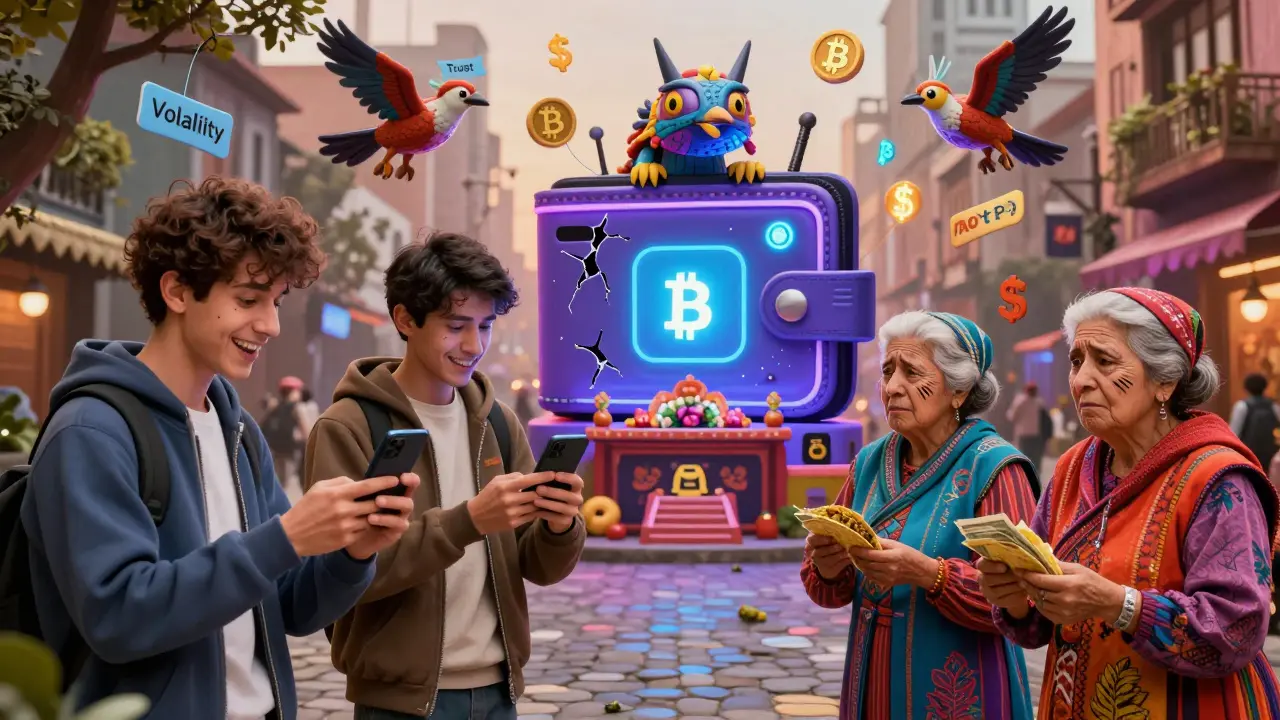
The IMF Backs In
By 2024, the cracks were too big to ignore. El Salvador was in debt. It needed a $1.4 billion loan from the International Monetary Fund. The IMF said yes-but only if El Salvador scaled back its Bitcoin plan. The deal forced the country to:- Stop buying Bitcoin with public funds.
- Improve transparency around its Bitcoin holdings.
- Limit how much Bitcoin it could use for tax payments.
What Happened to the Vision?
The original vision was beautiful: a country free from banking fees, where money moved instantly, and the poor could finally join the financial world. But real life doesn’t work like a tech demo. You can’t force adoption with free coins. You can’t ignore volatility and expect people to trust a currency that loses value overnight. And you can’t skip education and think people will just figure it out. The government didn’t build infrastructure. It built a marketing campaign. There were no community centers teaching people how to use Bitcoin. No local support teams helping elderly users. No offline options for areas without internet. It was all digital, all fast, all high-tech-and left behind the very people it claimed to help.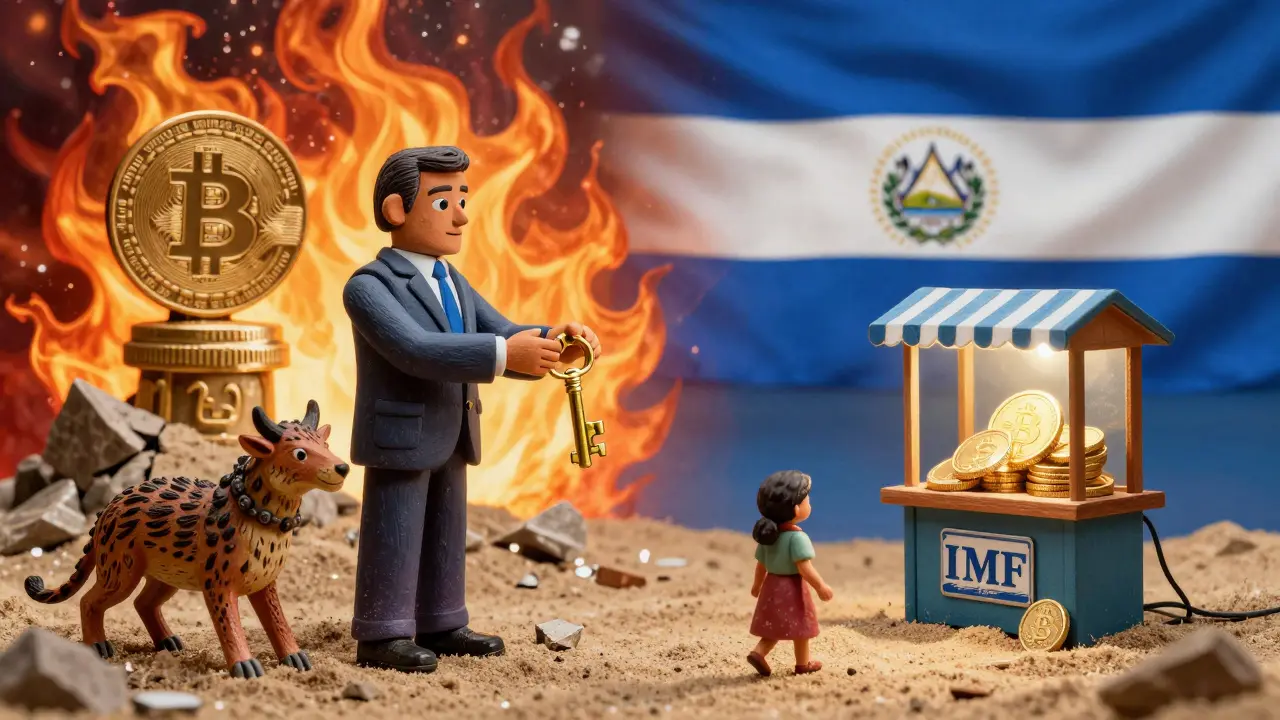
The Bigger Lesson
El Salvador’s Bitcoin experiment wasn’t a failure because Bitcoin is broken. It failed because the government treated money like software. Money isn’t just code. It’s trust. It’s stability. It’s predictability. When you make Bitcoin legal tender, you’re not just adding a payment option. You’re changing how an entire nation thinks about value, savings, and security. And most people don’t want their life savings tied to a cryptocurrency that can crash in a weekend. The country still uses Bitcoin. It’s still legal. But the government stopped pushing it. The Chivo app still works. But most people use it to cash out, not to pay for coffee.What’s Next for El Salvador?
Right now, the country is caught between two worlds. It won’t abandon Bitcoin-it’s too symbolic. But it won’t rely on it either. The IMF deal means Bitcoin is no longer the centerpiece of economic policy. It’s a footnote. A side experiment. The real focus now is rebuilding trust in traditional finance: fixing the banking system, lowering remittance costs through partnerships with fintechs, and expanding mobile payments with stablecoins-not Bitcoin. El Salvador didn’t win the crypto race. It didn’t even finish. But it did show something important: changing a national economy with cryptocurrency isn’t about technology. It’s about people. And people need more than a free $30 to change how they live.Is Bitcoin still legal tender in El Salvador?
Yes, Bitcoin is still legal tender in El Salvador. The law passed in 2021 hasn’t been repealed. However, since the 2024 IMF loan agreement, the government has stopped actively promoting its use for everyday transactions and tax payments. It remains an option, but most businesses and citizens now treat it as a speculative asset rather than a currency.
Did Bitcoin reduce remittance costs in El Salvador?
Not significantly. While Bitcoin transactions can be cheaper, most remittances still go through traditional services like Western Union or MoneyGram. Few senders use Bitcoin because recipients often don’t have wallets, or they’re afraid of price swings. Studies show no measurable drop in remittance fees since 2021. The promise of lower costs remains unfulfilled.
How many Salvadorans actually use Bitcoin daily?
Less than 10%. A 2025 survey found that only 9% of Salvadorans use Bitcoin for regular purchases. The rest either never downloaded the app, deleted it, or use it only to cash out their free Bitcoin bonus. The majority still rely on cash or debit cards. The app’s active users are mostly young men in cities-not the unbanked population it was designed for.
Why did the IMF step in?
The IMF stepped in because El Salvador’s Bitcoin policy threatened its financial stability. The country’s reserves were tied to Bitcoin’s volatile price. When Bitcoin dropped, the government’s budget shrank. The IMF required El Salvador to stop buying Bitcoin with public money, limit its use in taxes, and improve transparency. Without these changes, the $1.4 billion loan would’ve been denied.
Is El Salvador’s Bitcoin experiment a success or failure?
By its original goals, it’s a failure. It didn’t improve financial inclusion, didn’t cut remittance costs, and didn’t attract meaningful foreign investment. The government’s own data shows low usage and high abandonment. Critics, including The Economist and IMF analysts, call it a costly distraction. But it did spark global debate about cryptocurrency and sovereignty-something no other country has done.

13 Comments
El Salvador’s Bitcoin experiment was never about technology-it was about optics. The government wanted to look futuristic, so they threw a crypto party and called it economic reform. But real financial inclusion needs infrastructure, not free coins. You can’t build trust with a wallet app that crashes when you need it most.
Meanwhile, rural women still walk miles to send cash. The people who needed help the most got a digital mirage. And now? The IMF had to step in because the whole thing was a house of cards built on hype and hashtags.
I keep thinking about how we romanticize disruption without asking who gets left behind. Bitcoin promised liberation-but for whom? Not the grandmother who doesn’t own a smartphone. Not the farmer who can’t afford data. Not the single mom who just wants to send $50 to her sister without losing $5 in fees.
The tragedy isn’t that Bitcoin failed. It’s that we mistook a tech demo for a social solution. Money isn’t code. It’s dignity. And dignity doesn’t come from a free airdrop-it comes from consistent, reliable systems that don’t vanish when the market dips.
The structural flaw here is ontological: treating monetary policy as a distributed ledger problem. Bitcoin’s volatility is not a bug-it’s a feature of its design. When a sovereign state adopts a non-stable, non-fiat asset as legal tender, it surrenders its seigniorage power, monetary sovereignty, and macroeconomic control-all for speculative appeal.
The IMF’s intervention was not punitive; it was actuarial. A currency must fulfill three functions: medium of exchange, unit of account, store of value. Bitcoin fails two out of three. End of analysis.
They didn’t fail because of Bitcoin-they failed because they were manipulated. This was a psyop. The same people who sold you crypto during the 2021 boom? They’re the ones who pushed this. The government didn’t care about the people-they cared about getting rich off mining rigs and offshore wallets.
And now the IMF is in there like a corporate vampire sucking out the last bits of national autonomy. They didn’t save El Salvador. They took it over. You think the U.S. would let a foreign country force its citizens to use Bitcoin? Of course not. This was a Trojan horse for financial colonization.
They gave people $30 and took away their sovereignty. That’s not innovation. That’s theft wrapped in a whitepaper.
It’s not complicated. You don’t fix poverty with gambling. Bitcoin isn’t money-it’s a lottery ticket with extra steps. The government spent millions on a PR stunt while schools and clinics fell apart. That’s not visionary. It’s irresponsible. And now they’re begging the IMF for cash like a teenager who blew their allowance on NFTs.
One thing no one talks about: the Chivo app was never designed for the unbanked. It was designed for tech journalists and crypto bros. The UI was clunky, the support nonexistent, and the onboarding process assumed you already knew what a private key was.
Meanwhile, 70% of Salvadorans use feature phones. You can’t expect someone to manage a crypto wallet when they’ve never used a smartphone before. This wasn’t financial inclusion-it was digital exclusion dressed up as innovation.
There’s a quiet beauty in how this story unraveled. The dream was noble-free money, no fees, no banks. But dreams don’t run on code. They run on patience, on community, on someone showing up every week to help your abuela understand why her $30 vanished.
We didn’t need more blockchain. We needed more babysitters. More teachers. More local leaders who could say, ‘Here, let me show you how this works.’ Instead, we got a slogan and a smartphone. And now? The people are back where they started-with cash in their hands and no trust in the system.
Oh, so now we’re pretending this was a ‘failure’? Please. It was never meant to work. It was meant to be a spectacle-a distraction from the real issues: corruption, inequality, and the fact that El Salvador’s elites still own 80% of the wealth.
The Bitcoin move was a magic trick: ‘Look over here!’ while the banks quietly restructured debt and the rich moved their assets offshore. The people got a $30 gift and a crash course in volatility. The real winners? The crypto exchanges that cashed out millions in trading fees.
And now? The IMF gets to dictate policy. Classic colonial playbook: destabilize, then ‘rescue.’
BITCOIN IS A FEDERAL RESERVE DISGUISE. THEY’RE STILL PRINTING MONEY-JUST IN CODE. THE CHIVO WALLET IS A BACKDOOR FOR THE BIS. THEY’RE USING THIS TO TRACK EVERY TRANSACTION. YOU THINK YOUR $30 WAS FREE? IT WAS A TRAP. NOW THEY CAN SEE WHERE YOU SHOP, WHO YOU SEND MONEY TO, AND WHAT YOU EAT.
THE IMF? THEY’RE JUST THE OTHER SIDE OF THE SAME COIN. THEY WANT TO CONTROL THE CURRENCY SO THEY CAN CONTROL YOU.
YOU THINK YOU’RE LIVING IN A DEMOCRACY? YOU’RE LIVING IN A SURVEILLANCE ECONOMY.
WHEN THE NEXT CRASH COMES-WHICH IT WILL-THEY’LL TURN OFF THE APP. AND THEN? YOU’LL HAVE NOTHING.
One cannot help but observe that the imposition of a hyper-volatile asset as legal tender constitutes a fundamental violation of economic prudence, particularly in a developing economy with a fragile fiscal infrastructure. The decision was not merely ill-advised-it was intellectually indefensible.
Moreover, the notion that a smartphone application could serve as a substitute for institutional trust in financial systems is not only naive, but patronizing to the very population it purported to uplift. One must ask: who benefited? Certainly not the rural poor. The beneficiaries were venture capitalists, blockchain consultants, and public relations firms.
Let’s cut the bullshit. This wasn’t about helping the poor. It was about a president trying to look cool on Twitter. He didn’t care if grandmas couldn’t use the app. He didn’t care if remittance fees didn’t drop. He just wanted a headline. And now the country’s stuck with a worthless asset and a debt crisis.
And the worst part? People still defend it like it’s some kind of revolution. No. It was a vanity project. And the people paid for it with their trust, their savings, and their dignity.
It’s okay to admit when something doesn’t work. El Salvador didn’t fail because Bitcoin was bad-it failed because they skipped the hardest part: education. You don’t change how a nation thinks about money by handing out free coins. You do it by sitting down with people, listening, answering questions, showing up again and again.
The government gave them a hammer and said, ‘Build a house.’ But they never taught them how to swing it.
Maybe next time, they’ll start with the people-not the blockchain.
Look-I get the dream. I really do. A world where money moves instantly, where fees vanish, where you don’t need a bank to survive. That’s powerful. But dreams don’t pay bills. Stability does.
El Salvador didn’t need Bitcoin. They needed better banks. Cheaper remittance partnerships. Mobile money that works on flip phones. They needed someone to say, ‘Let’s fix what we have before we chase something shiny.’
Instead, they went all-in on a gamble. And now? The whole country’s stuck holding a bag of digital dust.
But hey-at least they tried. And that’s more than most governments ever do.