



Bitcoin hit $100,000 in late 2024, and by early 2025, major banks and investment firms started offering crypto through ETFs. For the first time, regular investors could buy Bitcoin without touching a wallet or understanding blockchain. But behind the headlines, cryptocurrency isn’t just an investment-it’s a whole new financial system with real benefits and serious risks.
Why People Are Using Cryptocurrency
Cryptocurrency lets you send money directly to someone anywhere in the world without a bank. That’s not just convenient-it’s cheaper and faster. Sending $5,000 to family in Nigeria used to cost $300 and take three days. Now, with Bitcoin or Ethereum, it costs under $5 and clears in minutes. That’s why companies like JPMorgan use blockchain to move $2.3 billion every month between institutions. It’s not just payments. Crypto lets you earn interest just by holding tokens. Platforms like Ethereum let you lock up your coins and get paid in return-this is called staking. In 2025, some staking yields hit 5-7% annually, far above savings accounts. And because these systems run on code, not banks, there’s no middleman taking a cut. Then there’s the inflation hedge angle. When the dollar weakens, Bitcoin tends to rise. In 2024 and 2025, when U.S. inflation spiked, Bitcoin’s price moved in sync with consumer price indexes. Investors who bought Bitcoin during those times saw their holdings grow while cash lost value. That’s why 67% of institutional investors now include crypto in their portfolios-not as a gamble, but as a hedge.The High Returns and High Volatility
Crypto doesn’t play by traditional rules. In 2024, Bitcoin returned 76.4% for the year. The S&P 500? Just 10.2%. That kind of return pulls in people looking to build wealth fast. But here’s the catch: Bitcoin’s price swings 44.1% on average every year. That’s more than triple the volatility of gold. That volatility isn’t just noise-it’s dangerous. In July 2025, a market crash wiped out 60% of one Reddit user’s portfolio overnight. Why? Because they used leveraged staking. When prices dropped, their position was automatically liquidated. They didn’t lose because they picked the wrong coin-they lost because they didn’t understand how the system worked under pressure. Even big players get burned. ByBit, one of the top exchanges, got hacked for $1.5 billion in early 2025. The attackers were linked to North Korean state actors. That’s not a glitch. It’s a flaw in the system: when you remove banks, you also remove the safety nets they provide.Security: Better Than You Think, Worse Than You Assume
Crypto security has improved. Institutions now use multi-signature wallets that require three out of five keys to move funds. They store private keys in hardware modules that can’t be hacked remotely. These aren’t just best practices-they’re mandatory for any firm managing client money. But retail users? Most still use phone apps with simple passwords. That’s why $3 billion was stolen from crypto users in the first half of 2025. Most of it wasn’t from big hacks. It was from phishing emails, fake apps, and people giving away their recovery phrases. One man in Texas lost $220,000 after he clicked a link that looked like Coinbase. He thought he was logging in. He wasn’t. The rise of AI-powered scams makes this worse. Scammers now use voice cloning to impersonate customer support. They call you, say your account is locked, and ask for your seed phrase to “fix” it. You don’t need to be tech-savvy to fall for this. You just need to trust someone who sounds like they’re helping.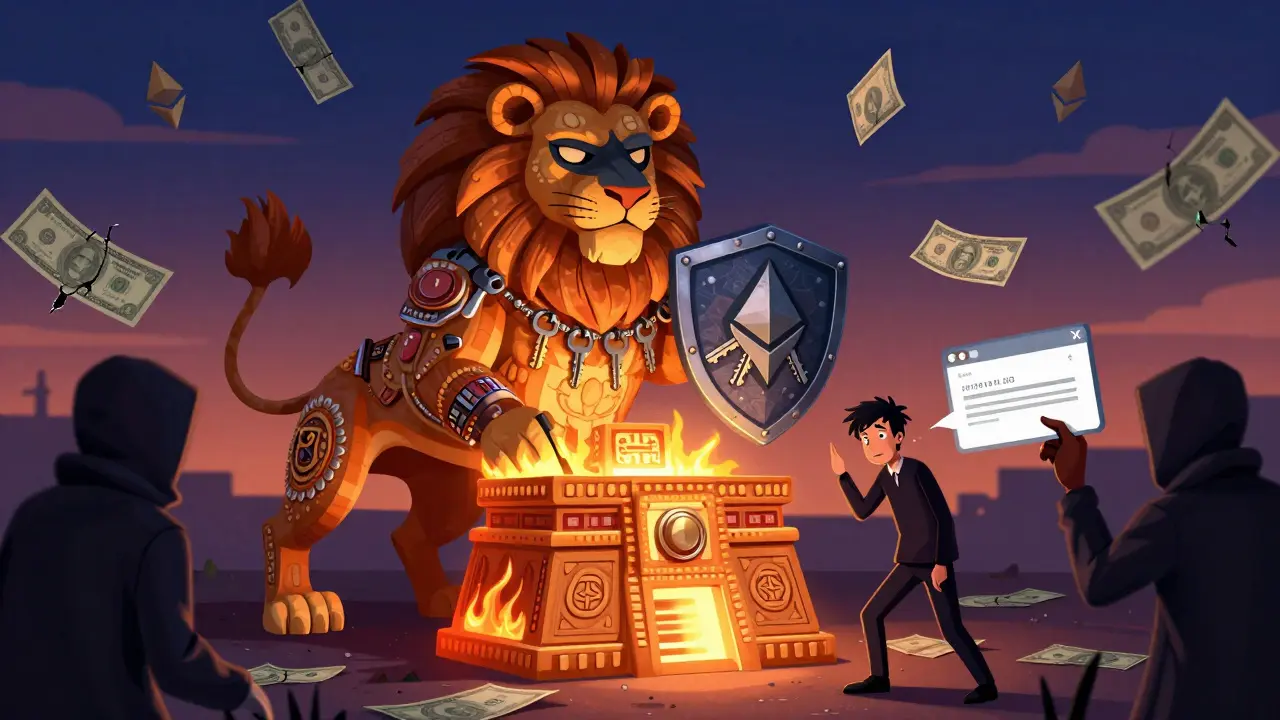
Regulation: The Wild West Is Getting Fences
In 2025, governments stopped pretending crypto was a fad. The U.S. passed SAB 122, which finally clarified how companies must store digital assets. The European Union’s MiCAR law requires 189 separate disclosures from exchanges. Hong Kong now licenses crypto firms like banks. That’s good for legitimacy. But it’s bad for freedom. Many small platforms can’t afford the compliance costs. Over 47% of crypto businesses say their legal expenses jumped 25-40% in the last year. Some shut down. Others moved offshore. For users, this means fewer choices. Coinbase still works in the U.S. Binance doesn’t. Some apps freeze accounts during market crashes. Trustpilot reviews show 42% of Coinbase users complained about delayed withdrawals when prices swung hard. That’s not a bug-it’s a feature. Regulators demand exchanges hold reserves. When everyone wants to cash out at once, the system slows down.Real-World Use? Still Limited
You can’t walk into a grocery store and pay with Bitcoin. Only 12% of merchants who accept crypto keep prices stable. Why? Because if Bitcoin jumps 10% in an hour, they lose money. So most shops convert crypto to dollars immediately. That defeats the whole point of using it. NFTs and DeFi sound revolutionary, but most people don’t use them. NFTs are mostly art and collectibles. DeFi platforms are complex, risky, and often poorly documented. GitHub surveys show newer DeFi projects average a 3.1 out of 5 in developer satisfaction. Ethereum’s docs? 4.5. That gap matters. The real winners? Companies using blockchain internally. JPMorgan’s Kinexys system processes transactions in seconds. Mastercard’s network handles 50,000 transactions per second. These aren’t flashy. They’re quiet. And they’re changing how finance works behind the scenes.Who Should Stay Away?
If you need your money to be safe and predictable, crypto isn’t for you. If you’re saving for a house in five years, don’t put it in Bitcoin. If you don’t understand how private keys work, don’t invest. If you think crypto is a get-rich-quick scheme, you’ll lose. The learning curve is steep. Coinbase says it takes 40 to 60 hours just to understand the basics: wallets, gas fees, staking, security. Most people don’t put in that time. They see a meme coin spike on TikTok and jump in. That’s how you end up broke.
Who Might Benefit?
If you’re an investor who already owns stocks and bonds, crypto can add diversification. Its correlation to the S&P 500 is only 0.37. That means when the stock market drops, crypto might not. That’s valuable. If you live in a country with unstable currency-Venezuela, Argentina, Nigeria-crypto is a lifeline. People there use it to buy food, pay rent, send money home. It’s not speculation. It’s survival. If you’re a developer or tech professional, learning blockchain opens doors. Enterprises are hiring engineers who understand smart contracts. The average enterprise crypto project costs $1.2 million and takes six to nine months to build. That’s a lot of jobs.What to Do Now
Start small. Put 1-2% of your portfolio in Bitcoin or Ethereum. Not because you expect to double your money. But because you want to understand how it works. Use a hardware wallet. Not an app. Not an exchange. A physical device like Ledger or Trezor. Store your recovery phrase on paper. Keep it in a safe. Never type it into a website. Learn the basics. Spend 10 hours reading official docs. Watch videos from Coinbase Learn. Try sending $10 to a friend. See how long it takes. See what the fee is. Ignore the hype. No one knows if Bitcoin will hit $1.5 million by 2030. But we do know that 78 of the top 100 asset managers now offer crypto. That’s not random. It’s strategy.Final Thought
Cryptocurrency isn’t the future of money. It’s already part of today’s financial system. The banks aren’t fighting it-they’re building on top of it. The question isn’t whether crypto will survive. It’s whether you’ll understand it before it leaves you behind.Is cryptocurrency a good investment in 2025?
It can be, but only if you treat it like a high-risk asset, not a guaranteed return. Bitcoin and Ethereum have shown strong long-term growth, with Bitcoin returning 76.4% in 2024. But volatility is extreme-44.1% annual swings mean you could lose half your investment in months. Only invest what you can afford to lose, and never put your emergency fund into crypto.
Can I lose my cryptocurrency forever?
Yes, and it happens more often than you think. If you lose your private key or recovery phrase, there’s no way to recover your coins. Exchanges don’t have access to your funds. No customer service can help. Thousands of people have lost millions this way. Always store your keys securely-on paper, in a safe, never on your phone or cloud.
Is cryptocurrency legal?
Yes, in the U.S. and most developed countries. But regulations are changing fast. The U.S. now requires exchanges to follow strict rules on custody and reporting. The EU’s MiCAR law forces platforms to disclose 189 different details. Some countries ban it outright. Always check your local laws before buying or trading.
Why do people say crypto is used for crime?
Crypto is pseudonymous, not anonymous. That means transactions are public but not always tied to names. In H1 2025, $3 billion was stolen from crypto users, mostly through phishing, scams, and hacks. Ransomware gangs still demand payment in Bitcoin. But crime in crypto dropped 35% from 2024 because tracking tools improved. Most crypto is used legally-for payments, investing, and saving.
Should I use an exchange like Coinbase or Binance?
For beginners, yes. They’re easy to use and regulated. But never leave large amounts on exchanges. They’re targets for hackers. Move your coins to a personal wallet after buying. Also, be aware: during market crashes, exchanges like Coinbase and Binance often delay withdrawals to protect themselves. That’s normal-but it can feel like your money is locked up.
Can cryptocurrency replace the dollar?
Not anytime soon. The dollar is backed by the U.S. government, global trust, and centuries of infrastructure. Crypto lacks stability, widespread acceptance, and regulatory clarity. But it’s already replacing parts of the system-like cross-border payments and asset tokenization. It won’t replace the dollar. It will work alongside it.
What’s the difference between Bitcoin and Ethereum?
Bitcoin is digital gold-it’s designed to store value. Ethereum is a programmable network. You can build apps on it, earn interest by staking, and trade tokens. Bitcoin transactions take 10 minutes on average. Ethereum finishes in under 15 seconds. Bitcoin uses proof-of-work (energy-heavy). Ethereum uses proof-of-stake (energy-efficient). They serve different purposes.
How do I protect myself from crypto scams?
Never give out your private key or recovery phrase. Never click links in DMs or emails claiming to be from Coinbase or Binance. Use two-factor authentication. Store funds in a hardware wallet. Research every project before investing-most new tokens are scams. If it sounds too good to be true, it is.






13 Comments
Just got my Ledger Nano X last week. Best decision ever. I put 1.5% of my portfolio in BTC and ETH after reading this post. Learned the hard way after losing $800 to a phishing site last year. Never again. Hardware wallet + paper backup = peace of mind. Also, never trust anyone who DMs you about 'limited-time airdrops'.
They don't want you to know this but crypto is just the Fed's new money printer disguised as decentralization. The banks didn't adopt blockchain because they love freedom-they want to track every satoshi you own. MiCAR? More like MI-CAPTURE. They're building the surveillance state with blockchain as the leash. Wake up.
The real insight here isn't about Bitcoin's price. It's about the quiet transformation of institutional infrastructure. JPMorgan's Kinexys, Mastercard's throughput, these aren't marketing gimmicks-they're the foundation of a new financial substrate. Most people fixate on speculation, but the real value is in the plumbing. The system is being rebuilt, not replaced.
India people use crypto to send money home. My cousin in Delhi pays his sister in Mumbai with USDT. No bank fees. No waiting. Just send and done. I started with $5. Now I send $200 every month. It's not about getting rich. It's about not getting ripped off by middlemen.
I read this whole thing last night. Felt like someone finally explained why I’ve been confused for years. Thank you.
Staking yields of 5-7%? That’s unsustainable. You’re essentially borrowing against future supply to pay current holders. This isn’t interest-it’s a Ponzi structure wrapped in smart contract code. When liquidity dries up, the whole model collapses. Institutions are playing a longer game. Retailers are the last ones holding the bag.
Who says crypto can't replace the dollar? The dollar is already a fiat illusion backed by nothing but military power and propaganda. Crypto is real scarcity. The real question is why are you still trusting a system that printed 40% of all USD since 2020? The system is broken. Crypto is the emergency exit.
Oh wow. A 60-hour course to understand crypto? How noble. Meanwhile, my 82-year-old grandma bought Dogecoin after a TikTok ad and made 300% in two weeks. You're not educating people-you're gatekeeping. The system is meant to be accessible. If you need a PhD to use money, something's wrong.
Let me break this down for you: DeFi isn’t dead-it’s just in its alpha phase. Smart contracts are the new APIs. Staking is the new dividends. NFTs? They’re digital ownership tokens-like deeds for virtual land. You’re not seeing the infrastructure because you’re still stuck in Web2 thinking. The next wave is enterprise-grade DeFi. And yes, it’s coming. The devs are already building.
Everyone's so obsessed with 'security' but nobody talks about how exchanges are just centralized banks with better logos. You think Coinbase is safer? They froze $200M in withdrawals during the May 2025 crash. They’re not protecting you-they're protecting their balance sheet. You’re not an investor. You’re a balance sheet line item.
Bitcoin is digital gold because gold is obsolete. Gold can't be divided into 100 millionths. It can't be programmed. It can't be transferred in seconds. The idea that crypto is speculative is a myth. It's the natural evolution of value transfer. The dollar is the relic. The banks are just delaying the inevitable.
Why do you think they let you use hardware wallets? So you feel safe while they track your IP, your wallet history, and your transaction patterns. They want you to think you're in control. You're not. You're just the data point they monetize later. Don't be fooled by the shiny box.
Just started with $20 in ETH. I don’t know what I’m doing, but I’m learning. And honestly? It feels like I’m finally part of something bigger than my paycheck. Thank you for writing this. It didn’t scare me. It inspired me.