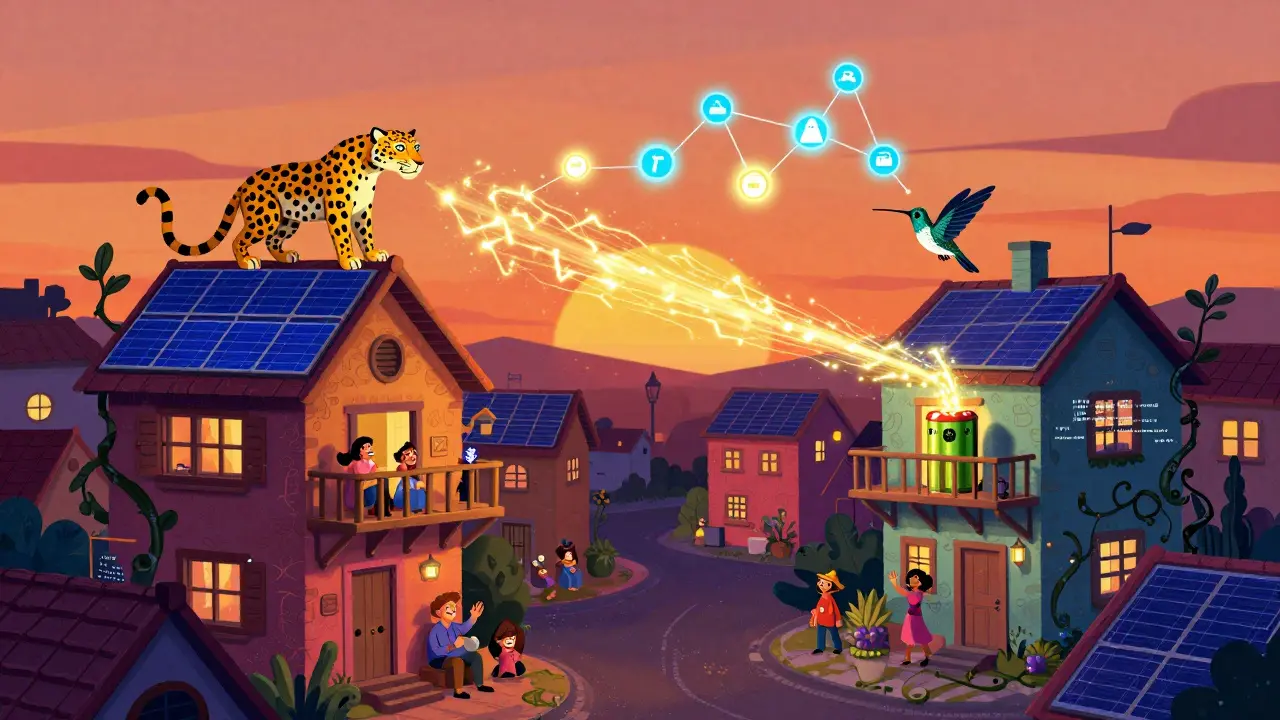

Imagine this: your neighbor’s solar panels are generating more electricity than they need. Instead of that extra power going unused or being sold back to the utility at a low rate, it’s sold directly to you-right now, at a fair price-through a digital system that doesn’t need a middleman. This isn’t science fiction. It’s happening right now in neighborhoods across the U.S., Europe, and Australia, powered by blockchain for peer-to-peer energy trading.
How P2P Energy Trading Works
Traditional electricity grids are one-way systems. Power plants generate electricity, send it through high-voltage lines, and utilities sell it to homes. But with rooftop solar, wind turbines, and home batteries, more people are becoming both producers and consumers-called prosumers. The problem? Utilities usually pay prosumers very little for excess power, and consumers pay full price even when clean energy is right next door.
Blockchain changes that. It creates a digital ledger where every energy transaction is recorded permanently and transparently. When your neighbor produces 5 kWh of surplus solar power at 3 p.m., a smart meter sends that data to a blockchain network. A smart contract automatically checks who nearby is using power right now, what they’re willing to pay, and matches the two. The energy flows through the local grid (yes, the same wires you already have), and payment is made instantly in crypto or fiat currency-no invoices, no delays.
This isn’t just theory. The Brooklyn Microgrid, launched in 2016, was the first real-world test. Over 500 households now trade solar energy directly using Ethereum-based smart contracts. Participants report saving 12-18% on their monthly bills. In Fremantle, Australia, Power Ledger’s system helped solar owners earn up to AUD$350 a month from surplus energy.
Why Blockchain? Why Not Just Use an App?
You might wonder: why not just use a simple app to track who’s selling power? The answer is trust. Without blockchain, how do you know the person selling you energy actually produced it? How do you know they didn’t double-sell it? How do you know the system won’t change the price after the deal is made?
Blockchain solves this. It’s not just a database-it’s a tamper-proof record. Every transaction is verified by multiple computers across the network. Once recorded, it can’t be erased or altered. Smart contracts automate the rules: if solar output exceeds 4 kWh and demand is above 1.5 kWh, then execute a trade at $0.12/kWh. No human intervention. No billing disputes. No waiting 30 days for a utility check.
And unlike apps that rely on a single company’s servers, blockchain is decentralized. If one node goes down, the system keeps running. That’s why these systems can keep lights on during blackouts-because they don’t depend on a central utility grid.
The Tech Behind It
Here’s what’s actually needed to make this work:
- Smart meters: These aren’t your grandma’s analog meters. They’re digital, internet-connected devices that record energy use every 15-60 minutes. Standards like IEEE 2030.5 and OpenADR 2.0 ensure they can talk to blockchain platforms.
- Blockchain platform: Most systems use Ethereum (after its 2022 shift to proof-of-stake), Hyperledger Fabric, or Corda. Ethereum’s energy use dropped 99.95% after ditching proof-of-work, making it viable for energy trading.
- Smart contracts: These are self-executing code. They don’t need lawyers or accountants. They just run when conditions are met-like “if solar production > 3 kWh and demand > 2 kWh, transfer 1 kWh at $0.10.”
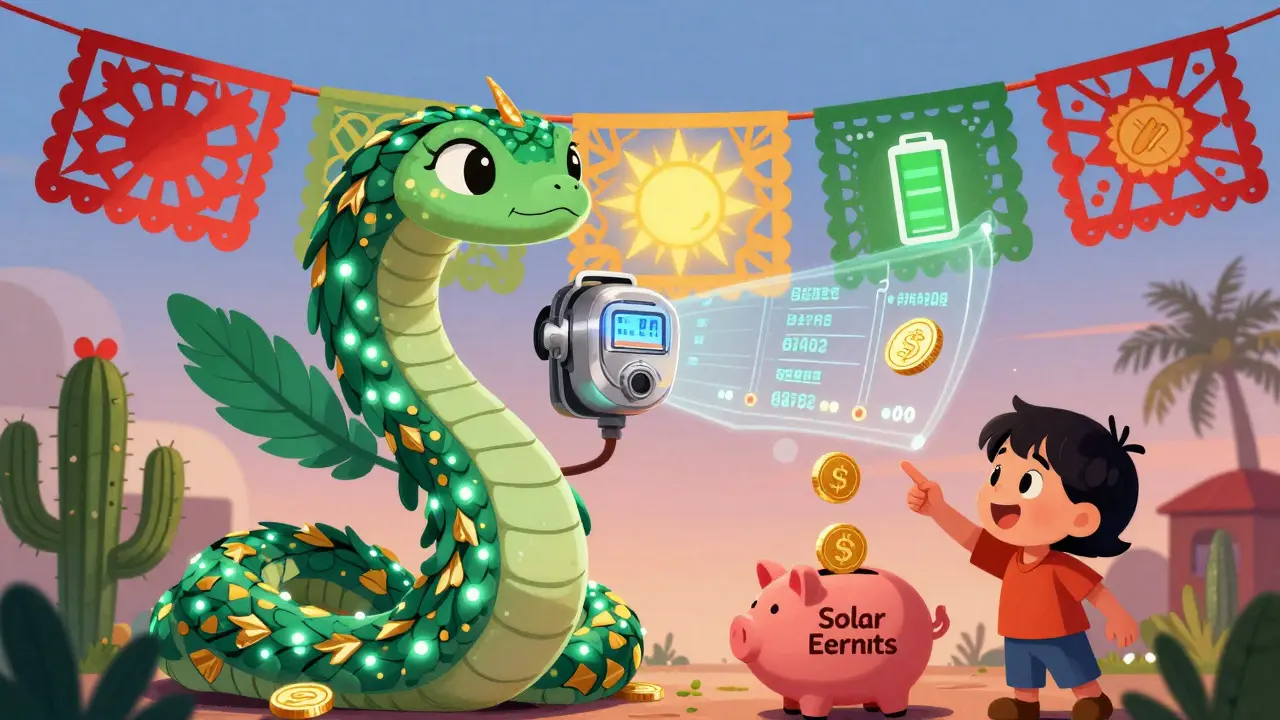
- User apps: Most participants use a mobile app or web dashboard to see real-time energy prices, track their surplus, and approve trades.
- Payment system: Transactions can be settled in cryptocurrency (like ETH or USDC) or in local currency via integrated payment gateways.
According to Nature.com’s April 2024 analysis, these systems cut distribution losses by about 6.2% on average. Why? Because energy doesn’t have to travel 50 miles from a power plant. It moves 50 feet-from roof to basement.
Real Benefits: Savings, Resilience, and Renewables
Here’s what this system actually delivers:
- Lower bills: Prosumers earn more for their surplus. Consumers pay less than utility rates. In Denmark’s Sonderborg community, P2P trading cut grid dependency by 37% during winter.
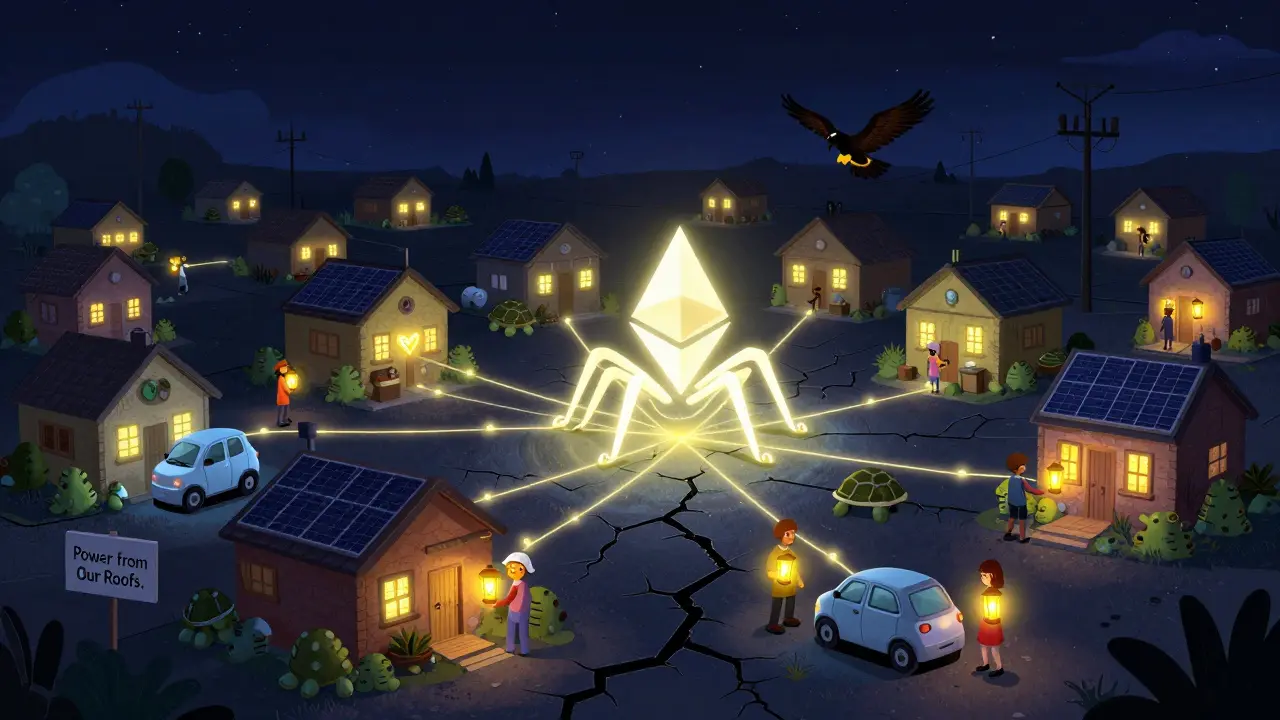
- Grid resilience: When storms knock out the main grid, local P2P networks can keep running. The Brooklyn Microgrid kept power flowing during a 2021 blackout that left nearby neighborhoods dark.
- More renewables: When people earn real money from solar, they invest in bigger panels or batteries. IRENA estimates P2P trading could boost renewable deployment by 15-25% in communities with over 15% solar penetration.
- Lower costs: IRENA found blockchain reduces transaction costs by 30-45% compared to utility-mediated systems. No billing departments. No meter readers. No delayed payments.
Where It’s Working-and Where It’s Stuck
Not every place is ready for this. Here’s what’s holding it back:
- Regulation: In many U.S. states, it’s illegal for individuals to sell electricity to neighbors. Power Ledger’s trial in some U.S. regions was shut down in 2022 because of this. The EU’s Clean Energy Package (2021) and FERC Order 2222 (2020) are helping, but state laws still lag.
- Scalability: Current systems handle 50-500 households per neighborhood. Scaling to a whole city? That’s still a challenge. Ethereum handles 15-30 transactions per second. Visa handles 24,000. It’s improving, but not there yet.
- Technical complexity: Setting up a smart meter, connecting to a blockchain app, understanding price signals-this isn’t easy for everyone. Early users reported onboarding took 3-5 hours. Some platforms still have clunky interfaces.
- Grid stability: National Grid warned in 2023 that uncoordinated P2P trading could overload local transformers during peak demand. That’s why new standards like IEEE 2030.5 Annex D are being rolled out-to make sure these systems talk to grid operators.
Success stories? Look at Germany. Shell’s acquisition of sonnen in 2019 led to P2P trials connecting 10,000 home batteries. In the Netherlands, a community project in Utrecht lets residents trade energy from solar panels and electric vehicles. BMW and Siemens launched a trial in Munich in April 2024, using 200 EVs as mobile energy storage units that can feed power back into the grid.
What’s Next?
The market is exploding. The global P2P energy trading market was $1.27 billion in 2023. By 2028, it’s projected to hit $8.43 billion. Why? Because the pieces are falling into place:
- Ethereum’s proof-of-stake cut energy use by 99.95%-no more “blockchain is too wasteful” arguments.
- The EU’s Blockchain Services Infrastructure now certifies energy trading as a valid use case, allowing cross-border trades between countries.
- Vehicle-to-grid (V2G) tech lets EVs act like giant batteries. At night, your Tesla charges. During the day, it sells power back to your neighbor.
- Energy cooperatives are forming. In Boulder, Colorado, a group of homeowners just launched a pilot using a local blockchain platform-no utility involved.
By 2030, IRENA predicts P2P trading could handle 10-15% of all distributed renewable energy transactions in regions with supportive laws. That means more solar panels, fewer outages, and lower bills-not because of a big corporation, but because neighbors decided to trade power directly.
Can You Join?
If you have solar panels or a home battery, you’re already part of the solution. The next step? Check if your utility or local government supports peer-to-peer energy trading. Some states (like California and New York) are piloting programs. Look for platforms like LO3 Energy, Power Ledger, or Electron. Join a community energy co-op. Install a smart meter if you haven’t already.
This isn’t about replacing the grid. It’s about making it smarter, fairer, and more resilient-one neighborhood at a time.
Can I sell solar energy to my neighbor without blockchain?
Technically, yes-but only if your state allows direct sales between individuals. Most U.S. states still require all energy sales to go through the utility, which then pays you a low rate. Blockchain makes this process automatic, secure, and transparent. Without it, you’d need contracts, manual billing, and trust in a third party-making it impractical for most people.
Is blockchain energy trading safe from hacking?
Yes, more so than traditional systems. Blockchain uses cryptographic keys to verify ownership and transactions. Each trade is signed with a private key only the owner has. Even if someone hacked a single node, they couldn’t alter the ledger because other nodes would reject the change. Smart contracts are also audited publicly before deployment. That’s why the Brooklyn Microgrid has operated for over 8 years with zero successful attacks.
Do I need cryptocurrency to participate?
Not necessarily. Many platforms now let you receive payments in U.S. dollars or euros via integrated payment processors like Stripe or PayPal. Cryptocurrency is often used behind the scenes for fast, low-cost settlement between nodes, but most users just see their bank account credited. You don’t need a crypto wallet unless you want to hold digital tokens.
What if my neighbor doesn’t have solar panels?
You can still sell energy to them. P2P systems match supply with demand, regardless of source. If you have excess solar, and your neighbor is using power at the same time, the system will route your energy to them-even if they’re not producing anything. They just pay for what they use. Some systems even let you buy renewable energy from others, even if you don’t have panels yourself.
How much does it cost to set up a P2P system at home?
The biggest cost is the smart meter, which ranges from $150-$400 if your utility doesn’t provide one. Most platforms offer free apps and smart contract setup. Some charge a small transaction fee (1-3%) or monthly subscription ($5-$15). If you already have solar panels and internet, you can start trading for under $500 total. Compare that to the $220-$350/month some homeowners earn from surplus sales.
Will this replace my utility bill?
Not entirely. You’ll still pay for grid access, maintenance, and backup power. But you’ll pay less. In successful P2P communities, users report 20-30% lower overall energy costs because they’re buying local power at lower prices and earning more for what they produce. The utility becomes more of a grid operator than a monopoly seller.
Is blockchain energy trading legal in the U.S.?
It depends on the state. In California, New York, and Illinois, pilot programs are active. In many others, state laws still prohibit direct sales between individuals. FERC Order 2222 opened the door for aggregated systems (like neighborhood cooperatives), but individual sales are still blocked in most places. Check with your state’s public utilities commission or look for local energy co-ops that are already running pilots.

20 Comments
this is wild i had no idea neighbors could just sell power like this 😱
I'm so here for this!! 🌞⚡ My sister in California just joined a P2P grid and her bill dropped by 30% last month. She’s literally making money off her solar panels while helping the whole block. Why isn’t this everywhere??
This is the future we need. No more middlemen taking 40% of your clean energy profits. When your neighbor’s panels are humming at noon and your AC is running, why should Big Utility get rich off that? It’s not magic-it’s just fair. Let’s stop pretending grids are neutral infrastructure. They’re monopolies dressed in blue uniforms.
blockchain? really? you think a ledger can stop a utility from shutting this down? they own the wires. they own the laws. they own the politicians. this is just a shiny toy for rich people with solar panels. meanwhile, my apartment building has zero access and i’m stuck paying $300/month for coal power. this isn’t revolution. it’s luxury.
I mean, I love the idea, but have you seen the interface on some of these apps? I spent 4 hours trying to approve a single trade last week. The screen froze three times. The app asked me to confirm my private key like it was a crypto wallet. I’m 58 and I just want to turn my surplus into cash, not become a blockchain engineer. And don’t get me started on the ‘transaction fees’-they’re just the utility’s new sneaky subscription model. I’m not convinced this is easier than just getting a check.
I live in a neighborhood where 12 homes have solar. We started a little informal group before any blockchain thing. Just a WhatsApp chat. We’d text: 'I’ve got 8 kWh surplus, anyone need it?' Someone’d say 'yes, I’m running the dryer.' We’d just note it down. No app. No crypto. Just trust. Then we tried Power Ledger. It felt… cold. Like the tech was solving a problem we already solved with human connection. Maybe the blockchain isn’t the hero here-maybe we are.
this is how they control us. blockchain + smart meters = surveillance state with extra steps. they’re tracking your energy use down to the watt. next thing you know, they’ll cut your power if you use too much AC. or charge you extra if you’re home during peak hours. they’re not giving you freedom. they’re building a prison with a solar panel on the roof.
America’s going to let some blockchain app decide who gets power? while europe’s already doing it? we’re falling behind. this is why we need to stop letting tech companies run our infrastructure. this should be public. not crypto. not apps. not private startups. it’s energy. it’s a human right.
I’ve been running a P2P setup for 18 months now. Here’s what nobody tells you: the real win isn’t the money-it’s the grid resilience. Last winter, a storm took out the main feed for 3 days. My neighborhood? Lights stayed on. We had 4 homes with batteries, 7 with solar, and a smart contract system that rerouted power automatically. I didn’t have to lift a finger. The system saw my neighbor’s fridge was running and routed 1.2 kWh from my surplus. It was silent. It was perfect. This isn’t about crypto. It’s about community survival. And it works.
The concept is theoretically intriguing. However, the operational scalability remains questionable. The computational overhead of blockchain verification, coupled with the absence of standardized regulatory frameworks, renders this model economically non-viable for mass adoption. Furthermore, the reliance upon smart meter interoperability introduces significant systemic fragility.
I read the whole thing. Very long. Very detailed. Very American. But here’s the thing: in India, we have 300 million people without reliable electricity. You’re talking about selling extra solar power to your neighbor who already has solar. Meanwhile, my cousin in Bihar is using kerosene lamps because the grid’s been down for 14 hours straight. This feels like a rich person’s hobby. Not a solution.
so you’re telling me a Tesla can sell power to my neighbor while I’m at work? and i don’t even need to think about it? cool. now tell me why i can’t do that with my gas car. oh right. because the whole system is designed to keep us dependent. this is the only thing that actually makes sense. finally.
This is amazing. I wish we had this in India. My rooftop solar is just sitting there. No one buys it. No one cares. Just feed it back to the grid for pennies. Why can’t we do this here? Someone needs to start a pilot
I’m from Kenya. We’ve been doing peer-to-peer energy sharing for years-just without blockchain. Solar lanterns, shared batteries, community charging stations. The tech is new. The behavior? Human. This post feels like America just discovered community. We’ve been doing it since the 80s. Maybe we should be teaching you, not the other way around.
I joined a co-op last year. We have 18 homes. We use Ethereum but pay out in cash. I got $210 last month. My neighbor paid $15 less on her bill. We started a little potluck after the first payout. We’re not just trading energy. We’re rebuilding neighborhood ties. It’s weird. It’s beautiful. It’s working.
everyone says this is the future. but what if the future is just another way for corporations to monetize our homes? what if the real winners are the companies selling the smart meters and the blockchain platforms? i’m not against it. i’m just asking: who really benefits?
I’m a single mom. I have solar panels but no battery. I can’t trade. I just get paid 3 cents/kWh by the utility. My kid’s school just got a grant for a solar-powered playground. I cried. I want that for my home. If this system works, I want in. But I need help. Not tech jargon. Not crypto wallets. Just someone to show me how.
The very notion of decentralized energy trading presupposes a fundamental misunderstanding of human nature. To believe that self-interest, unmediated by institutional authority, can yield equitable outcomes is not merely naive-it is ontologically flawed. Power is not a commodity to be bartered; it is a social contract. To commodify it is to dissolve the very fabric of collective responsibility.
In India, we have solar microgrids in villages. No blockchain. No apps. Just wires, batteries, and a guy with a clipboard. It works. Maybe the real innovation isn’t the tech-it’s the mindset. Stop overcomplicating. Just connect people.
this is the most beautiful thing i’ve seen all year 🙏✨ thank you for sharing this. i hope every neighborhood does this. we need more of this in the world. not less.