What is MBP Coin (MBP)? Price, Purpose, and Token Explained (2026)
Explore MBP Coin (MBP): An overview of its disputed AI vs. energy mission, volatile pricing across exchanges, and tokenomics as of 2026.
When you make a crypto investment, the act of buying or holding digital assets with the expectation of future value. Also known as digital asset investing, it’s not just about jumping on the next meme coin—it’s about understanding what gives a token real use, who’s behind it, and whether it’s built to last. Too many people lose money because they chase hype, not fundamentals. The market is full of tokens with zero trading volume, fake teams, and airdrops that never happen. Real crypto investment means looking past the price chart and asking: Is this project solving a problem? Is it transparent? Can I control my own keys?
That’s why non-custodial wallet, a wallet where you hold your own private keys without relying on a third party. Also known as self-custody, it’s not optional—it’s the foundation of safe crypto investment. If you can’t access your coins without an exchange, you don’t own them. And exchanges can freeze accounts, get hacked, or disappear—especially in countries like Myanmar or Russia, where crypto rules are harsh and unpredictable. That’s why the best crypto investors use hardware wallets like Ledger or Trezor, keep backups on metal, and never trust a platform that asks for your seed phrase.
Then there’s the decentralized exchange, a platform where you trade crypto directly with others without a middleman. Also known as DEX, it’s where real DeFi happens—whether you’re swapping tokens on KyberSwap, trading derivatives on Paradex, or adding liquidity to SushiSwap. But not all DEXs are equal. Some have zero users, no public data, or fake volume. A good DEX shows real trading activity, clear fee structures, and open-source code. If you can’t find who built it or how it works, walk away.
And don’t get fooled by crypto airdrop, a free distribution of tokens meant to reward early users or grow a community. Also known as token giveaway, it’s one of the most abused tactics in crypto. Most "airdrops" like CryptoTycoon, LACE, or YAE don’t exist. They’re traps to steal your private keys or get you to pay "gas fees" for nothing. Real airdrops come from projects with active development, public roadmaps, and verified social channels—like the ATA airdrop from Automata Network, which rewards actual network usage, not just signing up.
What you’ll find here isn’t a list of coins to buy. It’s a collection of honest breakdowns—on exchanges that work, tokens that are dead, airdrops that are fake, and wallets that keep you safe. You’ll see why Husky Avax and EverETH Reflect are ghost projects. You’ll learn how North Korea steals billions in crypto, how Switzerland banks securely hold digital assets, and why a $0.0001 token with no team is never a good investment. This isn’t about getting rich quick. It’s about not losing everything.

Explore MBP Coin (MBP): An overview of its disputed AI vs. energy mission, volatile pricing across exchanges, and tokenomics as of 2026.
Cryptocurrency offers fast, low-cost global payments and investment potential, but comes with extreme volatility, security risks, and regulatory uncertainty. Learn what works, what doesn't, and who should avoid it in 2025.
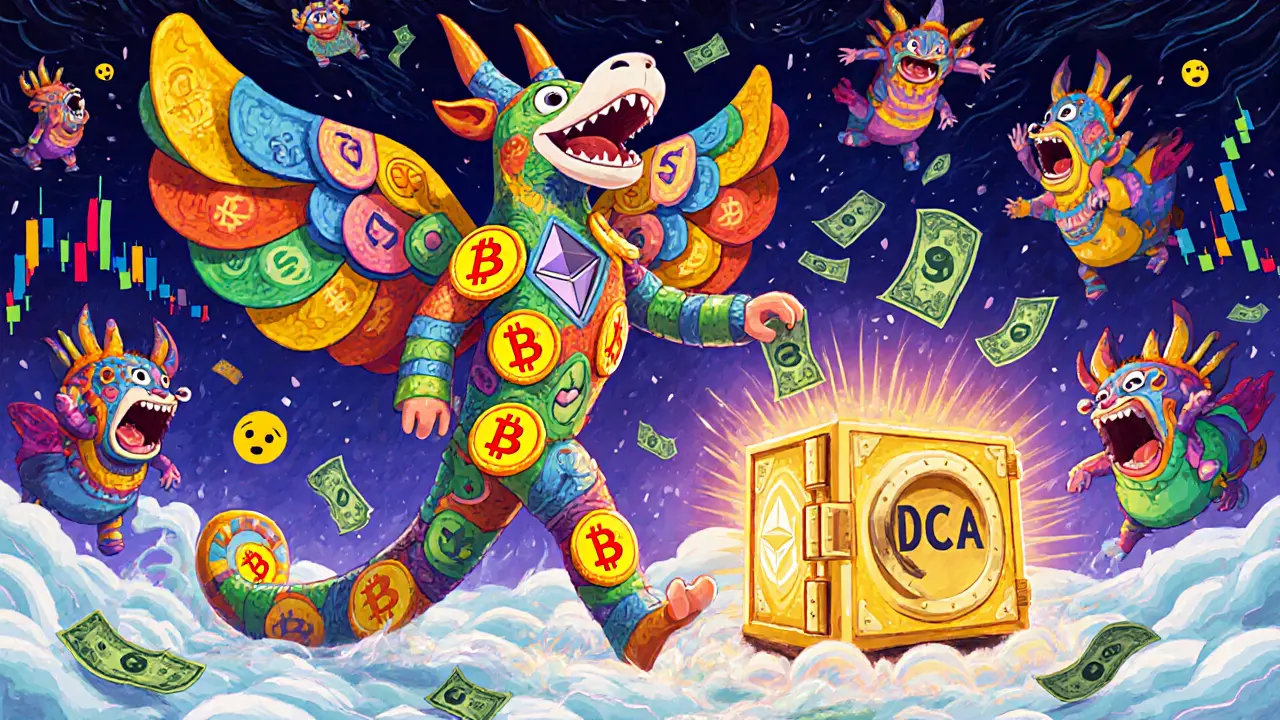
Dollar-cost averaging while HODLing is a simple, emotional-free way to build crypto wealth over time. Buy a fixed amount regularly, hold long-term, and let compounding work - no market timing needed.