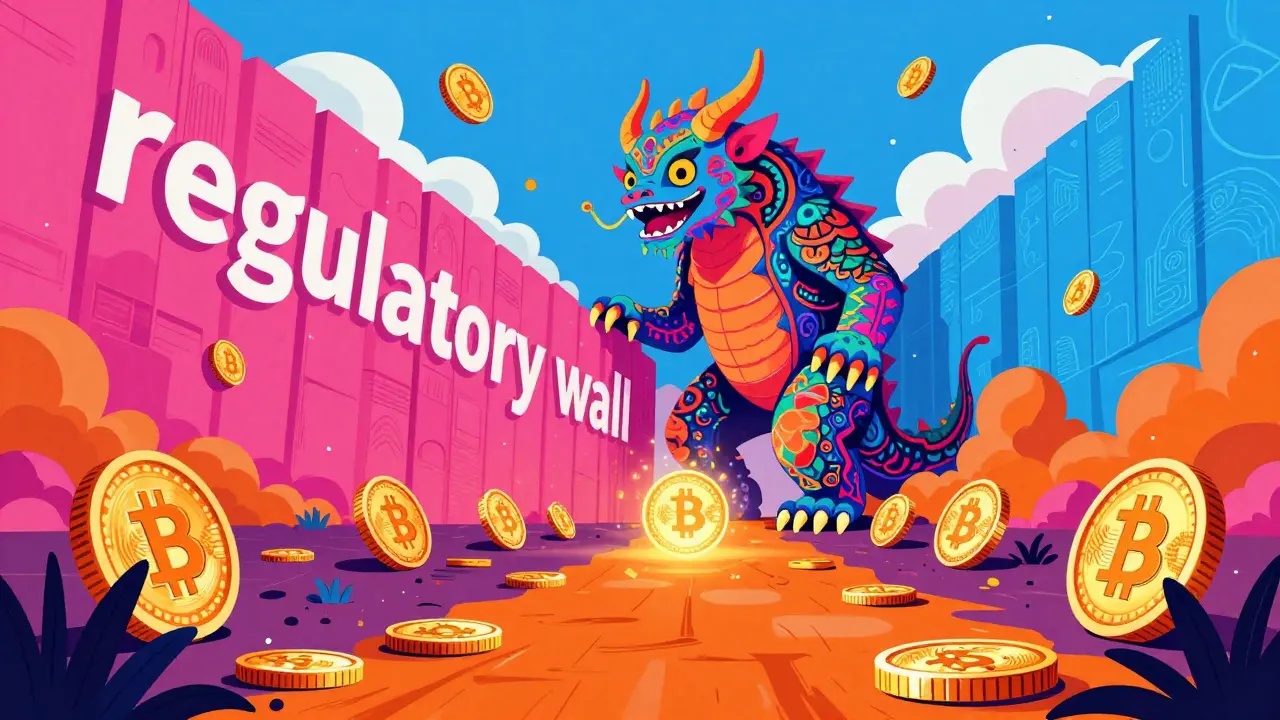


If you're thinking about trading or mining digital assets in Bangladesh, you're walking into one of the toughest regulatory minefields in Asia. While some countries are rolling out red carpets for blockchain startups, Bangladesh has spent the last decade building a wall. The core issue isn't just a dislike for Bitcoin; it's a deep-seated fear of financial instability and the ease with which anonymous tokens can be used to hide the trail of illicit funds.
| Activity | Legal Status | Primary Risk/Law |
|---|---|---|
| Trading/Usage | Strongly Discouraged / Implicitly Banned | Money Laundering Act 2012 |
| Mining | Explicitly Illegal | ICT Act & AML Laws |
| Ownership | Grey Area (Unclear) | Regulatory Ambiguity |
| Blockchain Dev | Encouraged (Govt Sector) | National Blockchain Strategy |
The Regulatory Hammer: How Enforcement Actually Works
Bangladesh doesn't have a single "Crypto Law" that you can look up in a handbook. Instead, the government uses a web of existing financial rules to squeeze out virtual assets. The Bangladesh Bank is the central banking authority and the primary engine behind crypto enforcement. Since 2014, they've issued a steady stream of warnings, effectively telling the public that if you touch cryptocurrency, you're playing with fire.
But how do they actually arrest someone if there's no specific "crypto law"? They use the Foreign Exchange Regulations Act of 1947 and the Money Laundering Prevention Act of 2012. Essentially, they treat crypto transactions as unauthorized foreign exchange movements or attempts to hide money. If you're caught moving large sums via a digital wallet, authorities don't charge you with "trading Bitcoin"-they charge you with violating national financial security laws.
The Information and Communication Technology (ICT) Act adds another layer of danger, especially for those running hardware. While trading might be a grey area, anti-money laundering efforts have made cryptocurrency mining a hard "no." In 2024, several people in Dhaka were arrested for running clandestine mining rigs. The state views these operations not as tech businesses, but as illegal infrastructure used to facilitate financial crimes.
The FATF Dilemma and International Pressure
Bangladesh is currently in a tight spot with global standards. The Financial Action Task Force (or FATF) is the global money laundering and terrorist financing watchdog. Specifically, FATF Recommendation 15 demands that countries regulate virtual assets to prevent them from being used for crime.
Here is the paradox: Bangladesh is so afraid of money laundering that it has banned the assets, but by banning them instead of regulating them, it fails to meet FATF's a request for a formal regulatory framework. This creates a gap. Because there is no official way to register a crypto exchange, the trade simply moves underground. This "shadow market" is exactly what the Financial Intelligence Unit (FIU) struggles to monitor, as users pivot to anonymous tools like TRC20 wallets to bypass the banking system entirely.
Blockchain vs. Bitcoin: The Government's Split Personality
If you look at the 2020 National Blockchain Strategy, you'll see a very different story. The government, guided by the Bangladesh Computer Council, is actually quite keen on blockchain technology. They want to use it for land records, digital identity systems, and e-governance to cut through the country's notorious bureaucracy.
This creates a bizarre contradiction: the state loves the ledger (blockchain) but hates the coin (cryptocurrency). They want the efficiency of a decentralized database to manage government assets, but they refuse to let the public use a decentralized currency to manage their own money. For a developer, this means you can likely build a blockchain app for a government ministry, but if that app involves a tradable token, you might find yourself facing a probe from the Criminal Investigation Department (CID).
Regional Contrast: Bangladesh vs. Pakistan
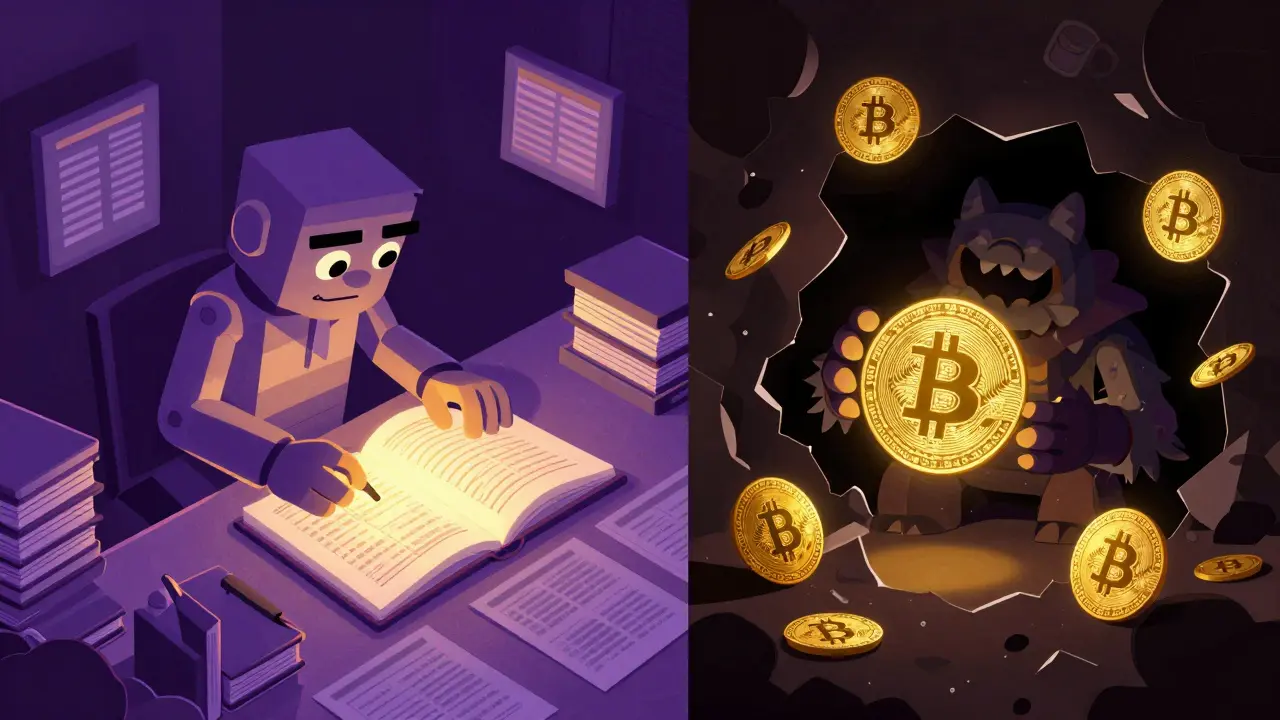
To understand how extreme Bangladesh's stance is, you only have to look next door. Pakistan has taken a complete 180-degree turn. By May 2025, Pakistan established the Pakistan Digital Assets Authority (PDAA) to officially regulate exchanges. They didn't stop there-they allocated 2,000 megawatts of power specifically for Bitcoin mining and even created a Bitcoin Strategic Reserve.
While Pakistan is trying to capture a piece of a market that reached an estimated $25 billion informally by 2023, Bangladesh is doubling down on restrictions. This divergence means that while the rest of South Asia moves toward a hybrid financial system, Bangladesh risks becoming a technological island, potentially pushing its most tech-savvy investors and entrepreneurs to migrate their capital to more friendly jurisdictions.
The Reality of the "Underground" Market
Despite the arrests and the warnings, people are still buying crypto. How? Through P2P (peer-to-peer) networks and informal money transfer systems. However, this creates a massive risk for the user. Without legal protection, investors are prime targets for scams. The MTFE scam is a perfect example; thousands of Bangladeshi investors poured money into what looked like a high-yield crypto project, only for the operators to vanish with the funds.
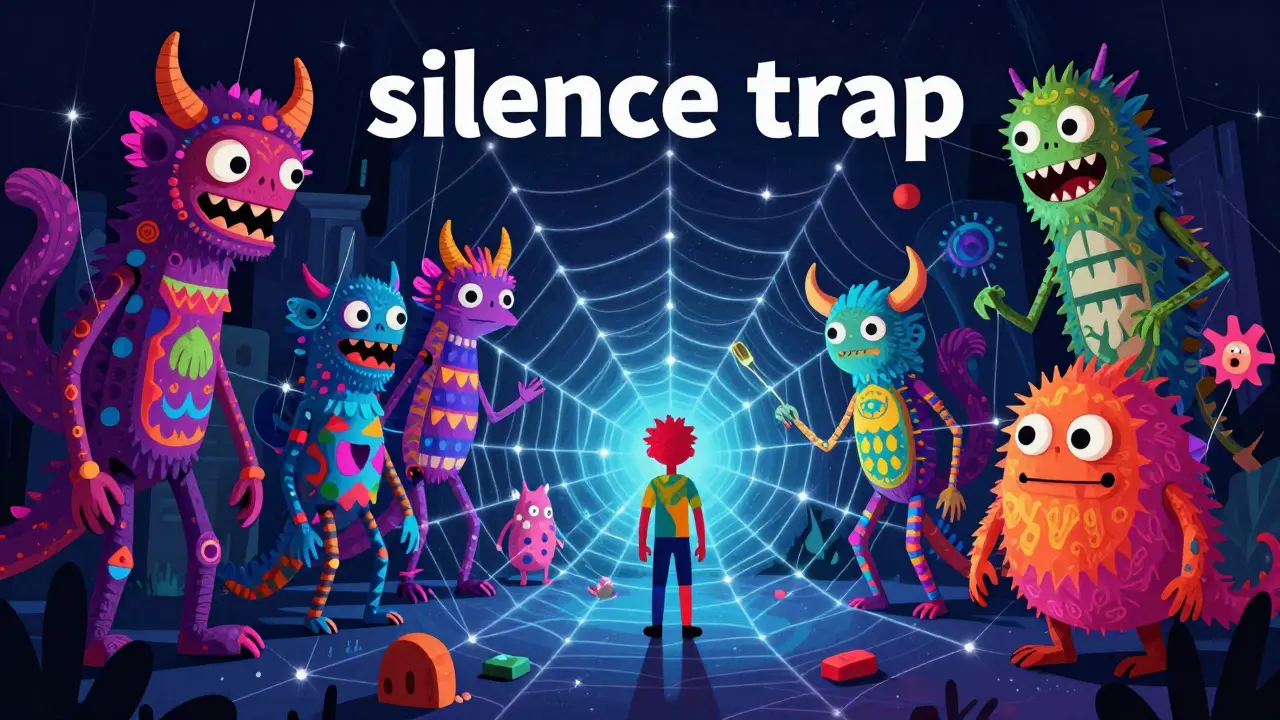
If you get scammed in a regulated market, you call the police. In Bangladesh, if you report a crypto scam, you're essentially admitting to the authorities that you were engaging in a prohibited financial activity. This "silence trap" is exactly why the underground market is so dangerous.
Taxation and the Legal Grey Zone
You might wonder how you're supposed to pay taxes on something that the central bank says isn't officially recognized. The National Board of Revenue (NBR) hasn't created a specific crypto tax bracket. Instead, they apply the general Income Tax Ordinance of 1984. If you make money from any source-including the sale of a digital asset-it's technically taxable income. The government is happy to take the tax money, even if they'll arrest you for the method used to earn it.
Is owning Bitcoin illegal in Bangladesh?
It's a grey area. The Bangladesh Bank states that cryptocurrency is not recognized as legal tender and warns against its use. While simple ownership hasn't always led to immediate arrest, using that ownership to trade, mine, or move money across borders often triggers violations of the Money Laundering Prevention Act or Foreign Exchange Regulations.
Can I be arrested for crypto mining?
Yes. Cryptocurrency mining is explicitly illegal. Authorities view mining rigs as tools for financial crimes and violations of the ICT Act. There have been documented arrests in Dhaka for operating clandestine mining setups.
What is the role of the CID in crypto enforcement?
The Criminal Investigation Department (CID) is tasked with investigating the movement of illicit funds. They focus specifically on cases where cryptocurrency is used as a vehicle for money laundering or terrorist financing, rather than just the act of possessing a digital wallet.
Why does Bangladesh ban crypto if it likes blockchain?
The government differentiates between the technology and the asset. They value blockchain for its ability to secure government data (land records, IDs), but they view the decentralized nature of cryptocurrencies as a threat to the central bank's control over the national currency and financial stability.
Does Bangladesh follow FATF rules for virtual assets?
Not fully. While they are strict on enforcement, they lack the formal regulatory framework (like licensing for exchanges) required by FATF Recommendation 15. This gap makes it harder for the state to actually trace illicit flows despite the bans.
What Now? Avoiding the Pitfalls
If you're a business owner or an investor, the best move is to stay clear of any activity that could be interpreted as "money laundering" or "unauthorized foreign exchange." Because the laws are implicit and based on interpretation, the risk is high. If you're a developer, focus on the blockchain-as-a-service (BaaS) side of things-enterprise solutions and government-linked projects are where the legal safety and the funding currently reside.
Keep a close eye on the Ministry of Finance. While the central bank has been the







13 Comments
It is pretty wild how they are okay with blockchain for land records but will throw you in jail for holding a few satoshis. That kind of contradiction usually leads to a huge brain drain where the best devs just move to Dubai or Singapore.
Oh sure, because banning a decentralized protocol always works out so great for the people in charge 🙄
I think it is fair to say that the central bank is just trying to protect the Taka from volatility, though the methods seem a bit heavy-handed.
The reliance on the 1947 Foreign Exchange Regulations Act is a classic example of using antiquated legislation to cover modern technological gaps. When a government lacks a specific statutory framework for digital assets, they inevitably pivot to broad money laundering statutes to maintain control. This creates an environment of extreme legal uncertainty, which is precisely why institutional capital avoids these markets entirely.
just keep learning the tech guys. the world is moving toward decentralization and eventually the regs will catch up to the reality of the street
Typical of these emerging markets to think they can just ban their way into stability while completely ignoring the fact that P2P volume probably triples every time a new warning is issued by the central bank, which honestly just makes the whole thing a giant joke for anyone who actually knows how a ledger works 🙄💅
It feels like such a tragedy when a nation's fear of the unknown stifles the creative spirit of its youth, especially when the very essence of blockchain is about transparency and trust 🌟. We should really be looking at how we can bridge this gap through education and empathy, perhaps by showing that a regulated path is far more sustainable than a hidden, shadow economy that only benefits the scammers 🌈✨. If we can shift the narrative from 'fear' to 'growth', the whole region could flourish in ways we can't even imagine yet!
Imagine thinking a ban stops crypto. Cute.
The liquidity-provisioning in those shadow markets is just wild!!! I bet the slippage on those P2P trades is absolutely astronomical, but people still dive in for the FOMO-driven alpha!!! It's such a high-risk environment for retail users without any KYC-compliant on-ramps!!!
Honestly, if you're breaking the law to trade some magic internet money, you deserve the risk. It's pathetic that people complain about getting scammed when they were doing something illegal in the first place. Stop playing the victim when you're basically funding a shadow economy.
So if I just hold it and don't trade it, I might be okay?
Be very careful there!!! The grey area is a dangerous place to stay!!! Always prioritize your safety and legal standing!!!
Who's using TRC20 anyway? 😂 Just send it all to a cold wallet and pray the government doesn't find your PC 🚀💻