


Imagine buying a cup of coffee with Bitcoin in Kathmandu. You might think it’s simple, but in Nepal, that transaction could land you in jail. Since the Nepal Rastra Bank (NRB) declared all cryptocurrency activities illegal in 2017, the country has maintained one of Asia’s strictest bans on digital assets. Yet, if you look closely at the streets of Lalitpur or the chat groups on Telegram, you’ll find a bustling, hidden economy where Bitcoin and other cryptocurrencies change hands daily.
This isn’t just about stubborn traders ignoring the law. It’s a complex cat-and-mouse game between tech-savvy citizens trying to preserve wealth and a government desperate to control its currency. As of late 2025, the tension hasn’t cooled. In fact, enforcement has gotten sharper. So, how are people still trading? What are the real risks? And why does this shadow market persist despite heavy fines and prison sentences?
The Iron-Clad Ban: Why Nepal Says No
To understand the underground scene, you first need to grasp the official stance. The NRB didn’t just discourage crypto; they banned it outright. Under the Foreign Exchange Regulation Act and recent cybercrime laws, mining, trading, holding, or using crypto as payment is prohibited. The logic? Protecting the stability of the Nepalese Rupee and preventing capital flight.
Authorities view digital currencies as a threat to monetary sovereignty. If everyone starts paying for goods in Bitcoin, the central bank loses its grip on money supply. This fear led to aggressive measures, including blocking major exchanges like Binance and Coinbase via the Nepal Telecommunication Authority (NTA). But banning a website doesn’t ban the technology behind it. Enter the underground.
How Underground Trading Actually Works
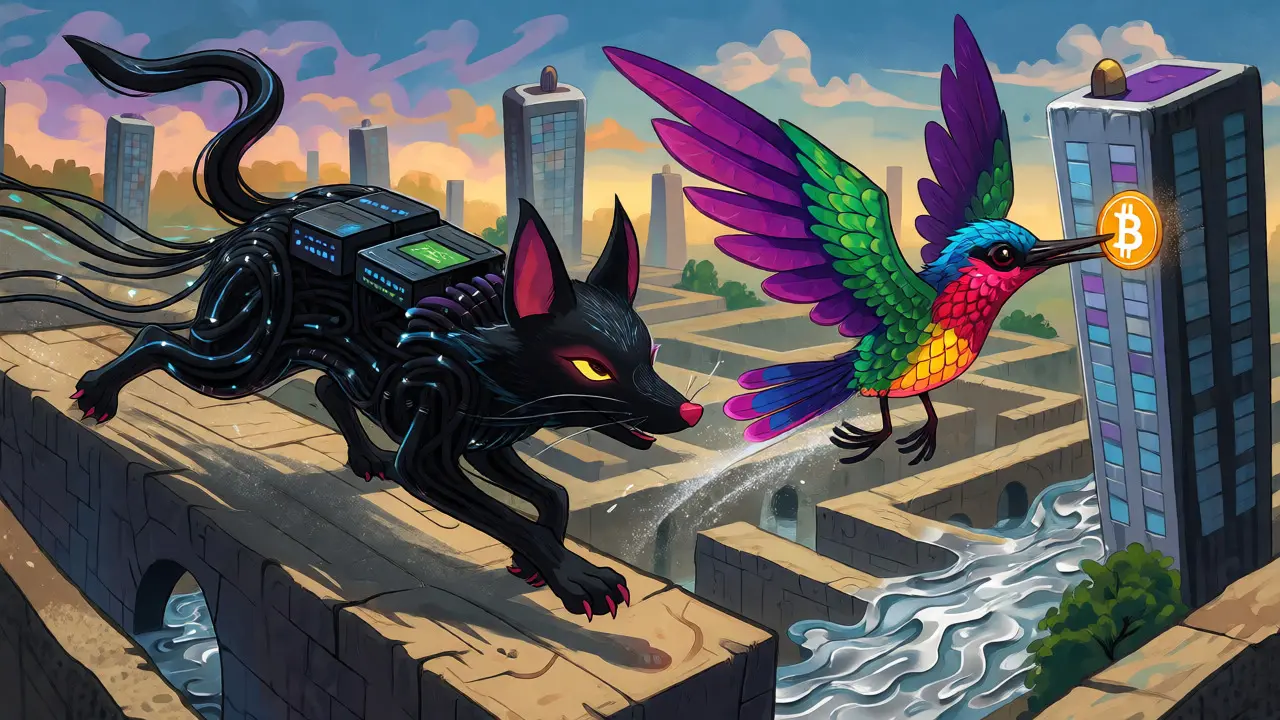
You won’t find open crypto shops in Thamel. Instead, trading happens in the shadows, relying on three main pillars: anonymity tools, peer-to-peer networks, and local payment rails.
1. The VPN Workaround Since direct access to global exchanges is blocked, almost every serious trader uses a Virtual Private Network (VPN). This masks their IP address, making it look like they’re browsing from Singapore or India rather than Kathmandu. Without a reliable VPN, accessing platforms like Binance P2P is nearly impossible.
2. P2P Platforms and Local Settlements The heart of the underground market is Peer-to-Peer (P2P) trading. Traders don’t send money directly to international banks, which would raise red flags. Instead, they use local digital wallets like eSewa or Khalti. Here’s a typical flow: A buyer wants to buy Bitcoin. They find a seller on Binance P2P. The buyer transfers NPR from their eSewa account to the seller’s eSewa account. Once the seller confirms receipt, they release the crypto. To the banking system, it looks like two locals sending money to each other for groceries or rent. It’s clever, but not invisible.
3. Encrypted Communication Coordination happens on encrypted apps like Telegram and WhatsApp. These channels allow traders to share prices, verify trustworthiness, and arrange meetups without leaving a public paper trail. However, authorities have started monitoring these platforms more closely, knowing that patterns emerge over time.
The Human Cost: Risks and Recent Arrests
Is it worth the risk? For many, yes. But the consequences can be severe. Violations fall under Nepal’s Criminal Code 2074, carrying fines up to Rs 1 million and imprisonment of up to five years for unauthorized use of virtual currency.
Recent cases highlight the danger. In July 2025, the Central Investigation Bureau (CIB) of Nepal Police arrested two Indian nationals, Rupesh Kumar Gupta and Bipin Kumar, in Lalitpur. They were running a grocery store called Rajatirtha Traders, but behind the counter, they facilitated illegal crypto transactions worth over Rs 1.5 billion. Police seized cash, CCTV footage, and digital devices. This wasn’t a small-time hobbyist; it was an organized operation caught by surveillance.
Individual traders face similar scrutiny. Banks now flag unusual transaction patterns. If your eSewa account suddenly shows ten small transfers a day from different users, you might get a call from compliance officers asking for explanations. Ignoring them can lead to account freezes or police inquiries.
| Feature | Official Stance (NRB/Govt) | Underground Reality |
|---|---|---|
| Legality | Prohibited (Mining, Trading, Holding) | Active but Illegal |
| Access Method | Blocked Websites (Binance, etc.) | VPNs, Mobile Apps |
| Payment Channel | Bank Transfers (Monitored) | eSewa, Khalti, Cash |
| Risk Level | Low (for non-users) | High (Arrest, Fines, Jail) |
| Primary Users | General Public (Avoidance) | Investors, Remittance Seekers |
Why People Still Trade: The Drivers
If it’s so risky, why bother? Two main reasons drive demand: investment potential and remittances.
Nepali investors watch global markets closely. When Bitcoin surges, the temptation to participate becomes hard to ignore. With limited stock market options and inflation eroding savings, crypto offers a high-risk, high-reward alternative. Many see it as a hedge against the depreciating Rupee.
Then there’s remittances. Nepal relies heavily on foreign income. Traditional money transfer operators charge fees and take days. Crypto allows workers abroad to send value instantly. While technically illegal, some families quietly accept stablecoins or Bitcoin as a faster, cheaper way to receive funds, bypassing formal banking channels entirely.

Enforcement Challenges: The Cat and Mouse Game
The government knows it can’t block every smartphone. Enforcement focuses on large-scale operations and visible promoters. Small-time traders flying under the radar often slip through. However, the net is tightening. Authorities use data analytics to spot anomalies in digital wallet transactions. They also monitor social media influencers who promote crypto, issuing warnings or fines to curb advertising.
Collaboration between the NRB, police, and anti-money laundering units makes detection harder for traders. It’s no longer just about catching someone on a website; it’s about tracing the flow of rupees through local fintech apps.
Future Outlook: Will the Ban Lift?
As of October 2026, there’s no sign of relaxation. Neighboring countries like India are exploring regulated frameworks, putting pressure on Nepal to modernize. Yet, political will remains firmly against legalization. Experts suggest that unless regional neighbors adopt unified policies, Nepal might stick to its prohibitionist approach to protect its fragile economy.
For now, the underground market thrives in the gray zone. It’s resilient, adaptive, and deeply embedded in the financial habits of tech-savvy Nepalis. If you’re considering joining this world, proceed with extreme caution. The thrill of digital freedom comes with the very real possibility of legal trouble.
Is it illegal to hold Bitcoin in Nepal?
Yes, the Nepal Rastra Bank prohibits the possession, trading, and mining of cryptocurrencies. Holding Bitcoin can lead to fines and imprisonment under current regulations.
How do Nepalis trade crypto if websites are blocked?
Traders primarily use Virtual Private Networks (VPNs) to access international exchanges. They then settle payments locally using digital wallets like eSewa or Khalti to avoid direct bank transfers.
What are the penalties for crypto trading in Nepal?
Violators can face fines up to Rs 1 million and imprisonment for up to five years. Charges are typically filed under the Foreign Exchange Regulation Act and cybercrime laws.
Can I pay for goods with crypto in Nepal?
No, accepting cryptocurrency as a mode of payment is illegal. Businesses cannot legally price goods or services in Bitcoin or other digital assets.
Are P2P trades safe in Nepal?
While popular, P2P trades carry significant risk. Besides legal penalties, traders face fraud risks from counterparties since there is no official regulatory protection or dispute resolution mechanism.






20 Comments
Another day, another country pretending they can ban mathematics with a decree. 🙄 It is absolutely laughable that the NRB thinks blocking Binance stops Bitcoin. They are fighting a war against code using fax machines and fear. The Nepalese people aren't stupid; they see their currency melting away while the government plays house. This isn't 'protecting sovereignty,' it's protecting incompetence. If you want to stop capital flight, fix your economy instead of jailing grandmas for holding digital gold. The arbitrage opportunities here must be insane for anyone brave enough to run a P2P node in Kathmandu. Honestly, the risk-to-reward ratio for these traders is better than most legit startups. Just don't get caught by the CIB, or say goodbye to your freedom and your savings. The state always loses when it tries to outsmart the market. 😒
I really appreciate this detailed breakdown. As someone from India, I see similar tensions but our approach has been more about regulation rather than outright prohibition. It is heartbreaking to hear about the arrests, especially those small business owners trying to survive inflation. The remittance angle is so crucial for Nepal’s economy, and bypassing formal channels makes total sense when fees eat into hard-earned money. We should focus on empathy for these individuals rather than just labeling them criminals. The cultural resilience shown here is truly inspiring despite the legal hurdles.
It is interesting to observe how different nations handle monetary policy. In my experience traveling through South Asia, the informal economy is often more efficient than the formal one. The use of eSewa and Khalti as settlement layers is quite clever. It keeps the transactions within the domestic banking system's view while changing the underlying asset. This minimizes the immediate red flags for foreign exchange regulators. However, the long-term sustainability of such a shadow market remains questionable without some form of regulatory clarity.
this whole thing feels so stressful for them... imagine buying coffee and fearing jail time? its like living in a dystopian novel but real life. i cant even imagine the anxiety of checking over your shoulder every time you open telegram. poor nepalis stuck between rock and hard place. hope they find a way to breathe soon
Actually, the premise that banning crypto protects the Rupee is economically illiterate. Capital controls have never successfully prevented capital flight; they only drive it underground where it becomes harder to track and tax. By forcing traders into P2P networks with cash settlements, the NRB is actually increasing the velocity of unrecorded money supply. This leads to higher inflationary pressures, not stability. Furthermore, the opportunity cost of lost foreign investment in fintech infrastructure is massive. Nepal is isolating itself from the global digital finance revolution while its neighbors integrate. It is a classic case of short-term political preservation at the expense of long-term economic development. The data supports this across multiple developing economies that attempted similar bans.
The sheer audacity of the Nepalese state to criminalize decentralized consensus mechanisms is breathtakingly archaic. One must consider the epistemological failure inherent in attempting to legislate against cryptographic proof-of-work. The authorities are clearly suffering from a severe case of institutional hubris, believing their fiat monopoly is natural law rather than social construct. This draconian enforcement regime merely creates an asymmetric information environment where only the sophisticated elite can navigate the regulatory labyrinth. For the common citizen, it is nothing less than financial apartheid. The resulting black market premiums distort price discovery and introduce systemic fragility that will eventually collapse under its own weight. Truly a tragedy of governance.
Love seeing the hustle! These traders are basically doing what we all wish we could do-take control of our own finances. The VPN workaround is genius. Keep pushing forward!
It is morally wrong for the government to punish people for seeking financial security. 🥺 When the local currency fails, people have a right to look elsewhere. Jailing them for holding digital assets feels like punishing victims of bad policy. We need compassion, not prison sentences. ❤️
Yo, listen up. This ain't just about tech, fam. This is about survival. You got folks dodging cops just to keep value in their pockets. That's raw courage. The NRB acts like they're protecting the rupee but they're just hoarding power. Real talk: if the money's hot, you gotta move it. Crypto is the escape hatch. Don't let the suits tell you otherwise. Stay sharp, stay hidden, stack sats. 💯
The analysis lacks depth regarding the liquidity fragmentation caused by the ban. By bifurcating the market into official and underground spheres, Nepal suffers from severe bid-ask spread widening. This inefficiency penalizes retail participants who lack access to high-volume OTC desks. Moreover, the reliance on Telegram-based trust models introduces counterparty risk that exceeds standard exchange custody risks. The regulatory framework is not merely strict; it is structurally unsound. It fails to account for the fungibility of stablecoins which act as quasi-cash equivalents. Until there is a harmonized KYC/AML protocol compatible with decentralized rails, the 'shadow' nature of this market will persist, creating significant compliance overhead for any future integration attempts.
Freedom finds a way. Always. The river flows around the stone. Adaptation is the ultimate victory. Respect the hustle.
Frankly, other countries should mind their own monetary policies. But looking at the UK context, we managed to regulate rather than ban, allowing innovation to flourish within a sandbox. The Nepali approach seems reactive and poorly informed by modern macroeconomic theory. It reflects a defensive posture typical of smaller economies fearing external shocks. Yet, isolationism rarely yields prosperity in a connected world. The friction costs imposed on citizens are disproportionately high compared to the marginal benefit of centralized control. It is a bureaucratic reflex, not a strategic choice.
This situation highlights a critical gap in understanding digital literacy among policymakers. The technical barrier to entry for trading via P2P platforms is already high; adding legal uncertainty exacerbates this divide. Those who succeed are likely those with existing networks and technical proficiency. This creates an elitist structure within the underground market itself. It is essential to recognize that technology does not respect borders, but laws do. The disconnect between the two realities causes unnecessary friction for ordinary citizens. A collaborative approach involving both technologists and economists would yield better outcomes than punitive measures.
Wow, this is so dramatic yet beautiful. The human spirit refusing to be crushed by invisible walls. It makes me think about what true wealth really means. Is it paper? Or is it trust? These people are building trust in code because they lost trust in banks. That is profound. I feel a mix of sadness and awe reading this. The stakes are so high for something so intangible. Life imitating art imitating blockchain. Beautiful chaos.
Wait, hold on. Are we sure this is about money? Maybe its about control? Like, why do governments hate things they cant touch? Its philosophical. If I cant see it, does it exist? If the bank cant count it, is it real? Deep questions here. Also, typo in the article maybe? No, just me thinking loud. Anyway, good post. Makes you wonder whats next. AI money? Quantum cash? Who knows. Life is weird.
The procedural aspects of enforcement mentioned herein warrant closer examination. Specifically, the evidentiary standards required for conviction under the Foreign Exchange Regulation Act appear to rely heavily on circumstantial evidence derived from digital footprints. This raises significant due process concerns. Furthermore, the discretionary power held by compliance officers in freezing accounts based on algorithmic anomalies introduces subjectivity into the legal process. Without clear guidelines, citizens face arbitrary administrative penalties. This procedural opacity undermines public confidence in the rule of law. A transparent appeal mechanism is currently lacking, leaving affected parties with limited recourse. This structural deficiency needs addressing before any regulatory framework can be considered fair.
Excellent analysis! This proves that no force can stop progress. The Nepali people are strong and resilient. We must support their right to financial freedom. Let us unite against oppressive bans! Forward together!
I am just glad to see people finding ways to cope. It must be very difficult to live with such constant uncertainty. I hope the authorities show some leniency soon. Peace and safety to everyone involved.
Stay safe out there. Trust your gut. Small trades first. Verify everything twice. You got this.
What an incredibly vibrant display of human ingenuity in the face of rigid constraints! It is truly electrifying to witness how communities adapt and thrive despite prohibitive legislation. The energy radiating from these underground networks is palpable and infectious. Each transaction represents a small victory for individual agency over bureaucratic inertia. We should celebrate this resilience rather than condemn it. The potential for growth in this sector is limitless if only the shackles were removed. Imagine the innovation unleashed if Nepal embraced this momentum instead of resisting it. The future belongs to those who dare to trade freely. Let us champion this spirit of independence and hope for a brighter, more open tomorrow. The world is watching, and the possibilities are endless!