
You just saw a notification about the WINGS airdrop by JetSwap.finance. You clicked. Maybe you expected free money. Maybe you just wanted to know if your wallet got richer overnight. Here is the hard truth: most people who participated in this specific event are looking at a number that doesn't move. Not because they did something wrong, but because the market for this token has essentially evaporated.
This isn't a scam alert-it's a reality check on how early-stage DeFi projects on Binance Smart Chain (BSC) often play out. If you're holding WINGS tokens from the CoinMarketCap airdrop or you're considering farming them on JetSwap, you need to understand what you actually own. Is it a ticket to future gains, or a digital souvenir? Let's break down the mechanics, the numbers, and why the price sits stubbornly at zero.
The JetSwap Ecosystem and WINGS Tokenomics
To understand the airdrop, you first have to understand the machine generating it. JetSwap Finance is a decentralized exchange (DEX) and automated market maker (AMM) built exclusively on Binance Smart Chain. It launched with a pitch that sounded great in 2021: "Cheaper and faster than Uniswap." And technically, it was. Ethereum gas fees were eating users alive, so moving to BSC made sense for traders wanting to swap tokens without paying $50 per transaction.
The WINGS token is the native reward asset of this ecosystem. It’s not just a governance token; it’s an incentive mechanism. Users earn WINGS by providing liquidity-pairing tokens like BUSD or CAKE-and staking those LP tokens in farms. There’s also a single-asset staking option for JETS, FTS, and WINGS itself. The smart contract address (ending in b498446) governs these rewards, distributing tokens block-by-block. No lock-ups. You can unstake whenever you want. Sounds flexible, right?
But here is where the data gets weird. The total supply of WINGS is fixed at 73,639,540 tokens. Yet, major trackers like CoinMarketCap report the circulating supply as 0. This isn't a typo. It suggests either massive technical reporting errors or, more likely, that the tokens aren't actively trading on major secondary markets anymore. When circulating supply reads zero, it usually means liquidity providers have pulled their funds, and the market depth has dried up completely.
Anatomy of the WINGS Airdrop Campaign
The specific event many are asking about was hosted via CoinMarketCap's airdrop portal. These campaigns are designed to boost visibility and distribute tokens broadly rather than concentrate wealth. For the WINGS campaign, the math was straightforward:
- Total Pool: 60,000 WINGS tokens.
- Winners: 2,000 participants selected.
- Reward Per Winner: Up to 30 WINGS tokens.
If you were one of the lucky 2,000, you received roughly 30 WINGS. In a healthy market, even at a modest $0.10 per token, that would be $3. Not life-changing, but enough to cover a coffee. However, context matters. At the time of distribution, the hype cycle around BSC forks was cooling off. Many participants claimed their rewards only to find that when they checked exchanges, the order books were empty.
Why did JetSwap do this? It wasn't necessarily to pay you. It was to create activity. Airdrops generate social media chatter, increase wallet connections, and sometimes trick algorithms into showing higher holder counts. For a project struggling to maintain user retention against giants like PancakeSwap, throwing 60k tokens at a community is a cheap marketing expense compared to paid ads.
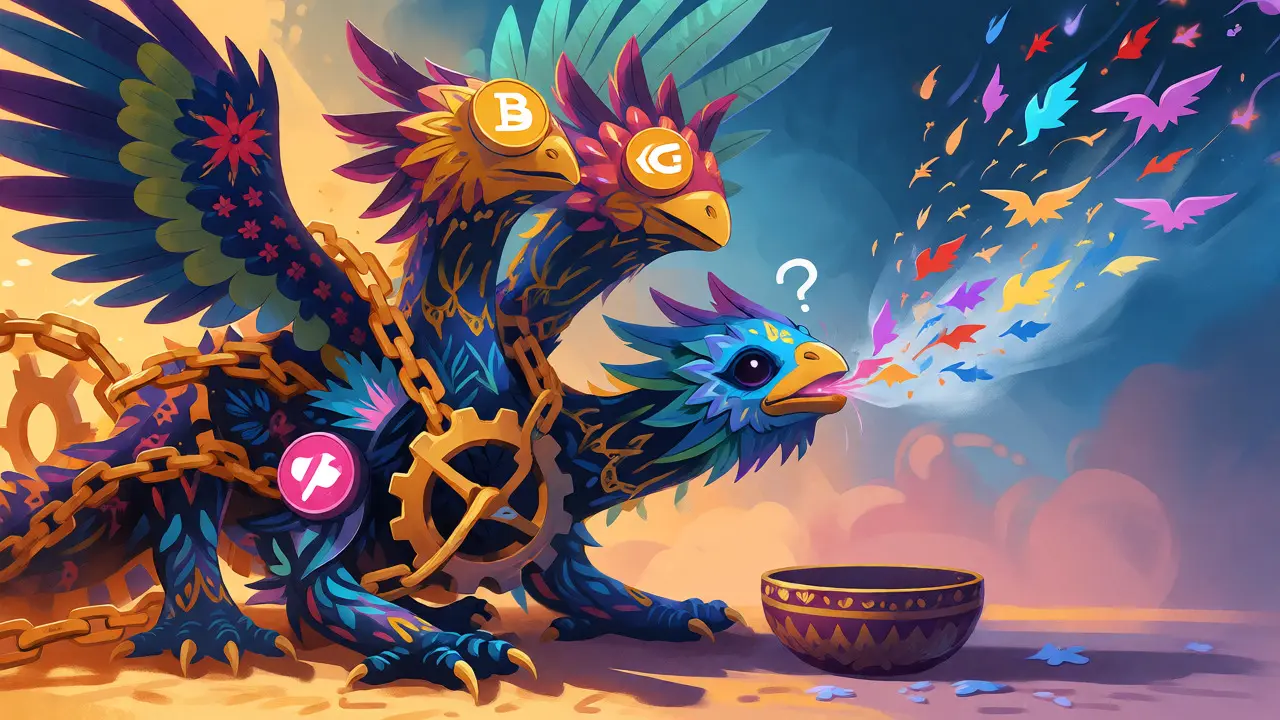
The Zero Price Problem: Why WINGS Trades at The Zero Price Problem: Why WINGS Trades at $0
Let’s talk about the elephant in the room. As of late 2026, WINGS trades at $0 USD. I don’t mean it’s penny-slim. I mean multiple major platforms, including Binance and Bitget, list the price as zero. Trading volume is also reported as $0 over the last 24 hours.
| Metric | Value | Implication |
|---|---|---|
| Price | $0.00 | No active buyers/sellers on major CEXs |
| Circulating Supply | 0 | Liquidity pools may be drained or inactive |
| Total Supply | 73.6 Million | Tokens exist but lack utility/market demand |
| Binance Listing | Not Listed | Hard to sell; requires DEX swaps |
This creates a vicious cycle. Because the price is near zero, there is no profit motive for market makers to provide liquidity. Without liquidity, the spread between buy and sell orders becomes infinite. If you try to sell your 30 WINGS now, you might find no one willing to buy them unless you accept a fraction of a cent, effectively rendering the token worthless in practical terms.
Binance explicitly notes that WINGS is not listed for trading services. This is critical. If you thought you could just log into your Binance account and cash out, you’re mistaken. You’d need to use a decentralized exchange (like PancakeSwap or JetSwap itself) to swap WINGS for a liquid asset like BNB or USDT. But if the JetSwap liquidity pool for WINGS/BNB is thin or empty, your swap will fail or incur massive slippage.
Is JetSwap Still Relevant in 2026?
JetSwap positioned itself as a "full-service" DeFi platform. It wasn't just swapping; it had a lottery system, an IJO launchpad called "Initial Jetfuel Offering," and auto-compounding vaults. On paper, this diversification looked strong. It tried to capture users who wanted gambling thrills alongside yield farming.
However, the DeFi landscape on BSC has consolidated. PancakeSwap dominated the market share, offering deeper liquidity, better security audits, and stronger community integration. Smaller forks like JetSwap struggled to retain users once the initial yield-farming mania died down. When yields drop below inflation, casual farmers leave. When casual farmers leave, TVL (Total Value Locked) drops. When TVL drops, token prices collapse.
There is little public evidence of recent development updates, new partnerships, or significant community engagement for JetSwap. Social sentiment trackers show minimal activity. No votes, few comments, quiet forums. This silence is often louder than bad news. It suggests the project has entered a maintenance mode or has been quietly abandoned by its core team.
What Should You Do With Your WINGS Tokens?
If you received WINGS from the airdrop or earned them through farming, you have three realistic options. None of them involve getting rich quick.
- Hold and Hope: Keep the tokens in your wallet. If the project revives, adds new features, or gets listed on a mid-tier exchange, the price might tick up. Given the current status, this is a low-probability bet.
- Attempt a DEX Swap: Go to JetSwap.finance or PancakeSwap. Try to swap WINGS for BNB. Check the price impact. If the price impact is over 10%, you’re losing too much value to bother. If it’s manageable, take the small amount of BNB you get and put it toward something else.
- Write It Off: Treat the airdrop as a learning experience. You learned how to connect a wallet, claim rewards, and navigate BSC. The financial value is negligible. Don’t waste gas fees trying to move dust amounts of WINGS around.
Be careful of "revival" promises. Some smaller projects announce new token burns or mergers to pump dead tokens. Always verify the contract address before interacting. Scammers love targeting holders of dead coins with fake "migration" contracts.
Lessons from the WINGS Airdrop
The WINGS story is a microcosm of the broader "fork era" of DeFi. Thousands of tokens were created, farmed, and forgotten. The key takeaway for future airdrops is to look beyond the headline number. 60,000 tokens sounds impressive until you divide it by 2,000 winners and multiply it by a $0 price tag.
Before participating in any future airdrop, ask three questions:
- Where is the liquidity? Is the token traded on reputable exchanges with visible volume?
- Who is behind it? Are there active developers pushing code to GitHub? Is the team public?
- What is the utility? Does the token actually control something, or is it just an emissions schedule for a dying farm?
WINGS failed the third test. Its utility was tied to a platform that lost its competitive edge. The airdrop didn't save it, and neither did the tech stack. If you’re hunting for alpha in crypto, focus on protocols with sustained developer activity and real user revenue, not just flashy token distributions.
Is the WINGS token still worth anything?
Currently, WINGS trades at approximately $0 USD across major tracking platforms. Due to extremely low or non-existent trading volume and lack of listings on major centralized exchanges like Binance, its practical monetary value is negligible. While the token exists on-chain, finding a buyer at a meaningful price point is difficult.
How many WINGS tokens did each winner receive in the CoinMarketCap airdrop?
The airdrop distributed a total of 60,000 WINGS tokens among 2,000 winners. Each winner received up to 30 WINGS tokens. The exact amount could vary slightly based on eligibility criteria, but 30 was the standard maximum allocation per participant.
Can I sell my WINGS tokens on Binance?
No, WINGS is not currently listed for trading on Binance. Binance directs users to external guides for acquisition methods, implying that direct trading pairs are unavailable. To sell WINGS, you typically need to use a decentralized exchange (DEX) such as JetSwap itself or potentially PancakeSwap, provided there is sufficient liquidity in the relevant pools.
Why does CoinMarketCap show 0 circulating supply for WINGS?
A reported circulating supply of 0 usually indicates a data reporting error or that the tokens are locked in ways that trackers do not recognize as "circulating." It can also mean that liquidity providers have withdrawn their positions, leaving very few tokens actively available for trading in open markets. The total supply remains fixed at 73,639,540.
Was the JetSwap airdrop a scam?
It was not a scam in the traditional sense. JetSwap was a legitimate decentralized exchange fork on Binance Smart Chain. The airdrop successfully distributed tokens to participants. However, the project suffered from poor long-term sustainability, leading to a collapse in token value and liquidity. Participants received the promised tokens, but the economic value of those tokens diminished significantly over time.


19 Comments
you guys are missing the point. it is not about the money. it is about the tech stack. everyone knows bsc forks are just copy paste jobs with no real innovation. i told you all this in 2021. if you read the whitepaper properly you would see the emissions schedule was broken from day one. nobody listens to experts anymore.
The analysis provided here is quite thorough, though I feel it lacks a certain cultural nuance regarding how decentralized finance intersects with global economic shifts. While the technical breakdown of the WINGS tokenomics is accurate, one must consider that many users in emerging markets viewed these tokens as a hedge against local inflation rather than pure speculative assets. The disappearance of liquidity is indeed tragic, but it reflects broader market consolidation trends seen across all major chains, not just BSC. It is essential to approach such post-mortems with an understanding of the geopolitical and socioeconomic factors that drove initial adoption rates among non-Western demographics.
honestly manish here. i saw this coming a mile away. chill out folks. its just crypto. we move on. keep farming those new gems. energy high!
@Manish Pahuja stop saying "keep farming" like you know what you are doing. most people lose money. i warned you. simple facts.
Hey everyone! 😊 Just wanted to add some positivity here! 🌟 Even if the price is zero, the experience of learning how to connect wallets and claim rewards is super valuable for beginners! 💡 Don't be too hard on yourselves or the project. Every journey has ups and downs, and this is just part of the adventure! Keep smiling and keep exploring new DeFi opportunities! You got this! ✨
It is frankly amusing to witness the collective delusion of retail investors who believe they have stumbled upon hidden alpha in a dead fork. The sheer ignorance displayed by those still holding WINGS is staggering. One does not simply hold a token with zero volume and expect a miracle. This is basic economics, yet people treat it like a lottery ticket. Sad.
I concur with the assessment that this project has failed. However, I must express my disdain for the lack of professional conduct exhibited by the development team. They abandoned their community without proper communication channels. Such behavior is unacceptable in any serious financial endeavor. We deserve better standards.
WAIT!!! HOLD UP!!! DO YOU THINK THIS IS COINCIDENCE??? NO WAY!!! THE LIQUIDITY DRAIN WAS STAGED!!! LOOK AT THE TIMING!!! THEY KNEW BINANCE WASN'T LISTING IT SO THEY PULLED THE RUG BEFORE WE EVEN GOT IN!!! THIS IS CLASSIC INSIDER MANIPULATION!!! DON'T FALL FOR THE "MARKET CYCLE" EXCUSE!!! THEY SOLD THEIR BAGS AND LEFT US WITH THE DUST!!! I TOLD YOU ALL!!! THE CONTRACT ADDRESS CHANGE WAS A RED FLAG!!! THEY ARE HIDING SOMETHING!!! PROVE ME WRONG!!! BUT YOU CAN'T BECAUSE THE TRUTH IS BURIED UNDER LAYERS OF DECEPTION!!! WAKE UP SHEEPLE!!!
One might argue that the ephemeral nature of such digital assets reflects a deeper existential crisis within the cryptocurrency paradigm. The value of a token is merely a social construct, dependent entirely on collective belief. When that belief dissipates, the asset returns to its intrinsic nothingness. Thus, WINGS serves as a memento mori for the modern speculator, reminding us that all things built on sand must eventually crumble. It is not a failure of technology, but a failure of human conviction.
This is exactly why greed is bad. People jumped in because they wanted free money. They didn't do their homework. Now they suffer. It's moral justice. If you don't respect the work, you don't get the reward. Simple as that.
hey guys dont worry too much. at least we learned something right? next time will be better. stay positive fam
Oh wow, another dead altcoin. Shocking. Truly shocking. But hey, at least the gas fees were low while you were holding onto your worthless bag. Congrats on the $3 coffee fund that never materialized. Next time maybe try reading a chart?
This is exactly what happens when you don't support American-made projects. JetSwap tried to compete with the best and failed. We need stronger regulations and less foreign influence in our crypto spaces. This is a loss for the US investor who trusted a platform that couldn't deliver.
Great discussion everyone! I think we can all agree that while the outcome isn't ideal, the community spirit remains strong. Let's focus on supporting each other and sharing knowledge. Collaboration is key in this space. Looking forward to seeing what the next big thing brings!
From a technical standpoint, the issue lies primarily in the automated market maker's constant product formula failing under conditions of extreme illiquidity. As the pool depth decreases, slippage increases exponentially, creating a feedback loop that discourages new entry. Without external capital injection or a strategic partnership, recovery is mathematically improbable. It is advisable to treat these holdings as sunk costs.
OMG I am literally crying right now. I worked so hard to farm these tokens. I stayed up all night. And for what?? Zero dollars?? My heart is breaking. Why did this happen to me?? I feel so betrayed by the universe. Someone please hug me. This pain is real. I can't believe it's over. Goodbye WINGS. Hello depression.
Frankly, this entire situation is a disgrace. The incompetence shown by the developers is appalling. To let a project die on the vine without even attempting a buyback or a pivot is lazy. And the users who bought into this hype without due diligence are equally culpable. It is a waste of time and resources. Disgusting.
i feel you guys its really frustrating when you put effort in and get nothing back. its okay to be mad. dont let it consume you though. we are all in this together. hang in there friends
It is highly probable that this collapse was orchestrated by larger entities seeking to consolidate power within the BSC ecosystem. The sudden cessation of activity suggests a coordinated exit strategy rather than organic decay. One must remain vigilant against such machinations. The system is rigged against the little guy. Always look for the hidden hand behind the curtain. Beware. 🧐