

You might think that if you can buy a coffee with your phone in Shanghai, you could also trade some Bitcoin. But here is the reality: as of late 2025 and into 2026, cryptocurrency is completely banned in mainland China. It’s not just restricted; it’s illegal to trade, mine, or even hold most private digital assets. If you are planning to visit, do business, or invest from within China, you need to understand exactly what this means for your wallet.
This isn't a new surprise. China has been tightening the screws on digital currencies for over a decade. What started as warnings to banks in 2013 evolved into a full-blown prohibition by June 2025. The People's Bank of China (PBOC) made it clear: decentralized cryptocurrencies like Bitcoin and Ethereum don't fit their model of financial stability. Instead, they want control. So, while the rest of the world debates ETFs and halving cycles, China is busy building its own state-controlled digital money.
The Current Legal Status in 2026
Let’s cut through the noise. Is crypto regulated in China? Yes, but "regulated" is a polite word for "prohibited." The law treats any transaction involving private cryptocurrencies as an illegal financial activity. This applies to everyone-residents, businesses, and even tourists engaging in local transactions. The ban covers three main areas:
- Trading: You cannot buy or sell Bitcoin, Ethereum, or stablecoins like USDT on domestic exchanges. Overseas exchanges are also blocked from serving Chinese users.
- Mining: All cryptocurrency mining operations were forced to shut down or relocate overseas years ago. There are no active legal mining farms in mainland China today.
- Holding: While owning a cold wallet isn't physically impossible, using those assets in the economy is. Courts have ruled that crypto holdings lack legal protection, meaning if you lose your keys or get scammed, you have little recourse.
The enforcement is strict. Financial institutions must monitor accounts for any links to crypto trading. If your bank sees unusual transfers to known crypto-related entities, they will flag it. Internet companies block access to major global exchanges, making it hard to even check prices without a VPN-and even then, executing trades is risky.
Why Did China Ban Cryptocurrency?
You might wonder why a country so advanced in technology would reject decentralized finance. The answer lies in control. For Beijing, money is a tool of state policy. Decentralized currencies threaten two things: capital controls and monetary sovereignty.
First, capital controls. China restricts how much money citizens can move out of the country annually. Crypto offered a loophole. People could convert Yuan to Bitcoin and effectively bypass these limits. By banning crypto, the government plugged that leak. Second, monetary sovereignty. The state wants to ensure that only its currency-the Yuan-is used for payments. Private coins compete with this monopoly. They don't want a parallel currency system where the central bank loses influence over the money supply.
There is also the issue of speculation. In the early days, crypto markets in China were wild west environments filled with scams and bubbles. The government saw this as a threat to social stability. When retail investors lost money, they protested. Banning the asset class removed the source of the unrest.
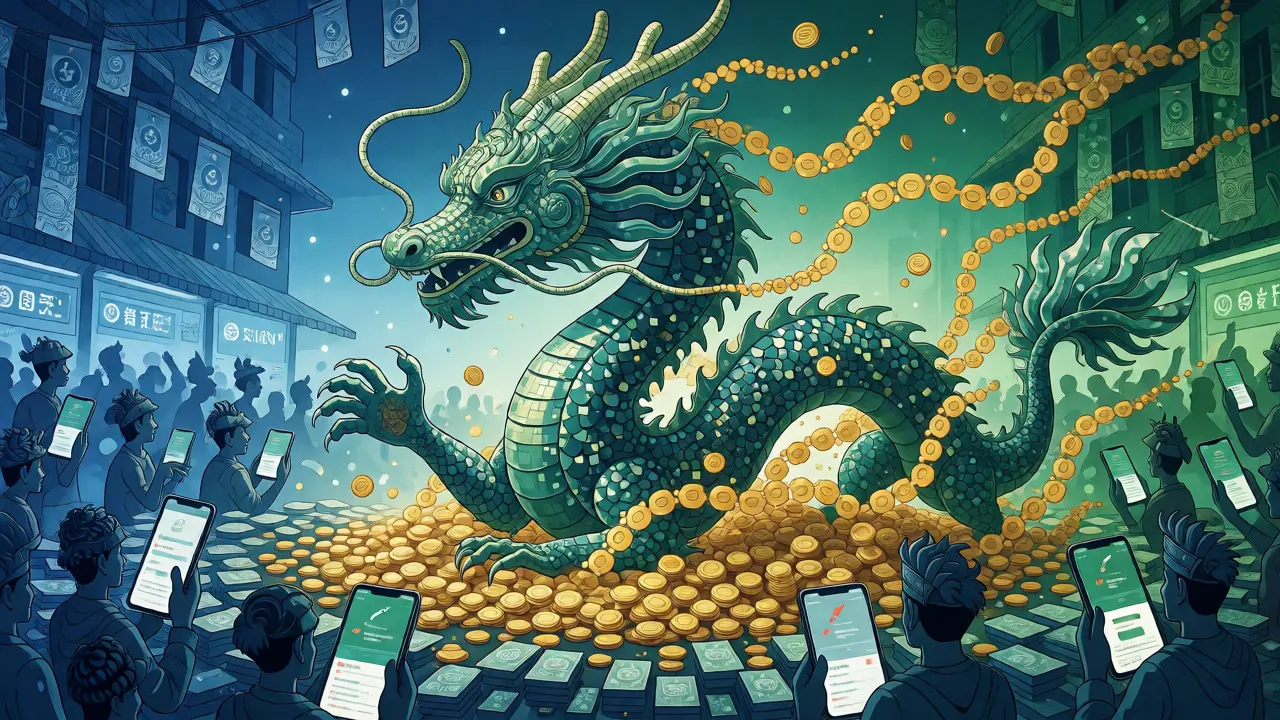
The Rise of the Digital Yuan (e-CNY)
While private crypto is dead, digital currency is alive and well in China. The Digital Yuan, also known as e-CNY, is the government's answer to blockchain technology. Unlike Bitcoin, which is decentralized and anonymous, the e-CNY is centralized and issued directly by the PBOC.
| Feature | Private Crypto (e.g., Bitcoin) | Digital Yuan (e-CNY) |
|---|---|---|
| Issuer | Decentralized Network | People's Bank of China |
| Legal Status | Banned / Illegal | Legal Tender |
| Privacy | Pseudonymous | Controllable Anonymity (State visible) |
| Volatility | High | Stable (Pegged to Yuan) |
| Use Case | Speculation / Store of Value | Daily Payments / Retail |
The e-CNY allows the government to track every transaction. This helps in fighting corruption and ensuring taxes are paid. It also lets them implement monetary policy more precisely. If the economy slows down, they can program incentives directly into the digital wallets. It’s a powerful tool, but it comes at the cost of user privacy. For now, the e-CNY is being rolled out across major cities, integrated into apps like WeChat Pay and Alipay.
Enforcement and Penalties
Don't mistake the ban for mere suggestion. Enforcement is real and aggressive. In 2024 and 2025, courts handed down significant sentences for those involved in crypto facilitation. One notable case in Beijing sentenced a man to 3.5 years in prison for helping launder money through USDT transactions. He didn't even know the funds were stolen, but the court applied a "should have known" standard.
The Ministry of Public Security leads the charge against money laundering via virtual currencies. Banks are required to report suspicious activities. If you try to cash out large amounts of crypto abroad and bring it back as fiat, you might face scrutiny. Asset seizures are common. If authorities suspect your wealth came from unlicensed crypto activities, they can freeze your accounts.
For businesses, the risk is high. Companies accepting crypto as payment face fines. Startups trying to launch token projects domestically usually fail because they can't legally offer services to Chinese customers. Most tech firms have pivoted to "blockchain-as-a-service," focusing on enterprise solutions rather than public tokens.

What About Business Opportunities?
If you are an entrepreneur, does this mean blockchain is dead in China? No. The government distinguishes between cryptocurrency (the asset) and blockchain (the technology). They actively support blockchain development for supply chain tracking, identity verification, and data sharing. However, these projects must be permissioned and centralized. You won't find many DeFi protocols thriving there.
International companies operating in China must comply with strict anti-money laundering (AML) rules. They need to ensure their employees aren't secretly trading crypto on company time or devices. Compliance teams spend significant resources monitoring internal communications for crypto references. It’s a cultural shift: talking about Bitcoin is often seen as talking about something illicit.
Future Outlook: Will the Ban Lift?
As of November 2026, there are rumors of softening. In mid-2025, officials in Shanghai discussed potential adjustments regarding stablecoins. Some experts argue that ignoring the global trend toward digital assets hurts China's competitiveness. But don't hold your breath for a full reversal.
Any change will likely be gradual and controlled. Perhaps we see limited pilots for corporate use of specific stablecoins under strict supervision. But a return to open retail trading seems unlikely. The political will to maintain capital controls remains strong. The Digital Yuan is working, and the state prefers its version of digital money.
So, is crypto regulated in China? It is banned, enforced, and replaced by a state alternative. If you plan to engage with China's digital economy, focus on the e-CNY ecosystem. Leave the speculative Bitcoin trades for other jurisdictions.
Can I still buy Bitcoin in China?
Technically, you can use peer-to-peer methods or overseas exchanges via VPN, but it is legally risky. Domestic exchanges are closed, and banks may block transactions linked to crypto purchases. There is no legal protection if you lose your funds.
Is mining allowed in China?
No. All cryptocurrency mining was banned in 2021. Any remaining small-scale operations operate in a legal gray area and face high risks of shutdowns and fines. Major miners have relocated to countries like Kazakhstan, the USA, and Canada.
What happens if I am caught holding crypto?
Holding alone is rarely prosecuted, but using it is. If you try to pay for goods or transfer funds using crypto, you violate financial regulations. Courts have ruled that crypto contracts are void, meaning you cannot sue to recover losses from failed trades.
Is the Digital Yuan the same as Bitcoin?
No. The Digital Yuan (e-CNY) is a Central Bank Digital Currency (CBDC) issued by the government. It is centralized, stable, and legal tender. Bitcoin is decentralized, volatile, and currently illegal to trade in China.
Can foreign tourists use crypto in China?
It is difficult. Most merchants do not accept crypto. You would need to exchange it for Yuan beforehand. Relying on crypto for daily expenses in China is impractical due to lack of acceptance and regulatory hurdles.