WELL Airdrop Details: What We Know and How to Prepare
No verified WELL airdrop exists as of November 2025. Learn how to spot scams, what real airdrops require, and which projects to watch instead. Stay safe and avoid losing crypto to fake claims.
When it comes to WELL airdrop eligibility, the specific conditions set by a project to distribute free tokens to users based on their activity or holdings. Also known as WELL token distribution rules, it’s not about how much you own—it’s about what you did, when you did it, and whether the project kept its word. Most airdrops like this one are designed to reward early supporters, active users, or people who helped grow the network. But too many people assume eligibility is automatic. It’s not. You have to meet exact criteria, often tracked on-chain or through wallet snapshots.
The real question isn’t just can you qualify—it’s did you do the thing? Projects like WELL typically check for wallet activity: holding a certain token, interacting with a smart contract, or joining a community before a cutoff date. If you held $WELL or its predecessor token in your non-custodial wallet before the snapshot, you might be in. But if you kept it on an exchange like MEXC or Bybit, you’re out. Exchanges don’t share user data for airdrops. That’s why so many people miss out—they thought their balance counted, but it didn’t.
Eligibility also depends on geography. Some airdrops exclude users from the U.S., Iran, or Russia due to legal risk. Others ignore region entirely but require KYC verification. And if the project is built on BSC or Ethereum, your wallet needs to have interacted with that chain. Holding tokens on Solana won’t help. This isn’t magic—it’s code. The rules are written in blockchain transactions, not in vague forum posts.
Don’t trust claims like "just connect your wallet and get free tokens." That’s how scams start. Legit airdrops like WELL don’t ask for private keys, don’t require you to send crypto to claim, and don’t pressure you with fake deadlines. They publish clear, verifiable rules on their official site or docs. If you see a guide saying "join Telegram and you’re guaranteed tokens," walk away. Real eligibility is tracked by smart contracts, not group admins.
What you’ll find below are real cases of people who got paid—and those who didn’t. We’ve dug into past airdrops like CrossWallet’s CWT, FLUX on CoinMarketCap, and HashLand’s NFT drops to show what actually works. You’ll see how some projects vanished after promising rewards, how others paid out without drama, and how to spot the difference before you waste time. No hype. No promises. Just what happened, why, and how to protect yourself next time.
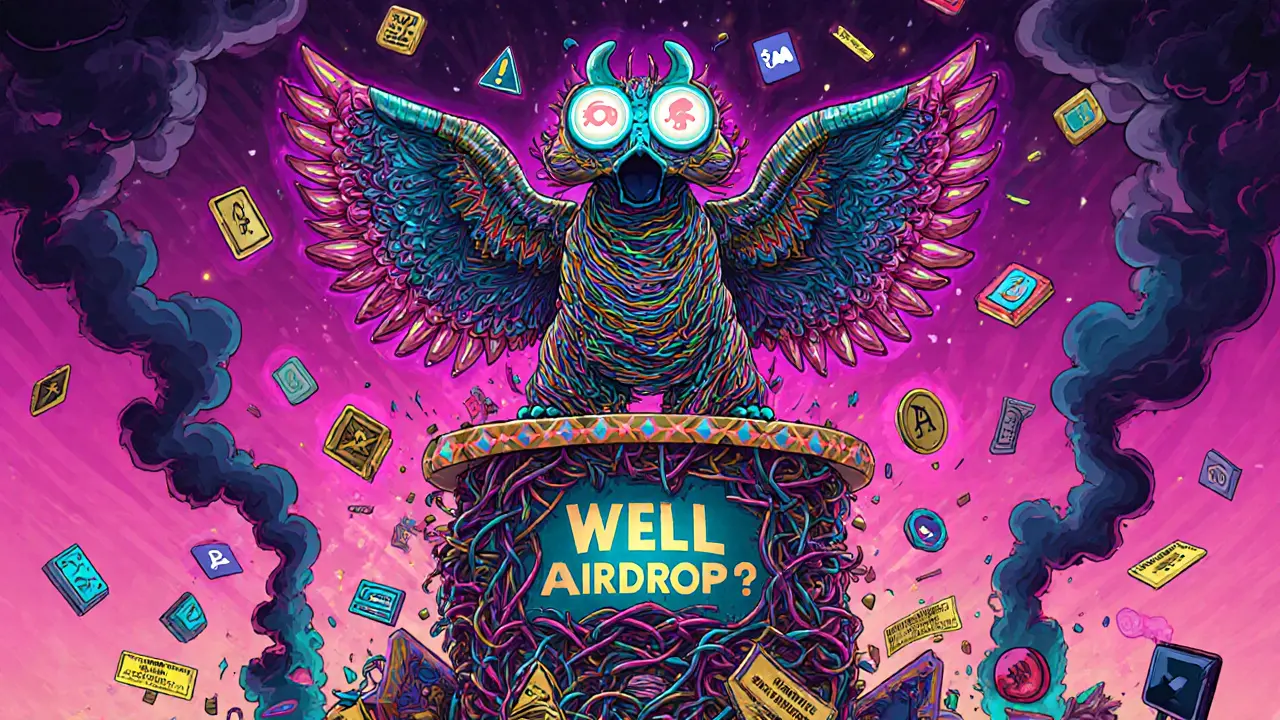
No verified WELL airdrop exists as of November 2025. Learn how to spot scams, what real airdrops require, and which projects to watch instead. Stay safe and avoid losing crypto to fake claims.