Bitcoin Mining: How It Works, Who Does It, and Why It’s Changing Fast
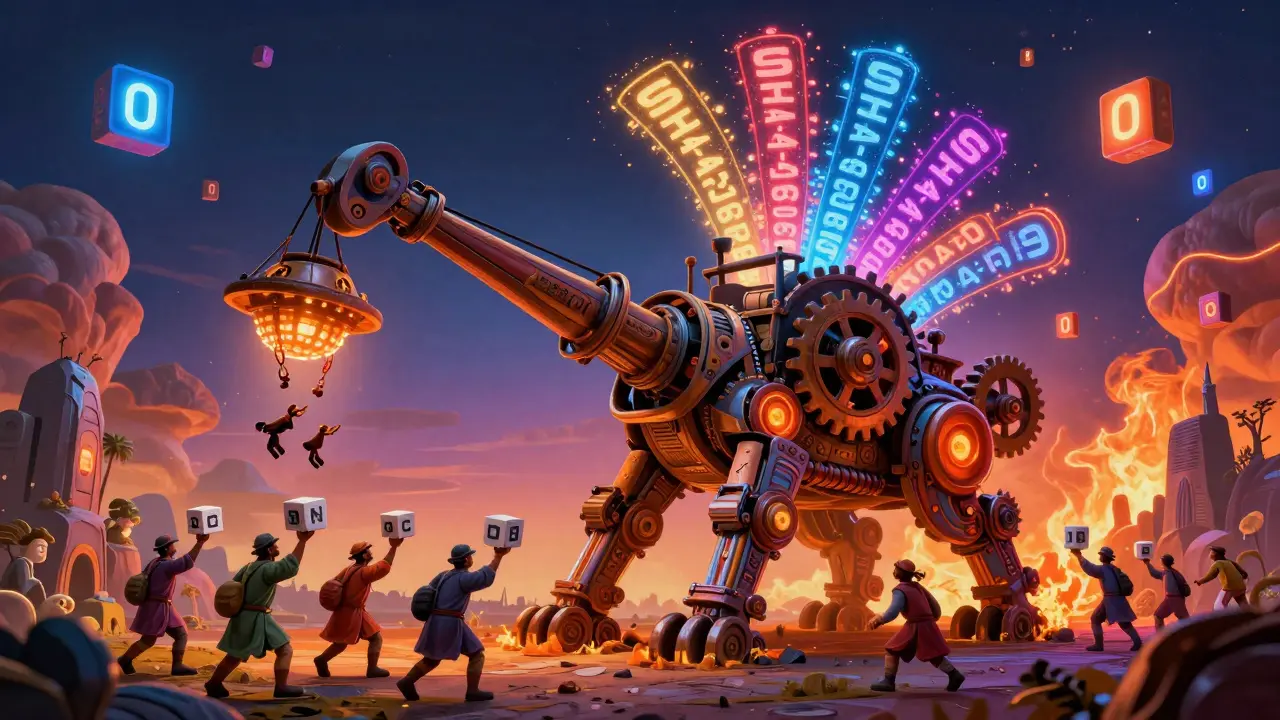
When you hear Bitcoin mining, the process of validating Bitcoin transactions and adding them to the blockchain by solving complex math problems. Also known as cryptocurrency mining, it’s the engine that keeps Bitcoin running without banks or middlemen. Every ten minutes, a new block of transactions gets confirmed by miners using powerful computers. In return, they earn newly created Bitcoin and transaction fees. It’s not magic—it’s math, electricity, and hardware working together.
But Proof of Work, the consensus mechanism Bitcoin uses to agree on transaction history without a central authority is energy-heavy. One miner in Texas might use as much power as a small town. That’s why places like Kosovo, a country that banned mining to prevent blackouts shut it down, while others like Texas or Kazakhstan opened their grids. Mining isn’t just about tech—it’s about where you can get cheap, reliable power. Some miners now use stranded gas or excess solar, turning waste into profit.
And it’s not just about big factories anymore. A few years ago, you could mine Bitcoin with a gaming GPU. Now, you need specialized machines called ASICs—expensive, loud, and hot. If you’re not running hundreds of them, you’re probably not making money after electricity and maintenance. That’s why most mining today is done by professional farms, not individuals. But the system still needs small players to stay decentralized. If only a few companies control the hash rate, Bitcoin loses its core promise: trust without control.
Meanwhile, mining hardware, the physical machines built specifically to solve Bitcoin’s cryptographic puzzles evolves fast. New models come out every few months, and older ones become worthless overnight. You can’t just buy one and hold it. You have to keep upgrading—or get out. That’s why some miners lease equipment instead of owning it. Others partner with energy providers to lock in low rates. It’s a business, not a hobby.
And then there’s the politics. Countries like North Korea, which bans crypto for its citizens but runs state-backed mining operations to steal billions, show how mining can be weaponized. Meanwhile, places like Saudi Arabia and Iran ban crypto transactions but can’t stop people from using it—mining is harder to block than trading. The rules change fast, and miners have to move quickly.
What you’ll find here aren’t theory pages or hype posts. These are real stories: the P2P networks that keep mining alive under sanctions, the energy crises that forced nations to ban it, the scams that pretend to offer mining returns, and the hidden costs no one talks about. Some posts show you how mining works under pressure. Others expose fake mining projects that vanish after collecting your money. You’ll see how mining connects to everything from DeFi manipulation to crypto taxation and underground markets. This isn’t about getting rich overnight. It’s about understanding what’s real—and what’s just noise.