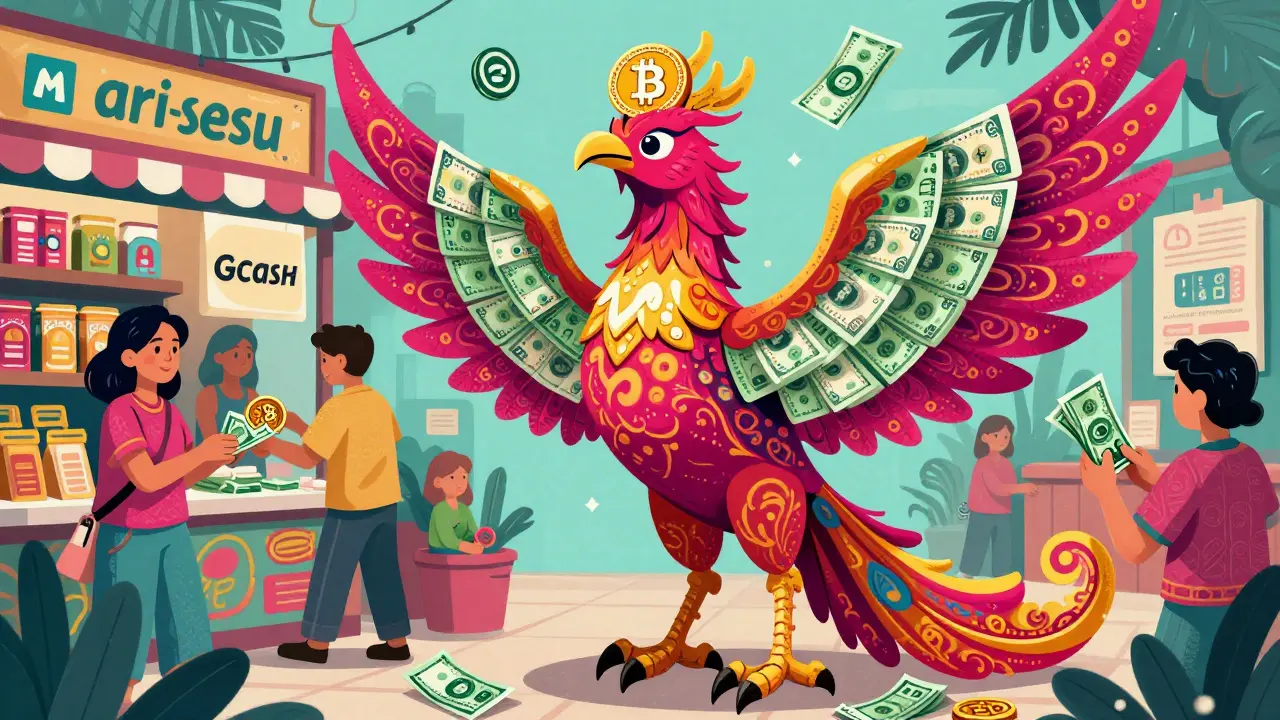

Coins.ph isn’t just another crypto exchange. For over 18 million Filipinos, it’s the bridge between their daily cash flow and the world of Bitcoin and Ethereum. You can buy crypto, pay your electric bill, send money to family, and top up your mobile load-all in one app. But as of 2025, users are walking away. Ratings on Google Play dropped from 3.3 to 2.7 stars. What’s really going on with Coins.ph? Is it still the safest, easiest way to get into crypto in the Philippines-or has it become too slow, too expensive, and too broken to trust?
What Coins.ph Actually Does (Beyond Crypto Trading)
Most crypto exchanges let you buy Bitcoin and trade altcoins. Coins.ph does that too-but it also handles your electricity bill, your GCash transfers, your M Lhuillier cash-ins, and your PESONet bank payments. That’s not a side feature. It’s the whole point. Coins.ph was built for Filipinos who don’t have bank accounts but still want to use digital money. It’s licensed by the Bangko Sentral ng Pilipinas (BSP), which means it’s one of the few crypto platforms in the country that’s legally allowed to hold your money and process payments. That’s huge. Most international exchanges like Binance or Coinbase can’t offer this level of local integration.You can deposit as little as 5 PHP using Palawan Pawnshop or Cebuana Lhuillier. Withdrawals go straight to your GCash, PayMaya, or bank account via InstaPay. There’s no need for a credit card or international wire. That’s why it’s still the go-to for beginners. But if you’re looking to day trade or use leverage, you’ll hit walls fast.
Trading on Coins.ph: Simple for Beginners, Limited for Pros
Coins.ph gives you two ways to trade: Coins Convert and Coins Pro. Coins Convert is for people who just want to buy Bitcoin with PHP and hold it. You pick the amount, click buy, and it’s done. No charts. No orders. No confusion. It’s like buying a movie ticket.Coins Pro is where things get real. You get spot trading with over 80 PHP pairs and 11 USDT pairs. You can place market, limit, and stop-limit orders. Minimum trades start at PHP 50 for most pairs, and PHP 60 for BTC/PHP, XRP/PHP, and USDT/PHP. That’s low enough for small investors. But here’s the catch: no margin trading. No futures. No stop-loss automation. No PAMM accounts. If you’ve used Binance or Kraken before, you’ll feel like you’re using a 2018 smartphone while everyone else has an iPhone 15.
Trading fees are 0.1% to 0.15% depending on your 30-day volume. That’s not terrible-but it’s not cheap either. On Binance, you can drop to 0.08% with BNB. On Coins.ph, even if you trade PHP 100,000 a month, you’re still stuck at 0.1%. For high-volume traders, there’s an OTC desk with a PHP 1 million minimum. But that’s not for most people.
Supported Coins: Plenty, But Not Always Liquid
Coins.ph claims to support over 206 cryptocurrencies. That sounds impressive. But here’s the reality: you can only trade about 170 of them. And not all of them move. You won’t find much volume on obscure tokens like SHIB or DOGE on Coins.ph. The real action is on BTC, ETH, XRP, USDC, and PHPC. Even stablecoins like PYUSD are available, which is rare for local exchanges.That’s good for safety-you’re not getting sucked into pump-and-dump coins. But bad if you’re looking to diversify beyond the big names. If you want to trade Solana, Polygon, or Avalanche on a local platform, you’re better off using an international exchange with a VPN. Coins.ph doesn’t offer them. And even if it did, the liquidity would be too thin to make meaningful trades.
Why Users Are Leaving: Customer Service and Glitches
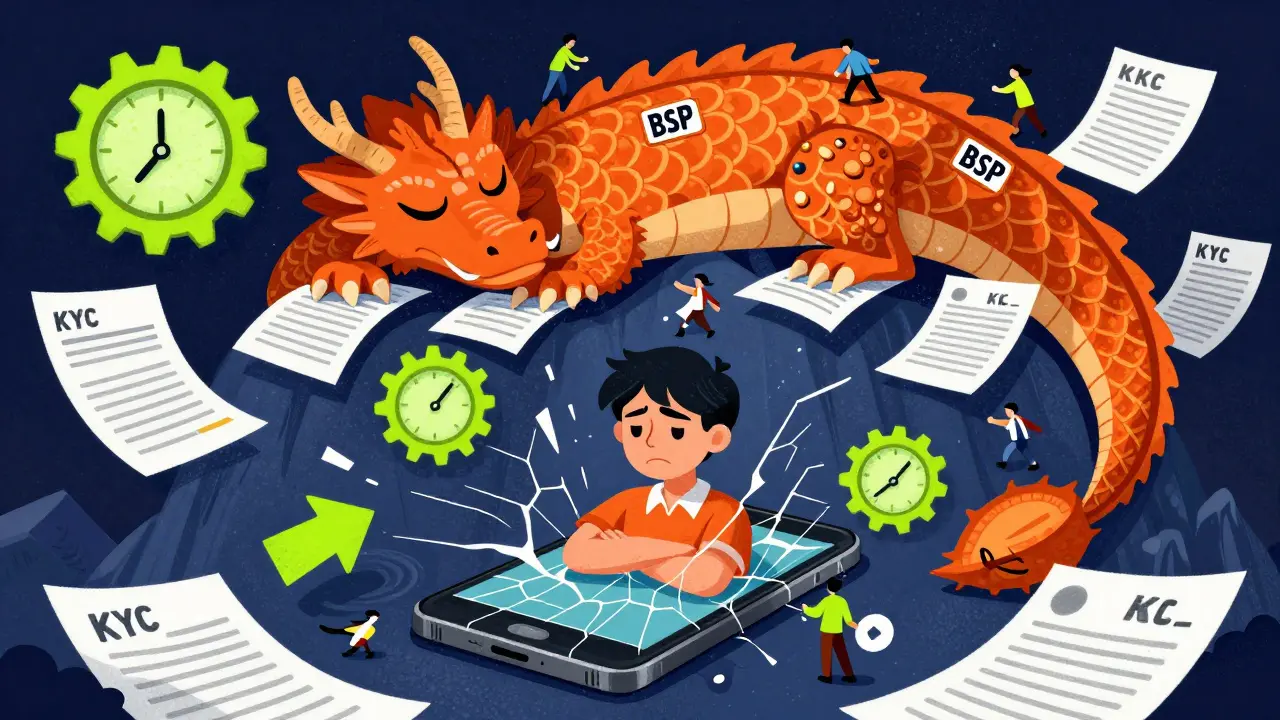
The biggest complaint? Customer service. Users report waiting days for responses to simple questions like “Why was my deposit rejected?” or “Where’s my Bitcoin?” The support team only operates during business hours, and even then, responses are inconsistent. During market spikes-like when Bitcoin jumped 15% in December 2025-the app froze for hours. People couldn’t sell. Couldn’t withdraw. Couldn’t even check their balance.Reddit threads and Facebook groups are full of posts like: “I tried to sell 0.1 BTC at 2 AM. The app crashed. By morning, the price dropped 8%. I lost PHP 2,000. No one replied.” That’s not a bug. That’s a system failure. And it’s happening more often.
Another issue: KYC verification takes too long. Some users wait 3-5 days to get their accounts fully verified. That’s unacceptable in 2026. Competitors like Binance or Coinbase verify in under 10 minutes. Coins.ph still relies on manual checks for many cases, even though AI tools exist to automate this.
Fees, Deposits, and Withdrawals: Local Access, Global Costs
Coins.ph wins on payment options. You can deposit via:- Palawan Pawnshop
- Cebuana Lhuillier
- M Lhuillier
- GCash
- PayMaya
- InstaPay
- PESONet
- Direct bank transfer
- Crypto deposit (BTC, ETH, USDT, etc.)
That’s unmatched in the Philippines. But withdrawals? They’re slow. Crypto withdrawals take 10-30 minutes. Bank transfers via InstaPay take 15-60 seconds. But if you’re withdrawing PHP from Coins.ph to your bank account, you might wait up to 24 hours. Why? Because the platform batches transactions to cut costs. That’s fine for them-but frustrating for you if you need cash fast.
There are no fees for deposits via GCash or PayMaya. But if you use Dragonpay or cash-in at pawnshops, you pay a small service fee (usually 1-2%). Withdrawals of PHP to banks are free. Crypto withdrawals have network fees-same as everywhere else.
Coins.ph vs. International Exchanges: The Trade-Off
Here’s the truth: if you want the lowest fees, fastest execution, and advanced tools, go with Binance or Bybit. They’re cheaper, faster, and more powerful.But if you live in the Philippines and don’t have a bank account? Or if you need to pay your water bill with crypto? Or if you want to buy Bitcoin with cash from your local pawnshop? Then Coins.ph is still the only option.
It’s not the best exchange. But it’s the most practical for millions of Filipinos. That’s its strength-and its weakness. It’s not built for traders. It’s built for users who need crypto to live, not to speculate.
Is Coins.ph Safe? Yes. But Is It Reliable?
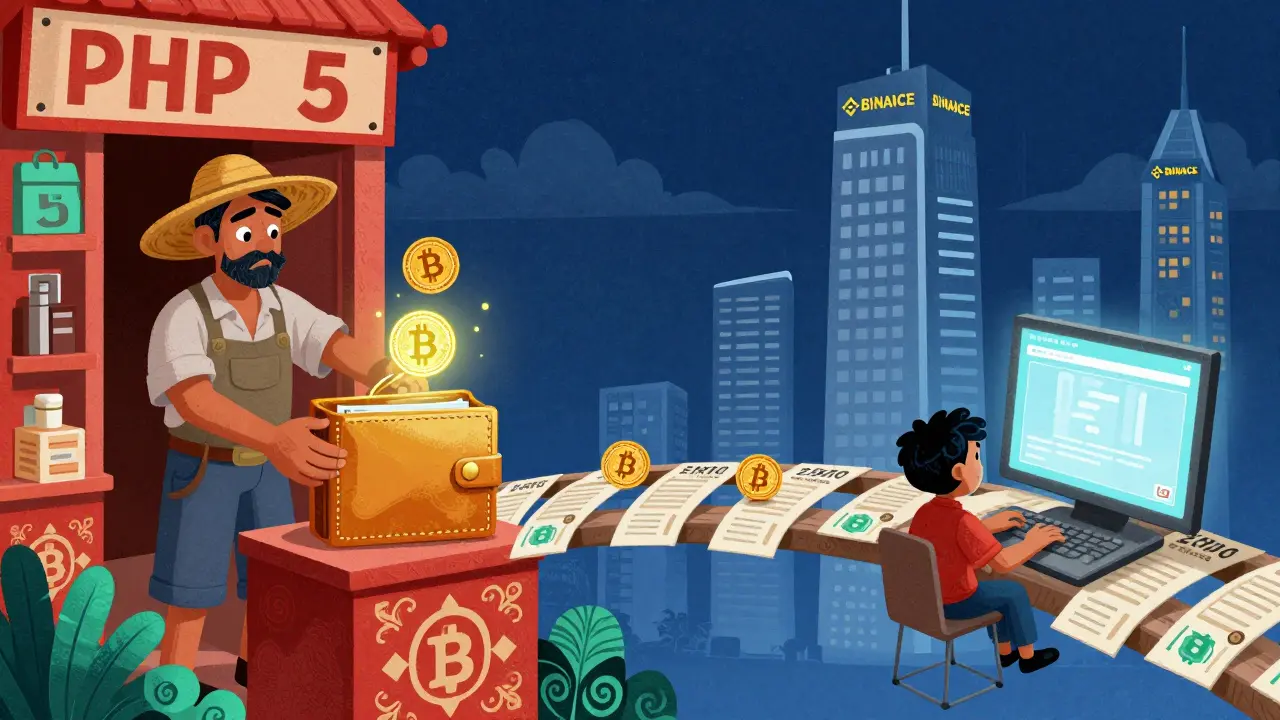
Yes, it’s safe. BSP license means your funds are protected under Philippine law. There’s no risk of the platform vanishing overnight like some unregulated exchanges. Your crypto is stored in cold wallets. Two-factor authentication is required. Account recovery is possible.But safety doesn’t mean reliability. You can be safe and still get locked out of your account for days. You can be secure and still have your trades fail because the server crashed. Coins.ph is like a sturdy house with a broken doorbell. You’re protected inside-but no one hears you when you knock.
Who Should Use Coins.ph?
- Beginners who want to buy their first Bitcoin with cash
- Daily users who pay bills, send money, or top up mobile loads
- Unbanked Filipinos who rely on pawnshops and convenience stores
- Long-term holders who don’t trade often
Who should avoid it?
- Active traders who need leverage, stop-losses, or advanced charts
- High-frequency traders who need sub-second execution
- Users who value fast support-expect delays
- People who want the cheapest fees-look elsewhere
Final Verdict: A Necessary Tool, Not a Perfect One
Coins.ph isn’t trying to be Binance. It’s trying to be the digital wallet of the Philippines. And in that role, it’s still the leader. It’s the only exchange that lets you turn cash from a pawnshop into Bitcoin in under 10 minutes. That’s magic.But magic doesn’t fix broken customer service. It doesn’t fix slow withdrawals. It doesn’t fix a trading platform that freezes during volatility.
If you’re just starting out, or if you need crypto to pay your bills, Coins.ph is still your best bet. But if you’re serious about trading, treat it like a side tool-not your main exchange. Use it to buy Bitcoin with cash. Then move it to a global platform for better trading tools.
Coins.ph won’t disappear. It’s too big, too licensed, too tied to the Filipino economy. But if it doesn’t fix its tech and support issues soon, it won’t just lose users-it’ll lose its relevance.
Is Coins.ph safe to use in 2026?
Yes, Coins.ph is safe because it’s licensed by the Bangko Sentral ng Pilipinas (BSP), the central bank of the Philippines. This means it follows strict financial regulations, stores crypto in cold wallets, and requires two-factor authentication. Your funds are legally protected. However, safety doesn’t mean the platform is always reliable-technical outages and slow support can still leave you locked out during critical moments.
Can I withdraw PHP from Coins.ph to my bank account?
Yes, you can withdraw PHP to any Philippine bank account using InstaPay or PESONet. Withdrawals are free, but processing times vary. InstaPay transfers usually complete within 15-60 seconds. PESONet transfers may take up to 24 hours. Coins.ph batches transactions to reduce costs, so even if your bank is fast, the platform may delay the send.
What are the trading fees on Coins.ph?
Coins.ph charges 0.1% to 0.15% for spot trading, depending on your trading volume over the past 30 days. Higher volume = lower fee. There are no fees for depositing via GCash, PayMaya, or cash-in at pawnshops. Withdrawals of crypto incur standard network fees (like Bitcoin miner fees). There are no hidden fees, but compared to global exchanges like Binance, Coins.ph’s fees are on the higher side.
Does Coins.ph offer margin trading or futures?
No, Coins.ph does not offer margin trading, leverage, futures, or options. You can only do spot trading on Coins Pro. This makes it unsuitable for active traders who want to amplify gains or hedge positions. If you need advanced tools, you’ll need to use an international exchange like Binance or Bybit.
How long does KYC verification take on Coins.ph?
KYC verification can take anywhere from a few hours to 5 business days. If your documents are clear and match your ID, you might get approved in under 24 hours. But if there’s a mismatch, blurry photo, or system backlog, it can take much longer. This is one of the biggest frustrations for new users, especially compared to global exchanges that verify in minutes using AI.
Can I use Coins.ph if I’m not in the Philippines?
Technically, yes-you can download the app and create an account from anywhere. But you won’t be able to deposit or withdraw PHP unless you have a Philippine bank account or access to local payment networks like GCash or Palawan Pawnshop. Coins.ph is designed for Filipino users. International users can’t use it effectively without local payment methods.
What’s the minimum amount to start trading on Coins.ph?
You can start with as little as 5 PHP for deposits. For trading on Coins Pro, the minimum order is PHP 50 for most pairs. For BTC/PHP, XRP/PHP, USDT/PHP, USDC/PHP, and PYUSD/PHP, the minimum is PHP 60. This makes it accessible even for users with very small budgets.
Does Coins.ph have a desktop version?
Coins.ph doesn’t have a dedicated desktop app, but you can access all features through a web browser at coins.ph. The website works well on laptops and desktops, and it mirrors the mobile app’s functionality. However, the interface isn’t optimized for large screens, so trading on a big monitor feels clunky compared to platforms like Binance or Kraken.
Are there any hidden fees on Coins.ph?
No hidden fees. All fees are clearly listed: 0.1%-0.15% for trading, network fees for crypto withdrawals, and small service charges when depositing via pawnshops. Coins.ph doesn’t charge for deposits via GCash, PayMaya, or bank transfers. There are no account maintenance fees or inactivity fees. Transparency is one of its strengths.
What should I do if Coins.ph crashes during a price spike?
If the app crashes during high volatility, you can’t trade until it’s back online. The best strategy is to avoid holding large positions on Coins.ph if you plan to actively trade. Use it to buy and hold, then move your crypto to a more reliable exchange for active trading. If you lose money because of downtime, there’s no compensation-this is a known risk with the platform.





18 Comments
Coins.ph is a beautifully broken institution
It's not a crypto exchange-it’s a digital lifeline wrapped in bureaucratic cotton candy. The fact that you can buy Bitcoin with cash from a pawnshop in Mindanao is nothing short of revolutionary. But when your withdrawal vanishes into the void for 18 hours because ‘batch processing’ is a corporate euphemism for ‘we don’t care’-well, that’s not innovation. That’s neglect dressed in BSP compliance.
I’ve watched this platform evolve from a grassroots marvel to a corporate ghost town. The UI hasn’t changed since 2020. The support team replies like they’re paid by the word, not the problem. And yet, millions still rely on it because there’s literally no alternative for the unbanked. That’s not a feature. That’s a national tragedy with a mobile app.
They’re not failing because they’re bad. They’re failing because they’re too important to fail-and too big to fix.
Oh wow. A crypto platform that actually serves the people? How quaint. Next they’ll start offering free rice with every BTC purchase.
Let me get this straight-you’re praising a service that freezes during market volatility like it’s a virtue? That’s not ‘practical,’ that’s pathological. You’re romanticizing systemic incompetence because it’s ‘local.’ If a hospital had the same uptime as Coins.ph, people would die waiting for their insulin. But hey, at least you can pay your electric bill with Dogecoin. What a world.
It’s not safe. It’s just slow. And slow kills just as effectively as fraud.
Let’s cut through the noise-Coins.ph is the only game in town for 18M Filipinos who don’t have bank accounts. That’s not a bug, that’s a feature. And yes, the trading side is outdated. But who cares? Most users aren’t trading-they’re paying bills, sending remittances, topping up load. That’s the real crypto use case here.
Stop comparing it to Binance. That’s like judging a bicycle because it doesn’t have a turbo engine. It’s not meant to be a sports car. It’s a tool for the masses. And it works. Sure, the KYC takes 3 days? Fine. But at least it works with Cebuana Lhuillier. No other platform in Southeast Asia can say that.
If you want leverage, go to Binance. But if you’re trying to feed your family and you only have cash? Coins.ph is your lifeline. Stop pretending finance is a tech competition. It’s a human one.
Let’s be honest. This isn’t a review. It’s a PR piece disguised as journalism.
The ‘BSP license’ is a magic shield they wave every time someone complains. But licenses don’t fix crashes. They don’t unstick withdrawals. They don’t make customer service responsive. You’re praising a platform that leaves people stranded during price spikes like it’s a public service. It’s not. It’s a liability wrapped in regulatory compliance.
The only thing more dangerous than an unregulated exchange is a regulated one that thinks compliance equals reliability. Spoiler: it doesn’t. And when your users lose money because the app froze, you don’t get a medal-you get a lawsuit.
Coins.ph is a manifestation of the paradox of inclusive finance
It enables financial access where traditional systems have failed, yet it simultaneously perpetuates technological stagnation under the guise of accessibility
The BSP license provides legitimacy but not innovation
The platform functions as a financial cathedral built on the foundation of 2015-era infrastructure
Its strength lies in its inability to be replaced, not in its capacity to evolve
This is not progress. This is preservation under duress
The real tragedy is not the slow withdrawals but the normalization of mediocrity as necessity
When convenience becomes the only metric of value, innovation dies quietly
One cannot build a digital future on pawnshop deposits and batched bank transfers
It is not safe because it is licensed. It is merely tolerated because no alternative exists
People are so dumb they think this is a good app
It crashes when bitcoin goes up? That’s not a bug thats a feature because you’re not supposed to be trading
Why would you even use this if you want to make money
Just use binance and send your crypto to your friend who cashes out at cebuana
Stop pretending this is the future its just a glorified moneygram with a blockchain sticker on it
And dont even get me started on the kyc taking 5 days
My cousin in manila waited 11 days to verify and lost 15k php in missed trades
Thats not practical thats criminal
Thank you for writing this. I’ve been using Coins.ph for two years now, and I’ve felt so alone in my frustration.
I love that I can pay my mom’s water bill with Bitcoin-but I hate that I have to wait 14 hours to withdraw my earnings after a successful trade.
I’ve had three deposits vanish into the void. Each time, I had to call three different support channels, send screenshots, wait days, and then get a reply that said ‘please try again.’
And yet-I still use it. Because my sister in Davao doesn’t have a bank account. And I need to send her money. And this is the only way.
I don’t know if the platform will ever fix itself. But I do know that if it disappears tomorrow, millions of people will be left with nothing.
Maybe the real question isn’t ‘Is Coins.ph good?’
But ‘Why does the Philippines still need this?’
Let’s break this down by use case.
If you’re a retail user who deposits via pawnshop and sends money to family: Coins.ph is perfect. No competition comes close.
If you’re a small-scale trader buying BTC with PHP and holding: Coins.ph is fine. Fees are acceptable, liquidity is decent for major pairs.
If you’re an active trader using stop-losses, leverage, or high-frequency strategies: Don’t even open the app. It’s not designed for you. Use Binance or Bybit and move your crypto over.
The real issue isn’t the platform-it’s the expectation. People treat it like a global exchange because it has ‘crypto’ in the name. But it’s not. It’s a remittance and bill-pay platform that happens to support crypto.
Stop asking for futures. Start asking: Why doesn’t the government invest in faster bank infrastructure? Why do we still rely on pawnshops for digital finance?
The problem isn’t Coins.ph. It’s the entire financial ecosystem it was built to patch.
OMG I CAN’T BELIEVE YOU’RE STILL DEFENDING THIS APP
I LOST 12,000 PHP BECAUSE THE APP CRASHED DURING A 15% SPIKE AND NO ONE RESPONDED
AND NOW YOU’RE WRITING A 2000-WORD ESSAY ABOUT HOW IT’S ‘PRACTICAL’
IT’S NOT PRACTICAL IF IT KILLS YOUR MONEY
I’M A FILIPINO. I USE GCASH. I USE PAYMAYA. I USE BINANCE. I DON’T USE COINS.PH FOR TRADING. I USE IT TO BUY BTC AND IMMEDIATELY SEND IT TO BINANCE.
WHY DOES IT TAKE 5 DAYS TO VERIFY?!
WHY IS THE SUPPORT TEAM STILL USING EMAIL?!
WHY DOES THE APP FREEZE WHEN THE MARKET MOVES?!
IT’S 2026. WE HAVE AI. WE HAVE AUTOMATION. WE HAVE BLOCKCHAIN.
AND COINS.PH IS STILL RUNNING ON A WINDOWS XP SERVER IN A CLOSET IN MANILA
THIS ISN’T ‘LOCAL.’ THIS IS A SCAM WITH A LICENSE.
Big picture: Coins.ph is the Philippines’ financial firewall.
It’s not perfect. But it’s the only thing standing between millions and financial exclusion.
Think about it-how many people in rural areas can even open a bank account? They don’t have IDs, addresses, or credit history. But they have cash. And they have a pawnshop down the street.
Coins.ph turns that cash into Bitcoin. Then they can send it to their kid in Canada. Or pay their child’s school fee. Or buy medicine online.
The trading side? Yeah, it’s weak. But it’s not the point. The point is access.
And yes, the support is slow. The app crashes. The KYC is a nightmare. But here’s the thing: they’re trying. They’re the only ones trying.
Don’t trash them for being imperfect. Push them to be better. Lobby for faster verification. Demand API access. Write to BSP. But don’t abandon them. Because if they go down, the people who rely on them have nowhere else to go.
This isn’t crypto. This is survival.
I appreciate how balanced this review is.
It’s rare to see someone acknowledge that a platform can be both essential and broken at the same time.
I’ve used Coins.ph for remittances and bill payments for three years. I’ve never lost money. But I’ve lost hours. And patience.
My favorite thing? Paying my internet bill with USDC. My least favorite? Waiting 18 hours to withdraw PHP to my bank.
It’s not a trading platform. It’s a financial bridge. And bridges aren’t supposed to be fast-they’re supposed to hold.
If you want speed, go to Binance. But if you want dignity-for your mother, your aunt, your neighbor who walks 3 kilometers to deposit cash-then Coins.ph still matters.
Maybe the real innovation isn’t in the trading engine. Maybe it’s in the fact that it exists at all.
For anyone reading this who’s thinking of switching to Binance: I get it.
But let me ask you this-how many people in your family use GCash? How many still go to pawnshops to deposit cash?
Coins.ph isn’t for you. It’s for them.
I’ve taught my grandmother how to buy Bitcoin on Coins.ph. She doesn’t know what a blockchain is. She just knows she can send money to her grandson in Dubai without paying 10% in fees.
That’s not ‘crypto.’ That’s love.
Yes, the app freezes. Yes, support is slow. But it’s still the only thing that lets her do this.
Don’t dismiss it because it’s not fancy. Dismiss it only when something better comes along that works for her too.
Until then, we need to fight for better tech-not abandon the people who need it most.
Coins.ph represents the confluence of informal economy and regulated fintech in developing nations.
Its operational model is not a failure of technology, but a reflection of structural economic constraints.
The BSP licensing framework provides legal legitimacy, yet institutional inertia impedes technological modernization.
Comparative analysis with global exchanges is fundamentally flawed, as their infrastructure assumes universal access to banking systems, digital IDs, and high-speed connectivity-conditions absent in much of the Philippine archipelago.
Thus, Coins.ph is not a suboptimal exchange. It is an adaptive mechanism designed for a context where liquidity is measured in cash-in transactions at pawnshops, not API call volumes.
The path forward lies not in criticizing its limitations, but in advocating for regulatory collaboration to integrate AI-driven KYC, real-time settlement protocols, and decentralized identity verification-without compromising its inclusive mandate.
Its survival is not a bug. It is a necessary feature of financial equity.
My ex used Coins.ph. She lost 30,000 PHP because the app crashed during a pump.
She cried for three days.
And you want to write a whole article about how it’s ‘practical’?
That’s not practical. That’s emotional abuse wrapped in a BSP license.
They know their app crashes. They know their support is garbage. They know people lose money.
And yet they keep it running because they’re making money off the pawnshop fees.
It’s not a platform. It’s a trap.
And you’re the enabler.
People are so naive
Coins.ph is a scam with a license
They make money off cash-ins and they dont care if your trade fails
Why do you think they dont fix the app?
Because if it worked good people would leave and go to binance
They need you to stay stuck
And you’re all here defending them like its some kind of charity
Its not charity. Its exploitation
Stop being so proud of using a broken app
Be proud of using something that works
I’ve used Coins.ph for three years. I’ve lost money. I’ve waited days. I’ve screamed at my phone.
But I still use it.
Because when my mother needed cash for her insulin, I sent her 5,000 PHP via InstaPay from Coins.ph. She got it in 45 minutes.
That’s not a feature. That’s a miracle.
Yes, the app crashes. Yes, the support is slow. But it’s the only thing that lets me help her.
I don’t care if it’s outdated. I care that it works when it matters.
Don’t judge it by your trading goals. Judge it by the lives it saves.
It is morally irresponsible to promote Coins.ph as a viable financial tool for the masses.
Its systemic unreliability constitutes a breach of fiduciary duty, regardless of regulatory status.
By normalizing delayed withdrawals, frozen interfaces, and unresponsive support, we are endorsing institutional negligence under the guise of accessibility.
True financial inclusion does not require compromise on operational integrity.
It is not progress to tolerate broken systems because they are convenient.
It is surrender.
Let us demand better-not settle for less because the alternative is inconvenient.
Wait, so you’re saying we should just accept this? No. Just no.