


There’s no official record of a project called Sonar Holiday airdrop. Not in press releases. Not in wallet trackers. Not in any verified blockchain explorer. If you saw a post, tweet, or Telegram message claiming this airdrop is real, you’re likely looking at a scam or a rumor dressed up as news.
Here’s the truth: as of March 2026, no legitimate project named "Sonar Holiday" has announced an airdrop. Not on their website. Not on Twitter. Not in their Discord. Not even in the dusty corners of GitHub. That doesn’t mean airdrops aren’t happening-far from it. Solana alone had over a dozen major token launches in 2025, with wallets filled by projects like Magic Eden, Pudgy Penguins, and Doodles. But "Sonar Holiday"? It’s not on the list.
Why You’re Hearing About It
You probably came across this name in a Discord server, a YouTube video, or a "free crypto" ad on social media. These posts often use emotional triggers: "Claim your holiday bonus before it’s gone!" or "Limited-time Sonar Holiday rewards!" They’ll even fake a logo, copy a Solana-themed color scheme, and paste a fake countdown timer. It’s designed to look urgent, official, and exciting.
Scammers know people are hungry for free tokens. After the big Solana airdrops in late 2024 and early 2025, thousands of users started checking every new name they saw. "Is this real?" they ask. And scammers answer with lies.
How to Spot a Fake Airdrop
Not all airdrops are scams-but most fake ones follow the same patterns. Here’s what to look for:
- No official website: Legit projects have a clean, live site with a whitepaper, team bios, and contact info. Sonar Holiday has none.
- Asks for your private key: If a site says "connect wallet to claim," that’s fine. If it says "enter your seed phrase," run. No legitimate project will ever ask for this.
- Urgency tactics: "Only 100 spots left!" or "Claim in the next 2 hours!" are classic red flags.
- No social proof: Check Twitter. Look for verified accounts. See if real users are talking about it. If the only posts are from new accounts with no followers, it’s fake.
- Too good to be true: "Get 500 SOL for connecting your wallet"? That’s not an airdrop. That’s a trap.
Real airdrops don’t need to beg you to join. They announce themselves through official channels, and the community talks about them before the drop. If you can’t find a single credible source confirming the project, it doesn’t exist.
What’s Actually Happening on Solana in 2026
While Sonar Holiday is a ghost, the Solana ecosystem is still alive with real airdrops. In 2025, Solana became the go-to chain for new token launches. Why? Because it’s fast, cheap, and user-friendly. Compared to Ethereum, where gas fees made participation expensive, Solana let everyday users interact with DeFi, NFTs, and apps without breaking the bank.
Confirmed 2025 airdrops included:
- Magic Eden (ME) - Distributed to NFT traders on the platform on December 10, 2024.
- Pudgy Penguins (PENGU) - One of the largest drops in Solana history, hitting wallets on December 17, 2024.
- Doodles (DOOD) - Rolled out on May 9, 2025, to NFT holders and early supporters.
- SonicSVM - Launched trading on January 7, 2025, after a community-driven airdrop.
- Sanctum, DeBridge, Drift, Grass, Kamino Season 3 - All followed proven models with clear eligibility rules.
These weren’t random. Each had documentation. Each had a team. Each had a history of activity before the drop. That’s what separates real from fake.
What You Should Do Instead
If you want to find real airdrops, stop chasing names you don’t recognize. Instead:
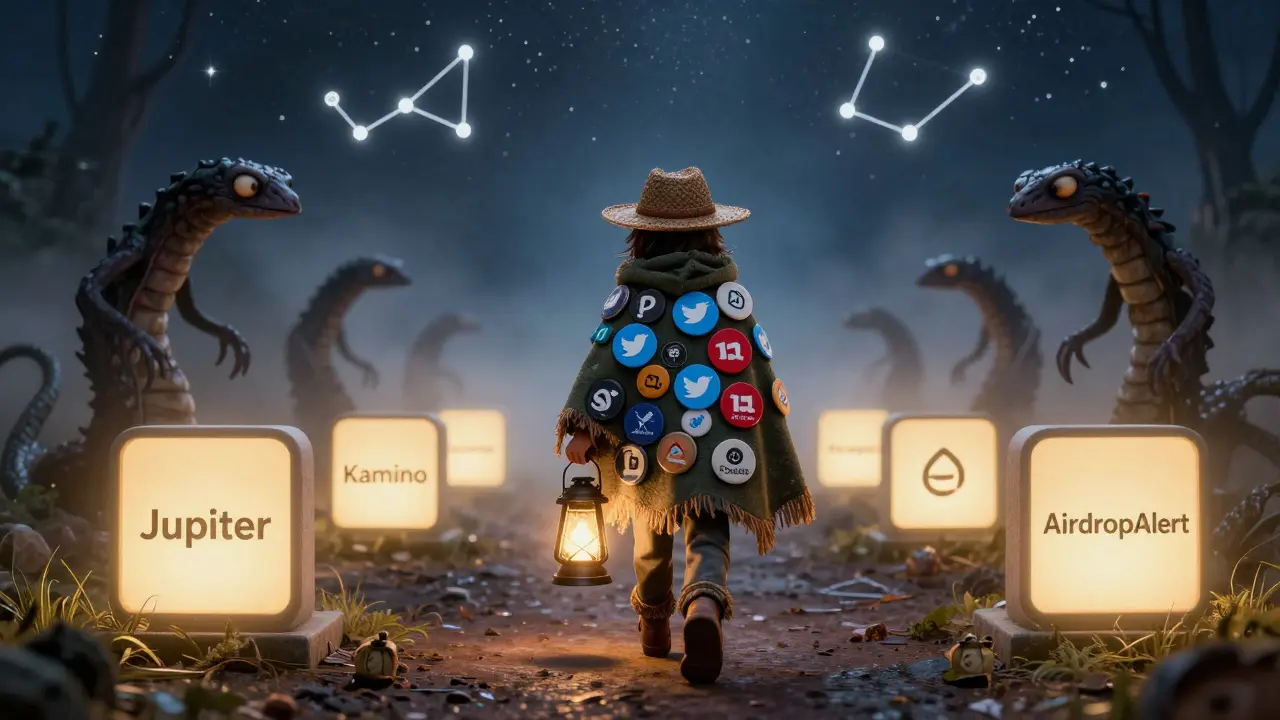
- Follow verified accounts of projects you already use. If you trade on Jupiter, follow their official Twitter. If you hold Solana NFTs, check Magic Eden’s announcements.
- Use trusted airdrop trackers like AirdropAlert or CoinGecko Airdrops. They verify each listing before publishing.
- Only interact with contracts you understand. If you don’t know what a token is, don’t connect your wallet.
- Set up alerts for Solana-based projects. New ones drop regularly-but they’re announced clearly, not buried in spam.
Real airdrops don’t need hype. They don’t need countdowns. They don’t need you to panic. They just show up in your wallet if you’ve done the work.
What Happens If You Fall for a Fake Airdrop
Connecting your wallet to a fake Sonar Holiday site might seem harmless. But once you sign a transaction-even if it says "claim your reward"-you could be authorizing access to your entire wallet. Scammers can drain your SOL, your NFTs, your staked tokens, everything.
There’s no recovery. Blockchain transactions are irreversible. Once your funds are gone, they’re gone for good. No customer service. No refund policy. No way to trace it back.
And it’s not rare. In Q4 2025, over 12,000 Solana wallets were drained by fake airdrop scams. Most of them were targeted by names like "Holiday Bonus," "Winter Rewards," or "Christmas Airdrop." They use holidays because people are more likely to act on impulse during that time.
Bottom Line: Don’t Chase Ghosts
The Sonar Holiday airdrop doesn’t exist. It never did. It won’t. It’s a lure.
Real crypto rewards come from participation-not desperation. If you want to earn tokens, use the platforms you already trust. Hold NFTs. Trade on DEXs. Stake your SOL. Interact with real projects. That’s how you earn. Not by clicking on a link that promises magic money.
Stay skeptical. Stay informed. And never give up your seed phrase. No matter how festive the offer looks.
Is the Sonar Holiday airdrop real?
No, the Sonar Holiday airdrop is not real. There is no official project, website, or team behind it. It is a scam designed to trick users into connecting their wallets and stealing funds. Legitimate airdrops are announced through verified channels, and this one has no trace in any credible source.
Why do fake airdrops use holiday names?
Scammers use holiday names like "Holiday," "Christmas," or "Winter Bonus" because people are more likely to act quickly during festive seasons. They create a false sense of urgency and generosity, making users less likely to check details. These names tap into emotional decision-making, not rational research.
How can I find real Solana airdrops in 2026?
Follow verified social accounts of projects you already use-like Jupiter, Magic Eden, or Kamino. Check trusted platforms like AirdropAlert or CoinGecko for vetted listings. Real airdrops require you to interact with protocols over time, not just click a link. Always research before connecting your wallet.
Can I get in trouble if I interact with a fake airdrop?
You won’t get in legal trouble, but you can lose your entire crypto portfolio. Connecting to a fake airdrop site often authorizes a transaction that lets scammers drain your wallet. Blockchain transactions are irreversible, so once your funds are gone, there’s no way to get them back. Always assume every unknown link is dangerous.
What should I do if I already connected my wallet to Sonar Holiday?
Immediately disconnect your wallet from all unknown sites using your wallet’s security settings. Move all your funds to a new wallet you control. Never reuse the old one. Change your seed phrase if you entered it anywhere. Monitor your wallet for any unauthorized transactions. If funds were stolen, there’s no recovery-so prevention is the only defense.



14 Comments
Wow, this post is such a breath of fresh air. I’ve been seeing so many "Sonar Holiday" posts in my DMs lately-like, literally every other day. One guy even sent me a screenshot of a "claim button" with a snowman wearing a Solana hoodie. I laughed so hard I spilled my matcha.
But seriously, it’s wild how scammers tap into holiday vibes. It’s like they know we’re all just one sugar cookie away from clicking "I accept" on anything that says "free."
I’ve started forwarding these to my crypto-illiterate aunt. She thinks Bitcoin is a type of cake. Now she thinks "airdrops" are just holiday gift baskets. Mission accomplished.
Pathetic. People are too lazy to verify anything anymore. You don’t just trust some random Discord link because it has a Christmas tree emoji. That’s not ignorance-that’s negligence. And now we’re paying for it with entire wallets wiped clean.
The U.S. needs to regulate this nonsense. If you’re running a fake airdrop, you should be facing federal charges, not just getting banned from Telegram. This isn’t freedom-it’s anarchy dressed up as DeFi.
I appreciate how thorough this breakdown is. It’s rare to see someone lay out the red flags without sounding alarmist.
I’ve been in crypto since 2021 and have seen this exact pattern repeat-holiday-themed, urgency-driven, no team info. I always check the domain registration date and whether the Twitter account has any engagement beyond bot replies.
Also, I’ve started keeping a spreadsheet of every legitimate airdrop I’ve participated in. Helps me spot the fakes faster.
Thank you for this. I shared it with my sister who just got her first crypto wallet. She was so excited about "Sonar Holiday"-thought it was some new holiday tradition like Secret Santa but with SOL.
Now she’s like, "Wait, so I can’t just click a link and get rich?"
I told her, "No, honey. Rich comes from patience, not panic." She laughed and saved the article. Progress!
ok so like i read this whole thing and i think its kinda true but also idk maybe its a government thing? like what if sonar holiday is real but theyre hiding it because of the fed or something? like why would they make a whole fake thing unless they wanted us to think it was fake? idk just a thought lol
also i think the solana chain is kinda overrated tbh. too many bots. i prefer ethereum but its so expensive now. sigh.
OMG YES THIS. I lost 2.3 SOL to a "Winter Bonus" scam last month. I thought it was legit because the site had a countdown timer and a cute animated snowflake. I’m so mad at myself.
But now I’m on a mission. I’ve been DMing every person who posts "Sonar Holiday" with this exact post. I’ve sent it to 17 people. 3 deleted their posts. 2 apologized. 12 ignored me. I’m not done.
Also-why does EVERY fake airdrop use the same color palette? Like, is there a Scammer Canva template? 🤔
While the surface-level analysis is technically accurate, it fails to account for the broader geopolitical context of crypto manipulation. The absence of a verified "Sonar Holiday" project does not equate to nonexistence-it merely reflects the deliberate obfuscation tactics employed by transnational financial entities seeking to destabilize decentralized ecosystems.
Consider: Solana’s low transaction fees make it ideal for micro-transaction laundering. The timing of this rumor-coinciding with the U.S. Federal Reserve’s interest rate review-suggests a coordinated effort to create a false narrative that distracts retail investors from legitimate regulatory threats.
Moreover, the very act of publishing this article may itself be a counterintelligence maneuver, designed to instill false confidence in users who are now lulled into believing they "know" what’s real. The truth is far more complex: Sonar Holiday may be a phantom project created by a state actor to test behavioral responses to emotional triggers in decentralized finance.
Verify nothing. Question everything. Especially this.
Everyone’s missing the point. This isn’t about Sonar Holiday-it’s about the death of trust. We used to have communities that vetted projects. Now? You’re supposed to just Google it and hope for the best.
I’ve been watching this for years. The same people who scream "decentralization!" when their wallet gets hacked are the first to click a link that says "claim your 500 SOL."
And don’t even get me started on how the media glamorizes these scams. "Free crypto" headlines drive engagement. They don’t care if you lose everything. They just want your clicks.
This isn’t a scam. It’s a system. And we’re all just cattle in the algorithmic pasture.
Okay but like-real talk. If you’re not already staking your SOL with Kamino or trading on Jupiter, you’re not even in the game. These "Sonar Holiday" people are just rug-pull hopefuls who think crypto is a lottery.
Real airdrops? You earn them. You hold NFTs. You provide liquidity. You don’t just "claim" like it’s a free burrito.
And if you’re still using Phantom without 2FA? Honey, you’re not a degenerate-you’re a liability. Go back to Coinbase. We don’t need you here.
It is imperative that we recognize the gravity of this issue. The proliferation of fraudulent airdrop schemes represents not merely a financial risk, but a fundamental erosion of the ethical framework upon which decentralized technologies were founded.
I commend the author for providing a clear, evidence-based rebuttal to misinformation. Such diligence is not only commendable-it is necessary for the continued integrity of the ecosystem.
I urge all participants to adopt a posture of rigorous due diligence. Verify sources. Cross-reference with official repositories. Consult trusted third-party aggregators. Do not allow emotional manipulation to override rational analysis.
The future of finance depends on our collective commitment to integrity.
Man, I remember when airdrops were just people giving away tokens because they were excited. Now it’s like a horror movie. Every holiday, another fake pops up.
I just ignore all of it now. If I see "Sonar Holiday," I delete it. If I see "Winter Bonus," I block. If I see "Free NFTs," I laugh and move on.
Still got my SOL. Still got my NFTs. Still got my peace.
Good post. Made me feel better about ignoring all those "claim now" DMs.
Still don’t get why people fall for it though.
Love this. I’ve been teaching my college-age nephew how to spot scams, and this is exactly what I’ve been telling him.
He’s now the family crypto watchdog. If someone sends him a "free SOL" link, he replies with the full article. His cousins are annoyed. I’m proud.
Also-real talk: if you’re not following @MagicEdenOfficial or @JupiterExchange, you’re flying blind. That’s not FOMO. That’s basic hygiene.
While the article presents a compelling argument grounded in empirical observation, one must acknowledge the limitations of its epistemological framework. The absence of evidence is not necessarily evidence of absence, particularly in a domain where decentralized governance structures operate beyond traditional regulatory paradigms.
Furthermore, the reliance on centralized airdrop trackers such as AirdropAlert introduces a potential point of vulnerability-centralization by proxy. If such platforms themselves are compromised or manipulated, the very tools designed to ensure safety may become vectors of deception.
A more robust approach would involve on-chain verification through smart contract audits, historical wallet interaction patterns, and consensus-based validation via community-run oracle networks.
While the immediate conclusion is valid, the methodology for arriving at it may require further refinement.