
India doesn’t just use cryptocurrency - it dominates it. Despite some of the strictest digital asset tax rules in the world, India ranked #1 in the 2025 Chainalysis Global Crypto Adoption Index across every single category: retail, centralized finance, decentralized finance, and institutional adoption. No other country comes close. Not the U.S., not China, not even Singapore. India is the most active crypto market on Earth - and it’s happening under heavy regulatory pressure.
Why India Leads the World in Crypto Use
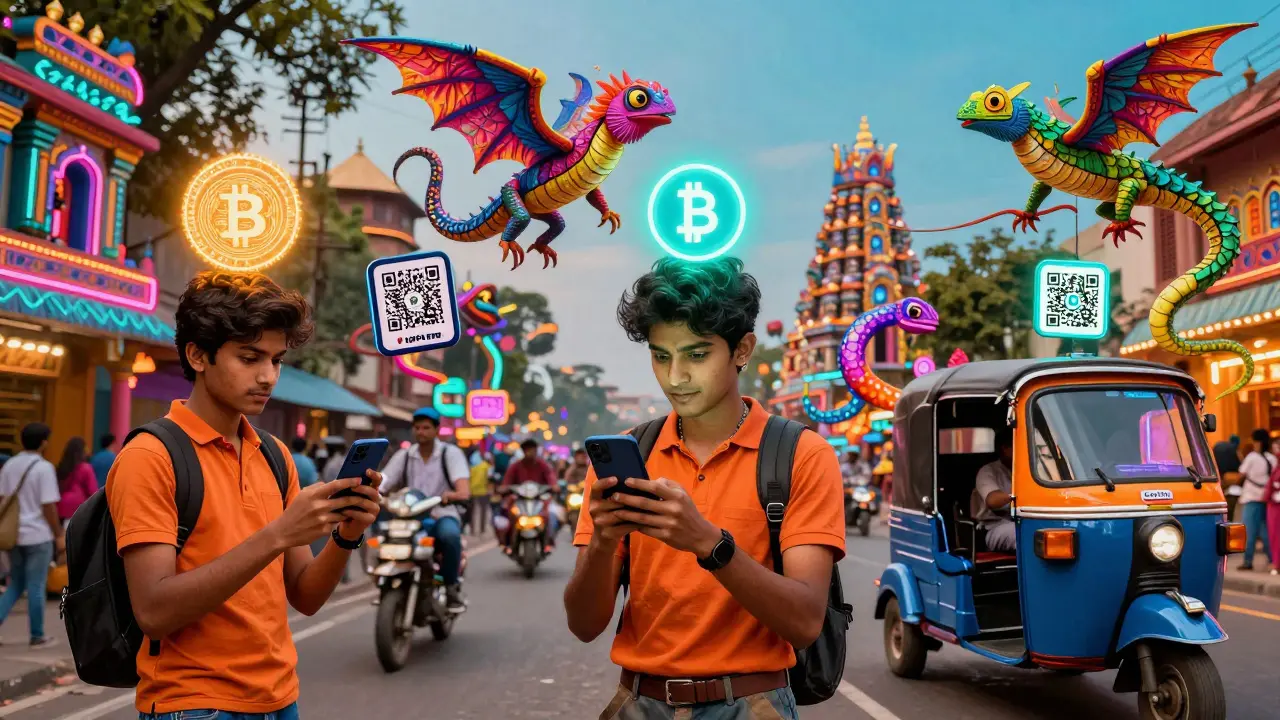
The numbers don’t lie. Between July 2024 and June 2025, India accounted for over $2.36 trillion in on-chain cryptocurrency transactions across the Asia-Pacific region. That’s a 69% jump from the year before. Bitcoin alone saw $4.6 trillion in fiat on-ramps during that time - more than double any other country. And it’s not just about buying Bitcoin. Indians are using stablecoins like USDT and USDC for daily payments, sending remittances, and accessing DeFi protocols that pay interest on holdings without a bank. What makes this possible isn’t just tech-savvy youth. It’s infrastructure. India already had one of the most advanced digital payment systems on the planet: UPI. Over 10 billion UPI transactions happen every month. People are used to paying for chai, groceries, and bus tickets with their phones. When crypto apps came along, they didn’t need to learn a new habit - they just added another wallet to their phone.The Tax That Didn’t Stop Adoption
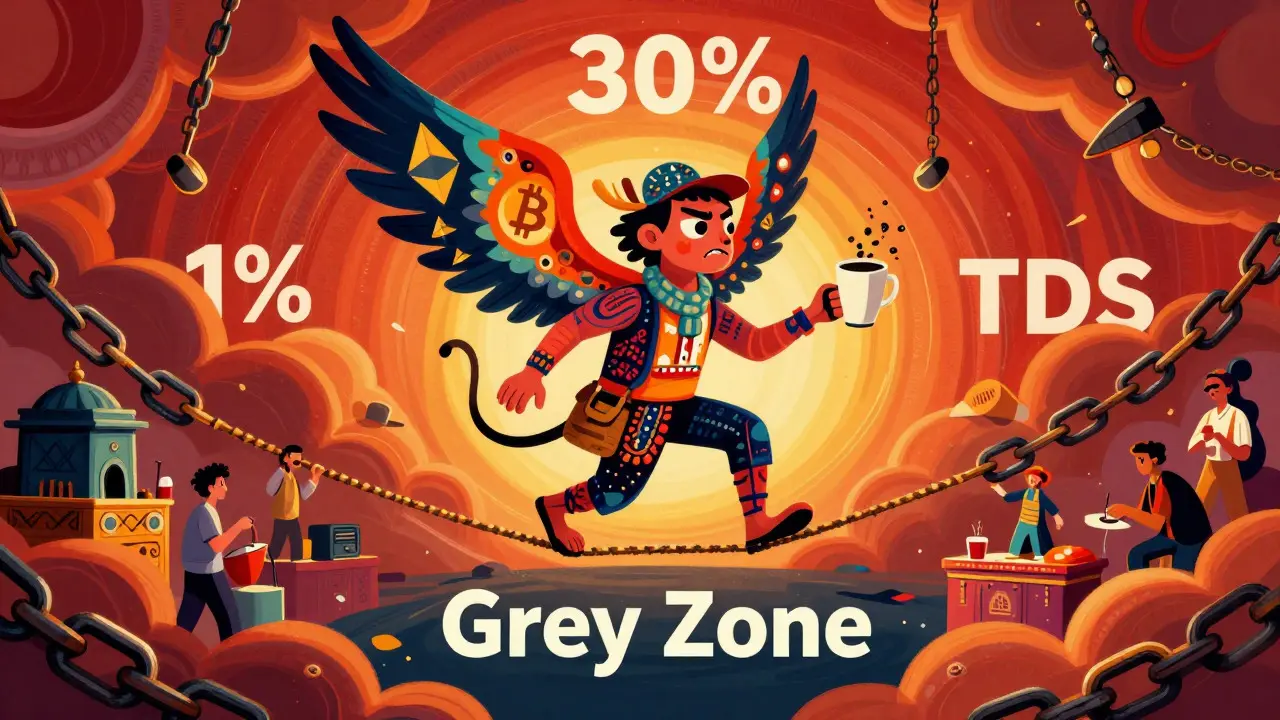
Here’s the twist: India taxes crypto trades at 30%, with no deductions for losses. Plus, there’s a 1% TDS (tax deducted at source) on every transaction. That’s harsher than most countries. Yet, adoption didn’t slow down - it exploded. Why? Because the value outweighed the cost. For millions of young Indians working gig jobs, crypto isn’t a gamble - it’s income. A student in Bangalore might earn 5,000 INR per month freelancing for a U.S. client via crypto. No bank delays. No currency conversion fees. No paperwork. The tax is a nuisance, but not a dealbreaker. Small businesses are doing the same. A tailor in Jaipur accepts USDC for custom orders. A freelance graphic designer in Pune gets paid in Bitcoin. They don’t wait for regulation to catch up. They just use what works.From Students to Startups: Who’s Really Using Crypto?
Crypto adoption in India isn’t driven by Wall Street. It’s driven by students, freelancers, delivery drivers, and local shop owners. Chainalysis data shows that over 70% of crypto activity in India comes from retail users under 35. But it’s not just about speculation. In rural towns, crypto is being used to bypass traditional banking. Farmers in Punjab use stablecoins to sell crops to buyers in Mumbai without waiting weeks for bank transfers. Women’s self-help groups in Tamil Nadu pool funds using crypto wallets to lend to each other at 0% interest - no middleman, no bureaucracy. Even universities are getting involved. IITs now offer blockchain electives. Coding bootcamps in Hyderabad teach Solidity alongside Python. Students aren’t just learning about crypto - they’re building it. Decentralized apps (dApps) for local agriculture, healthcare records, and microloans are being developed by Indian teams and deployed locally.
Institutional Adoption: The Quiet Revolution
While retail users drive volume, institutions are building the backbone. Indian fintechs like CoinSwitch Kuber, ZebPay, and Bitbns now serve over 100 million users combined. These platforms aren’t just exchanges - they’re full financial ecosystems. You can earn interest on your crypto, take out crypto-backed loans, and even pay utility bills with Bitcoin. Banks? They’re watching. State Bank of India and HDFC are testing blockchain-based settlement systems. Insurance companies are piloting smart contracts for claims. Even the Reserve Bank of India is exploring a digital rupee that could one day integrate with crypto wallets. The Bharat Web3 Association - a coalition of over 150 Indian crypto firms - is pushing for clearer rules, not bans. Their message? “We don’t want to be underground. We want to be official.” And the government is starting to listen.What’s Next? The Bitcoin Reserve Talk
The most surprising development? Rumors are swirling that India is considering creating a national Bitcoin reserve. Not as a currency - but as a strategic asset. Think of it like gold, but digital. If true, this would be the first time a major economy seriously considers holding Bitcoin as part of its foreign reserves. Why? Because India’s crypto adoption isn’t a fad. It’s structural. The country has built a parallel financial layer that works better than the old one for millions. When people can send money across borders in seconds for 1% of the cost, why would they go back? Regulators may still tax it heavily, but they can’t stop it. And they’re realizing that trying to shut it down could hurt innovation, jobs, and economic growth. The shift isn’t about legality anymore - it’s about integration.
The Bigger Picture: India as the Blueprint
India’s story isn’t about crypto being legal or illegal. It’s about what happens when technology outpaces regulation - and people choose convenience over bureaucracy. Other countries are watching. Nigeria, Indonesia, and Brazil are copying India’s model: leverage existing mobile payment systems, empower grassroots users, and let the market lead. India proved that you don’t need permission to adopt crypto. You just need a smartphone, a network, and a reason to try. The future of finance isn’t being built in New York or London. It’s being built in Mumbai, Bengaluru, and Lucknow - by students, shopkeepers, and gig workers who didn’t wait for approval. They just started using it.Is cryptocurrency legal in India?
Yes, cryptocurrency is legal in India. There is no ban on owning, trading, or using crypto. However, the government imposes heavy taxes - 30% on profits and 1% TDS on every transaction. The lack of clear regulation creates uncertainty, but not illegality.
Why is India #1 in crypto adoption despite high taxes?
India leads because crypto solves real problems: fast cross-border payments, access to global income, and financial inclusion for the unbanked. When the benefit outweighs the tax cost - especially for gig workers and small businesses - people use it anyway. UPI’s digital infrastructure made adoption effortless.
Do Indians use Bitcoin or stablecoins more?
Bitcoin is the entry point for most new users - over $4.6 trillion in fiat on-ramps went to BTC between mid-2024 and mid-2025. But stablecoins like USDT and USDC dominate daily transactions because they’re stable, easy to use, and accepted by merchants. Many users convert BTC to USDT immediately after buying.
Is DeFi popular in India?
Yes. Indian users are among the top global participants in DeFi protocols. Platforms like Aave, Uniswap, and Curve see heavy traffic from India. People use DeFi to earn interest on crypto, borrow without credit checks, and access global financial services - especially useful for those without bank accounts.
Could India create a Bitcoin reserve?
Rumors suggest India is exploring this. A national Bitcoin reserve would mean holding BTC as a strategic asset, similar to gold. If done, it would signal official recognition of crypto’s value - not as money, but as a store of value. It’s still unconfirmed, but the momentum is building.
How does UPI help crypto adoption?
UPI created a culture of instant, mobile-first payments. When crypto apps integrated with UPI, users didn’t need to learn anything new. They could buy crypto with a single tap using their existing UPI app. This lowered the barrier to entry dramatically - millions adopted crypto overnight because it felt familiar.








11 Comments
This is so inspiring 😭 I never realized how much power a simple smartphone and a stablecoin could give someone. From farmers in Punjab to students in Bangalore - this isn't just crypto, it’s freedom. And the fact that they’re doing it despite the tax? Pure grit. I’m literally crying right now.
India's adoption isn't about rebellion. It's about necessity. UPI made digital payments normal. Crypto just plugged into that. No one asked for permission. They just started using what worked.
Stablecoins are the real MVP here no one talks about it enough
Honestly this is the most realistic crypto story I've seen. No hype. No moon. Just people solving real problems with tech they already trust. UPI + crypto = unstoppable combo.
Let me guess - the same people who think Bitcoin is ‘digital gold’ are now claiming India’s gig workers are building the future of finance. Cute. The tax rate is 30%. That’s not a nudge - it’s a sledgehammer. And yet somehow we’re supposed to believe this is innovation and not just desperation? The numbers look big because the population is huge. That doesn’t make it sustainable. It makes it statistically noisy.
I love how this isn't about governments or banks or Wall Street. It's about a woman in Tamil Nadu lending money to her friend through a crypto wallet because the bank took too long. That's the real revolution right there
India is #1? Really? What about Nigeria? They’ve had crypto adoption for years. This feels like cherry-picking data to fit a narrative. Also 30% tax is brutal. People aren’t adopting crypto - they’re tolerating it.
There’s a deeper layer here that most people miss. The real story isn’t just UPI or stablecoins - it’s the cultural shift in how value is perceived. In India, trust isn’t placed in institutions. It’s placed in networks. A farmer doesn’t trust the bank. He trusts the guy who pays him in USDT. A student doesn’t trust the government’s tax system. She trusts the U.S. client who pays her in crypto. This isn’t adoption - it’s a redefinition of financial trust. And that’s why taxes won’t stop it. You can’t tax trust. You can only ignore it. And right now, India’s doing the latter.
I’ve been following this for years. The fact that DeFi is thriving without regulation is proof that people want autonomy. Not just in finance - in dignity. The Indian user isn’t looking for a handout. They’re looking for a pathway. And crypto gave them one.
One must ask: Is this adoption or merely a symptom of systemic financial failure? A nation with 30% taxation on crypto gains, yet still leads in adoption, is not a triumph of innovation - it is a indictment of its own economic infrastructure. The people are not embracing blockchain; they are fleeing the ruins of a broken system. This is not a blueprint - it is a funeral pyre.
So India’s using crypto because taxes are high? Funny. That’s like saying people buy electric cars because gas prices are high. Yeah, that’s part of it. But the real reason? The car’s just better. Same here. Crypto’s faster, cheaper, more flexible. The tax? Just the price of admission. And honestly? Worth every rupee.