Trading Crypto in India's Grey Zone: Risks, Taxes, and the COINS Act
Navigating India's crypto grey zone: 30% tax, RBI caution, and the COINS Act 2025. Learn the real risks and opportunities for traders in 2026.
When you trade, earn, or sell cryptocurrency in India, you’re not just participating in a new financial system—you’re creating a crypto tax India, a legal obligation under Indian income tax law that treats digital assets as taxable property. Also known as cryptocurrency taxation, it applies whether you bought Bitcoin on KoinBX, swapped tokens on GroveX, or earned rewards from an airdrop like ATA or SAKE. The government doesn’t care if you think crypto is ‘not real money.’ If you made a profit, you owe tax.
India treats crypto as a capital asset, a type of investment subject to capital gains tax when sold or exchanged. Also known as digital asset taxation, it means every trade—BTC to USDT, ETH to SOL, or even swapping one meme coin for another—triggers a taxable event. Even if you didn’t cash out to INR, the moment you swap one crypto for another, the IRS-style rules apply. And yes, the FIU-IND, India’s Financial Intelligence Unit that tracks crypto transactions and enforces reporting. Also known as Financial Intelligence Unit - India, it works with exchanges like KoinBX to flag suspicious activity. If you earned crypto from staking, mining, or airdrops, that’s treated as income, taxable at your regular slab rate, not capital gains. Also known as crypto income, it’s added to your salary or business income and taxed accordingly. No one is auditing your MetaMask wallet, but if you report less than what your exchange reports to the government, you’re asking for trouble.
You don’t need a CPA to file—but you do need records. Track every transaction: date, amount, value in INR at the time, and whether it was a buy, sell, or swap. Use free tools or spreadsheets. The 1% TDS on crypto trades isn’t optional—it’s already deducted by exchanges like KoinBX. That’s not your final tax, just a prepayment. Your actual tax bill depends on your total income and how long you held the asset. Holding longer than 36 months gets you lower long-term gains rates, but most crypto trades happen way faster than that.
Don’t assume foreign exchanges like KCEX or GroveX are safe from Indian tax law. The government already knows about them. If you made over ₹50,000 in crypto trades last year, you’re required to report it—even if you never used an Indian platform. Failing to report can mean penalties up to 200% of the tax due, plus interest. And if you got an airdrop like PERA or RACA and sold it? That’s taxable income too. No one told you? That doesn’t matter. The law doesn’t care about your ignorance.
What you’ll find below are real, practical guides that cut through the noise. You’ll see how Indian traders handle reporting, what exchanges track, which tokens trigger tax events, and how to avoid common mistakes that land people in trouble. No theory. No fluff. Just what you need to stay compliant and keep your money.
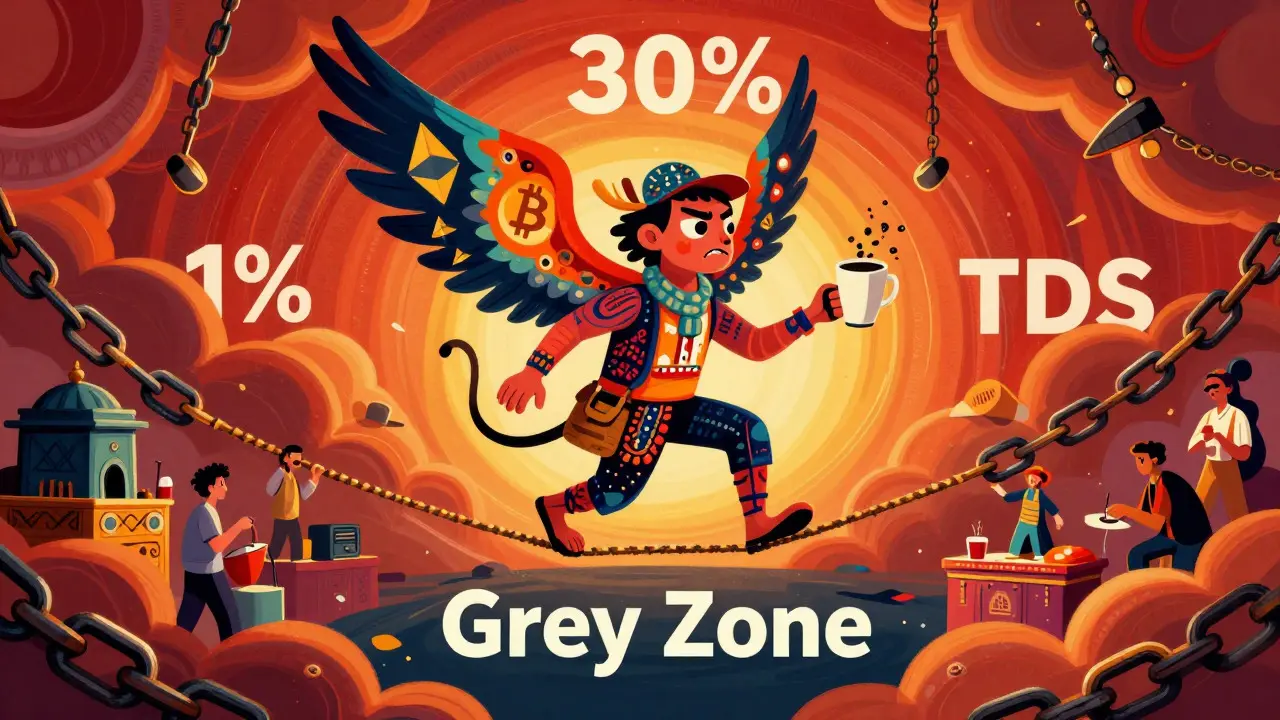
Navigating India's crypto grey zone: 30% tax, RBI caution, and the COINS Act 2025. Learn the real risks and opportunities for traders in 2026.

India ranks #1 globally in crypto adoption despite harsh taxes, driven by UPI infrastructure, grassroots use, and institutional growth. Bitcoin and stablecoins dominate, with DeFi and gig workers fueling the boom.

India taxes crypto at 31.2% with a 1% TDS and 18% GST on exchange fees. No deductions, no long-term discounts. Learn how it works, what's taxed, and how to comply in 2025.

India's 1% TDS on crypto transactions deducts tax at the time of trade, not on profits. Understand thresholds, crypto-to-crypto rules, GST叠加, and how to stay compliant in 2025.