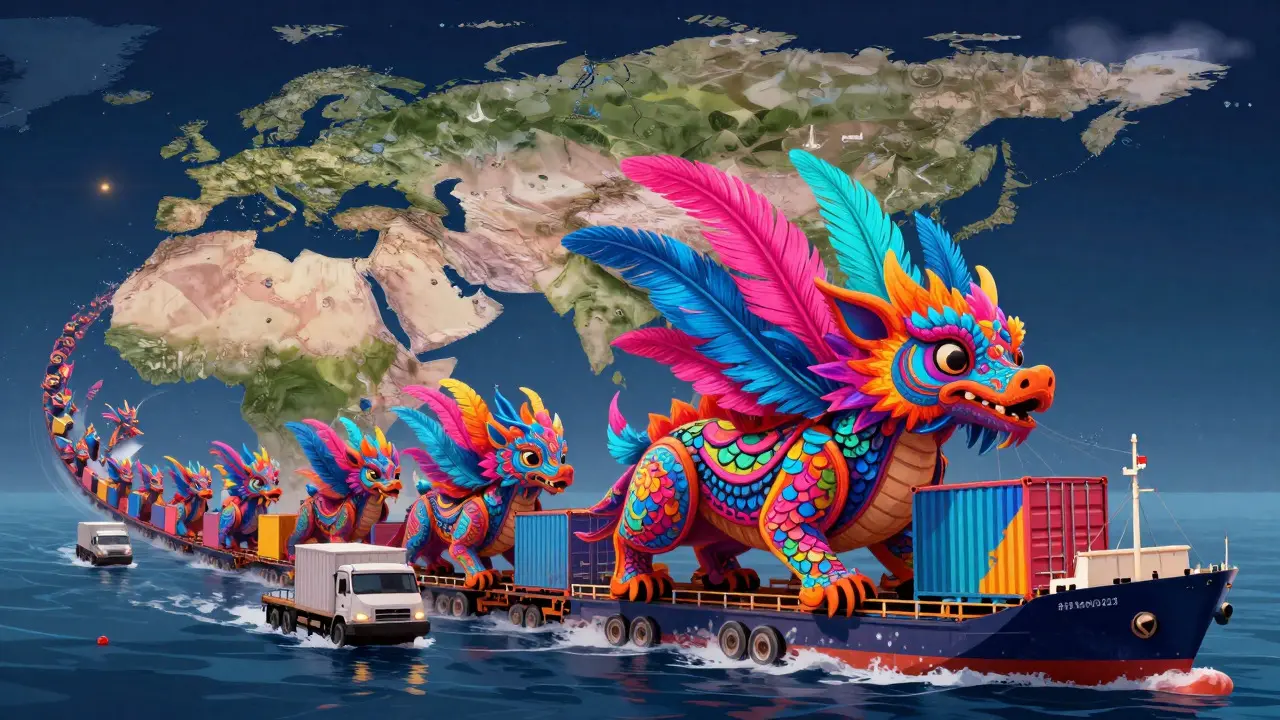




Imagine packing up an entire industrial factory, not to move it down the street, but across continents. That is exactly what happened to Bitcoin mining, a process that secures the cryptocurrency network through massive computational power. In 2021, China decided to shut its doors on this energy-intensive industry. The result was the largest geographical shift in digital infrastructure history. But where did all those machines go? And why did they choose specific countries over others?
The answer isn't just about finding cheap electricity. It’s a complex mix of deregulated energy markets, political stability, and physical grid capacity. When China banned crypto mining, the global map of BTC mining was redrawn in months. This article breaks down exactly where the miners went, why they chose those locations, and what it means for the future of the network.
The Scale of the Great Migration
To understand the relocation, you first have to grasp the scale. Before the crackdown, China dominated the scene. According to data from the Cambridge Centre for Alternative Finance (CCAF), China held roughly 75.5% of the global Bitcoin hashrate, which measures the total computing power dedicated to solving cryptographic puzzles. By April 2021, that number had plummeted to 46%. This wasn't a slow decline; it was a sudden exodus.
The Chinese government didn't just frown upon trading; they targeted the miners directly. Provincial bans started in Inner Mongolia, aiming at energy-intensive industries. Then, the central government stepped in with unprecedented weight. For miners, the message was clear: leave or lose everything. Unlike traditional manufacturing, Bitcoin mining operations require only internet connectivity and electrical power. This made them uniquely mobile. Entire farms consisting of thousands of ASIC machines were packed into shipping containers and moved across borders.
Kazakhstan: The Unexpected Powerhouse
If you were looking for the biggest winner of the Chinese exodus, look north. Kazakhstan emerged as the primary beneficiary. Its share of global mining power surged almost six-fold, jumping from 1.4% in September 2019 to 8.2% by April 2021. By late 2021, Kazakhstan had surpassed China to become the second-largest crypto mining country in the world.
Why Kazakhstan? The answer lies in its energy infrastructure. The country sits atop abundant coal mines and has existing industrial electrical capacity that could handle the sudden influx of demand. For Chinese miners fleeing strict regulations, Kazakhstan offered a pragmatic solution: plenty of power, relatively low costs, and a regulatory environment that was initially welcoming.
| Country | Share (Sept 2020) | Share (April 2021) | Key Driver |
|---|---|---|---|
| China | 75.5% | 46% | Regulatory Ban |
| United States | ~3% | ~11% | Deregulated Energy Market |
| Kazakhstan | 1.4% | 8.2% | Cheap Coal Power |
| Russia | ~2% | 6.8% | Low Electricity Costs |
However, this rapid growth came with growing pains. Kazakhstan's grid struggled under the strain. In mid-2021, the country faced severe power shortages, leading to rolling blackouts. The government eventually had to intervene, forcing some miners to reduce consumption or face disconnection. This highlighted a critical lesson: while energy availability is key, grid stability is equally important for large-scale operations.
Texas and the United States: The Strategic Choice
While Kazakhstan grabbed headlines for speed, the United States, particularly Texas, became the strategic long-term destination. Texas accounts for roughly half of the 5.2 gigawatts of Bitcoin mining capacity installed across the US. Why did so many miners cross the Pacific instead of heading east?
It comes down to market structure and energy mix. Texas operates a deregulated energy market, meaning miners can negotiate direct contracts with power generators. This often results in lower prices compared to regulated states. More importantly, Texas offers access to renewable energy. With wind and solar making up 22.5% of the state's energy mix, miners could tap into green power sources.
This connection to renewables is crucial. As environmental concerns grew around the carbon footprint of mining, Texas provided a narrative of sustainability. Furthermore, Bitcoin miners offer a unique service to the grid: flexibility. During peak demand, when power outages are a risk (like during the winter storm Uri in 2021), mining facilities can instantly reduce their power draw. This helps stabilize the grid, turning miners into valuable partners for energy providers rather than just consumers.
Other Destinations: Russia, Iran, and Beyond
The migration wasn't limited to just two regions. Other countries saw significant increases in mining activity due to similar economic drivers.
- Russia: With vast natural resources and historically low electricity costs, Russia attracted a notable portion of displaced miners, reaching a 6.8% share. However, geopolitical tensions and potential regulatory shifts have made it a more volatile option in recent years.
- Iran: Holding a 4.6% share, Iran leveraged its subsidized electricity rates. Yet, like Kazakhstan, the Iranian grid faced stress, leading to periodic crackdowns on unauthorized mining operations.
- Pakistan: Emerging as a minor player, Pakistan offered cheap hydroelectric power, though infrastructure limitations kept its share relatively small compared to its neighbors.
These destinations shared common traits: abundant energy, low costs, and less stringent initial regulations. However, they also shared risks. Grid instability and unpredictable policy changes meant that miners had to remain agile, ready to move again if conditions worsened.
Impact on Decentralization and Network Security
One might worry that moving millions of machines would disrupt the Bitcoin network. Initially, there was a temporary drop in global hashrate as equipment was physically transported and reconnected. But the long-term effect has been positive for decentralization.
Before the ban, over 75% of mining occurred in one country. This created a single point of failure. If China decided to cut off internet access to miners or seize hardware, the network could have been severely compromised. Today, mining is spread across North America, Central Asia, Europe, and other regions. This geographic diversity strengthens the network's resilience.
The "Great Mining Migration" proved that Bitcoin mining is inherently mobile. It demonstrated that the industry could adapt rapidly to regulatory shocks. For investors and developers, this decentralization reduces concentration risk. No single government holds the keys to the majority of the network's security.
Future Trends: Sustainability and Regulation
As we move further from the 2021 exodus, new trends are emerging. The focus is shifting from just "cheap power" to "clean power." Investors and institutional players are increasingly favoring jurisdictions with strong environmental, social, and governance (ESG) criteria. This benefits places like Texas, Canada, and parts of Scandinavia, where hydro and wind power are abundant.
Regulation is also maturing. Countries that initially welcomed miners with open arms are now implementing clearer frameworks to manage grid impact and taxation. Miners are no longer just nomads; they are becoming integrated members of local energy ecosystems. They provide grid services, invest in local infrastructure, and create jobs. This shift suggests that the era of wild west mining is ending, replaced by a more structured, sustainable industry.
Why did China ban Bitcoin mining?
China banned Bitcoin mining primarily due to concerns over energy consumption and financial stability. The government viewed crypto mining as wasteful of electricity resources needed for other industries and sought to curb capital flight associated with cryptocurrency trading. The ban was part of a broader crackdown on the crypto sector.
Which country has the most Bitcoin miners after China?
After the Chinese exodus, the United States became the largest hub for Bitcoin mining, followed closely by Kazakhstan. Texas alone hosts a significant portion of US mining capacity due to its deregulated energy market and favorable policies.
How does Bitcoin mining affect the energy grid?
Bitcoin mining consumes large amounts of electricity, which can strain local grids if not managed properly. However, miners can act as flexible load, reducing power usage during peak demand times. This helps stabilize the grid and can integrate excess renewable energy that would otherwise be wasted.
Is Bitcoin mining more decentralized now?
Yes. Before 2021, over 75% of mining occurred in China. Today, mining is distributed across multiple continents, including North America, Central Asia, and Europe. This geographic spread reduces the risk of any single country controlling the network.
What role does renewable energy play in modern mining?
Renewable energy is becoming a key factor for miners seeking long-term sustainability and investor appeal. Locations with abundant wind, solar, or hydro power, such as Texas and Canada, are increasingly attractive. Using clean energy helps mitigate environmental criticisms of the industry.