Privacy in Decentralized Identity: How Blockchain Protects Your Data
Discover how decentralized identity uses blockchain and zero-knowledge proofs to give you control over your data, eliminating single points of failure and enhancing privacy.


Self-sovereign identity with NFTs lets you control your digital identity and prove ownership without relying on third parties. Learn how DIDs, verifiable credentials, and NFTs work together in real-world Web3 applications.
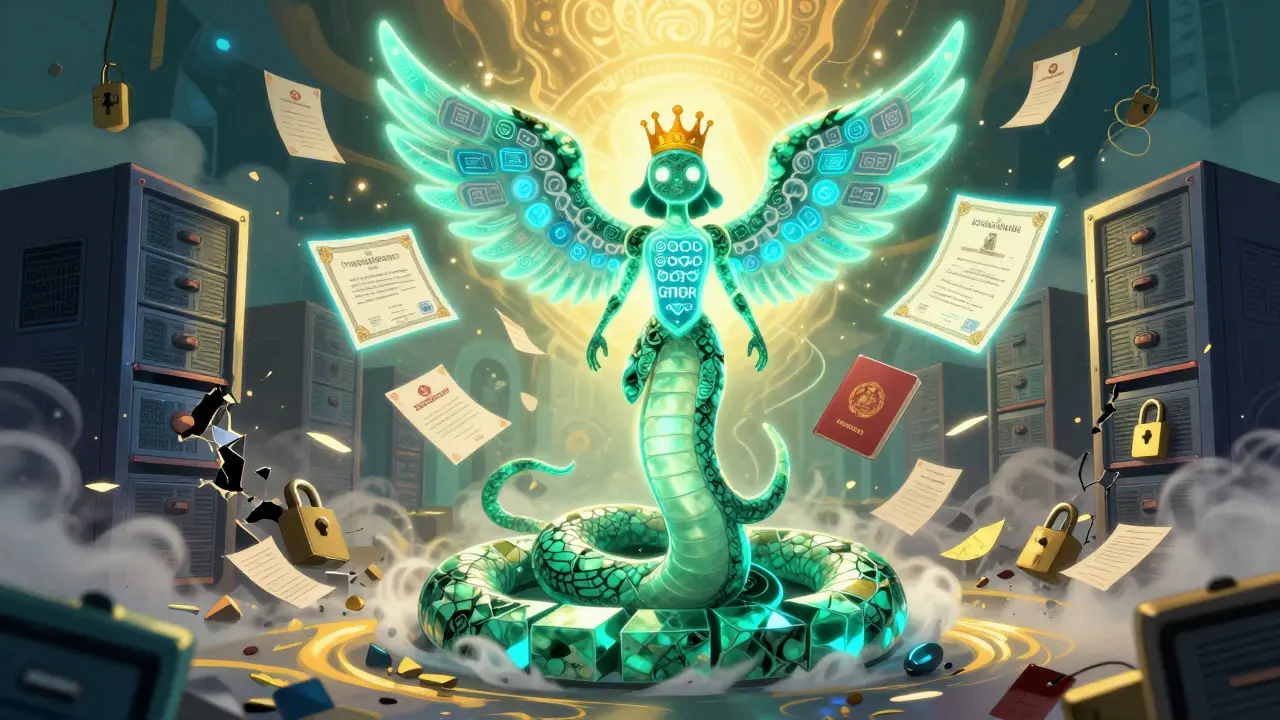
Blockchain-based identity verification lets you control your personal data with cryptography, eliminating the need to share sensitive documents. It's faster, more secure, and gives you real privacy-here's how it works and why it's already changing digital trust.
Binance offers low fees and 500+ cryptocurrencies in Singapore but lacks MAS licensing. Learn the risks, deposit options, and how it compares to Gemini and Luno in 2025.
Blockchain enables neighbors to trade solar energy directly, cutting costs, reducing waste, and boosting renewables. Learn how peer-to-peer energy trading works, where it's working, and why it's the future of local power.
Iran uses Bitcoin mining to bypass sanctions, turning cheap electricity into imported goods. State-linked miners produce nearly 5% of global Bitcoin, funding medicine, machinery, and industrial imports outside the traditional banking system.
Husky Avax (HUSKY) is a meme coin on the Avalanche blockchain with a 100-trillion-token supply and no real utility. Learn its price, where to buy it, and why it's not a serious investment.
Ecuador doesn't ban cryptocurrency, but banks block all transactions, taxes apply to profits, and only 2.73% of people use it. Learn how crypto works in this restrictive dollarized economy.