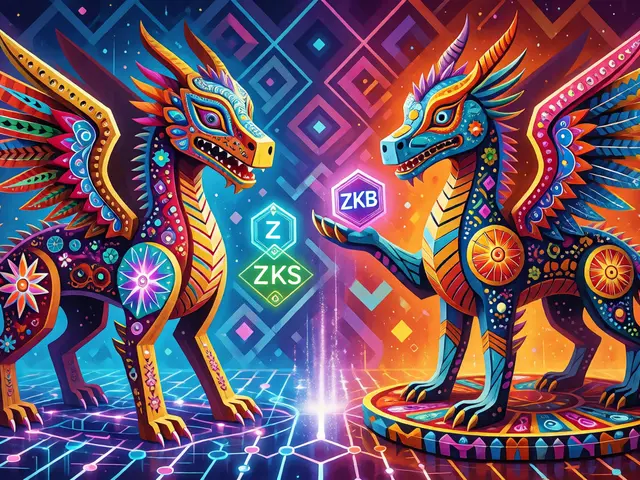


Have you ever spent hours hunting for an airdrop, only to realize you were looking at the wrong ticker symbol? That is exactly what happens when people mix up ZKSwap’s ZKS tokens with ZKBase’s ZKB tokens. It is a common trap in the crypto world, where similar names lead to missed opportunities or wasted gas fees. If you are here because you heard about a "ZKSwap V3 airdrop" involving ZKB, you need to pause and check your facts. The reality is that these are two distinct entities with different histories, tokenomics, and reward structures.
This article cuts through the noise. We will break down exactly what happened with the ZKSwap V3 testnet rewards, clarify the role of the ZKB token within the broader ZKBase ecosystem, and help you understand which project actually pays out what. Whether you are an early adopter trying to claim old rewards or a new investor evaluating the current landscape, getting these details right matters.
The Core Distinction: ZKS vs. ZKB
Before we dive into the specific events, let's establish who is who. ZKSwap is a decentralized exchange protocol built on Ethereum. It uses Automated Market Maker (AMM) technology combined with ZK-Rollups for Layer 2 scaling. Its native token is ZKS. This token is used for governance and paying transaction fees on the platform.
ZKBase is often cited as the parent infrastructure or a related entity that encompasses ZKSwap. However, it operates with its own token, ZKB. While ZKSwap focuses on trading and liquidity, ZKBase includes other components like ZKSquare (a payment service). The critical point here is that historical major airdrops were paid in ZKS, not ZKB. If you see a headline claiming "ZKB airdrop from ZKSwap," verify the source carefully. Most confirmed distributions from the ZKSwap team have been in ZKS.
| Feature | ZKSwap Protocol | ZKBase Ecosystem |
|---|---|---|
| Primary Token | ZKS | ZKB |
| Main Function | Layer 2 AMM Decentralized Exchange | Infrastructure & Payment Services (ZKSquare) |
| Notable Airdrop | Feb 2021 (80M ZKS), Dec 2021 (Testnet Rewards) | Limited public documentation on direct ZKB airdrops |
| Technology Focus | ZK-Rollup Scaling, NFT Support | Broad Infrastructure Integration |
Recapping the Major ZKSwap Airdrops
To understand why there is confusion, look at the timeline. The biggest event in this space was the February 25, 2021, distribution. ZKSwap dropped 80 million ZKS tokens to existing holders. This wasn't a small trickle; it was a massive 1:1 ratio distribution for users holding ZKS in private wallets or supported exchanges like Huobi, Gate.io, and LBank.
Who got left out? Team members and angel investors were excluded from this specific snapshot to ensure fairness for community holders. However, angel investor tokens did unlock partially alongside this event. If you held ZKS during that window, you likely received significant value. But note: this was ZKS, not ZKB.
Then came the V3 Testnet campaign in late 2021. This is likely the source of the "V3 airdrop" rumors. Between December 1 and December 14, 2021, ZKSwap ran a targeted incentive program for testers. They distributed 50,000 ZKS tokens total-valued around $30,000 at the time-to those who helped debug the third version of their exchange.
How the V3 Testnet Rewards Worked
This wasn't just a "hold and wait" situation. You had to work for it. The process required connecting a MetaMask wallet to the Ethereum Rinkeby Test Network. Users then interacted with the new interface, tested NFT features, and documented their experience.
The reward structure had two tiers:
- Best Contribution Award: 60 authors received 500 ZKS each. To qualify, you needed to write a review of at least 300 words on the official forum and post it on Twitter with the hashtag #V3 Testnet Feedback# along with your wallet address.
- Honorable Mention Award: 200 participants received 100 ZKS each. This tier rewarded broad participation and bug reporting accuracy.
Evaluation focused on uniqueness and technical accuracy. If you reported a real bug that broke the UI, you stood a better chance than someone who just said "it works." Payments were finalized by December 23, 2021. Importantly, if you linked multiple wallets to one IP address, only the highest-earning wallet got paid. This prevented sybil attacks where one person creates ten accounts to farm rewards.
Where Does ZKB Fit In?
So, if the big payouts were ZKS, what is the deal with ZKB? ZKB has a maximum supply of 600 million tokens, with roughly 197 million circulating in recent data points. It serves as the utility token for the wider ZKBase infrastructure, which includes ZKSwap but also extends to payment solutions like ZKSquare.
Currently, there is no widely documented evidence of a massive, standalone "ZKB airdrop" comparable to the ZKS drops. Some community discussions conflate the two because they share branding elements and technological roots. If you are holding ZKB, your value proposition lies in the broader ecosystem growth rather than the specific DEX trading volume that drives ZKS demand.
Be cautious of scams. Because the names are similar, fake websites often pop up promising "ZKB airdrops" for ZKS holders. Always check the official contract addresses. A legitimate airdrop never asks for your private key. If a site demands you connect your wallet and sign a transaction to "claim" ZKB without a clear smart contract interaction history, proceed with extreme caution.
Technical Context: Why Layer 2 Matters Here
Why did ZKSwap bother with all these incentives? Because building a Layer 2 solution is hard. ZKSwap uses ZK-Rollups to bundle transactions off-chain and prove their validity on Ethereum using zero-knowledge proofs. This allows for high throughput and low fees.
The V3 update specifically added NFT support and optimized the user interface. These weren't just cosmetic changes; they were attempts to capture the NFT market boom of 2021. By rewarding testers, they ensured the code was robust before mainnet deployment. For you as a user, this means the platform is more stable now, but it also highlights how projects use tokens to bootstrap network security and user engagement.
Actionable Steps for Current Holders
If you are still involved with either token, here is what you should do right now:
- Audit Your Wallets: Check if you participated in the 2021 snapshots. Did you receive ZKS? If you wrote reviews for the V3 testnet, did you get your 100-500 ZKS payout? Many users forget to check older balances.
- Verify Token Contracts: Ensure you are interacting with the correct contracts. ZKS and ZKB have different addresses. Mixing them up can lead to sending funds to the wrong place.
- Monitor Official Channels: Follow the official ZKSwap and ZKBase blogs. New airdrops usually start with announcements on Twitter or Discord before hitting news aggregators.
- Tax Implications: Remember that airdrops are often taxable income in many jurisdictions. Keep records of the date you received the tokens and their fair market value at that time.
Common Pitfalls to Avoid
The biggest mistake is assuming all "ZK" prefixed projects are the same. There are dozens of zero-knowledge rollup projects. ZKSwap is specific. Another pitfall is falling for phishing links. During airdrop seasons, scammers create lookalike domains. Always type the URL manually or use a bookmark.
Also, don't ignore the fine print on eligibility. The V3 testnet required a 300-word review. Just posting a tweet wasn't enough. You had to provide substance. Future airdrops may have even stricter criteria, such as minimum holding periods or specific on-chain interactions. Read the rules twice.
Did ZKSwap give an airdrop in ZKB tokens?
No, the major historical airdrops from ZKSwap, including the February 2021 distribution and the December 2021 V3 testnet rewards, were paid in ZKS tokens. ZKB is the token for the broader ZKBase ecosystem, and while related, they are distinct assets with different distribution histories.
How much was the ZKSwap V3 testnet airdrop worth?
The total pool was 50,000 ZKS tokens, valued at approximately $30,000 at the time of the campaign in late 2021. Individual rewards ranged from 100 ZKS for honorable mentions to 500 ZKS for best contributions.
Can I still claim the ZKSwap V3 airdrop today?
Generally, no. The V3 testnet campaign concluded in December 2021, with payments distributed by December 23, 2021. Unless you missed a specific long-tail claim window announced later, those rewards are likely expired. Check your wallet history for any pending transactions from that period.
What is the difference between ZKS and ZKB?
ZKS is the governance and fee token for the ZKSwap decentralized exchange. ZKB is the token associated with the ZKBase infrastructure, which includes ZKSwap but also other services like ZKSquare. They serve different parts of the ecosystem and have separate token supplies and use cases.
Were team members included in the ZKSwap airdrops?
For the major February 2021 airdrop, ZKSwap team members and angel investors were explicitly excluded from the snapshot to prioritize community holders. Angel investor tokens were unlocked separately over time.
Final Thoughts on Navigating Crypto Branding
Crypto moves fast, and branding gets messy. The story of ZKSwap and ZKBase is a perfect example of why due diligence is non-negotiable. Don't let similar tickers fool you into thinking you have free money waiting. Verify the contract, read the announcement dates, and understand the mechanism.
If you are looking for the next opportunity, keep an eye on Layer 2 developments. As networks scale, incentivized testnets remain a primary way to earn early access rewards. But always remember: if it sounds too good to be true, or if the token name doesn't match the project description, double-check before you click.