

Identity Verification Savings Calculator
Calculate Your Savings
Estimate how much time and money you could save by switching to blockchain identity verification.
Total Time Saved
Total Cost Saved
Efficiency Gain
What Exactly Is Blockchain-Based Identity Verification?
Imagine you could prove who you are online without handing over your passport, social security number, or driver’s license every time you sign up for a new service. That’s the promise of blockchain-based identity verification. Instead of storing your personal data in a company’s server-where it can be hacked, leaked, or misused-this system lets you control your own identity using cryptography and a decentralized ledger.
It’s not science fiction. By 2023, over 31% of Fortune 500 companies had started testing blockchain identity solutions for specific tasks like customer onboarding or employee authentication. Estonia has been using it for citizens since 2014. Banks, hospitals, and even government agencies are slowly switching from paper forms and PDF uploads to digital credentials that you own.
How It Works: The Core Components
Blockchain identity doesn’t store your full name, address, or birth certificate on the blockchain. That would be inefficient and risky. Instead, it uses four key building blocks:
- Decentralized Identifiers (DIDs): These are unique, tamper-proof digital IDs that you control. Unlike an email or username, DIDs aren’t tied to any company or government. You create them, and only you hold the keys to prove they’re yours.
- Verifiable Credentials: Think of these as digital versions of your diploma, passport, or driver’s license. They’re issued by trusted sources-like your university or the DMV-but signed with cryptography so anyone can verify they’re real without contacting the issuer.
- Digital Signatures: Every time you share a credential, you sign it with your private key. No one else can fake your signature. If someone tries to alter the document, the signature breaks, and it’s instantly flagged as invalid.
- Smart Contracts: These are automated rules on the blockchain that decide who gets access to what. For example, a rental app might use a smart contract to check if you’re over 18 and have a verified income level-without seeing your actual bank statements.
Your real documents? They’re stored securely off-chain, usually on IPFS (InterPlanetary File System). The blockchain only holds a cryptographic hash-a unique fingerprint-of those files. That way, you get the security of a public ledger without bloating it with gigabytes of personal data.
Why It’s Better Than Traditional Systems
Right now, most identity systems are broken. You give your Social Security number to your bank. Then your doctor. Then your landlord. Then your gym. Each one stores it differently. If one gets hacked, your identity is exposed everywhere.
Blockchain fixes that in three big ways:
- No single point of failure: There’s no central database to breach. Even if one service gets hacked, your identity data stays safe because it’s not stored there.
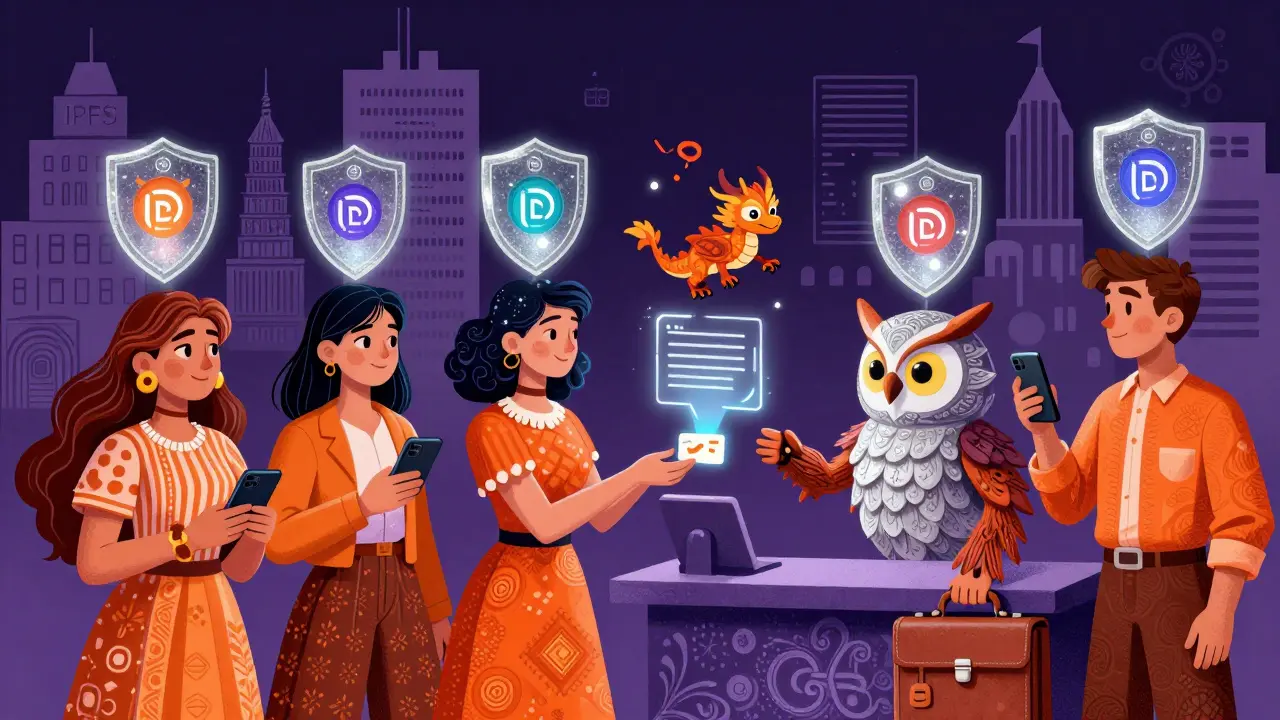
- Minimal disclosure: You don’t have to show your whole passport to prove you’re over 21. With zero-knowledge proofs, you can prove you meet a requirement without revealing any extra details. A bar can confirm you’re legally allowed to drink-without knowing your name, birthdate, or address.
- You’re in control: You decide who sees what, when, and for how long. Want to revoke access to your medical records after a doctor’s visit? Just turn it off. No calls, no forms, no waiting.
One healthcare provider reduced patient onboarding from 45 minutes to under 5 minutes using blockchain credentials. That’s not just faster-it’s less stressful for patients and cuts administrative costs by up to 60%.
Real-World Examples You Can See Today
People aren’t just talking about this-they’re using it.
- Estonia’s e-Residency: Over 70,000 people from 170 countries use blockchain-based digital IDs to start businesses, sign contracts, and file taxes online. In a 2022 survey, 87% of users said they trusted the system more than traditional ID cards.
- IBM’s Trusted Identity: Used by banks and insurers, it lets customers prove their identity across multiple services without re-uploading documents. Verification happens in seconds.
- Dock.io’s professional credentials: Freelancers and job seekers upload verified diplomas and work history. Employers check them instantly. One user on Reddit said, “I landed three interviews in a week because my credentials were instantly verifiable.”
- Microsoft’s ION: Built on the Bitcoin blockchain, it’s designed to be open and free for anyone to use. It’s already integrated into enterprise tools like Azure Active Directory.
These aren’t prototypes. They’re live systems handling real transactions-job applications, bank loans, hospital registrations, even voting pilots in Switzerland.
The Challenges: Why It’s Not Everywhere Yet
Don’t get it twisted-blockchain identity isn’t perfect. It’s still early.
The biggest roadblock? Key management. If you lose your private key, you lose access to your identity. There’s no “forgot password?” button. Some platforms offer recovery options using trusted contacts or multi-sig wallets, but most users aren’t familiar with crypto keys. A PreciseHire survey found 28% of enterprise users cited key recovery as their top concern.
Then there’s integration. Most companies still run legacy systems from the 1990s. Connecting those to blockchain requires custom code, training, and time. Enterprises report 8-12 weeks for full deployment.
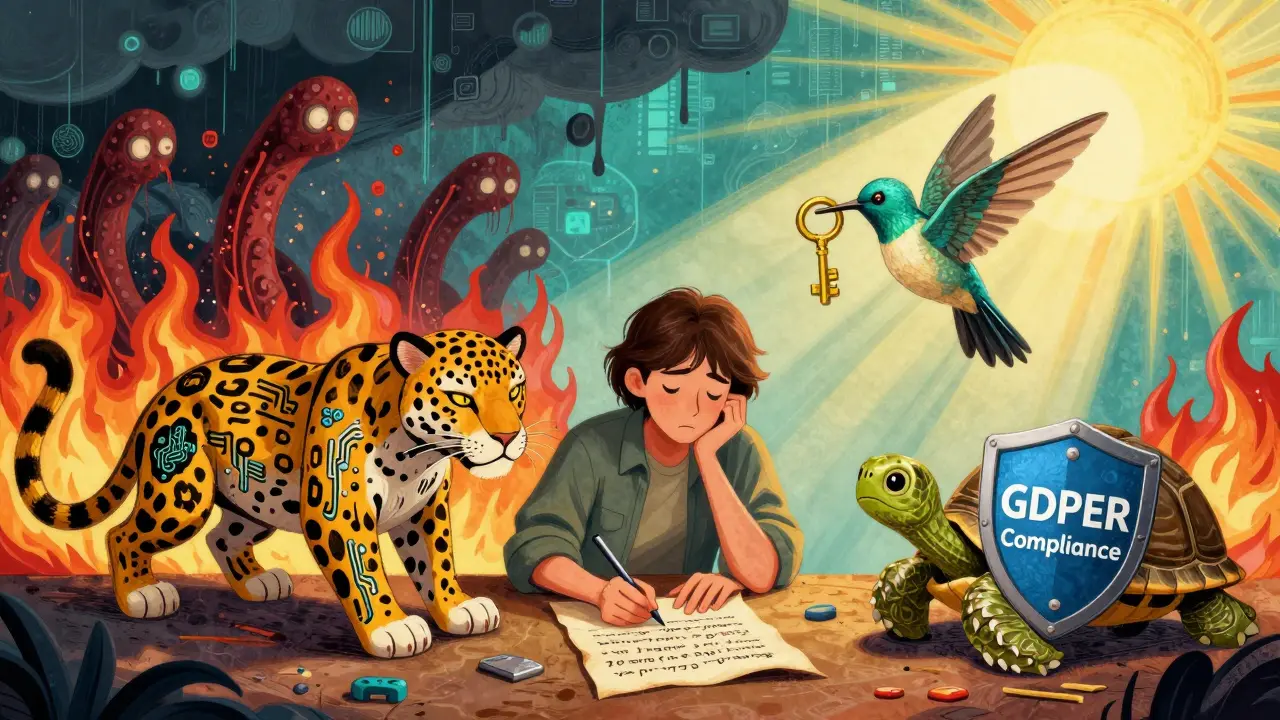
Regulations are messy too. The EU’s eIDAS 2.0 framework supports blockchain IDs. The U.S. has no federal standard yet. GDPR requires data minimization-which blockchain supports-but also mandates the right to be forgotten, which conflicts with blockchain’s immutability. Solutions are emerging (like off-chain storage and encrypted revocation lists), but it’s still a legal gray zone in many places.
And let’s not forget the learning curve. “The setup was seamless once I got past the key backup,” said one user. “But the first time I had to write down 12 words and store them in a safe? That scared me.”
What’s Next? The Road Ahead
By 2025, Gartner predicts half of all organizations will start using decentralized identity for customer access. That’s not a guess-it’s based on current adoption trends.
Here’s what’s coming:
- Biometric-bound credentials: Dock.io and others now tie your identity to your fingerprint or face scan. Even if someone steals your phone, they can’t use your credentials without your biometrics.
- Mobile driver’s licenses (mDL): States like Colorado and Maryland are rolling out blockchain-based digital licenses that work with Apple Wallet and Google Pay. You can show your license to a cop without pulling out your wallet.
- DeFi integration: Over 78% of blockchain identity providers plan to link their systems to decentralized finance platforms. Imagine borrowing money from a crypto lender without submitting pay stubs-just prove your income with a verified credential.
- AI-powered fraud detection: 1Kosmos is adding AI to spot synthetic identities-fake people created using stolen data. The system flags anomalies in behavior, document quality, and timing.
The long-term vision? A world where your identity is as portable as your email, as secure as your bank account, and as private as a conversation in a locked room.
Should You Care? Yes-Even If You’re Not a Tech Expert
You don’t need to understand cryptography to benefit from this. Just like you don’t need to know how the internet works to send an email.
What matters is this: your personal data is valuable. Right now, companies sell it. Hackers steal it. Governments collect it. With blockchain identity, you become the owner-not the product.
Next time you sign up for a new app, ask: “Can I use my verified digital ID instead of uploading a photo of my passport?” If they say no, push back. Demand better. The technology is ready. The question is whether we’re ready to demand control over our own lives.
Is blockchain identity verification safe?
Yes, when implemented correctly. Your private keys are encrypted and never shared. The blockchain records only cryptographic proofs, not your actual documents. Even if a service gets hacked, your identity data stays safe because it’s stored off-chain. The biggest risk isn’t hacking-it’s losing your recovery phrase. Treat it like a physical key to your house.
Can I use blockchain identity everywhere?
Not yet. Adoption is growing fast in finance, healthcare, and government, but many smaller businesses still rely on old systems. Most platforms today support integrations with major services like banks, job portals, and rental apps. As standards like W3C Verifiable Credentials become universal, compatibility will improve. For now, it’s a “choose your own adventure”-you can use it where supported, and keep traditional methods elsewhere.
What happens if I lose my private key?
You lose access to your identity. There’s no central authority to reset it. That’s by design-it prevents anyone else from taking over your identity. But many platforms now offer recovery options: multi-sig wallets (requiring 2/3 trusted contacts to approve recovery), biometric backups, or encrypted key shards stored in secure locations. The key is planning ahead. Write down your recovery phrase. Store it offline. Don’t screenshot it.
Does blockchain identity violate GDPR?
It can, if data is stored on-chain. But most systems avoid this by keeping personal data off-chain (on IPFS or encrypted servers) and only storing hashes or credentials on the blockchain. Since the blockchain doesn’t hold your name or address, it doesn’t violate GDPR’s data minimization principle. Revocation mechanisms also allow you to delete access rights-fulfilling the “right to be forgotten” by removing permission, not data.
Is blockchain identity just for tech people?
No. The apps are designed to feel like regular mobile apps. You upload a photo of your ID, take a selfie, and set up a PIN. Behind the scenes, blockchain and cryptography handle the rest. The average user doesn’t need to know what a DID or smart contract is-just like you don’t need to know how SSL encryption works to log into your bank. The complexity is hidden. The benefit? Control, speed, and privacy.




15 Comments
I just used my digital ID to rent an apartment last week. No more uploading blurry passport pics. It took 90 seconds. Game changer.
This is the future we’ve been waiting for. Stop handing out your SSN like it’s candy. You deserve control over your own data.
The architecture is elegant, but the UX remains catastrophically hostile to non-technical users. DIDs are not a solution if people can’t recover them.
Estonia? That’s a tiny country with 1.3 million people. Don’t act like this is scalable. We’re talking about 330 million Americans here. This isn’t a magic fix.
It’s weird how we’ve accepted that companies own our identity. Like, we just… give it away? Maybe we’re just used to being powerless. But this feels different.
I’ve taught this to my mom. She’s 72. She didn’t understand the blockchain part, but she got that she could say ‘no’ to a company asking for her birth certificate. That’s huge.
So… you’re telling me the government and big tech are quietly pushing this so they can track us even better? 🤔 They’ll say it’s ‘secure’ but it’s just a new leash. Don’t be fooled.
blockchain identity my ass next theyll say your dna is on chain and you cant opt out
I know losing your key sounds scary, but so does having your identity stolen from a data breach. This is just a new kind of responsibility. You can learn it.
The fact that Microsoft built ION on Bitcoin is the only reason I’m even considering this. Otherwise, it’s just another corporate vanity project.
Oh so now you’re supposed to trust a system built by Silicon Valley billionaires who don’t even pay taxes? Cute. I’ll stick with my paper ID, thanks.
I’ve seen this work in rural Kenya. A farmer verified his land title without leaving his village. This isn’t just for the rich. It’s for the excluded.
They’re using blockchain to make us all traceable. Soon you won’t be able to buy groceries without your digital ID. They’re building the panopticon and calling it ‘convenience’.
I lost my key last month and now i cant get into my bank or my email and they told me to wait 3 weeks for recovery and i lost my job because i couldnt prove who i was
You people act like this is revolutionary. I’ve been using government-issued digital IDs since 2018. It’s just a rebrand. The power structures didn’t change.