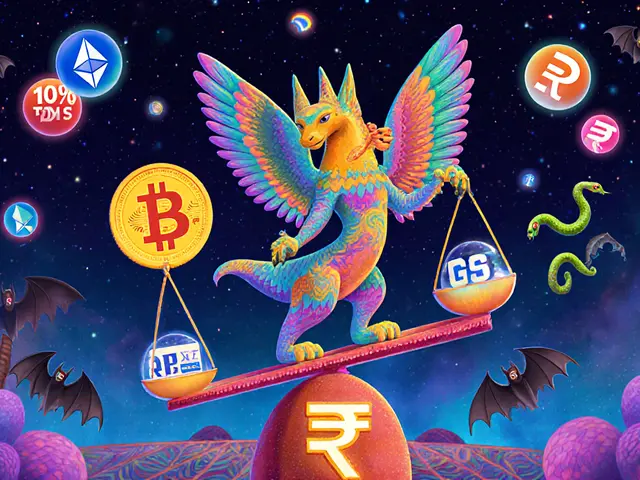


Money moves fast in Bangladesh right now. In fiscal year 2025, the country saw a record-breaking $30 billion flow into its economy from people working abroad. That is more money than the entire ready-made garment industry brings in. It sounds like a golden age for sending cash home. But if you are thinking about using Bitcoin or Ethereum to send that money, stop. The rules are strict, and the risks are real.
You might hear stories from friends or online forums about how easy it is to use crypto to bypass high fees or slow banks. Those stories are dangerous myths. While traditional remittance channels have improved dramatically with new apps and faster processing times, the legal landscape for digital currencies remains a closed door. This article breaks down exactly how the current system works, why the government banned crypto, and what you can actually do to send money safely and efficiently in 2026.
The Record-Breaking Remittance Surge
Let’s look at the numbers first because they tell a compelling story. Bangladesh’s economy has been heavily reliant on remittances-money sent by migrant workers-to stay stable. For years, this flow was inconsistent, often dipping due to global economic shifts or local political instability. But recently, something changed.
In March 2025 alone, inflows hit $3.29 billion, which was a massive 64.7% jump compared to the same month last year. By the end of FY2025, the total reached that historic $30 billion mark. Why did this happen? It wasn’t magic. It was policy.
The Central Bank of Bangladesh (also known as Bangladesh Bank) made some tough decisions. They shifted to market-driven exchange rates. Before this, the official rate didn't always match reality, encouraging people to use illegal channels. Now, the rates are competitive. They also cracked down hard on informal networks. The result? Money that used to hide in the shadows is now flowing through official banks and mobile wallets. This surge helped boost foreign currency reserves to over $25 billion, giving the country much-needed breathing room.
Why Crypto Is Banned in Bangladesh
If the traditional system is working so well, why would anyone even think about crypto? Usually, it’s because of fees or speed. But in Bangladesh, using cryptocurrency for remittances isn’t just risky; it’s illegal.
The ban dates back to 2017 under Section 33 of the Foreign Exchange Regulation Act. Since then, the stance has only hardened. In September 2025, the central bank issued Warning Notice No. BB/CC/2025/17. This notice explicitly forbids any entity from facilitating crypto transactions for remittances. The penalty? License revocation and criminal prosecution.
Deputy Governor Ahmed Munas stated clearly in September 2025 that cryptocurrencies pose "unacceptable risks to monetary sovereignty." In plain English, the government wants control over how money enters and leaves the country. If everyone uses Bitcoin, the central bank loses visibility. They can’t track inflation, manage reserves, or prevent money laundering effectively.
Unlike neighboring India or Pakistan, which have debated regulated frameworks, Bangladesh has chosen a hard line. Even though officials monitor Central Bank Digital Currencies (CBDCs) globally, private coins like Bitcoin are off-limits. So, if you see an app promising to convert your USDT to Taka instantly, run the other way. You could lose your funds, and you could face legal trouble.

The Decline of Hundi and Rise of Formal Channels
Before the digital boom, many Bangladeshi families relied on Hundi. This is an informal, underground banking system where money is transferred without physical movement across borders. It’s fast and cheap but completely unregulated and risky. If the person on the receiving end disappears, you have no recourse.
The recent political transition and stricter oversight by the Bangladesh Bank have significantly reduced Hundi usage. Officials noted that flows redirected to official channels partly because of this crackdown. This is a good thing for stability, but it means users must adapt to formal systems.
So, where does the money go now? Three main pillars support the current ecosystem:
- Direct Bank Transfers: Traditional wire transfers via scheduled banks.
- Mobile Financial Services (MFS): Apps like bKash and Nagad.
- Agent Banking Networks: Physical locations where cash can be deposited or withdrawn.
These channels are monitored in real-time. The data comes from direct bank feeds, MFS reports, and post office records. This transparency is what allows the government to claim those record-high figures.
How to Send Money: The Modern Toolkit
If you are sending money to Bangladesh in 2026, you have better tools than ever before. The learning curve has dropped significantly. A survey by the Bangladesh Institute of ICT in Development found that most users can learn basic mobile financial service operations in just 1-2 hours.
Here are the most effective ways to send funds today:
- bKash and Nagad: These are the giants of mobile finance. bKash holds a 15.2% market share. Users report that remittances from places like the UAE can arrive in as little as 12 hours. The app interface is simple, and agent networks are everywhere, even in rural areas.
- Remittance Direct App: Launched by the Bangladesh Bank in August 2025, this government-backed app aims to cut costs. It processed $1.2 billion shortly after launch with average fees of just 3.8%, which is lower than the market average of 5.2%. This is a strong option for those wanting to avoid private sector markup.
- Major Banks (Sonali, BRAC, City): Sonali Bank leads with 18.7% market share. BRAC Bank has improved processing times for Middle Eastern remittances by 40% through their digital platforms. These are best for larger amounts where security is paramount.
Documentation is key. You will need a National ID card, registered mobile number, and linked bank account. About 18% of rural recipients still struggle with this requirement, so ensure your recipient has these documents ready before you send anything.

Costs, Fees, and Hidden Traps
Speed and legality come at a price. The average transaction cost for sending money to Bangladesh is still around 6.5%, according to World Bank data from 2024. This is double the Sustainable Development Goal target of 3%. However, this is improving.
User experiences vary wildly. On Reddit, user 'DhakaDave1987' praised bKash for speed, while 'SylhetiAbroad' complained about paying 7% fees for UK remittances despite lower official rates. The discrepancy often lies in exchange rate margins. Banks may advertise low transfer fees but charge a worse exchange rate, eating into your total amount.
A mystery shopping exercise by the Bangladesh Bank in July 2025 found an average 1.2% discrepancy in exchange rates between different banks. To get the best deal:
- Compare Total Value, Not Just Fees: Look at how many Taka your recipient actually gets, not just the dollar fee you pay.
- Use the Remittance Direct App: With fees around 3.8%, it currently offers one of the best value propositions.
- Avoid Small, Frequent Transfers: Fixed fees mean small transfers cost more proportionally. Bundle payments if possible.
Be wary of "too good to be true" offers. Some smaller operators promise near-zero fees but delay crediting funds. Data shows 7.3% of transactions experience delayed crediting. Always check recent reviews on platforms like Google Play or trusted community forums before choosing a provider.
Future Outlook: What Comes Next?
The trajectory for 2026 and beyond points toward continued digitization, but not decentralization. The Bangladesh Bank targets 95% digital remittance processing by FY2026-27. Crypto is explicitly excluded from this roadmap.
One exciting development is the potential integration with India’s Unified Payments Interface (UPI). An MOU signed in September 2025 suggests this could happen by Q2 2026. This would streamline remittances for the 1.2 million Bangladeshi workers in India, making transfers instant and cheaper. This is a huge win for cross-border labor mobility.
Growth projections remain positive. The Asian Development Bank expects 15-18% growth in FY2026. The central bank projects remittances could hit $40 billion by FY2028. However, experts like Dr. Birupaksha Paul warn that without addressing structural issues like high costs and financial inclusion gaps, growth might plateau.
For now, the message is clear: Stick to the formal channels. The system is faster, safer, and legally secure. The era of relying on shadowy informal networks or risky crypto experiments is ending. Embrace the digital tools provided by licensed institutions, and you’ll find that sending money home has never been more transparent.
Is it legal to use Bitcoin or Ethereum for remittances in Bangladesh?
No, it is strictly illegal. The Bangladesh Bank prohibits all cryptocurrency transactions for remittance purposes under Section 33 of the Foreign Exchange Regulation Act. Violators face license revocation and criminal prosecution.
What is the fastest way to send money to Bangladesh in 2026?
Mobile Financial Services like bKash and Nagad are currently the fastest, with some transfers arriving in as little as 12 hours. The government-backed Remittance Direct app also offers rapid processing with lower fees.
Why are remittance fees so high in Bangladesh?
Average fees hover around 6.5% due to multiple intermediaries, compliance costs, and exchange rate margins. However, new initiatives like the Remittance Direct app aim to reduce this to below 4%.
What happened to the Hundi system?
Hundi, an informal money transfer method, has declined significantly due to strict regulatory oversight and competitive official exchange rates. Most users have shifted to formal banking and mobile financial services.
Will Bangladesh accept CBDCs in the future?
The Bangladesh Bank monitors global developments in Central Bank Digital Currencies (CBDCs) but maintains a firm prohibition on private cryptocurrencies. Any future adoption would likely be a state-controlled digital Taka, not decentralized coins.