
It is August 2026, and if you have seen pop-ups or social media posts promising free NEXTYPE (NT) tokens, you are likely wondering if it is real. The short answer? It is complicated. While the NEXTYPE project launched with big promises in gaming and DeFi, its current operational status raises serious red flags for anyone looking to claim an airdrop today.
The NEXTYPE ecosystem was designed as a cross-chain platform combining NFTs, blockchain games, and decentralized finance. Launched by the NEXTYPE Foundation in November 2020, the project aimed to create a "game-DApp" matrix where players could earn NT tokens through gameplay. However, without active official channels or verified recent announcements, claiming any "new" airdrop requires extreme caution. Here is what you need to know about the NT token, the project's history, and how to protect yourself from potential scams.
What Is the NEXTYPE (NT) Token?
NEXTYPE is a cryptocurrency token that serves as the utility currency for the NEXTYPE ecosystem, which integrates gaming, NFTs, and DeFi. The token trades under the symbol NT. Its primary function within the ecosystem is to facilitate transactions, stake for rewards in games like MiningTycoon, and act as a bridge between traditional gaming assets and blockchain value.
Originally, the token was intended to support two key protocols: the NFT Value Exchange Protocol (NVEP) and the NFT Cross-Chain Protocol (NCCP). These were designed to make swapping NFTs more efficient across different blockchains. However, the token's market performance has been volatile. As of late 2025, the price hovered around $0.000055 USD, with minimal trading volume. By mid-2026, the lack of active liquidity on major exchanges suggests that the token is no longer a high-volume asset.
| Attribute | Detail |
|---|---|
| Symbol | NT |
| Launch Date | November 2020 |
| Primary Use Case | Gaming rewards, NFT staking, DeFi integration |
| Auditor | CERTIK (Smart Contract Audit) |
| Current Status (2026) | Low liquidity, expired official website |
The Core Ecosystem: Gaming and MiningTycoon
To understand why an airdrop might be promoted, you have to look at the project's flagship product: MiningTycoon. This game served as the economic engine of the NEXTYPE ecosystem. Players used virtual mining mechanics to produce NT tokens and specialized props called "mining licenses."
These mining licenses were not just in-game items; they were NFTs that allowed players to participate in simulated BTC mining pools within the game. The idea was that holding and staking these licenses would generate daily rewards in NT. For a while, this created a loop where new users joined to get the initial airdrop of tokens or licenses, played the game to maintain their position, and sold their earnings.
However, the sustainability of such models depends heavily on continuous user inflow. With the project's visibility dropping significantly since 2024, the activity level in MiningTycoon has likely declined. If you are being offered an airdrop tied to this game now, ask yourself: Is the game still active? Are there enough other players to make the rewards valuable?
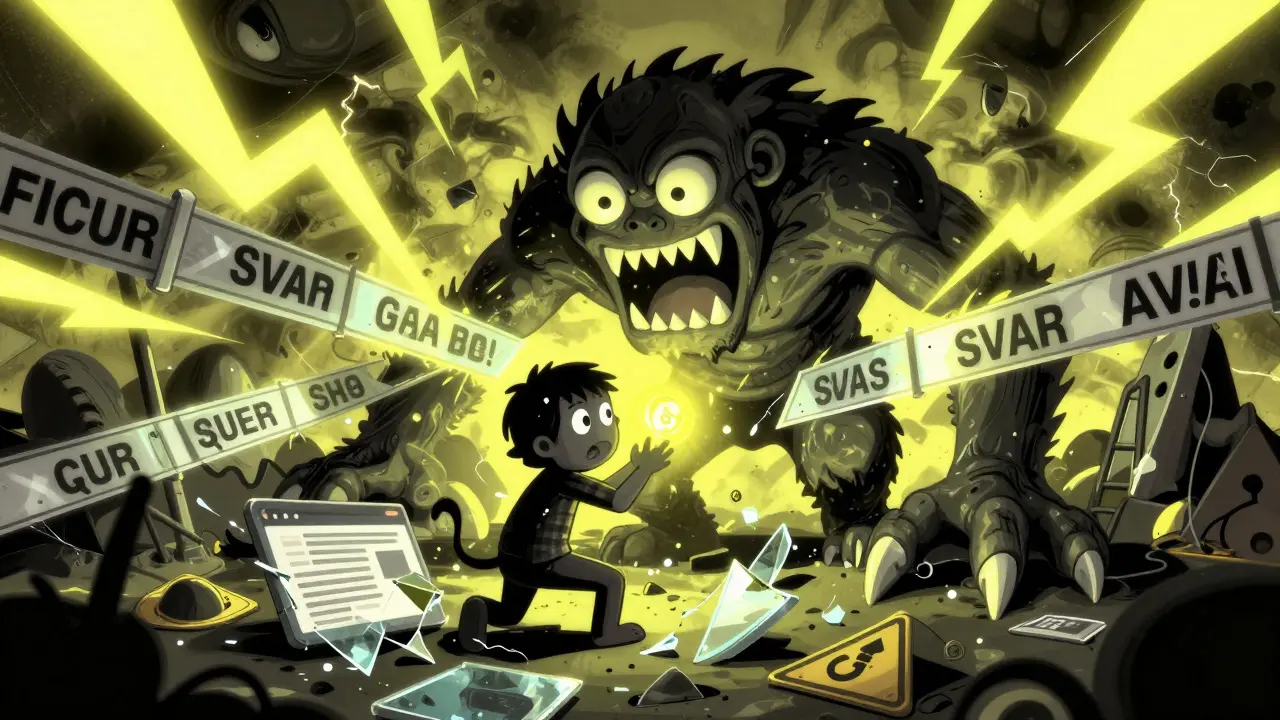
Red Flags: Why Caution Is Critical in 2026
Here is the part most promotional posts won't tell you. The official NEXTYPE website, nextype.finance, expired and became available for auction. When a project's main hub disappears, it is usually a sign of stalled development or team departure. Without an active website, there is no central place to verify legitimate announcements, whitepapers, or team updates.
Furthermore, market data from sources like CoinGecko and Binance showed significant price drops leading into 2025, with declines exceeding 80% over 90-day periods. While crypto prices fluctuate, a combination of low volume, high volatility, and an inactive web presence is a classic warning signal. Scammers often target dormant projects because investors may still hold old tokens and hope for a revival, making them vulnerable to "claim your bonus" scams.
- Expired Domain: No active official site means no verified source of truth.
- Low Liquidity: Even if you receive tokens, selling them may be difficult due to thin order books.
- Unverified Social Media: Many "official" Telegram or Twitter accounts for dead projects are taken over by scammers.
- Gas Fee Traps: Some fake airdrops require you to pay gas fees to "unlock

19 Comments
It feels a bit like trying to catch a ghost, doesn't it? :/ The domain expiring is such a quiet way for a project to just... vanish. I always think about how the silence speaks louder than the hype ever did.
Omg this is sooo dramatic! Like who even keeps track of these dead projects anymore?? It's like finding an old toy in your closet and thinking it still works but it's just broken plastic. Be careful everyone!!
There’s a strange poetry in the decay of digital empires, isn’t there? We build these glittering castles on the cloud, only for them to crumble into dust before we’ve even finished the tour. It’s a reminder that value is often just a collective hallucination that fades when the dreamers leave the room.
I have been watching this space from afar. The silence is quite loud here. When the lights go out in the arena, the players usually just wander off into the night without looking back.
you guys are being so naive about this whole thing its actually painful to watch. i mean seriously if you cant even keep a website up how do you expect us to trust your smart contracts. it’s just another one of those 'trust me bro' schemes that ends with your wallet drained and your hopes dashed. really shows what kind of people are running around in this industry now
The moral hazard here is interesting. Who benefits from keeping a zombie token alive? Probably no one except the scammers preying on the gullible. It’s a tragedy of common resources where the commons are just empty air pockets.
Domain expired. Liquidity gone. Team silent. The data points align perfectly with abandonment.
Ah, the classic 'expired domain' special. How original. You’d think after 2022, we’d have learned that if the site is down, the rug is pulled. But no, we’re still clicking links like lemmings. Bravo, humanity. 🙄
Let me tell you something, folks, because clearly none of you have read the whitepaper (which was written by a intern probably) or understand the fundamental mechanics of cross-chain bridges which are essentially digital juggling acts performed by acrobats who are drunk on their own supply. The fact that NEXTYPE tried to bridge NFTs across chains while simultaneously trying to be a gaming platform is like trying to cook a five-course meal while riding a unicycle through a hurricane; it’s not just ambitious, it’s actively suicidal for any investor who thought they were getting rich quick instead of just donating to a charity fund for failed developers.
From a DeFi liquidity perspective, the order book depth is effectively zero. Without active market makers or significant volume, slippage will eat any theoretical gains from an airdrop. The TVL metrics are also non-existent, indicating a complete lack of user engagement in the staking protocols.
Agreed. The infrastructure is just too hollow to support any real economic activity right now. It’s safer to stay on the sidelines until we see some genuine traction again.
One must appreciate the sheer audacity of marketing a token that has effectively ceased to exist as a liquid asset. It is a testament to the delusional nature of crypto twitter, where 'potential' is valued higher than 'reality'. A truly magnificent display of cognitive dissonance, if you ask me.
How quaint. The masses continue to worship at the altar of 'free tokens' while ignoring the most basic tenets of due diligence. It’s almost impressive in its stupidity.
Hey everyone! Just wanted to chime in because I found this super interesting and it got me thinking about how much we rely on external signals like websites to gauge health, but sometimes the real pulse is in the community engagement metrics which can be hard to spot if you're not digging deep into the social listening tools and tracking the sentiment shifts over time which is a whole rabbit hole but totally worth it if you want to avoid getting burned by these kinds of zombie projects that pop up every few months!
They didn't die, they were silenced by the SEC! 🕵️♂️👀 The main street banks don't want you mining your own BTC in a game, so they bought the domain and buried the evidence. Wake up sheeple! 🐑💸
Its really sad to see how fast things can change in this sector. I remember when the hype was high and everyone was talking about the next big thing but now its just quiet. Maybe we need to look at other opportunities that are more stable and less risky for our future investments.
Perhaps we are all just waiting for the next narrative to emerge. The cycle continues, whether we like it or not. 📉🎭
This is exactly why the EU needs to step in and regulate this circus. These American-style pump-and-dumps are poisoning the well for legitimate innovation. We need strict KYC and capital controls, otherwise, it’s just a casino for the wealthy to bleed the rest of us dry. Disgusting.
Statistically speaking, the probability of success for a dormant token reviving is negligible. 📊 The variance in price action indicates pure noise rather than signal. One should refrain from allocating capital to such high-beta, low-liquidity assets unless one enjoys gambling with one's principal. 🎲