

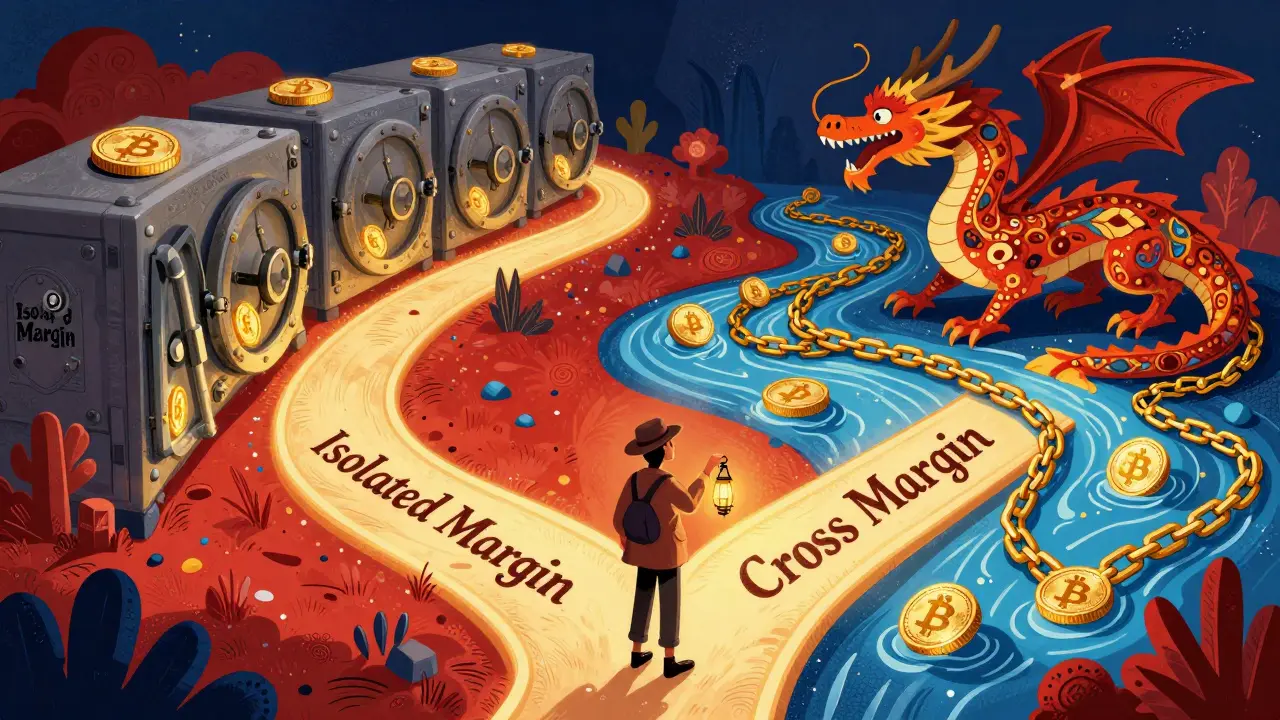

Most crypto traders lose money not because they pick the wrong coins, but because they don’t control how much they risk on each trade. You can have the best technical analysis in the world, but if you don’t use a stop-loss order properly, one bad market move can wipe out weeks-or months-of gains. Stop-loss orders aren’t just a safety net; they’re the foundation of professional trading discipline. When combined with smart risk management, they turn guessing into strategy.
What a Stop-Loss Order Actually Does
A stop-loss order is an automatic instruction to sell your position when the price hits a specific level. It’s not a guarantee you’ll sell at that exact price, but it ensures you don’t sit there hoping the market will turn around while your losses grow. In crypto, where prices can swing 20% in an hour, this isn’t optional-it’s survival. There are two main types: stop-market and stop-limit. A stop-market order triggers a market sell as soon as the price hits your level. It executes fast, but you might get filled at a worse price during a crash. A stop-limit order adds a second price: it only sells if the market reaches your trigger and stays at or above your limit price. The problem? During a flash crash, your order might never fill at all. In March 2020, over 40% of stop-limit orders on Bitcoin failed to execute because prices dropped too fast. For most retail traders in crypto, stop-market is the better choice. You sacrifice perfect pricing for guaranteed exit. That’s the trade-off.Why Stop-Loss Alone Isn’t Enough
Placing a stop-loss at $30,000 on Bitcoin because it’s a "round number" is a rookie mistake. Why? Because everyone else is doing it. The Bank for International Settlements found that 38% of intraday crypto volatility spikes happen right at these obvious levels. Sophisticated traders know where the crowd places stops-and they push prices there to trigger them, then reverse. A stop-loss without context is just a number on a chart. It needs to be tied to real market structure. The best stop-loss levels are based on:- Recent swing lows (for long positions)
- Key support and resistance zones
- Volatility measures like ATR (Average True Range)
Position Sizing: The Math That Keeps You Alive
You can have the perfect stop-loss level, but if you risk 20% of your account on one trade, you’re still gambling. Risk management isn’t about picking winners-it’s about surviving losers. The formula is simple:Position Size = (Account Risk % × Total Capital) ÷ (Entry Price − Stop Price)
Let’s say you have a $10,000 account and you’re willing to risk 1.5% per trade. That’s $150. You buy Solana at $120 and place your stop at $110. The risk per coin is $10.Position size = ($150) ÷ ($10) = 15 coins
You buy 15 SOL. If the stop hits, you lose $150. If it works, you gain based on your reward target. This is how professionals protect their capital. Most retail traders risk 5% or more per trade. That’s why 90% of them burn out within a year. Van Tharp’s research shows traders who stick to 0.5-2% risk per trade are 2.3 times more likely to be profitable after three years.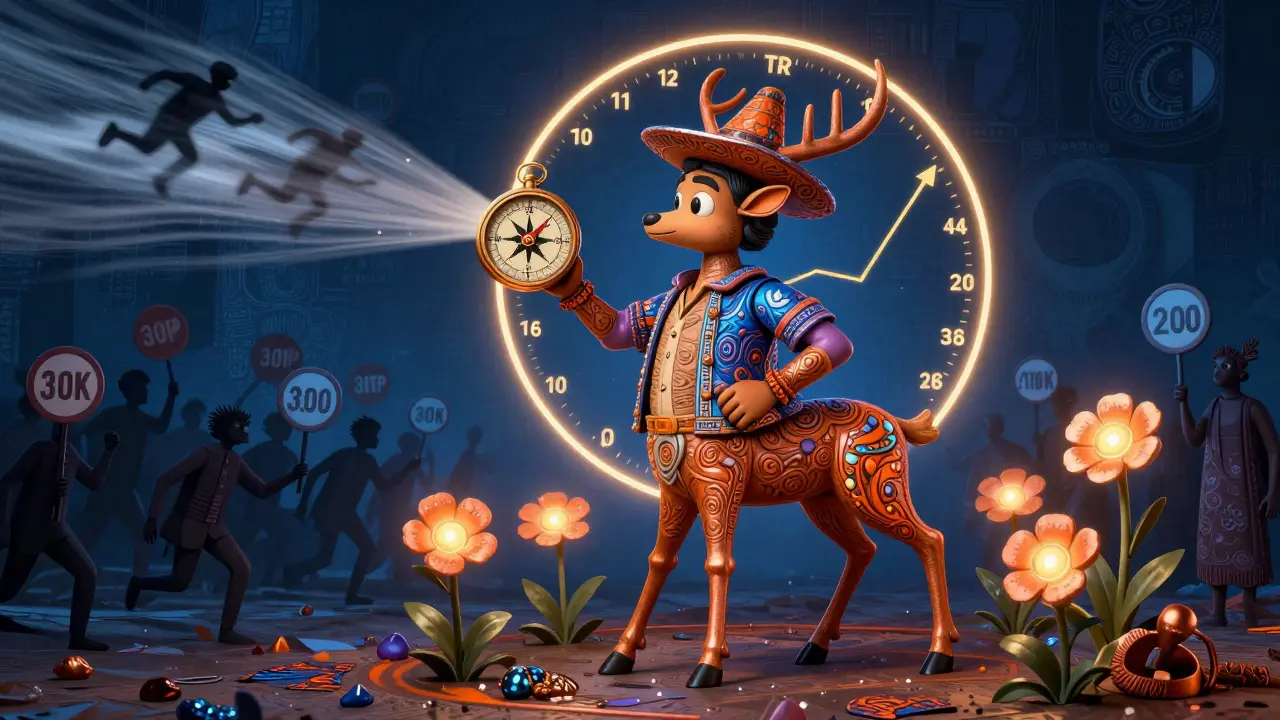
Trailing Stops: Let the Trend Work for You
Fixed stop-losses are great for short-term trades. But if you’re holding a crypto asset through a multi-week rally, you don’t want to get stopped out early just because the market pulled back 3%. That’s where trailing stops come in. Instead of locking in a static price, a trailing stop follows the price upward as it rises. For example, you set a 5% trailing stop on Cardano. If it goes from $0.40 to $0.50, your stop moves up from $0.38 to $0.475. If it then drops 5% from its peak, you’re automatically out. BacktestMarket.com found trailing stops captured 22% more profit than fixed stops during strong crypto trends in 2022-2023. But they underperform in sideways markets. Use them only when you’re clearly in a trend. Platforms like TradingView and Binance let you set trailing stops with a percentage or dollar amount. Start with 4-6% for altcoins and 2-3% for Bitcoin or Ethereum.Common Mistakes (And How to Avoid Them)
Most traders fail not because they don’t know how to use stop-losses-but because they break their own rules. Here are the top mistakes:- Placing stops at round numbers: $30,000, $1.00, $0.50. These are bait. Use technical levels instead.
- Moving stops wider after a loss: This turns risk management into revenge trading. Stick to your plan.
- Disabling stops during FOMO: If you’re afraid to set a stop because you think the coin will "go to the moon," you’re not trading-you’re gambling.
- Ignoring volatility: A 5% stop works for Bitcoin but will get you killed on a low-cap altcoin with 20% daily swings. Adjust based on ATR.
Stop-Losses in DeFi and On-Chain Trading
On centralized exchanges like Binance or Coinbase, stop-losses are handled by the platform. But in DeFi, things are different. You can’t just click a button to set a stop on Uniswap. Instead, you need smart contracts. Some DeFi tools like DefiSaver and Gelato let you automate stop-losses on-chain. But there’s a catch: blockchain execution is slow. While a stop on Binance triggers in milliseconds, on-chain stops can take 10-15 seconds due to Ethereum or Solana block times. That’s enough for a price to gap past your stop. For high-frequency or leveraged DeFi trades, on-chain stops are risky. For longer-term holds, they can work-but always test them on a small amount first.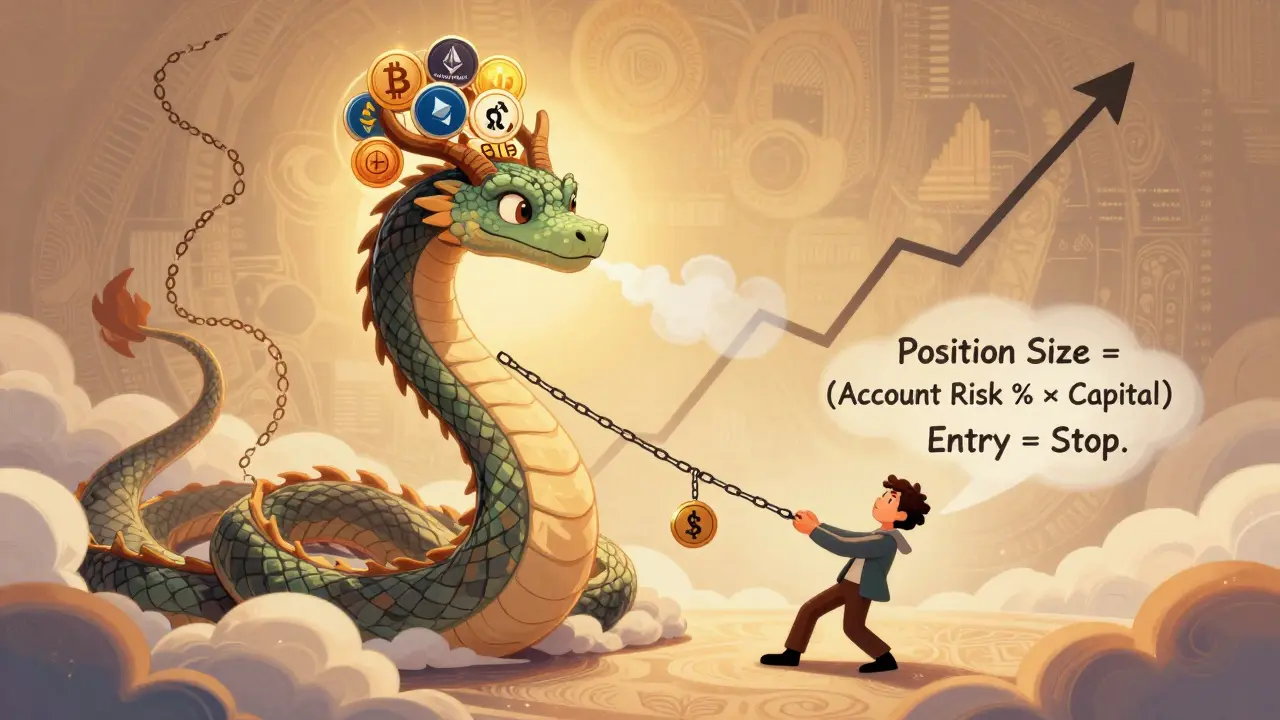
The Bigger Picture: Risk Management Beyond Stop-Loss
Stop-losses are just one tool. True risk management means thinking about your whole portfolio:- Don’t put more than 5% of your total capital in one altcoin.
- Diversify across asset classes: Bitcoin, Ethereum, DeFi tokens, and stablecoins.
- Use portfolio-level volatility filters-some platforms now adjust individual stop levels based on how correlated your holdings are.
- Review your risk parameters weekly. Markets change. Your stops should too.
How Long Does It Take to Get Good at This?
You won’t master stop-loss and risk management in a week. The Online Trading Academy found that traders who paper trade stop strategies for 3-6 months make 43% fewer real-money mistakes. Start small. Use a demo account. Track every trade: entry, stop, position size, reason for exit. You’ll make mistakes. You’ll get stopped out on a trade that then rockets up. That’s normal. The goal isn’t to never be wrong-it’s to lose small when you’re wrong and win big when you’re right.Final Thought: Stop-Losses Are Discipline
Warren Buffett doesn’t use stop-losses in the traditional sense. But he has one: he sells when the reason he bought the company no longer holds. That’s a qualitative stop-loss. In crypto, your "reason" might be: "I bought this because of the upcoming upgrade." If the upgrade gets delayed and the price drops 30%, your thesis is broken. Exit. Stop-loss orders aren’t about fear. They’re about clarity. They remove emotion from your trading. They turn chaos into structure. And in crypto, where noise is constant and volatility is extreme, structure is the only thing that keeps you alive.Set your stop. Size your position. Stick to your plan. Repeat.
Can I use stop-loss orders on decentralized exchanges like Uniswap?
Yes, but not natively. You need third-party tools like Gelato or DefiSaver to automate stop-losses on-chain. These services use smart contracts to trigger sells when prices hit your level. However, blockchain execution is slower than centralized exchanges-often 10-15 seconds-so you risk slippage during fast drops. Use them only for longer-term holds, not day trading.
Should I use a stop-market or stop-limit order in crypto?
For most crypto traders, stop-market is better. It guarantees execution, which matters more than getting the perfect price during a crash. Stop-limit orders can fail to execute when prices gap down-happened in over 40% of cases during the March 2020 crypto crash. Only use stop-limit if you’re trading in a stable, low-volatility market and you’re willing to risk missing the exit.
How much of my account should I risk on one trade?
Stick to 0.5%-2% per trade. Risking more than 2% increases your chance of blowing up your account. For example, if you lose 5 trades in a row at 2% risk each, you’re down 10%. At 5% per trade, you’re down 25%-and it takes a 33% gain just to break even. Professional traders rarely risk more than 1.5% per trade to survive long-term.
Why do my stop-losses keep getting hit right before the price reverses?
You’re probably placing stops at obvious levels-round numbers, previous highs/lows, or psychological levels. Smart traders know where retail traders place stops and push prices there to trigger them, then reverse. Use volatility-based stops (like 1.5x ATR) instead. They’re less predictable and give your trade room to breathe.
Are trailing stops better than fixed stops for crypto?
Trailing stops are better for trending markets. If you’re holding a coin that’s in a strong uptrend, a trailing stop lets you ride the wave and lock in profits as the price rises. But in choppy, sideways markets, they can trigger too early. Use trailing stops only when you clearly have a trend. For range-bound coins, stick with fixed stops at support/resistance levels.








15 Comments
OMG I literally cried when I first used a 1.5x ATR stop-loss-my account stopped bleeding like a faucet. I used to place stops at round numbers like a total noob and got rekt every time. Now I sleep like a baby. Trust the math, not the hype. 🙌
So many new traders think stop-losses are about avoiding losses-but they’re really about preserving your ability to keep playing. You don’t need to be right every time. You just need to live to trade another day. I’ve seen people blow up accounts because they couldn’t accept a 2% loss. But the ones who stick to 1%? They’re still here five years later. Slow and steady wins the race.
Trailing stops changed my life. I held a token that went from $0.08 to $0.45 and only got stopped out at $0.41 because I used a 5% trailing stop. I didn’t miss the moon-I just didn’t fall off it. 🚀 I used to panic-sell at the first dip, but now I let the trend breathe. It’s like having a co-pilot who doesn’t get emotional.
Stop-losses are not tools. They are mirrors. They show you what you believe about risk. Most traders fear loss more than they desire gain. That’s why they move stops. The market doesn’t care about your feelings.
While the technical advice here is sound, I’d like to emphasize the psychological component. Discipline isn’t a habit-it’s a ritual. Writing down your entry, stop, and position size before placing the trade creates accountability. I’ve kept a trading journal for seven years. The most valuable entries aren’t the wins-they’re the ones where I followed the plan despite fear.
Just tried a 3% trailing stop on SHIB after reading this-got stopped out at $0.0000085 and it went to $0.000011 😭 but honestly? I’m glad. I didn’t lose 80% of my position. I lost 5%. That’s a win. 🤝
They say 'stop-losses protect you' but who really controls the market? The same whales who pump altcoins then dump right after the retail crowd buys. Your stop-loss is just a target painted on your back. The system is rigged. ATR? Please. The only real strategy is to exit before the pump. Or just buy Bitcoin and HODL. Everything else is casino.
Let me guess-you think your '1.5x ATR' stop is genius? Newsflash: everyone’s using the same indicators. The algorithmic bots are watching ATR levels like hawks. You’re not being clever-you’re just another sheep in a different colored hoodie. Real traders don’t use stops. They use options. Or short the liquidity pools. Or front-run the retail. Stop-losses are for people who think trading is a spreadsheet game.
I started with 5% risk per trade. Lost my first 3K in 3 weeks. Then I read this and dropped to 1%. Now I’m up 12K in 8 months. Not because I’m smart-because I stopped being dumb. Your stop-loss isn’t your enemy. Your ego is.
Okay so I’m new and I’ve been paper trading for 4 months and I swear I’ve had like 17 trades where I got stopped out and then the price went straight up and I cried so hard I had to take a nap. But then I remembered-this is supposed to be a numbers game. I’m not trying to catch every top or bottom. I’m trying to not die. And honestly? I feel like I’m starting to get it. It’s not about being right. It’s about staying in the game. And I’m so tired of losing. I just want to not lose anymore.
omg i just tried the 1.5x atr thing on doge and it worked?? i thought i was gonna lose everything but it just kinda danced around my stop and then went up 😭 i feel like a wizard now. also i spelled atr wrong in my notes but it still worked so maybe its magic?? 🤫✨
Stop-market over stop-limit. Full stop. I’ve seen too many traders lose everything because their stop-limit didn’t fill during a flash crash. The difference between losing $150 and $1,500 is one setting. Don’t overthink it. Execution > precision.
It’s worth noting that the concept of a stop-loss is not unique to crypto. It is a foundational element of risk management in classical finance, dating back to the 19th century. What distinguishes modern crypto trading is not the tool, but the volatility of the underlying asset. The principles remain unchanged: define risk, quantify exposure, and adhere to discipline. The market does not reward intuition-it rewards consistency.
Stop-losses are freedom. You set it and walk away. No stress. No checking every 5 minutes. No FOMO. Just trade. Sleep. Wake up. Repeat. I used to be glued to my screen. Now I hike. My portfolio thanks me.
Stop-losses? That’s for weak Americans who can’t handle real volatility. In my country, we just hold. We don’t run from a dip. We laugh at it. Crypto is war. If you can’t take the heat, get out of the kitchen. Your stop-loss is a surrender flag.