


When you stake your crypto, you’re not just earning rewards-you’re also putting your capital at risk. One of the most dangerous but often ignored threats is slashing. It’s not a bug. It’s not a glitch. It’s a built-in penalty designed to punish validators who mess up. And if you’re staking on Ethereum, Cosmos, Solana, or any major Proof-of-Stake network, slashing can wipe out a chunk-or all-of your staked tokens in seconds.
Most people think staking is passive income. It’s not. It’s a job. And if you don’t treat it like one, you’re going to lose money.
What Exactly Is Slashing?
Slashing is when a blockchain automatically takes away part or all of your staked tokens because you broke the rules. Think of it like a traffic ticket-but instead of a fine, you lose crypto. The rules are simple: don’t sign two different blocks at the same time (double-signing), don’t go offline for too long (downtime), and don’t propose invalid blocks.
It’s not punishment for being slow. It’s punishment for being dishonest or careless. And the system doesn’t ask for permission. It doesn’t give you a warning. It just takes your money.
Ethereum, for example, slashes 1% of your stake for a minor mistake like a few hours of downtime. For double-signing? That’s 100% of your 32 ETH gone. No appeal. No refund. Just gone.
How Much Can You Actually Lose?
Slashing penalties vary by network, but the numbers are scary:
- Ethereum: 1% minimum for downtime, up to 100% for double-signing. In coordinated attacks, penalties can hit 60% across multiple validators.
- Cosmos: 0.1% to 5% for downtime, 5% to 10% for double-signing.
- Solana: Minimal downtime penalties, but 100% loss for critical failures.
- Avalanche: 0.5% to 3% for most violations.
- Polkadot: Dynamic penalties from 1% to 100%, depending on severity.
Here’s the real kicker: slashing doesn’t just reduce your balance. It reduces your future earnings. Less stake = less rewards. If you lose 10 ETH out of 32, your daily rewards drop by over 30%. That loss compounds over time.
In 2023, over 27 validators on Ethereum lost their full 32 ETH deposits due to software bugs. Each one was worth over $50,000 at the time. That’s $1.35 million wiped out in one event.
Why Slashing Exists (And Why It’s Necessary)
Slashing isn’t there to make your life harder. It’s the reason Proof-of-Stake works at all.
In Bitcoin’s Proof-of-Work system, attackers need expensive hardware to try to take over the network. In Proof-of-Stake, the cost is your own crypto. If you try to cheat, you lose it. That’s called "skin in the game."
Without slashing, validators could sit back, go offline, and still collect rewards. Or worse-they could collude to rewrite history. Slashing makes that too expensive to attempt.
As Vitalik Buterin put it: "The ideal slashing rate balances security with validator economics, targeting 0.05%-0.1% annual incidence for optimal network health."
That means networks want slashing to be rare-but devastating enough to scare off cheaters.
Who Gets Slashed the Most?
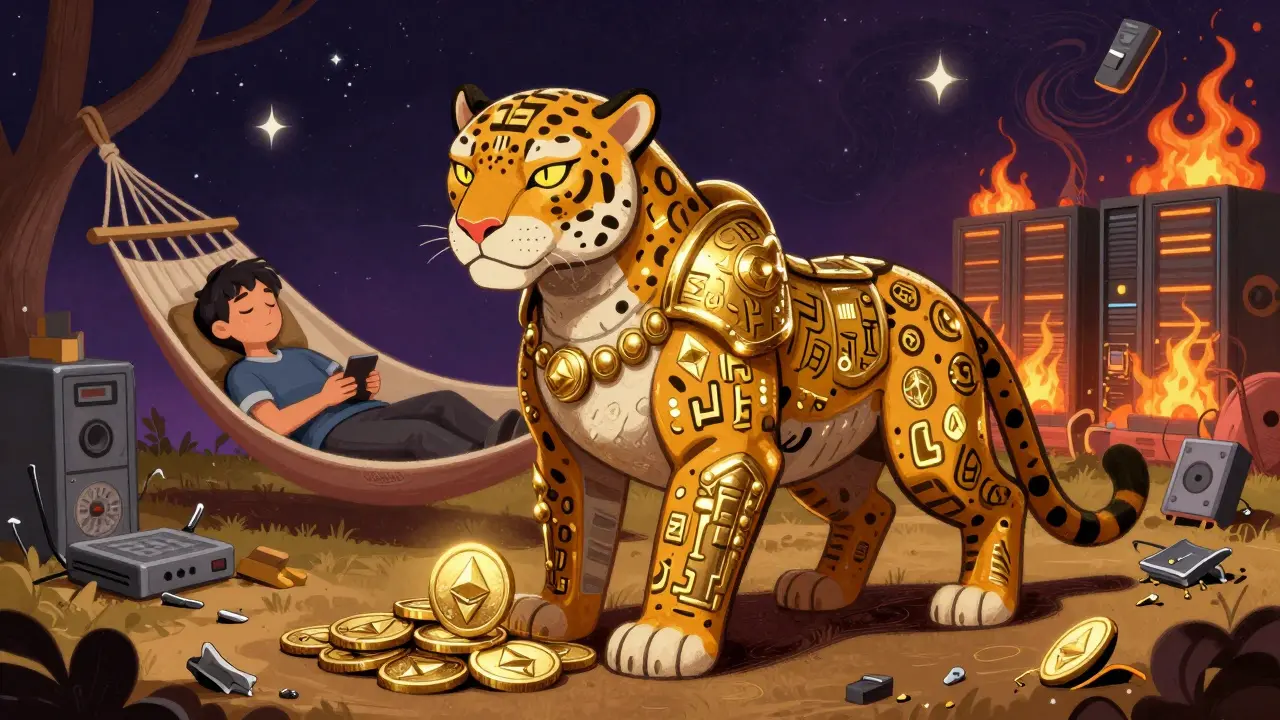
Not everyone is at equal risk. Retail stakers-people running their own nodes at home-get slashed way more than institutions.
According to KPMG’s 2023 data:
- Institutional validators: 0.1% annual slashing rate
- Retail validators: 1.2% to 2.5% annual slashing rate
Why? Because institutions use:
- Redundant servers in multiple data centers
- Hardware Security Modules (HSMs) to protect signing keys
- 24/7 monitoring with alerts for downtime
- Team backups and failover protocols
Retail stakers? They run nodes on a Raspberry Pi in their basement. They forget to update software. They lose power. They misconfigure their firewall. One mistake-and poof-your stake is gone.
Reddit’s r/ethstaker community tracked 142 slashing incidents in 2023. 68% of those users lost all their staking profits for 6 to 12 months. Most said they didn’t even know they were at risk until it happened.
Top 3 Reasons People Get Slashed
If you want to avoid slashing, you need to know what causes it. Here are the top three:
- Outdated or buggy software - 31% of cases. Validators running old versions of Ethereum clients (like Prysm or Lighthouse) got slashed during the Shanghai upgrade in April 2023 because of a known bug that wasn’t patched.
- Hardware or internet failure - 42% of cases. A power outage, a router reboot, or a cloud server crash can trigger downtime penalties. Even 10 minutes offline can count if it’s part of a longer streak.
- No monitoring - 27% of cases. Most people don’t set up alerts. They check their wallet once a month. By then, it’s too late.
These aren’t edge cases. They’re everyday mistakes.
How to Protect Yourself From Slashing
You can’t eliminate slashing risk-but you can reduce it by 80% or more. Here’s how:
1. Use a Reputable Staking Service
If you’re not a tech expert, don’t run your own node. Use Lido, Coinbase, or Kraken. These services handle slashing prevention for you. They have teams of engineers, redundant systems, and insurance.
Trustpilot reviews show institutional staking platforms average 4.2/5 ratings. Self-hosted nodes? 3.1/5. The top complaint? "Slashing risk."
2. If You Run Your Own Node, Use an HSM
An HSM (Hardware Security Module) is a physical device that stores your validator keys. Even if your server gets hacked, the keys can’t be stolen or used to double-sign.
Stakin.com’s 2023 study found HSMs reduce slashing risk by 83%. They cost $500-$1,500 upfront. Worth it.
3. Set Up Real-Time Monitoring
Use tools like Prometheus and Grafana. They show you:
- Uptime percentage
- Recent attestations
- Missed blocks
Set up SMS or Discord alerts for any missed attestations. If your node goes offline for more than 5 minutes, you need to know immediately.
Proper monitoring reduces slashing risk by 76%.
4. Keep Software Updated
Subscribe to official Ethereum or Cosmos client updates. Don’t wait for a forum post. Set up auto-updates where possible. Test them in a sandbox first.
During the Shanghai upgrade, validators who updated early avoided slashing. Those who waited got hit.
5. Spread Your Stake
Don’t put all your ETH into one validator. Split it across 3-5 different providers. If one gets slashed, the rest keep earning.
Even if you use a service like Lido, you’re still exposed to their infrastructure. Diversify your exposure.

Slashing Insurance? Not What You Think
Companies like Nexus Mutual offer slashing insurance. Sounds great, right?
Here’s the catch: their policies exclude 78% of common slashing scenarios. They won’t cover you if:
- You ran outdated software
- You didn’t use an HSM
- Your internet went down
- You misconfigured your node
In other words, they only pay out for system-level failures-not human error. That’s the exact thing that causes 90% of slashing events.
Insurance is a band-aid. Prevention is the cure.
What’s Changing in 2024 and Beyond
Slashing isn’t static. Networks are tuning it.
Ethereum’s Prague upgrade (expected Q2 2024) will:
- Reduce minimum slashing penalty from 1% to 0.5%
- Increase penalties for coordinated attacks
This is a smart move. It makes small mistakes less punishing while keeping big ones deadly.
Delphi Digital predicts slashing rates will drop from 0.8-1.2% today to 0.3-0.5% by 2026. That could boost net staking returns by 0.7-1.2 percentage points.
But here’s the warning: slashing spikes during market crashes. When prices drop, more people panic and shut down nodes. That increases downtime. More downtime = more slashing. That can trigger a feedback loop-lower prices → more slashing → lower confidence → more selling.
Final Reality Check
Staking isn’t free money. It’s a responsibility. And slashing is the price you pay if you ignore it.
If you’re staking on your own:
- You need Linux skills
- You need to monitor your node daily
- You need backup power and internet
- You need to update software like clockwork
If you don’t have those things, you’re gambling. And the house always wins.
Use a trusted provider. Let them handle the tech. Keep your crypto safe. Earn your rewards without losing sleep.
Slashing is real. It’s not hype. It’s not theory. It’s happening right now. And if you’re not prepared, you’re already behind.







15 Comments
bro i just staked 5 eth on lido and thought i was getting free money lmao then i read this and nearly threw my laptop out the window. slashing is real and i didnt even know it existed till last week. thanks for the wake up call.
The philosophical underpinning of slashing is fascinating-it transforms economic incentive into cryptographic enforcement. It's not punitive; it's emergent order. The system doesn't care about intent, only behavior. That’s what makes PoS resilient. Human error is the vector, not the protocol.
so you're telling me my raspberry pi running eth in my garage is basically gambling with my life savings?? wow. thanks for the terrifying clarity. i'm switching to coinbase right now.
Slashing exists because trustless systems need teeth. No warnings. No second chances. Just math. And if you're not treating this like infrastructure, not a hobby, you're already losing. Simple as that.
bro why are you scared of slashing?? 🤡 crypto is supposed to be wild. if you lose 32 eth because you forgot to update your node, maybe you weren't meant to be in this space. just hodl and vibe. 🚀
For anyone running their own node: start with a simple monitoring setup using UptimeRobot and a free Discord webhook. It takes 15 minutes. It catches 90% of issues before they become slashing events. Don’t wait until you’re down 10 ETH to learn this.
Oh wow, so the solution to losing your life savings is... paying a company to do it for you? Groundbreaking. Next you'll tell me we should outsource breathing to a hospital.
you people are so dramatic. i staked on a toaster and it’s been fine for 18 months. you think crypto is banking? nah. it’s chaos. if you can’t handle a little digital fire, go back to your savings account with 0.05% interest. 💸🔥
Let me just say this gently - if you’re staking without an HSM, you’re not a validator, you’re a liability to the network. And if you think insurance covers your laziness, you’re not just wrong, you’re dangerous to the ecosystem. This isn’t a game. It’s governance.
use a service. end of story. you think you’re a hacker because you run a pi? you’re just the guy who gets slashed so the big boys can stay safe. be useful, not tragic.
The data presented here is statistically significant and aligns with network telemetry from public beacon chains. Retail stakers are indeed 10x more likely to be slashed due to operational fragility. The solution isn't fear-it's standardization. Adoption of best practices must become as routine as password hygiene.
Y’all need to stop treating staking like it’s a side hustle. This is your digital job. Get a backup battery. Set alarms. Learn the CLI. You can do this. I did. And I’m not even a dev. You got this 💪
Slashing is just Wall Street’s way of saying ‘we don’t trust you’. If you’re not a corporation with 10 engineers, you shouldn’t be allowed to stake. Let the big players run the nodes. We’ll just collect the yield. Simple.
It is imperative that participants in decentralized consensus mechanisms acknowledge the non-negotiable nature of protocol-enforced penalties. The integrity of the network is contingent upon the fidelity of its actors. Failure to adhere to operational standards constitutes a systemic risk. Therefore, institutional-grade practices are not optional-they are foundational.
Look, I get it-you’re scared. I used to run my own node too. Then I realized: I’m not a sysadmin. I’m a guy who wants to earn yield without panic attacks. So I switched to Lido. My rewards are slightly lower. My peace of mind? Infinite. You don’t have to be a hero. You just have to be smart.
Also, if you think you’re ‘decentralizing’ by running a Pi in your basement while your internet drops every Tuesday? You’re not. You’re just making the network work harder to keep you from breaking it.