

Most people think of apps like Instagram or Uber - centralized, controlled by one company, running on servers they can’t see. But what if an app didn’t need a company to run it? What if it ran on a public, tamper-proof network where no single person or corporation could shut it down? That’s what a DApp is - a decentralized application built on blockchain technology. And unlike traditional apps, it doesn’t rely on a central server. Instead, it runs on a network of computers, all working together to keep things fair and transparent.
What Makes a DApp Different?
A DApp isn’t just an app with blockchain in its name. It has three core traits that set it apart:- Open-source: Its code is public. Anyone can look at it, check for bugs, or even improve it.
- Decentralized: No single entity owns it. Control is spread across many users and nodes on the network.
- Blockchain-based: It uses smart contracts - self-executing code stored on a blockchain - to handle logic and transactions.
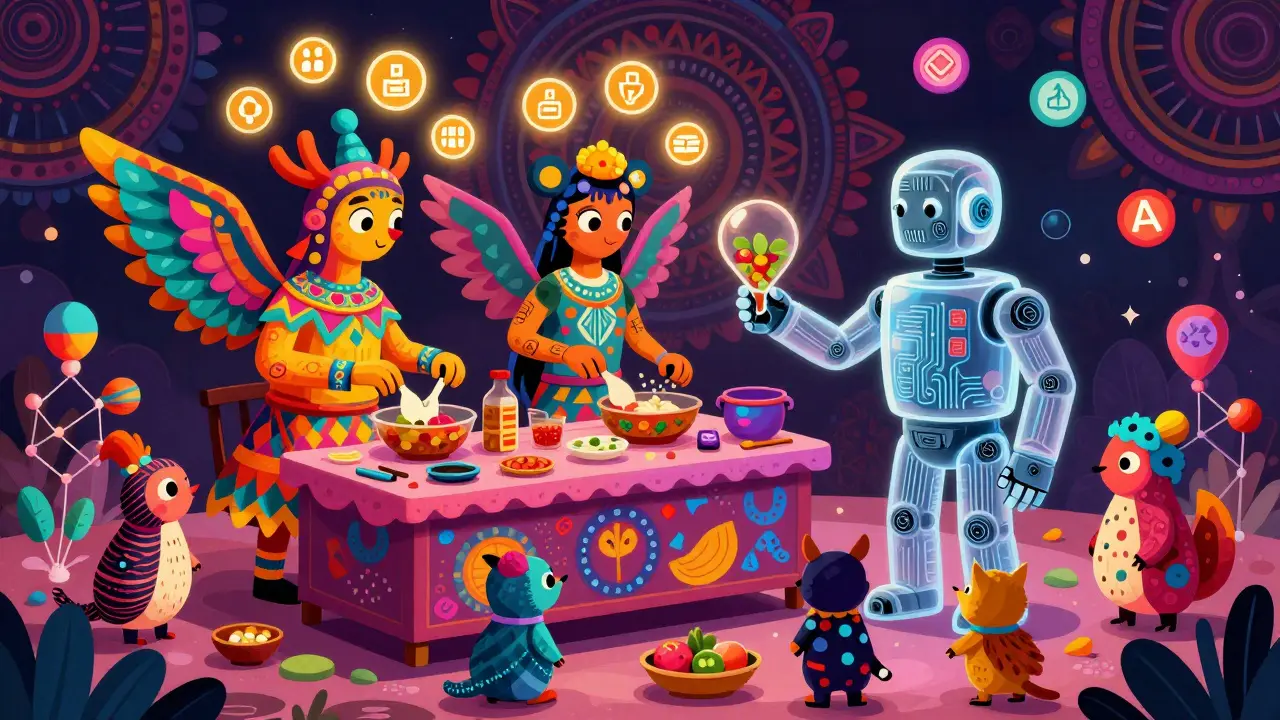
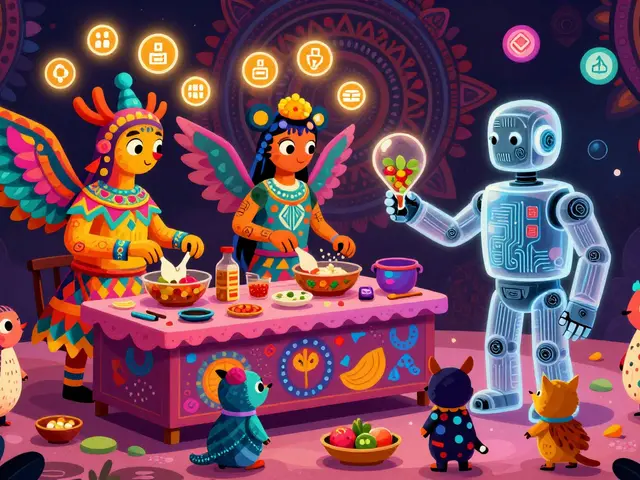
Think of it like this: A regular app is like a restaurant where the chef (the company) decides the menu, prices, and rules. A DApp is like a community kitchen where everyone agrees on the recipe beforehand, and a robot (the smart contract) follows it exactly - no chef, no bias, no last-minute changes.
How DApps Actually Work: The Technical Side
DApps have two main parts: the front-end and the back-end.The front-end? That’s what you see. It looks like any normal website or mobile app. You click buttons, fill out forms, and get feedback. But behind the scenes, it’s not talking to a company’s server. It’s connecting directly to a blockchain network.
The back-end? That’s where the magic happens - in smart contracts. These are tiny programs written in code (like Solidity for Ethereum) and stored permanently on the blockchain. Once deployed, they can’t be changed. They run automatically when certain conditions are met.
For example, if you lend crypto on a DApp like Aave, the smart contract holds your funds, tracks interest rates, and sends you returns - all without a bank. No human steps in. No middleman. Just code doing exactly what it was programmed to do.
Most DApps run on Ethereum because it was the first to make smart contracts practical. Ethereum’s network uses something called the Ethereum Virtual Machine (EVM). Think of it as a global computer that every node on the network runs at the same time. When you interact with a DApp, your action gets sent to this machine. Every node checks it, agrees on the result, and records it on the blockchain. That’s how trust is built - not by trusting one company, but by trusting math and consensus.
Why Do DApps Need Blockchains?
Blockchains aren’t just databases. They’re trust machines. Here’s how they help DApps:- Immutability: Once a transaction is recorded, it can’t be deleted or altered. This stops fraud and manipulation.
- Transparency: Every transaction is public. You can see every coin move, every loan issued, every NFT sold.
- Censorship resistance: No government or company can block your access. If you have a wallet and internet, you can use the DApp.
- Security: DApps use cryptography. Your private key is your password. No one else can access your funds - not even the app developers.
Compare that to traditional apps. Facebook controls your data. PayPal can freeze your account. Banks take days to settle payments. DApps fix these problems - but they come with trade-offs.
The Real Advantages: Where DApps Shine
DApps aren’t better at everything. But in some areas, they’re game-changers:- Finance (DeFi): Uniswap processed over $1.1 trillion in trades in 2023. No bank. No approval process. You swap tokens in seconds.
- Ownership: NFTs like CryptoPunks (valued at over $1.3 billion) prove you truly own digital items - not just a license from a company.
- Supply chain: VeChain tracks luxury goods from factory to shelf. Every step is recorded on-chain. Counterfeiters can’t fake it.
- Speed and cost: A cross-border payment that used to take 3 days now settles in under 15 seconds on some DApps. Fees dropped from 3% to under 0.3% on average.
These aren’t theoretical. People use them daily. Over 2,800 active DApps were live on Ethereum alone by the end of 2023. And the market is growing fast - from $5.1 billion in 2021 to $19.4 billion in 2023, with projections hitting $58.9 billion by 2026.
The Big Problems: Why DApps Still Feel Clunky
Despite the promise, most people still avoid DApps. Here’s why:- High fees during peak times: In May 2022, Ethereum fees spiked to $50 per transaction. That’s fine for buying a $10,000 NFT - but impossible for sending $5 to a friend.
- Complex wallets: You need a crypto wallet like MetaMask. You have to manage a 12-word recovery phrase. Lose it? Your funds are gone forever. No customer service to help.
- Smart contract bugs: In 2023 alone, hackers stole $1.8 billion from DApps. The Wormhole bridge hack in February 2022 took $320 million in one go. Code isn’t perfect.
- Slow speed: Ethereum handles 15-30 transactions per second. Visa handles 24,000. Even with Layer 2 solutions like Optimism and Arbitrum (which now handle 2,000-4,000 TPS), it’s still not enough for real-time gaming or high-frequency trading.
- Bad user experience: If you send crypto to the wrong address? Too bad. No undo button. No refund. That’s why Reddit threads like “Why I Stopped Using DApps” have over 1,200 upvotes.
Developer challenges are just as bad. Building a DApp takes 3-6 months and costs $50,000-$500,000. Learning Solidity takes 6-9 months. Debugging smart contracts is notoriously hard. And 68% of DApp projects die within 18 months because they can’t keep a community alive.
What’s Changing: The Road Ahead
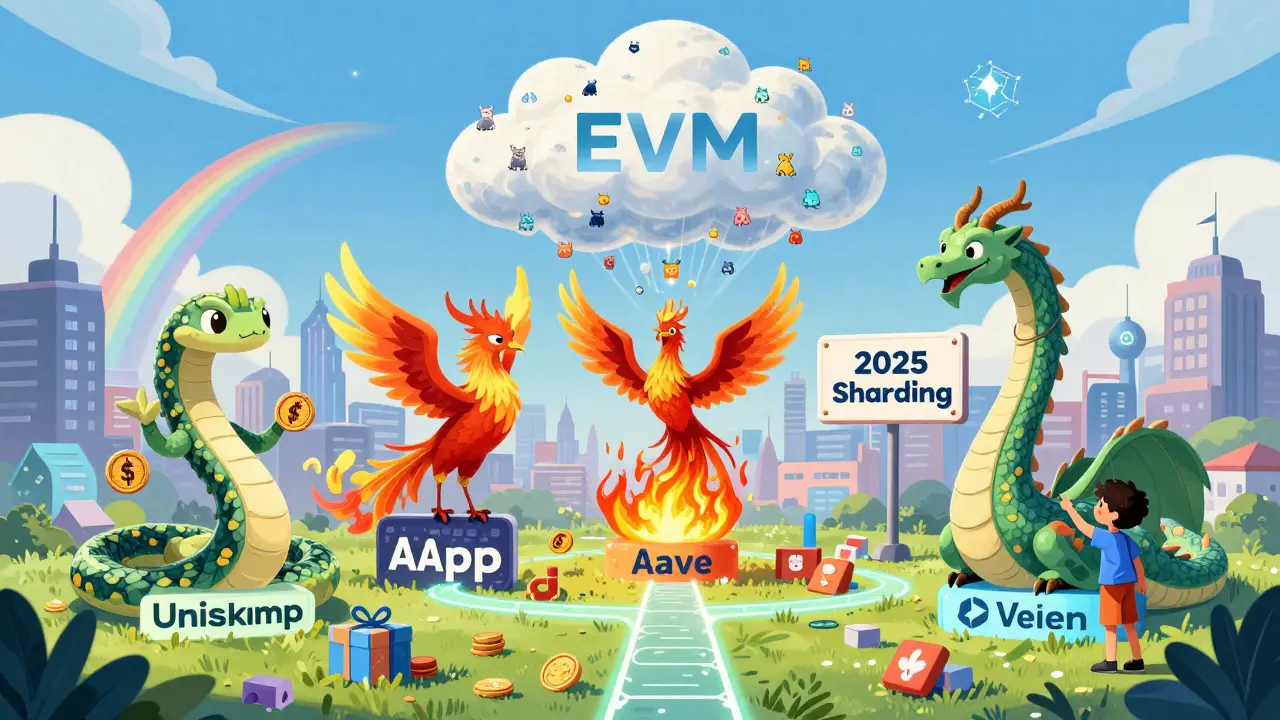
The DApp world isn’t stuck. It’s evolving fast:- Ethereum’s Dencun upgrade (March 2024): Cut Layer 2 transaction costs by 90%. This made microtransactions viable again.
- Account abstraction (EIP-4337): Lets users pay gas fees with any token - not just ETH. Also allows social recovery (like asking a friend to help restore your wallet).
- Full sharding (targeted for 2025): Could push Ethereum to 100,000 transactions per second - matching or beating Visa.
- Enterprise adoption: Walmart uses blockchain to track 5 million food shipments monthly. Microsoft’s ION handles 12,000 decentralized IDs daily.
Regulation is catching up too. The EU’s MiCA law (June 2023) now requires DApp operators to get licenses if they offer financial services. The U.S. SEC has filed 17 enforcement actions against DeFi platforms since 2023. Compliance is becoming part of the game.
Who Uses DApps - And Who Doesn’t
DApp users today are mostly tech-savvy. CoinGecko found that 78% have programming experience. They’re early adopters - developers, traders, crypto natives. They tolerate complexity for control and transparency.But mainstream users? They’re not there yet. Gartner says 70% of current DApps will fail to go mainstream because of bad UX. Trustpilot reviews for MetaMask show 63% of complaints are about the learning curve. If you’re not comfortable managing your own keys, DApps aren’t for you - not yet.
Final Thoughts: Is This the Future?
DApps aren’t perfect. They’re slow, expensive, and hard to use. But they offer something no centralized app ever can: true ownership. No middleman. No shutdown button. No data harvesting.The future of DApps isn’t about replacing Instagram. It’s about replacing the systems we don’t trust - banks, monopolistic platforms, opaque corporations. They’ll succeed not by being flashy, but by being reliable. By fixing the pain points: cost, speed, and simplicity.
By 2025, with sharding and account abstraction, DApps could finally become usable for everyday people. But until then, they remain a tool for the technically curious - not the masses.
One thing’s clear: the internet is shifting. And DApps are one of the most important experiments in that shift.
Are DApps the same as cryptocurrencies?
No. Cryptocurrencies like Bitcoin or Ethereum are digital money. DApps are applications built on top of blockchains - they use crypto to function, but they do much more. For example, Uniswap is a DApp that lets you trade tokens. It runs on Ethereum, which is a cryptocurrency. The crypto is the fuel; the DApp is the car.
Can I use a DApp without a crypto wallet?
Not currently. Every DApp requires a wallet like MetaMask, Trust Wallet, or Coinbase Wallet to sign transactions and prove ownership. These wallets hold your private keys - the passwords that control your funds. If you don’t have one, you can’t interact with the blockchain.
Why do DApps have high gas fees?
Gas fees pay miners or validators to process your transaction. On Ethereum, fees spike when lots of people use DApps at once - like during an NFT drop. The network gets congested, and users bid higher fees to get their transaction processed faster. Layer 2 solutions like Optimism and Arbitrum have cut these fees by up to 90% since early 2024.
Are DApps safe from hackers?
The blockchain itself is very secure - it’s nearly impossible to hack. But DApps rely on smart contracts, and code can have bugs. Hackers exploit those bugs, not the blockchain. In 2023, over $1.8 billion was stolen from DApps due to smart contract flaws. Always check if a DApp has been audited by a trusted firm like CertiK or OpenZeppelin.
What’s the best DApp for beginners?
Start with a simple DeFi DApp like Aave or Compound. They let you lend or borrow crypto and earn interest - no trading needed. Use a wallet like MetaMask, connect it to the site, and follow the step-by-step prompts. Avoid complex DApps like prediction markets or derivatives until you understand how gas fees and smart contracts work.
Can governments shut down DApps?
Not easily. Since DApps run on decentralized networks, there’s no central server to shut down. Governments can ban access through ISPs or regulate wallet providers, but they can’t turn off the blockchain itself. That’s why DApps are called censorship-resistant. However, regulators are now targeting the companies that build or promote DApps - like the SEC suing Uniswap in 2023.

14 Comments
DApps? More like DumbApps. I tried using one to send $5 to my cousin. Ended up paying $47 in gas fees. No thanks.
You know, I’ve been thinking about this a lot lately. The whole idea of a decentralized app is beautiful in theory - no middlemen, no corporate overlords, just pure code doing what it’s told. But in practice? It’s like trying to build a house out of Legos while blindfolded. The tech is there, sure. But the UX? It’s a nightmare. I’ve watched friends lose money because they sent crypto to the wrong address. No undo button. No customer service. Just silence. And that’s not innovation - that’s negligence dressed up as progress.
And don’t even get me started on wallet management. A 12-word phrase is supposed to be your entire financial identity? That’s not security. That’s a time bomb. One typo, one lost phone, one phishing email - and poof. Your life savings vanish into the blockchain ether. We’re asking average people to become blockchain engineers just to send a payment. That’s not empowerment. That’s exclusion.
Meanwhile, Visa processes 24,000 transactions per second. Ethereum? 15. We’re building castles in the clouds while the world moves on. The real revolution isn’t about decentralization - it’s about making tech that works for *everyone*, not just the ones who read Solidity manuals for fun.
OMG 😍 I just love how DApps are finally bringing true ownership to the people! 🌍✨ I’ve been using Uniswap for months now and the transparency? *chef’s kiss* 🤌 No more shady banks hiding behind fine print! Also, did you know VeChain is now tracking luxury handbags from Paris to Mumbai? 🛍️ blockchain is art, my friends. 💎
PS: If you’re still using MetaMask without 2FA and a hardware wallet, you’re basically leaving your front door open in a crime-ridden neighborhood. 🚫🔑
lol u think this is about tech? nah. this is a cia op. they want us all using "crypto wallets" so they can track every single transaction. mark my words: one day ur wallet will be frozen for "suspicious activity" like buying a pizza with eth. theyre building the surveillance state one smart contract at a time. 🤡
also who wrote this? some fed? 🤔
Just chiming in as someone who’s built a few DApps and watched others fail. The real bottleneck isn’t the tech - it’s onboarding. People don’t care about decentralization. They care about whether it works, is fast, and doesn’t cost them $50 to send $10. Layer 2s are helping, account abstraction is a game-changer, and honestly? The next 18 months will be make-or-break. If DApps can’t get UX right, they’ll stay niche. But if they do? We’re looking at the next internet.
Also - if you’re not using EIP-4337 yet, you’re doing it wrong. Gas fees paid in USDC? Yes please.
I used to think blockchain was just crypto hype. Then I saw a farmer in Kenya use a DApp to sell his coffee directly to a roaster in Portland - no middlemen, no fees, no delays. Just a phone, a wallet, and a smart contract. That’s not tech. That’s justice.
Yeah, it’s clunky. Yeah, it’s risky. But so was the internet in 1995. We didn’t abandon it because it was hard. We made it better. Maybe DApps need the same patience. Not everyone has to use them. But for those who’ve been locked out? They’re the only way forward.
Let’s cut through the FUD. Ethereum isn’t a "blockchain" - it’s an EVM-based execution environment with probabilistic finality. The notion that "code is law" is a naive oversimplification. Smart contracts are Turing-complete, meaning they’re vulnerable to halting problems, reentrancy attacks, and gas limit exploits. You’re not "owning" anything - you’re just trusting a 10,000-line Solidity file written by some 22-year-old in Ukraine who got rich off an airdrop.
And please, spare me the "no central authority" rhetoric. The Ethereum Foundation controls the roadmap. The core devs decide upgrades. The MEV bots run the network. It’s not decentralized - it’s just a different kind of oligarchy.
Agree with Chris on the EVM limitations - but also, let’s not pretend this is all bad. The real shift isn’t in the tech. It’s in the incentives. DApps shift control from corporations to users through tokenomics. That’s revolutionary. You don’t need to understand Merkle trees to get that. You just need to know: if you’re not paid to use the product, you’re the product.
And honestly? The fact that Walmart and Microsoft are experimenting with this? That’s the real signal. This isn’t a crypto thing. It’s a systems thing. The future isn’t centralized or decentralized - it’s distributed.
Hey - if you’re new to DApps, start small. Aave for lending, Uniswap for swapping, MetaMask for wallet. Watch a 10-minute tutorial. Do it on testnet first. Don’t throw real money at it. I’ve helped over 200 people get started - and 90% of them were terrified at first. Now they’re doing their own research. It’s not about being a hacker. It’s about being curious.
Also: if you lost funds? You’re not alone. But you can learn. Join a Discord. Ask questions. This space isn’t for robots. It’s for humans who refuse to accept broken systems.
OMG the gas fees?? I cried. 💀 I spent $120 trying to mint a PFP and got a glitched JPEG. My cat now has a better digital identity than me. 😭
Just want to say - this post actually helped me understand why I keep coming back to DApps. Not because they’re perfect. But because they’re honest. No fake promises. No ads. No data selling. Just code. And yeah, it’s scary. But isn’t freedom?
For anyone feeling overwhelmed: you’re not behind. You’re just early. Take your time. Ask for help. We’ve all been there.
Decentralized? More like decentralized delusion. If you think this isn’t just another pyramid scheme with better branding, you’re not paying attention. The only thing more fragile than a smart contract is a crypto bro’s ego.
USA and EU regulating DApps? LOL. They’re scared because blockchain exposes their corruption. Banks launder money. Governments spy. DApps? They don’t care who you are. That’s why they’re being targeted. This isn’t tech - it’s a revolution. And they’re terrified.
I just want to say… I lost $800 because I sent ETH to a contract instead of a wallet. I’ve been crying for three days. No one helped. I feel so alone. 😭