

Many people assume Cuba banned cryptocurrency. That’s not true. In fact, Cuba is one of only two countries in the world that officially recognize Bitcoin and other digital currencies as legal payment methods. This isn’t a loophole or a gray-area experiment-it’s a formal, government-backed system that started in August 2021 with Resolution 215. The Central Bank of Cuba now licenses and regulates crypto service providers, requiring them to follow strict anti-money laundering rules and customer verification standards.
So why did Cuba do this? The answer isn’t about technology. It’s about survival. For over 60 years, U.S. sanctions have blocked Cubans from using PayPal, credit cards, Western Union, or even shopping on Amazon. When Western Union shut down its 400+ locations in Cuba in 2020, families lost their main way to receive money from relatives abroad. Cryptocurrency became the only viable alternative. Today, an estimated 100,000 to 200,000 Cubans use Bitcoin, Ethereum, or Avalanche-not as investors, but as a lifeline to send and receive money, buy goods online, and pay for services.
The government didn’t just allow crypto. It built a system around it. Licensed providers must register with the Central Bank, report suspicious activity, and verify users’ identities. This isn’t chaos. It’s control. The state wants to monitor flows, prevent fraud, and keep financial activity within its oversight. But it also recognizes that without crypto, ordinary Cubans are cut off from the global economy. The same sanctions that freeze Cuban assets in U.S. banks also make it impossible to open foreign bank accounts. Crypto bypasses all of that.
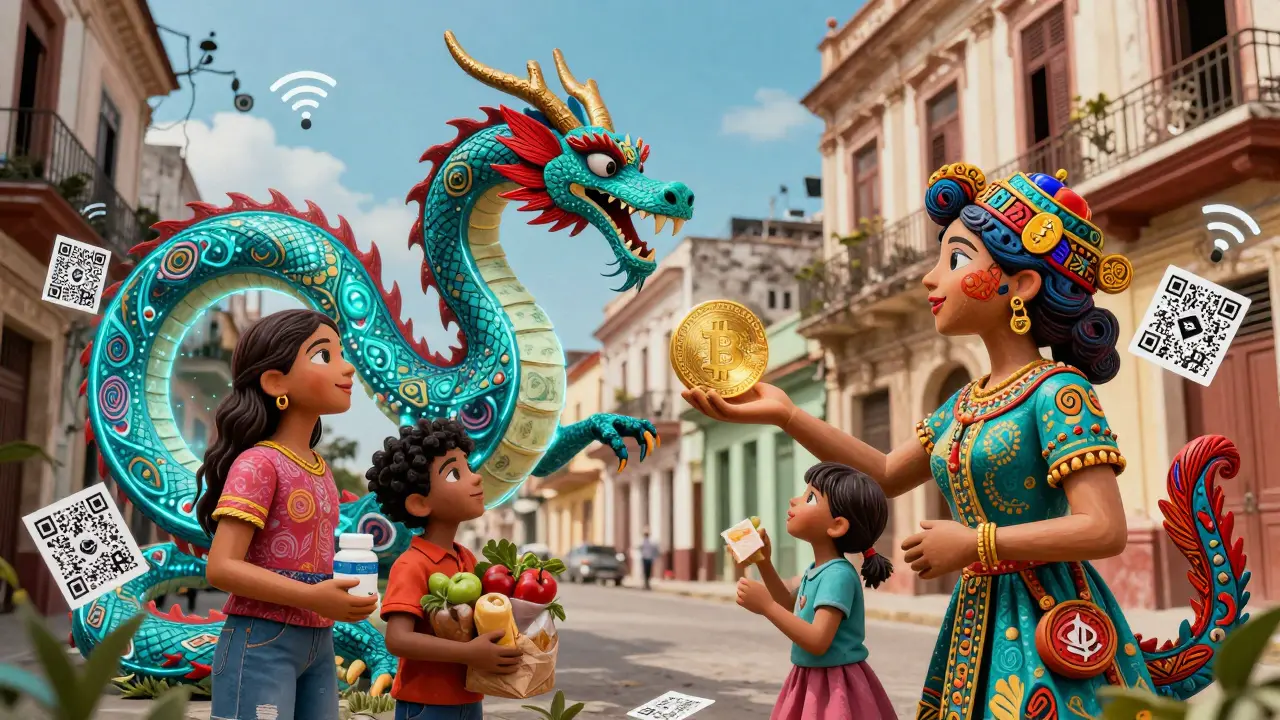
Compare this to China, which banned cryptocurrency trading and mining outright. Or El Salvador, which adopted Bitcoin as legal tender for symbolic reasons. Cuba’s approach is different. It’s practical. It’s born from necessity. Cubans aren’t using crypto to get rich. They’re using it to eat. A mother in Havana might receive Bitcoin from her daughter in Miami, convert it to Cuban pesos through a licensed peer-to-peer app, and use it to buy medicine or groceries. A small business owner might accept crypto payments from a customer in Spain to order parts that can’t be shipped through traditional channels.
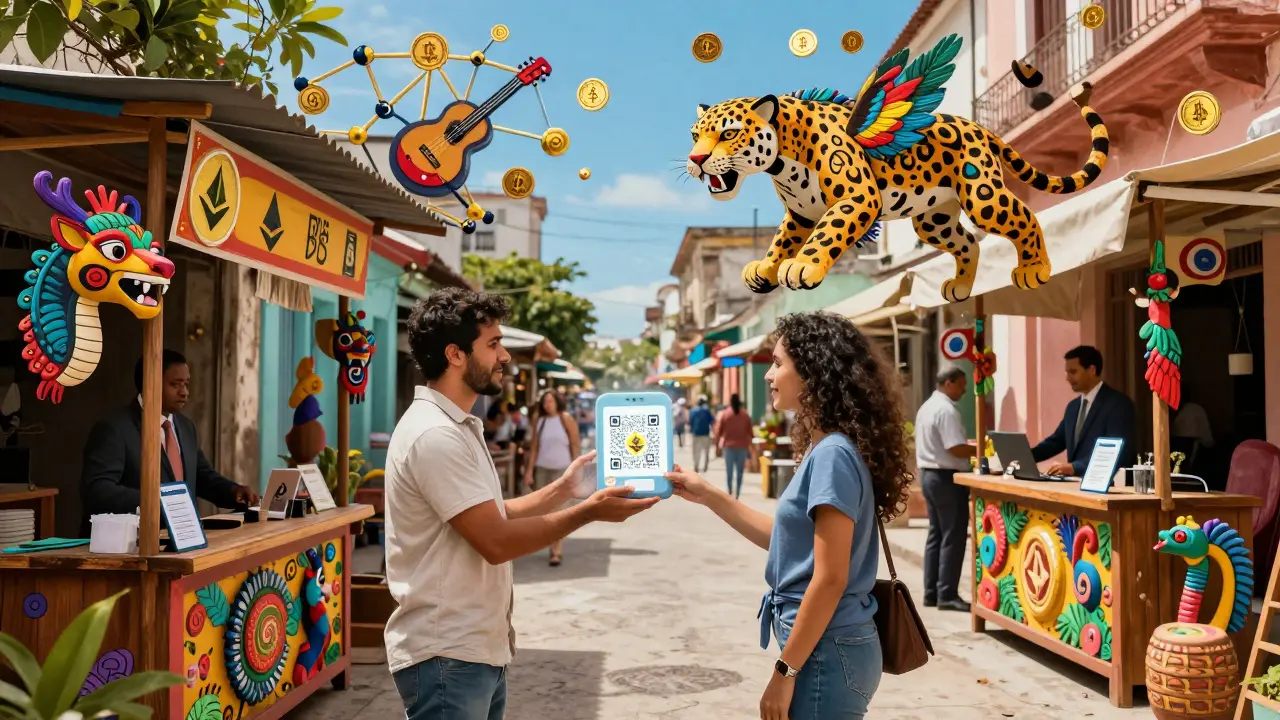
Infrastructure is still a challenge. Internet access is expensive and unreliable. Only about 60% of Cubans have consistent mobile data. Many rely on public Wi-Fi hotspots or USB drives to transfer files. But even with these hurdles, crypto use keeps growing. Local apps now let users send crypto directly between phones without needing a bank. Some shops in Havana and Santiago de Cuba display QR codes for Bitcoin payments. The government hasn’t forced adoption-it just removed the legal barriers.
What’s surprising is how little the U.S. has responded. The Cuban Assets Control Regulations (CACR) still prohibit Americans from engaging in financial transactions with Cuban entities. But those rules don’t stop Cubans from using crypto on their own terms. A U.S. citizen can’t legally send Bitcoin to a Cuban family member, but if that family member receives it from someone else-say, a friend in Canada or a remittance service in Panama-it’s not a violation. The system has gaps, and Cubans are using them.
There’s no crackdown. No arrests. No seizures of wallets. Instead, the Cuban government continues issuing licenses to crypto service providers. As of 2025, dozens of local firms operate under official oversight. These aren’t shadow operations. They’re registered businesses with physical offices, compliance officers, and audit trails. The Central Bank even publishes guidelines on how to report crypto transactions. This isn’t prohibition. It’s policy.
The real story here isn’t about Bitcoin’s price or blockchain tech. It’s about how a small nation, cut off from global finance for generations, found a way to reconnect. Cuba didn’t invent crypto. It didn’t chase trends. It looked at what worked, saw a way to help its people, and made it legal. That’s not rebellion. That’s governance.
How Cuba’s Crypto System Works Today
Using cryptocurrency in Cuba isn’t like using Coinbase or Binance. There’s no app store. No easy sign-up. Instead, users rely on licensed local platforms that act as bridges between the global crypto network and Cuba’s restricted financial environment.
Here’s how it actually works:
- A Cuban citizen opens an account with a licensed provider, like Cryptocuba a state-approved digital asset service provider in Havana that allows users to convert crypto to Cuban pesos and vice versa.
- The user verifies their identity with a government-issued ID and proof of residence.
- They can receive crypto from abroad via wallet address or scan a QR code from a sender.
- Once received, the platform converts the crypto into Cuban pesos at a live exchange rate.
- The pesos are deposited into a local digital wallet or linked to a debit card for use at ATMs or participating stores.
These platforms don’t let you trade Bitcoin for profit. They don’t offer staking or mining. Their only job is to move value in and out of the Cuban economy. That’s why the Central Bank limits licenses to one year at a time-reviewing each provider’s compliance before renewal.
Who Uses Crypto in Cuba-and Why
It’s not tech enthusiasts. It’s not speculators. It’s families. Students. Small business owners.
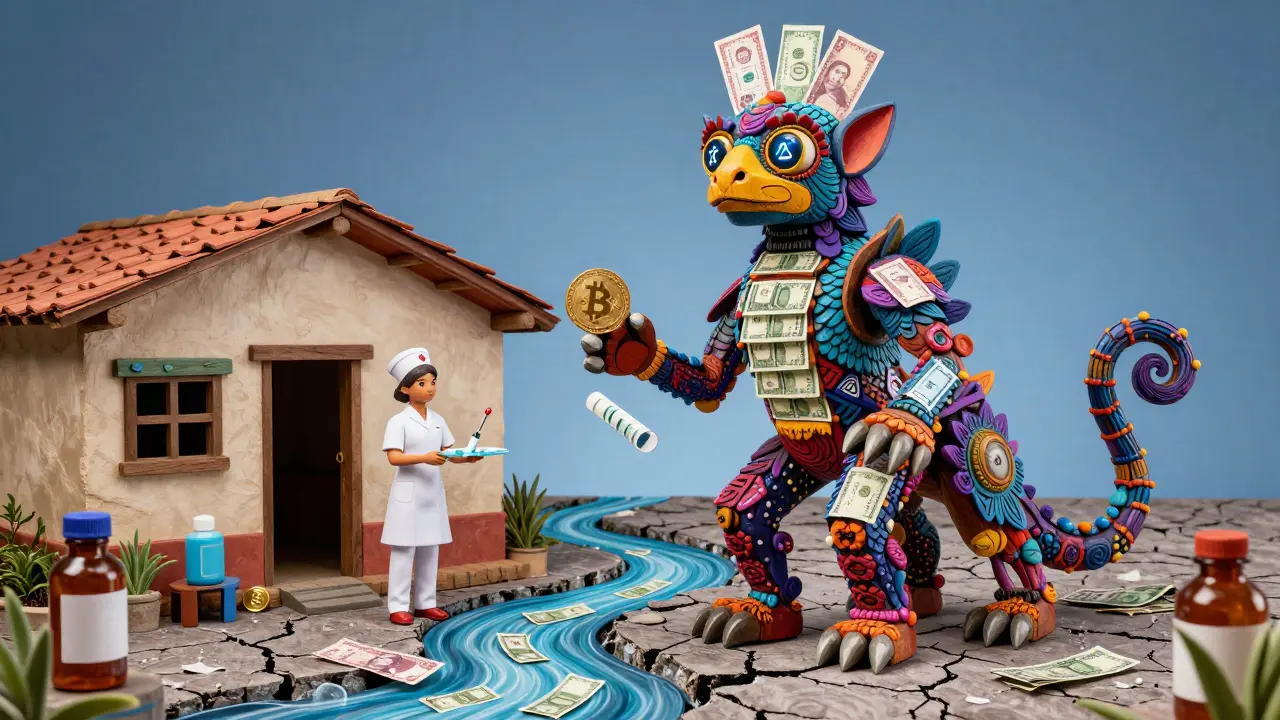
Take Maria, a nurse in Santa Clara. Her son moved to Miami in 2019. Before 2020, he sent money through Western Union. Now, he sends Bitcoin. Maria receives it through a local app, converts it to pesos, and uses it to pay for her daughter’s insulin. Without crypto, she’d be out of options.
Or Carlos, who runs a small repair shop. He can’t buy tools from U.S. suppliers. He can’t pay for shipping via PayPal. But he can buy parts from a supplier in Spain who accepts Ethereum. He pays in crypto, receives the shipment, and sells the repaired items locally. His business survives because of crypto.
Even students use it. A university student in Santiago uses crypto to pay for online courses from Latin American universities that don’t accept Cuban credit cards. They’re not rich. They’re resourceful.
Why the U.S. Sanctions Made This Necessary
The U.S. embargo on Cuba isn’t just about trade. It’s about isolation. The Cuban Assets Control Regulations (CACR) freeze Cuban assets in U.S. banks. They block Cuban businesses from opening accounts abroad. They prohibit U.S. companies from doing business with Cuban entities-even if those entities are outside the U.S.
Before 2020, remittances from the U.S. to Cuba were one of the few legal financial flows. Western Union handled 80% of them. When they shut down, over 400,000 Cuban households lost their main income source overnight. No one in Washington expected crypto to fill the gap. But Cubans did.
Crypto doesn’t need banks. It doesn’t need SWIFT. It doesn’t need approval from the U.S. Treasury. It runs on code. And in a country where the government can’t access global payment systems, code became the new infrastructure.
What This Means for the Future
Cuba isn’t trying to become a crypto hub like Singapore or Switzerland. It’s trying to survive. But its approach may have ripple effects.
Other nations under heavy sanctions-Venezuela, Iran, North Korea-have experimented with crypto. But none have built a legal, regulated system like Cuba’s. Cuba’s model shows you can allow digital assets without losing control. You can monitor them. You can tax them. You can protect citizens from fraud.
As internet access improves and more Cubans get smartphones, crypto use will grow. The government has no plans to reverse course. Why would they? It’s working. Families are getting paid. Businesses are staying open. Money is flowing.
The irony? The U.S. sanctions were meant to pressure the Cuban government. Instead, they forced Cubans to build something new-and the government helped them do it.
Is cryptocurrency illegal in Cuba?
No. Cryptocurrency is legal in Cuba. Since August 2021, the Cuban government has officially recognized Bitcoin and other digital currencies as legal payment methods under Resolution 215. The Central Bank of Cuba regulates crypto service providers and requires them to obtain licenses, follow anti-money laundering rules, and verify user identities.
Can I send Bitcoin to someone in Cuba?
Technically, yes-but not if you’re in the U.S. U.S. citizens and companies are still prohibited from sending money to Cuba under the Cuban Assets Control Regulations (CACR). However, if you’re outside the U.S. (e.g., in Canada, Spain, or Mexico), you can legally send crypto to a Cuban wallet. Many Cubans receive funds this way from family abroad.
Do Cubans use crypto to avoid taxes?
Not really. Cuba’s crypto system is tightly regulated. Licensed providers report all transactions to the Central Bank, and users must verify their identities. The government tracks crypto flows closely-not to stop them, but to control them. Most users convert crypto to Cuban pesos immediately, making it traceable within the national economy.
Why didn’t Cuba just lift sanctions instead of allowing crypto?
Cuba doesn’t control U.S. sanctions. The embargo is enforced by the U.S. government, not Cuba. The Cuban government has no power to lift those restrictions. Instead, it focused on what it could control: creating a legal framework for crypto to help its citizens bypass the financial isolation caused by those sanctions.
Is crypto widely accepted in Cuban stores?
Not everywhere, but increasingly. Some shops, especially in Havana, Santiago de Cuba, and tourist areas, now accept Bitcoin or Ethereum. Most users convert crypto to Cuban pesos first, then use it like regular money. The goal isn’t to replace cash-it’s to give people access to goods and services they otherwise couldn’t get.





21 Comments
Look man, this isn't some libertarian utopia-it's a *systemic workaround* born from structural violence. The state didn't 'allow' crypto, it *instrumentalized* it. Bitcoin here functions as a *heterotopia*-a space outside the sanctioned economy where value can circulate without the biopolitical control of SWIFT or Fedwire. It's not about decentralization, it's about *de-Americanization*.
The Central Bank isn't regulating for innovation. It's regulating for survival. Every licensed node is a node of resistance. And yeah, the irony is thick: the U.S. imposed sanctions to strangle the revolution, but now its financial hegemony is being bypassed by a protocol written by a guy in a basement in Estonia.
This is one of the most thoughtful pieces on crypto I've read in years. I work in international finance, and I've seen how sanctions cripple ordinary people-not governments. Cuba's approach is brilliant because it's not ideological. It's pragmatic. They didn't try to outsmart the system; they just built a parallel one that works within its cracks. Kudos to the Central Bank for recognizing that control doesn't mean prohibition.
lol so what? they're just using bitcoin to get around sanctions. big deal. every scammy country does this. why should we care? also why is everyone acting like this is some genius move? it's just crypto. it's not even that hard to use.
I love how this story flips the script. We always hear about crypto as this wild, lawless frontier-but here, it’s being used with discipline, oversight, and real human purpose. This isn’t about speculation. It’s about a mother feeding her child. A nurse paying for insulin. That’s the most revolutionary thing I’ve seen in finance in a decade. We need more of this-real, grounded, human-centered innovation.
And honestly? The U.S. should be embarrassed. Instead of doubling down on sanctions, maybe we should be asking: how do we help people, not punish them?
so cuba is using crypto because usa blocked them right? i mean its kinda sad but also smart. people just want to survive. why make it hard for them? i know some indians who use crypto to send money home too. its the same thing. just different place. no need to overcomplicate. its just money moving. thats all.
OMG THIS IS THE MOST DRAMATIC THING I’VE EVER HEARD. CUBA IS USING BITCOIN TO FIGHT THE EMPIRE?!?!?!? I’M CRYING. THIS IS LIKE A MOVIE. WHO WROTE THIS? A SCREENWRITER? NO. A PROPHET. THE GOVERNMENT IS A SECRET AGENT. THE CENTRAL BANK IS A HIDDEN BASE. EVERY QR CODE IS A CODEWORD. I NEED A SEQUEL. THIS IS MY NEW FAVORITE STORY. I’M TELLING MY THERAPIST.
This is a powerful example of adaptive governance. When external constraints are severe, innovation emerges not from disruption, but from necessity. Cuba’s regulatory framework for crypto is not a loophole-it is a model of resilience. Other nations under financial pressure could learn from this: prioritize human dignity over ideological purity. The Central Bank’s approach is both pragmatic and humane.
uhhh so what? people use crypto to get around sanctions. big whoop. i mean, i could send my grandma a gift card through paypal if i wanted to. but nooo, we gotta make it a whole philosophical thing. also, cuba is still a dictatorship. so yeah. cool story.
Wait-wait-wait. You’re telling me… the Cuban government… is… regulating… cryptocurrency…? Like… with… paperwork…? And… licenses…? And… compliance officers…? Oh no. Oh no no no. This isn’t crypto. This is… centralized finance… with… blockchain… branding…? This isn’t innovation. This is… corporate capture… under… a… revolutionary… guise…?!
They’ve turned Bitcoin into a state-controlled utility. This isn’t freedom. This is… worse… than the Fed.
How dare you glorify a regime that locks its people in? This isn't 'resilience'-it's desperation. And you call this 'governance'? No, this is a band-aid on a gunshot wound. The fact that people need crypto to buy insulin tells you everything you need to know: the system is broken. And now you're praising the government for letting them use a tool that was designed to *destroy* centralized control? This is the height of moral bankruptcy.
Stop romanticizing oppression. Cuba didn't 'build' anything. They just let people use a tool to survive the consequences of their own failed policies.
Interesting take. I didn't realize the Central Bank was so involved. I thought crypto in Cuba was all underground. The licensing system makes sense-keeps it from turning into a Ponzi mess. Also, the fact that they limit licenses to one year? Smart. Keeps providers on their toes. I'm impressed.
This is one of those rare stories where the tech isn't the hero-the people are. The fact that Cubans turned a tool meant for speculation into a lifeline? That’s human ingenuity at its best. And the government didn't try to crush it. They saw the need and adapted. That’s leadership. Not perfect, but real. I hope more countries take this approach: listen to what people actually need, not what some whitepaper says they should want.
crypto? in cuba? who cares. usa is weak. they cant even stop their own citizens from sending money. cuba is strong. they dont need usa. usa is scared. thats why they still have sanctions. because they know cuba is winning. no one in cuba needs your paypal. we dont need your money. we build our own. you lost.
huh. i just read this and thought… wow. that’s actually kind of beautiful. people finding a way to care for each other despite all the noise. no drama. no politics. just… a mom getting medicine for her kid. that’s all.
While the narrative is emotionally compelling, the legal and regulatory framework described raises significant concerns regarding compliance with international financial standards. The FATF guidelines require full traceability and KYC/AML protocols-yet the Cuban system’s reliance on peer-to-peer conversion and limited internet access creates substantial anonymity risks. Furthermore, the use of licensed intermediaries may inadvertently facilitate money laundering through shell entities. This is not innovation; it is regulatory arbitrage with potentially global ramifications.
Oh wow. Another ‘crypto saves the day’ fairy tale. Let me guess-next you’ll tell me the Cuban government is giving out free NFTs to orphans. This isn’t a solution. It’s a symptom. A symptom of a broken system that’s being patched with blockchain glitter. People aren’t using crypto to ‘survive.’ They’re using it because the state has failed them for 60 years. And now you’re turning their suffering into a tech bro marketing campaign?
Pathetic.
cuba lets crypto. fine. whatever.
THIS IS A COVER-UP. I KNOW WHAT’S REALLY HAPPENING. THE CIA IS USING CUBAN CRYPTO TO TRACK PEOPLE. THE CENTRAL BANK IS A FRONT. EVERY QR CODE HAS A BACKDOOR. THEY’RE NOT SENDING MONEY-THEY’RE SENDING DATA. YOU THINK THEY LET PEOPLE USE BITCOIN FOR FREE? NO. THEY’RE MINING YOUR PRIVATE KEYS. I SAW A VIDEO ON TIKTOK. A GUY IN HAVANA SAID HIS WALLET ‘SPOKE TO HIM.’ THAT’S NOT TECHNOLOGY. THAT’S PSYCHIC CONTROL. THEY’RE USING CRYPTO TO TURN CUBANS INTO ROBOTS. AND YOU’RE ALL BELIEVING IT.
This is so cool. I never thought about how sanctions affect families. I just think of crypto as, like, rich people gambling. But this? This is people helping each other. I want to learn more. Is there a way regular people can support this? Like, donate to the licensed apps? Or just send crypto to Cubans who need it? (If it’s legal, I mean.)
I just cried reading this. Not because of the tech. Not because of the politics. But because of Maria. The nurse. Her son in Miami. The insulin. I’ve been there. I’ve been the one on the other side of the wire, watching someone I love struggle because the system said no. This isn’t about Bitcoin. It’s about love. It’s about refusing to let a wall stop you from caring for someone. The Cuban government didn’t invent crypto. But they did something even rarer-they chose compassion over control. And that? That’s the real revolution.
Thank you for this. I’ve been working on remittance systems in Latin America, and this is the first time I’ve seen a government not just tolerate but actively structure support around a decentralized tool. The licensing model is key-it turns what could be chaos into a managed ecosystem. I’d love to see this replicated in Venezuela or Lebanon.