
You have probably heard the term "Web3" thrown around for years. But let’s be honest: for most people, it still feels like a walled garden of confusing jargon, clunky wallets, and tokens that go nowhere. You buy a digital collectible in one game, but you can’t use it in another. You earn rewards on one platform, but they’re stuck there. This fragmentation is exactly what Moca Network aims to fix. It isn’t just another blockchain; it’s an attempt to build a unified cultural economy where your digital identity and assets move freely across music, sports, gaming, and education.
The core token driving this ecosystem is MOCA. If you are wondering what makes this coin different from the thousands of other altcoins out there, the answer lies in its architecture. MOCA is designed as an omnichain utility token, meaning it doesn’t care which blockchain you are using. It operates across multiple networks simultaneously, bridging the gap between traditional internet users (Web2) and crypto natives (Web3). Backed by industry heavyweights like Animoca Brands, Moca Network is trying to do something ambitious: make crypto invisible to the end-user while keeping the benefits intact.
The Core Concept: One Token, Many Worlds
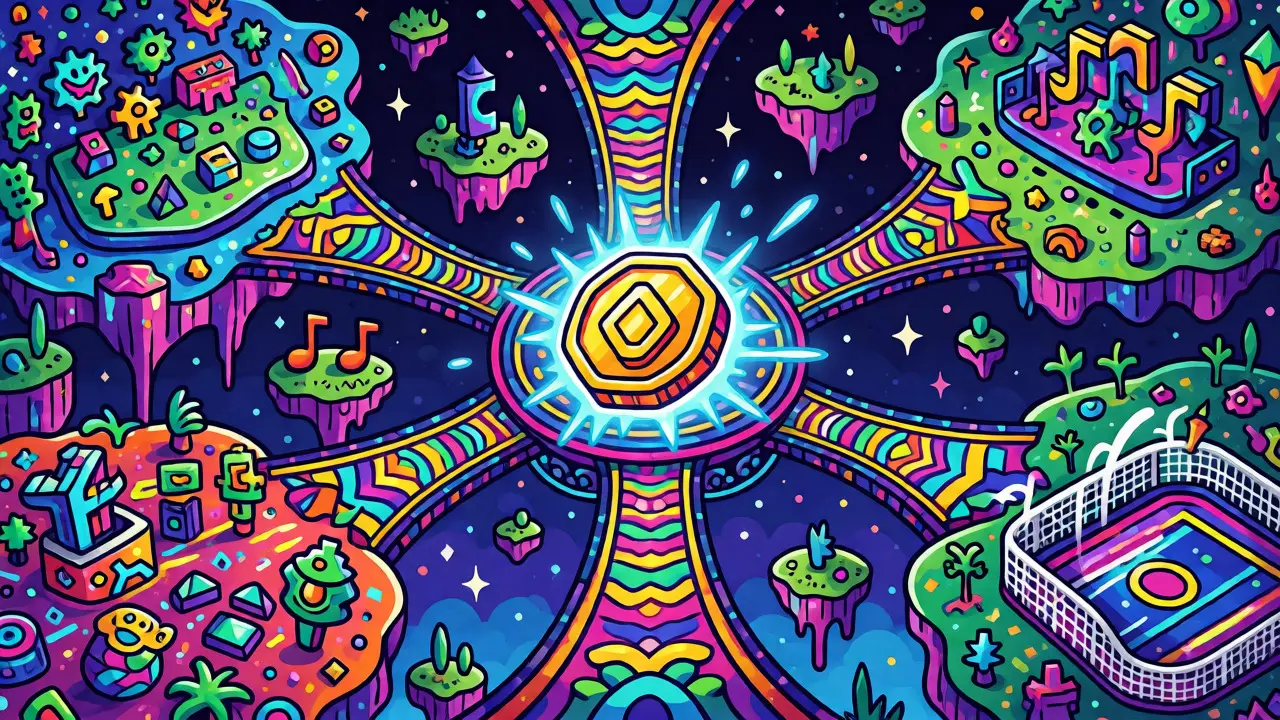
Think of Moca Network as a hub. Instead of having separate ecosystems for gaming, music, and sports, Moca connects them all through a single infrastructure. The vision is simple: one $MOCA to unite all cultures. This isn't just marketing fluff. The network uses advanced technology to ensure that when you interact with a partner app-say, buying a ticket for a virtual concert or unlocking a skin in a game-you are using the same underlying currency and identity system.
This approach solves a major pain point in crypto today. Currently, if you want to participate in five different decentralized applications (dApps), you might need five different wallets, five different native tokens, and five different bridges to move funds between them. Moca simplifies this by creating a shared layer. Partners contribute MOCA to the network as "operators," sharing public infrastructure. In return, they get access to a broader audience through cross-pollination. Your activity in the gaming sector could potentially boost your reputation in the music sector, creating a cohesive user experience.
Technical Backbone: How MOCA Works Under the Hood
To understand why MOCA can function across different chains, you need to look at its technical foundation. Unlike older blockchains that operate in silos, Moca Network leverages the LayerZero v2 protocol. This is a key component that enables true interoperability. LayerZero allows messages and assets to move between different blockchains without relying on centralized bridges, which are often prone to hacks.
Here is how the pieces fit together:
- Omnichain Capability: MOCA is chain-agnostic. While it may initially deploy on specific chains to empower specific utilities, it is designed to go wherever the culture takes it. It isn’t locked into Ethereum, Solana, or any single Layer 1.
- ZkProofs for Identity: Privacy is huge in Web3. Moca uses zero-knowledge proofs (zkProofs) to verify user data without revealing sensitive information. This creates a secure, transparent transaction environment while maintaining user privacy.
- Decentralized Data Storage: The network employs a full identity stack combined with decentralized storage. This ensures that your digital identity isn’t owned by a single company but is portable and secure.
- Energy-Efficient Consensus: MOCA does not support traditional proof-of-work mining. Instead, it uses an alternative consensus mechanism focused on sustainability and speed, validating transactions efficiently without the massive energy consumption associated with Bitcoin-style mining.
This technical setup positions Moca not just as a payment network, but as a comprehensive infrastructure layer. It handles the heavy lifting of connectivity so developers can focus on building cool consumer apps rather than worrying about cross-chain compatibility issues.
Tokenomics: Supply, Utility, and Governance
If you are looking at MOCA as an investment or a tool, you need to know the numbers. The total supply of MOCA is fixed at 8,888,888,888 tokens. This fixed supply model contrasts with inflationary models seen in some other networks, aiming to create scarcity as demand grows.
But what do you actually do with MOCA? It serves three fundamental pillars: Growth, Culture, and Governance.
| Utility Type | Description | User Benefit |
|---|---|---|
| Payment Currency | Used to pay for products and services within partner apps. | Seamless transactions across music, gaming, and sports platforms. |
| Network Gas | Acts as "gas fees" for adopting network infrastructure. | Enables smooth interaction with dApps and smart contracts. |
| Access Rights | Grants early purchase opportunities for digital assets. | Potential value appreciation through early adoption of new items. |
| Governance | Voting rights on network proposals and upgrades. | Direct influence over the future direction of the ecosystem. |
| Reward Mechanism | Earned based on loyalty (actions) and reputation (strength). | Incentivizes active participation and community engagement. |
One interesting aspect of the tokenomics is the "reputation-based economy." Users don’t just hold MOCA; they earn it. Your actions within the network-such as participating in events, completing tasks, or engaging with content-contribute to your loyalty score. Higher loyalty and reputation strength can lead to better rewards and privileges. This shifts the dynamic from pure speculation to actual usage-based earning.
The Ecosystem: Who is Building on Moca?
A blockchain is only as valuable as the applications built on top of it. Moca Network claims to have integrated over 450+ partner companies into its ecosystem. These aren’t just random projects; many are backed by Animoca Brands, a global leader in blockchain gaming and metaverse investments.
The partners span various industries:
- Gaming: Allowing players to carry assets and achievements across different games.
- Music: Creating new ways for artists to monetize fans and for fans to own parts of their favorite songs.
- Sports: Enhancing fan engagement through digital collectibles and exclusive experiences.
- Education: Verifying credentials and incentivizing learning through token rewards.
- Intellectual Property (IP): Managing and licensing digital rights more efficiently.
This breadth of application is crucial. By targeting mainstream consumer sectors rather than just DeFi (Decentralized Finance) traders, Moca aims to bring non-crypto users into the fold. The goal is to make the technology invisible. When you buy a ticket or unlock a level, you shouldn’t need to know which blockchain is running underneath. You just want it to work.
How to Get Involved: Wallets and Staking
If you want to start using Moca Network, you’ll need a compatible wallet. The Moca Ecosystem offers its own solution, described as "designed to make crypto easy for everyone." This includes a non-custodial wallet, business payment solutions, and even a private messenger. The emphasis here is on accessibility. They recognize that complex interfaces drive average users away.
For those interested in holding MOCA long-term, staking is a primary method of participation. Staking allows holders to lock up their tokens to support the network’s security and governance. In return, you earn rewards. The Annual Percentage Yield (APY) varies based on market conditions and the total number of tokens staked. While specific current APY figures fluctuate, the mechanism encourages holding and reduces immediate sell pressure, contributing to network stability.
Developers also have tools at their disposal. The "AIR Kit" mentioned in official documentation provides resources for integrating Moca’s features into existing applications. While specific implementation times vary, the use of standard protocols like LayerZero suggests that integration complexity is lower compared to building custom cross-chain solutions from scratch.
Challenges and Considerations
No project is without risks, and it’s important to look at Moca Network critically. While the vision is compelling, execution is everything. Here are a few things to keep in mind:
- Adoption Metrics: While 450+ partners sound impressive, actual daily active users and transaction volumes are harder to pin down. Look for real-world usage data, not just partnership announcements.
- Competition: Interoperability is a crowded space. Projects like Polkadot (DOT) and Chainlink (LINK) also solve similar problems. Moca’s edge is its focus on consumer culture, but it needs to prove that this niche is large enough to sustain growth.
- Regulatory Uncertainty: As with all cryptocurrencies, regulatory changes can impact utility and trading. Moca’s focus on utility rather than pure speculation may help navigate these waters, but it’s not immune to legal shifts.
- Whitepaper Depth: Some analyses note that while the whitepaper outlines the vision well, it lacks specific performance metrics compared to competitors. Investors should conduct thorough due diligence beyond the marketing materials.
The lack of extensive third-party user reviews or sentiment analysis in available sources means you should rely on direct experience and verified on-chain data when possible. Don’t just trust the hype; test the product.
Frequently Asked Questions
Is MOCA a good investment?
Investment potential depends on your risk tolerance and belief in the mass adoption of Web3 consumer apps. MOCA has strong backing from Animoca Brands and a clear utility case in gaming and media. However, like all altcoins, it is volatile. Success relies heavily on whether the 450+ partners successfully onboard mainstream users who actually use the token for transactions.
Can I mine MOCA coins?
No, you cannot mine MOCA using traditional proof-of-work methods like GPU or ASIC mining rigs. The network uses an energy-efficient consensus mechanism. To acquire MOCA, you typically buy it on exchanges or earn it through staking and participation in the ecosystem's reward programs.
Which blockchains does MOCA support?
MOCA is omnichain, meaning it is not restricted to a single blockchain. It utilizes the LayerZero v2 protocol to operate across multiple environments. While it may launch primarily on specific chains like Ethereum or others depending on partner needs, its architecture allows it to bridge and function across various L1 and L2 networks.
What is the total supply of MOCA?
The total maximum supply of MOCA is fixed at 8,888,888,888 tokens. This fixed cap is intended to create scarcity relative to demand, distinguishing it from inflationary tokens that continuously mint new units.
Who backs Moca Network?
Moca Network is closely associated with Animoca Brands and Mocaverse. Animoca Brands is a prominent venture capital firm known for investing in blockchain gaming, NFTs, and the metaverse. Their involvement provides significant industry connections and development resources.
How do I stake MOCA?
You can stake MOCA through supported wallets or platforms within the Moca ecosystem. Staking involves locking your tokens for a period to support network operations. Rewards are distributed based on the amount staked and the duration, with APY rates varying according to network conditions.
Next Steps for Readers
If you are curious about Moca Network, start small. Download the Moca wallet to explore the interface. Check out which of the 450+ partners are currently live and offer tangible products you might actually use. Are there games you enjoy? Music platforms you frequent? See if MOCA integrates there.
Keep an eye on the roadmap. The transition from a promising tech stack to a widely used consumer economy takes time. Watch for updates on user adoption metrics, not just new partnership logos. If the daily transaction volume rises alongside user count, that’s a healthy sign. If it stalls, reconsider the thesis. Crypto moves fast, and staying informed is your best defense against hype.