
Imagine sending money across Brazil instantly, without bank fees, and having it settle on a blockchain in seconds. That’s exactly what BRL1 is designed for. It is not just another speculative token; it is a fully backed stablecoin pegged 1:1 to the Brazilian Real (BRL). If you are looking to move value efficiently within Latin America or want exposure to the Brazilian market without the volatility of Bitcoin or Ethereum, BRL1 offers a structured, transparent alternative.
Launched by a powerful consortium of major exchanges-Bitso, Foxbit, and Mercado Bitcoin-in partnership with liquidity provider Cainvest, BRL1 was built to solve a specific problem: the friction of moving Brazilian reais between traditional banking systems and cryptocurrency markets. By May 2026, this infrastructure has matured from a promise into a working reality, offering users a bridge between the fiat world and decentralized finance.
How BRL1 Works: The Mechanics of Stability
The core value proposition of any stablecoin is trust in its backing. With BRL1, that trust is anchored in tangible, regulated assets. Each token you hold represents one Brazilian real held in reserve. But unlike some stablecoins that rely on opaque corporate balance sheets, BRL1 uses a mix of high-quality, low-risk instruments.
The reserves consist primarily of:
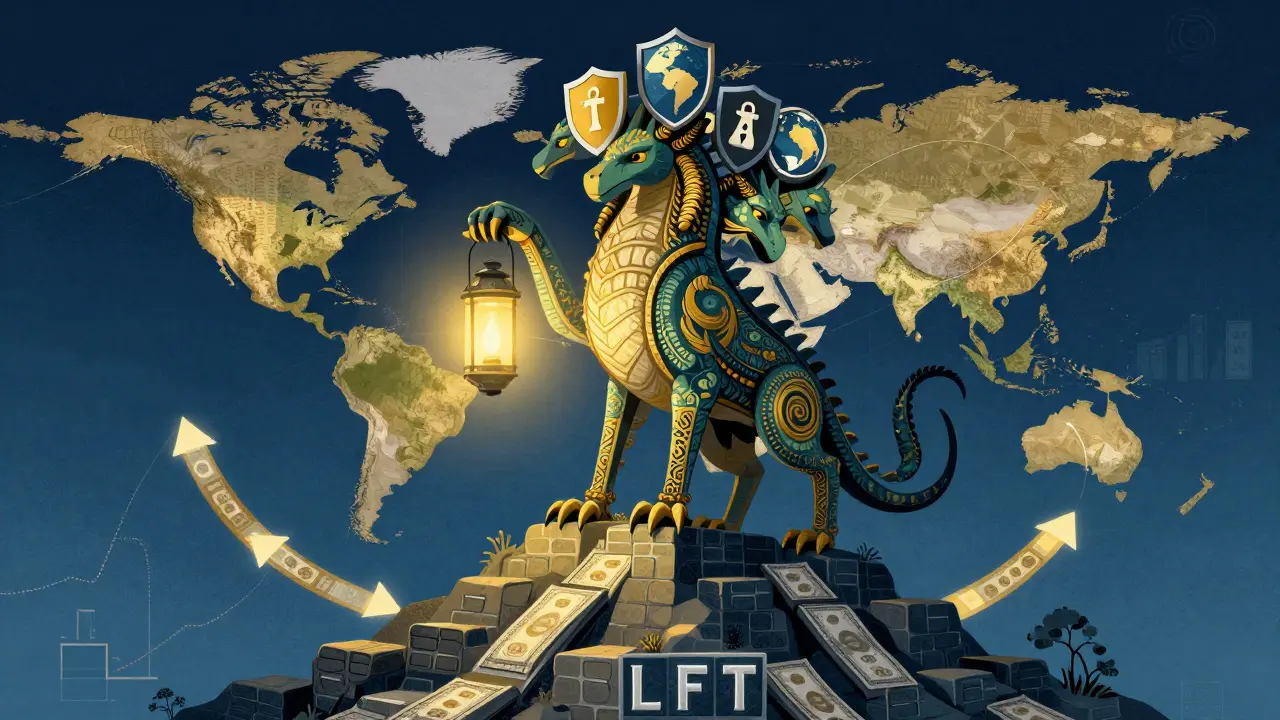
- LFTs (Letras Financeiras do Tesouro): These are Brazilian public securities indexed to the Selic rate, essentially government bonds that provide steady yield.
- Repurchase Agreements (Repos): Short-term loans secured by collateral, ensuring liquidity.
- Cash Reserves: Direct funds held in accounts at regulated financial institutions.
This structure means your BRL1 isn’t just sitting idle; it’s earning yield through safe government-backed instruments while maintaining its 1:1 peg. For transparency, the project publishes monthly attestations. You can verify these reports to see exactly how many tokens are in circulation versus the assets held in reserve. This level of openness addresses one of the biggest fears in crypto: counterparty risk.
Why Polygon? The Technical Backbone
You might wonder why BRL1 didn’t launch on Ethereum, the original home of most stablecoins. The answer lies in cost and speed. Ethereum mainnet transactions can be slow and expensive during peak times, which kills usability for everyday payments. BRL1 operates natively on the Polygon blockchain.
Polygon is an Layer-2 scaling solution that inherits Ethereum’s security but offers significantly lower transaction fees and faster settlement times. When you send BRL1, the transaction confirms in seconds, not minutes, and the gas fees are negligible. This makes it practical for micro-transactions and high-volume trading. For developers building DeFi applications targeting the Brazilian market, Polygon provides a familiar environment with robust tooling and interoperability.
The Consortium Behind the Coin
BRL1 wasn’t created by a single anonymous team. It was developed by a strategic alliance of three of Brazil’s largest cryptocurrency exchanges: Bitso, Foxbit, and Mercado Bitcoin. This consortium approach is crucial. Instead of each exchange building its own proprietary stablecoin-which would fragment liquidity-they collaborated to create shared infrastructure.
Here is why this matters to you:
- Liquidity Depth: Because all three major exchanges support it, BRL1 benefits from deep order books and tighter spreads.
- Regulatory Compliance: The project works closely with Pinheiro Neto Advogados, a leading law firm in Brazil, to ensure full compliance with local financial regulations.
- Institutional Security: Custody is managed by Fireblocks, a global leader in digital asset security. This means your assets are protected by enterprise-grade security protocols, including multi-party computation (MPC) technology.
This institutional backing gives BRL1 a legitimacy that many retail-focused tokens lack. It signals that serious financial players believe in this model.
Integration with PIX: Bridging Fiat and Crypto
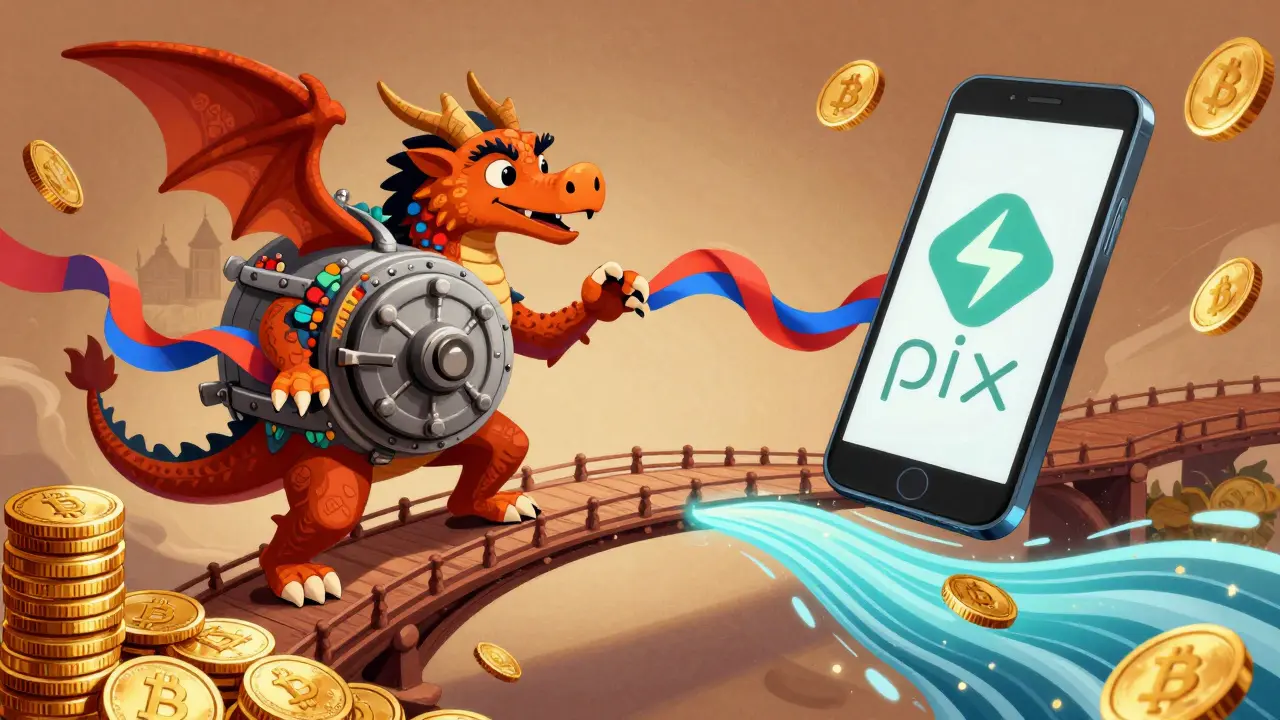
The killer feature of BRL1 is its seamless integration with PIX, Brazil’s instant payment system launched by the Central Bank. PIX has revolutionized domestic payments in Brazil, allowing free, 24/7 transfers between banks. BRL1 connects this traditional system directly to the blockchain.
Here is how the flow works:
- Minting: You send Brazilian reais via PIX to the designated address provided by your exchange.
- Tokenization: Once the funds are confirmed, BRL1 tokens are minted and sent to your Polygon wallet.
- Redemption: To cash out, you send BRL1 back to the exchange, and the equivalent amount in BRL is sent to your bank account via PIX.
This process eliminates the need for intermediaries and reduces conversion fees to near zero on participating platforms. For businesses and individuals who frequently move money between crypto and fiat, this integration saves time and money. It also lowers the barrier to entry for newcomers who are already comfortable using PIX but hesitant about complex crypto wallets.
Global Interoperability and Liquidity
While BRL1 is rooted in Brazil, it is designed for global use. Through its partnership with Cainvest, the stablecoin offers direct conversion pathways to major international stablecoins like USDT (Tether) and USDC (USD Coin). This creates a liquidity bridge for international traders who want exposure to the Brazilian market without dealing with volatile currency fluctuations.
If you are a DeFi developer or a global business, BRL1 serves as a gateway to Brazilian liquidity. You can accept BRL1 as payment, knowing it holds stable value relative to the local economy, and easily convert it to USD-pegged assets if needed. This interoperability strengthens the entire ecosystem, making cross-border transactions smoother and more efficient.
| Feature | BRL1 | USDT / USDC | DREX (Future) |
|---|---|---|---|
| Peg Currency | Brazilian Real (BRL) | US Dollar (USD) | Brazilian Real (CBDC) |
| Blockchain | Polygon (Multi-chain planned) | Ethereum, Tron, Solana, etc. | Central Bank Infrastructure |
| Backing Assets | LFTs, Repos, Cash | Treasury Bills, Cash Equivalents | Central Bank Reserves |
| Fiat On-Ramp | PIX Integration | Bank Transfer, Cards | Direct CBDC Wallet |
| Primary Use Case | Brazilian Market Efficiency | Global Trading Store of Value | National Digital Payments |
Future Roadmap: Multi-Chain and DREX
The team behind BRL1 is not stopping at Polygon. Their roadmap includes expansion to other relevant blockchains to increase accessibility and reduce dependency on a single network. More importantly, they have signaled plans to integrate with DREX, Brazil’s upcoming Central Bank Digital Currency (CBDC).
When DREX becomes available, BRL1 aims to act as a bridge between the private crypto ecosystem and the official central bank currency. This could allow users to swap BRL1 for DREX seamlessly, combining the innovation of decentralized finance with the regulatory certainty of state-backed money. This forward-looking approach positions BRL1 as a critical piece of Brazil’s future financial infrastructure.
Risks and Considerations
No financial instrument is without risk. While BRL1 is highly regulated and transparent, you should consider the following:
- Regulatory Changes: Cryptocurrency regulations in Brazil are evolving. While BRL1 complies with current laws, future changes could impact operations.
- Smart Contract Risk: Like any crypto asset, BRL1 relies on code. Although audited and secured by Fireblocks, theoretical vulnerabilities always exist in blockchain systems.
- Exchange Dependency: Since BRL1 is closely tied to Bitso, Foxbit, and Mercado Bitcoin, issues with these platforms could temporarily affect liquidity or redemption speeds.
However, compared to unregulated stablecoins, BRL1’s legal oversight and monthly attestations significantly mitigate these risks.
Is BRL1 a good investment?
BRL1 is not an investment in the traditional sense because it is a stablecoin pegged 1:1 to the Brazilian Real. Its value does not appreciate like Bitcoin or Ethereum. Instead, it is a utility tool for preserving value, facilitating fast transactions, and accessing the Brazilian crypto market with stability. You earn potential yield indirectly through the underlying assets (LFTs), but the primary goal is stability and efficiency.
How do I buy BRL1?
You can acquire BRL1 through the founding exchanges: Bitso, Foxbit, and Mercado Bitcoin. The easiest method is to deposit Brazilian Reais via PIX into your exchange account and convert them to BRL1. The tokens will then be sent to your Polygon-compatible wallet. Always ensure you are using the official channels of these reputable exchanges to avoid scams.
Is BRL1 safe?
BRL1 employs high-security standards. It uses Fireblocks for institutional-grade custody, which protects against hacking and unauthorized access. Additionally, the reserves are fully backed by regulated assets like LFTs and cash, verified by monthly third-party attestations. Legal oversight by Pinheiro Neto Advogados ensures compliance with Brazilian laws, adding another layer of safety.
Can I use BRL1 outside of Brazil?
Yes. While optimized for the Brazilian market, BRL1 operates on the global Polygon network. International users can hold, transfer, and trade BRL1 on compatible wallets and decentralized exchanges. It serves as a way for global investors to gain exposure to the Brazilian Real without opening a local bank account.
What happens if the Brazilian Real crashes?
Since BRL1 is pegged 1:1 to the BRL, its value will reflect the performance of the Brazilian Real. If the BRL depreciates against the US Dollar, the value of your BRL1 holdings in USD terms will decrease. However, within the Brazilian economy, it remains stable and functional for transactions. It is a store of value in BRL, not a hedge against BRL inflation or devaluation.