

Iran is having power outages that last for days. Factories shut down. Homes go cold in winter. Meanwhile, rows of humming machines in secret military zones are spinning out Bitcoin-24 hours a day, 7 days a week-using electricity that should be powering cities. This isn’t a glitch. It’s policy.
How the IRGC Took Over Crypto Mining
The Islamic Revolutionary Guard Corps (IRGC) didn’t stumble into cryptocurrency mining. It planned it. By 2019, as international sanctions choked Iran’s access to global banking, the regime needed a new way to move money. Bitcoin became the answer. The IRGC, under direct orders from Supreme Leader Ali Khamenei, moved quickly to build a mining empire. They didn’t start small. In Rafsanjan, Kerman Province, a 175-megawatt Bitcoin mining farm went live. It was disguised as a joint venture with foreign investors, mostly from China. But the land, the security, and the power? All controlled by the IRGC. These aren’t backyard operations. These are industrial-scale farms filled with thousands of ASIC miners-specialized computers built only for mining Bitcoin. Each one uses as much electricity as a small household. Together, they drain entire neighborhoods of power. Estimates suggest around 180,000 mining devices operate in Iran. About 80,000 belong to private citizens. The rest-roughly 100,000-are run by state-linked groups. That’s more than half the country’s mining power in the hands of the military. And they don’t pay for it.Free Power, No Consequences
Private miners in Iran pay high electricity rates and are forced to sell their Bitcoin to the Central Bank of Iran at fixed prices. Many can’t make a profit. Some shut down. Others go underground. The IRGC doesn’t have that problem. They don’t pay bills. They don’t need permits. They built their own power lines. In 2022, Iran’s parliament quietly passed a law letting the military create private power plants and bypass the national grid. That meant the IRGC could siphon electricity meant for hospitals, schools, and factories directly into their mining farms. Religious foundations like Astan Quds Razavi-controlled by the Supreme Leader-are also deeply involved. These organizations, officially called charitable trusts, act as fronts for mining operations. They own land, buy hardware, and launder profits through religious donations. The system is designed to look legitimate. It’s not. Energy Minister Ali Abadi, a former IRGC commander himself, called unauthorized mining “an ugly and unpleasant theft.” But when you’re part of the system that created it, calling it theft doesn’t change anything. It’s theater.The Sanctions Evasion Machine
Bitcoin doesn’t need banks. That’s the whole point. Traditional money transfers go through SWIFT, a global banking network controlled by Western nations. Sanctions block Iran from using it. Bitcoin? It moves directly from wallet to wallet. No bank. No middleman. No audit trail. That’s why the IRGC turned to crypto. Blockchain analysts have traced Bitcoin wallets linked to IRGC operations. U.S. Treasury and Israeli intelligence have targeted them. These wallets fund proxy militias in Syria, Iraq, and Yemen. They pay for drones. They buy weapons. They finance cyberattacks. Crypto mining isn’t just about profit-it’s about survival. Iran is now one of the top 10 Bitcoin producers in the world. Not because of innovation. Not because of entrepreneurship. Because the military has a monopoly on electricity and zero accountability.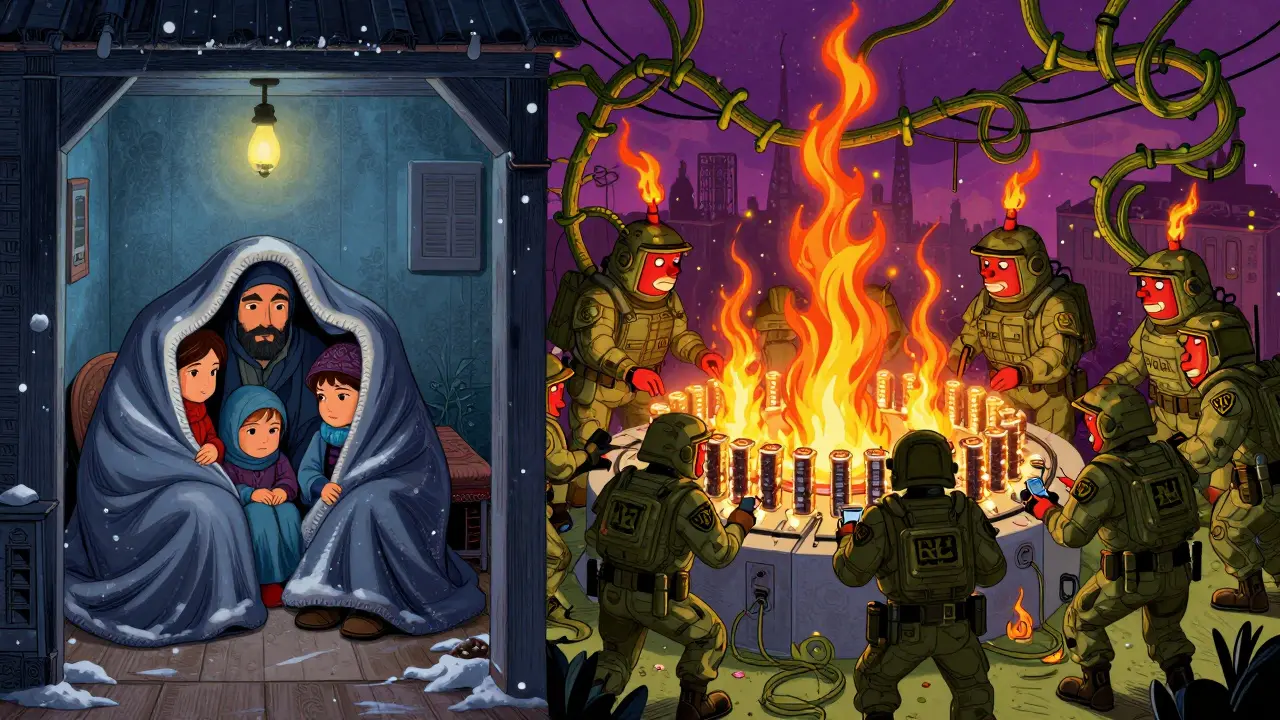
Two Systems, One Country
There are two Irans when it comes to crypto mining. One is the Iran of ordinary people: rolling blackouts, rising fuel prices, families rationing electricity. They’re told mining is illegal. They’re fined. Their equipment is seized. They’re pressured to sell their Bitcoin to the state at a loss. The other is the Iran of the IRGC: armored convoys delivering new mining rigs to secret bases. Power lines snaking from military zones into mining farms. No inspections. No taxes. No consequences. This isn’t corruption. It’s institutionalized theft. The government pretends to crack down. In December 2024, the Central Bank blocked all domestic crypto-to-rial exchanges. But by January 2025, they unblocked them-only for approved traders using government-controlled APIs. That’s not regulation. That’s control. They want to monitor who’s mining, who’s trading, and who’s making money. But only if they’re on the regime’s side.How Iranians Fight Back
Regular Iranians aren’t powerless. They’re using VPNs to access foreign exchanges like Nobitex. They’re trading Bitcoin for dollars on peer-to-peer platforms. They’re avoiding the state’s rigged system. But it’s risky. Using a VPN to trade crypto can land you in jail. The government monitors internet traffic. They track wallets. They’ve arrested dozens of private miners. Still, people keep trying. Because when your lights go out and your kids are cold, and the state is using your electricity to make Bitcoin for its war machine, you do what you have to.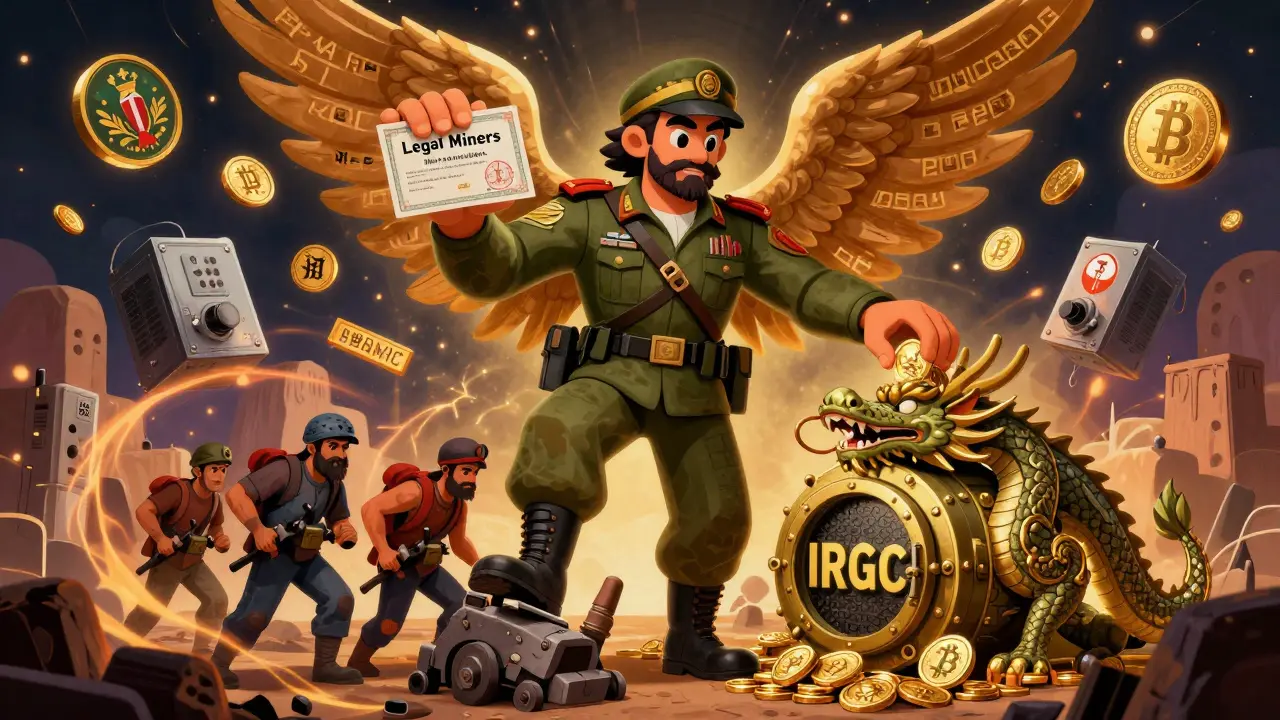






12 Comments
So the IRGC is using our electricity to mine Bitcoin while our kids freeze? Classic. And we sit here watching Netflix like it’s none of our business. This isn’t a government. It’s a criminal syndicate with nukes.
They’re not even hiding it. Power lines? Secret bases? Come on. They’re laughing at us.
This is all a psyop. The US and Israel are feeding us this story so they can justify bombing Iranian power plants. You think the IRGC is dumb enough to mine Bitcoin without a backdoor? They’re using it to fund the resistance. And you? You’re just another sheep in the matrix. 🤡
Wait… if they’re mining Bitcoin, why aren’t they using solar? Iran has desert. Sun’s free. They’re using coal and gas? That’s… weird. Maybe it’s not about Bitcoin. Maybe it’s about controlling the grid. Like… a long game. You ever think about that? 🤔
Power is the new oil. Whoever controls it controls the future. Iran’s elite are just adapting. The people suffer. Always. But systems don’t collapse because of injustice. They collapse because they stop working. This won’t end until the machines stop humming.
I keep thinking about the families in Tehran right now, huddled under blankets, waiting for the power to come back on. Meanwhile, in some underground bunker, a server farm is quietly turning their children’s cold into digital gold. There’s no moral high ground here. Just theft dressed up as policy.
Let’s be real-this isn’t crypto mining. It’s state-sponsored looting with ASICs. The IRGC didn’t invent Bitcoin. They weaponized it. And now they’ve turned the entire country into a battery. You call that innovation? Nah. That’s just fascism with a blockchain logo. 💥
I mean… I get that sanctions are brutal, and I get that the IRGC is corrupt-but isn’t there a middle ground? What if the government just taxed the mining and used the revenue to fix the grid? Why does everything have to be binary? Either you’re a victim or you’re a villain? Why can’t we just… fix it? It’s not that complicated.
The fact that you’re surprised by this proves you’ve never studied how authoritarian regimes operate. This isn’t corruption-it’s optimization. The IRGC isn’t stealing power. They’re reallocating it. The people? They’re the cost of doing business. Welcome to realpolitik, sweetheart.
This is a textbook case of rent-seeking behavior in a post-scarcity energy economy. The IRGC has captured the energy production function and externalized the social costs. Bitcoin mining is merely the vector. The real exploit? The capture of public infrastructure by non-market actors. It’s not illegal. It’s systemic.
I’m done pretending this is about Bitcoin. This is about power. The IRGC doesn’t care if you’re cold. They care if their drones fly. And if you’re mad? Good. That means you’re still awake. Keep being mad. That’s the only thing they can’t mine.
It’s easy to call them evil. But what if they truly believe they’re protecting the revolution? What if they think the people’s suffering is a necessary sacrifice for the greater good? That’s the scariest part. They’re not monsters. They’re true believers. And that’s why this won’t end with sanctions. It’ll end when their faith cracks.
I just want to say-this isn’t just Iran’s problem. It’s ours too. We buy the chips. We fund the tech. We ignore the human cost. Maybe instead of just pointing fingers, we should ask: what are we complicit in? And how do we stop being part of the machine?