WELL Airdrop Details: What We Know and How to Prepare
No verified WELL airdrop exists as of November 2025. Learn how to spot scams, what real airdrops require, and which projects to watch instead. Stay safe and avoid losing crypto to fake claims.
When you hear about a WELL airdrop, a free token distribution by a blockchain project to attract users. Also known as crypto airdrop, it’s often the first thing people see when a new project launches. But not all airdrops are created equal—some give you real value, others vanish with your attention. The WELL airdrop is one of those cases where hype meets reality. It’s not a guaranteed payout. It’s not a lottery ticket. It’s a test of whether a project can deliver on its promises—or if it’s just collecting wallets to sell later.
Airdrops like WELL rely on three things: WELL token, the digital asset distributed in the airdrop, a blockchain airdrops, distribution mechanisms tied to wallet activity or community participation, and user trust. Most failed airdrops, like the LNR Lunar Crystal NFT or CHY from Concern Poverty Chain, never delivered tokens after collecting thousands of sign-ups. They used the airdrop as a way to build a fake user base, then disappeared. WELL could be different—but you need to ask: who’s behind it? What’s the token for? And is there any real demand?
Look at the patterns. Projects that actually succeed with airdrops—like FLUX on CoinMarketCap or CrossWallet’s CWT—have clear utility, public teams, and active communities. They don’t just say "claim your tokens" and vanish. They explain how the token works, where it’s used, and what happens after you get it. The WELL airdrop? If it’s silent on those details, that’s a red flag. Airdrops don’t create value. They just move it around. And if the token has no exchange listing, no use case, and no roadmap, then your "free" tokens are just digital dust.
You’ll find real stories below—some people got nothing. Others lost time. A few found a foothold in a project that actually moved forward. This collection doesn’t promise riches. It gives you the facts: who ran the WELL airdrop, what happened after the claim window closed, and whether anyone ever saw a return. No fluff. No hype. Just what actually happened when people showed up for the free tokens.
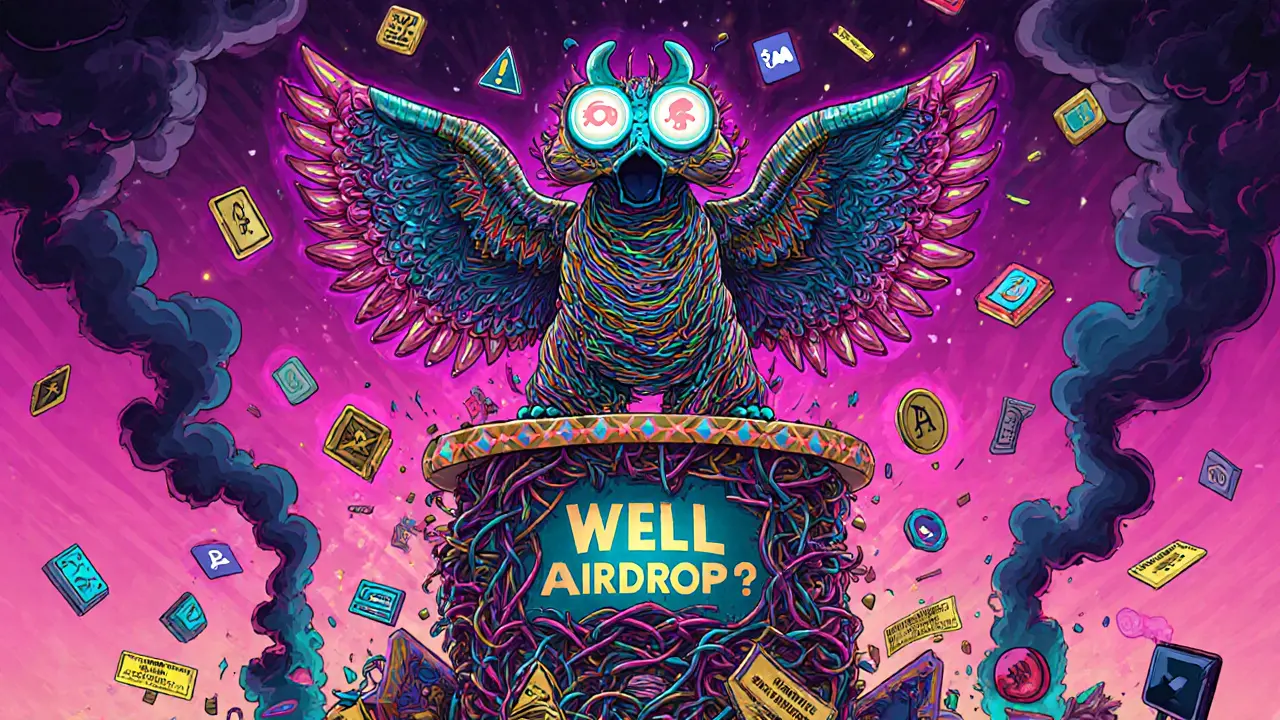
No verified WELL airdrop exists as of November 2025. Learn how to spot scams, what real airdrops require, and which projects to watch instead. Stay safe and avoid losing crypto to fake claims.