HSM Integration with Blockchain: Secure Key Management Guide
Discover how Hardware Security Modules (HSMs) secure blockchain private keys. Learn about PKCS#11 integration, deployment strategies, and best practices for institutional crypto custody.
When you hold cryptocurrency, you’re not just storing value—you’re managing digital keys that, if lost or stolen, can vanish forever. Blockchain security, the practice of protecting digital assets on decentralized ledgers through cryptography, access control, and verified identity systems. It’s not about fancy software—it’s about knowing what to trust, what to avoid, and how to lock down your holdings so even a nation-state can’t take them. Without it, your coins are as vulnerable as cash left on a park bench.
Real blockchain security starts with hardware wallets, physical devices that store private keys offline, making them immune to remote hacking. cold storage—things like Ledger and Trezor—are the only proven defense for anyone holding more than a few hundred dollars in crypto. But security isn’t just about storage. It’s also about how you interact with the network. Blockchain voting, a system that uses immutable ledgers to record votes without revealing identities, shows how the same tech that secures your wallet can prevent fraud in elections. And when you hear about crypto theft, large-scale attacks where hackers exploit weak points in exchanges, smart contracts, or user behavior, you’re seeing what happens when security is an afterthought.
Some threats are technical, like smart contract bugs or phishing scams. Others are systemic: North Korea’s Lazarus Group has stolen over $3 billion by targeting exchanges and DeFi protocols. Meanwhile, tools like Tornado Cash, a privacy-focused mixer that was later sanctioned by the U.S. government for enabling money laundering, reveal the tension between privacy and regulation. You can’t have true security without understanding both sides.
What you’ll find here isn’t theory. These are real stories—of failed tokens, hacked platforms, dormant projects, and the tools that actually work. You’ll see how a simple hardware wallet stopped a thief, how a fake airdrop tricked hundreds, and why a government’s digital currency isn’t crypto at all. This isn’t about fear—it’s about clarity. Know what to protect. Know how to protect it. And know what’s just noise.

Discover how Hardware Security Modules (HSMs) secure blockchain private keys. Learn about PKCS#11 integration, deployment strategies, and best practices for institutional crypto custody.

Discover how account abstraction transforms crypto wallets with enhanced security, social recovery, and gas sponsorship. Learn why ERC-4337 is key to mainstream adoption.

Learn how to detect Sybil nodes in blockchain networks using social graphs, reputation systems, and economic barriers. Explore real-world cases like Ethereum Classic and emerging AI-driven solutions.
Discover why smart contract audits fail and how to secure your DeFi project in 2026. Learn about the 5-stage audit process, top firms like OpenZeppelin, and the rise of AI in blockchain security.

Explore how homomorphic encryption enables computing on encrypted data without decryption. Learn about FHE, PHE, real-world uses in healthcare and blockchain, and implementation challenges.
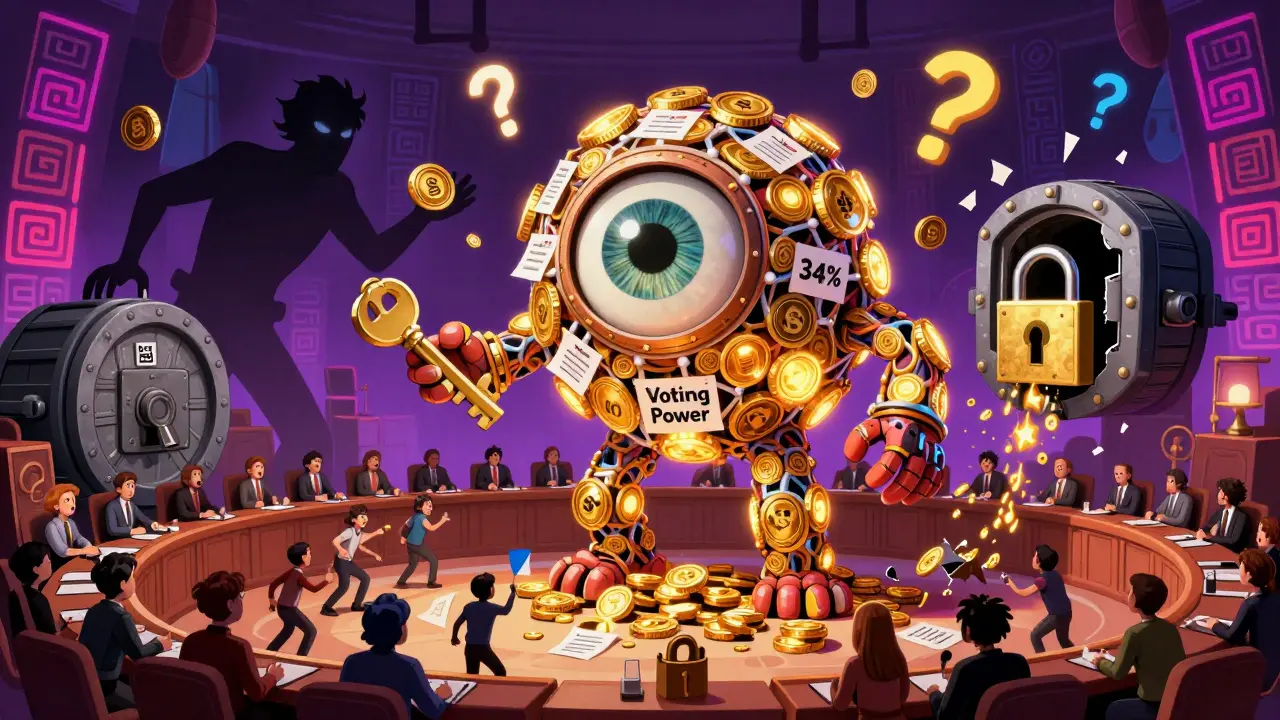
Governance attack vectors in blockchain exploit flawed decision-making processes, not code bugs. These weaknesses cause some of the biggest crypto losses - and most projects still ignore them.
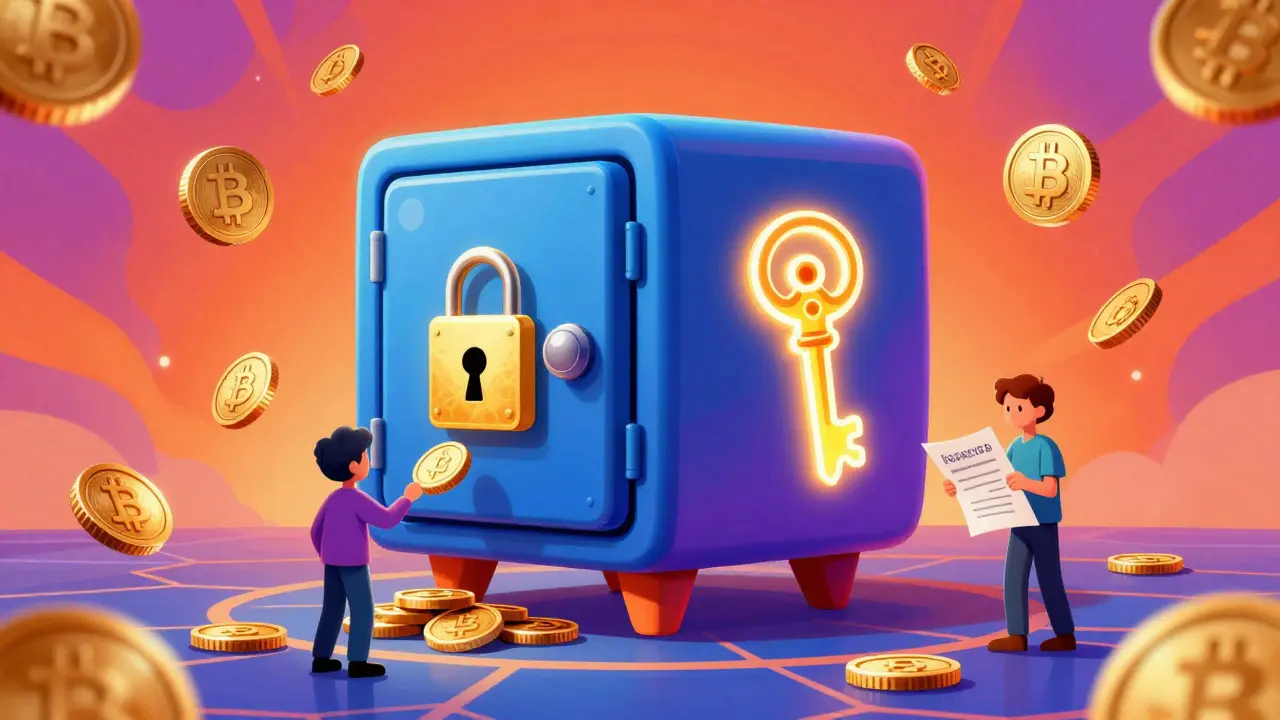
Public and private keys are the foundation of cryptocurrency ownership. Your public key lets others send you crypto; your private key lets you spend it. Lose the private key, and you lose everything - forever.

Immutable blockchain records provide tamper-proof data storage that enhances security, transparency, and trust across industries like finance, healthcare, and supply chains. Learn how cryptographic hashing and distributed networks make data unchangeable-and why that matters.

Cryptographic encryption in blockchain uses hash functions, public/private keys, and digital signatures to secure transactions, prove ownership, and prevent tampering. It's the reason blockchain is trustless and immutable.