Anonverse X CMC Airdrop: What We Know (and What We Don’t)
There is no verified Anonverse X CMC airdrop as of November 2025. Learn why this claim is a scam, how to spot fake crypto airdrops, and what real airdrops look like in 2025.
When people talk about ANON token, a privacy-focused cryptocurrency meant to obscure transaction details on public blockchains. Also known as anonymous coin, it’s one of many attempts to give users real financial privacy in a world where every transaction is visible. Unlike Bitcoin or Ethereum, where anyone can trace who sent what to whom, ANON token claims to break that chain—hiding sender, receiver, and amount. But here’s the problem: most tokens like this don’t deliver on the promise. They’re built on weak tech, have no real adoption, and vanish within months.
ANON token isn’t alone. It’s part of a larger group of privacy coins, cryptocurrencies built specifically to protect user identity and transaction history. Also known as anonymous cryptocurrency, they include well-known names like Monero and Zcash. But unlike those, which have active development teams and real usage, most ANON-style tokens are created by anonymous developers with no roadmap, no code transparency, and no community. They rely on hype, fake social media buzz, and airdrop scams to trick people into buying in.
The real issue isn’t just the token itself—it’s what it represents. crypto anonymity, the ability to transact without exposing personal financial data. Also known as financial privacy, is a legitimate need in countries with strict surveillance, censorship, or unstable banking. But most ANON tokens don’t solve this. They’re just names slapped onto empty smart contracts. Meanwhile, real privacy tools like Zcash use advanced cryptography, and Monero has a decade of community trust. ANON token? It’s often just a placeholder for a pump-and-dump.
Look at the posts below. You’ll see how often projects disappear after promising free tokens or anonymous trading. The LNR airdrop vanished. The CHY token was worth $0. The HERO airdrop was a ghost. ANON token fits right in. It’s not a breakthrough—it’s a warning sign. If a token’s whole selling point is anonymity but you can’t find a team, a whitepaper, or even a working wallet, it’s not innovation. It’s a trap.
What you’ll find here isn’t a list of winners. It’s a collection of what happens when crypto promises outpace reality. From fake airdrops to dead projects, these posts show you how to spot the difference between real privacy tech and empty hype. You won’t learn how to get rich off ANON token. You’ll learn how to avoid losing everything chasing it.
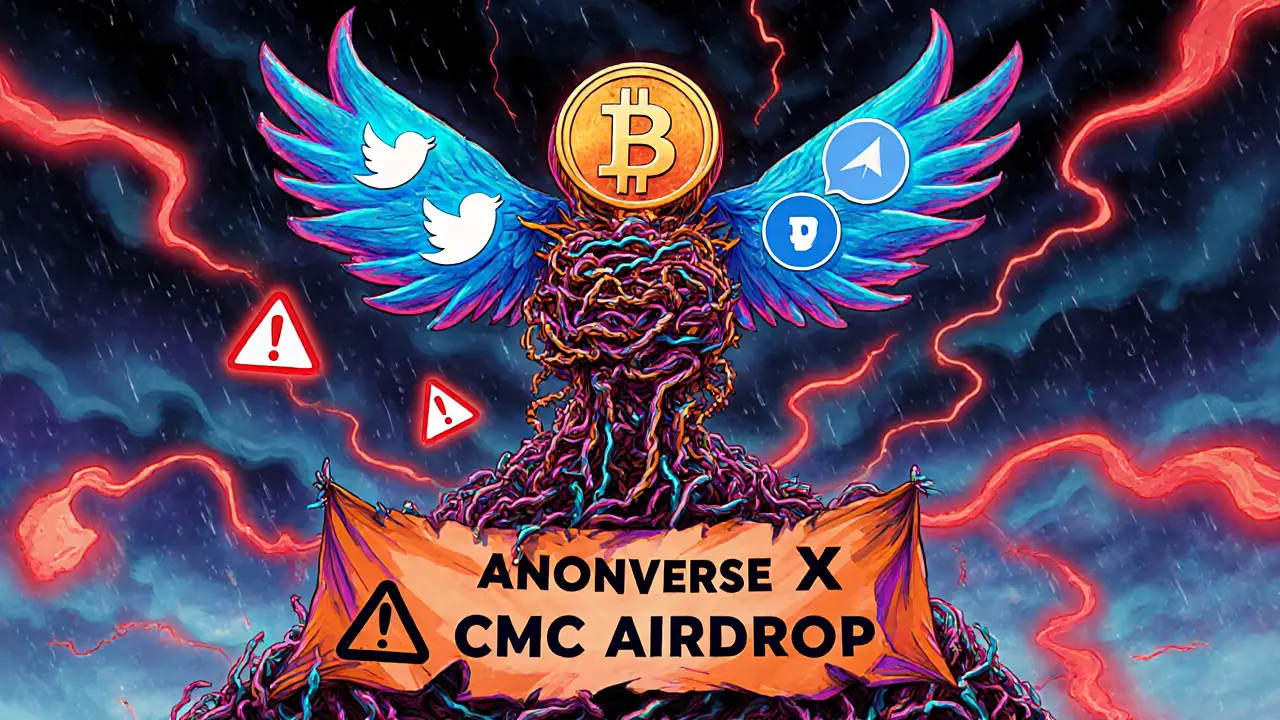
There is no verified Anonverse X CMC airdrop as of November 2025. Learn why this claim is a scam, how to spot fake crypto airdrops, and what real airdrops look like in 2025.