

You’ve probably heard the buzz around SwapX Algebra. It’s popping up in Discord chats and Twitter threads as the next big thing in decentralized finance. But here’s the hard truth: while the tech sounds impressive, the actual user experience tells a different story. If you are looking for a robust platform to park large amounts of capital or execute complex trades, this might not be it. However, if you are an early adopter hunting for alpha on emerging blockchains, SwapX Algebra deserves a closer look.
This review cuts through the marketing noise. We will examine the real numbers behind SwapX Algebra, its connection to the Sonic blockchain, and whether the limited features are a bug or a feature. By the end, you’ll know exactly where this platform fits in your portfolio strategy.
The Core Concept: What Is SwapX Algebra?
SwapX Algebra is a decentralized exchange (DEX) built specifically for the Sonic blockchain, leveraging advanced Automated Market Maker (AMM) technology from Algebra Finance V4. It operates without a central authority, meaning you connect your wallet directly to the protocol to trade tokens. This setup eliminates the need for identity verification (KYC) but places the burden of security entirely on you.
The platform is essentially a specialized trading venue. Unlike massive centralized exchanges like Binance or Coinbase that support hundreds of coins, SwapX Algebra focuses on a narrow selection. Currently, it supports only 19 coins and offers 44 trading pairs. This limitation is significant. You won’t find obscure meme coins or every new token launch here. Instead, it targets specific liquidity pools within the Sonic ecosystem.
The integration with Algebra Finance V4 is a sophisticated AMM architecture designed to optimize capital efficiency and reduce slippage for traders. This technology allows for more dynamic fee structures and concentrated liquidity, which can benefit both traders and liquidity providers compared to older AMM models.
Trading Realities: Volume, Pairs, and Fees
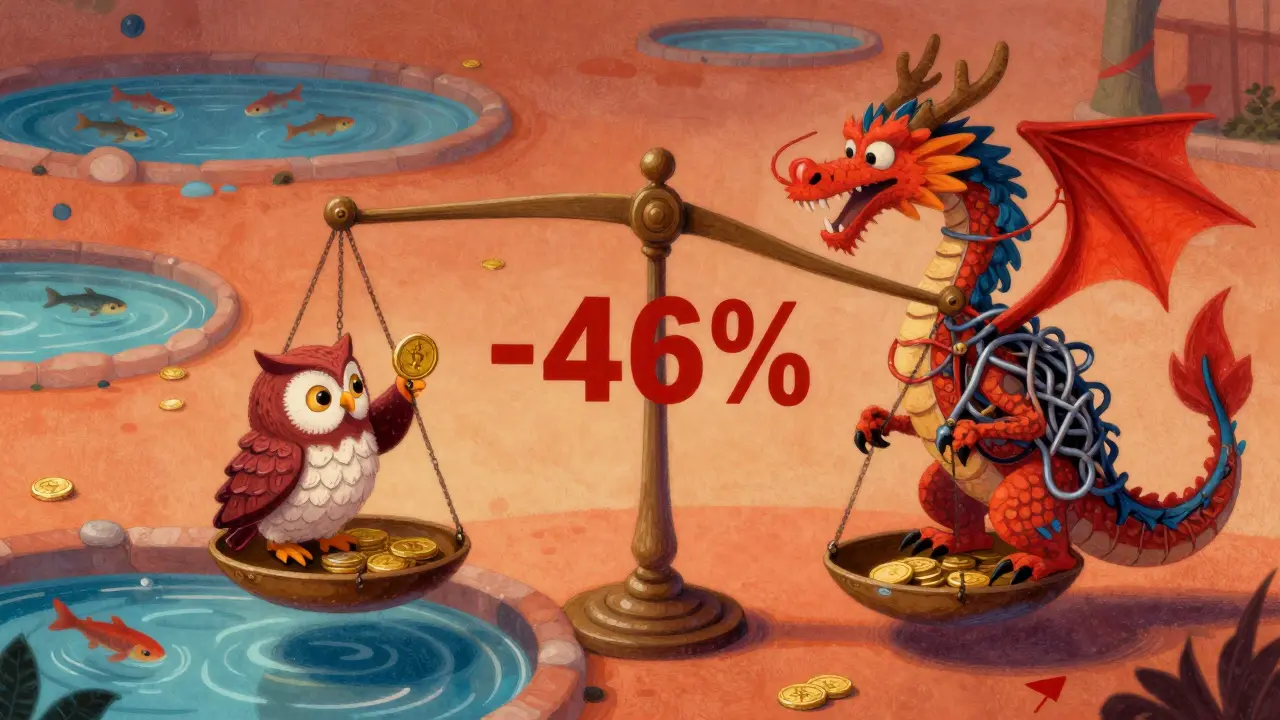
Let’s talk numbers, because they reveal the platform’s current health. As of May 2026, SwapX Algebra reports a 24-hour trading volume of approximately $2.8 million. While that sounds decent, context matters. That figure represents a sharp decline of -46.53% in just one day. Such volatility suggests that trading activity is sporadic and heavily dependent on specific market events rather than consistent organic usage.
The most active pair on the platform is OS/WS, which generated over $600,000 in volume in a single day, accounting for roughly 21% of total activity. If you aren’t trading this specific pair, you might face wider spreads and lower liquidity. The average bid-ask spread sits at 0.634%. For a decentralized exchange, this is reasonable, but it’s higher than what you’d see on top-tier centralized platforms during stable markets.
| Feature | SwapX Algebra | Binance (Centralized) | Uniswap (DEX) |
|---|---|---|---|
| Supported Coins | 19 | 700+ | Thousands |
| Trading Pairs | 44 | 1,500+ | Thousands |
| Avg. Spread | 0.634% | ~0.1% | Variable (0.3%-1%) |
| Margin Trading | No | Yes (up to 125x) | No (Spot only) |
| User Reviews | 0/5 (No data) | High volume | Mixed/High volume |
Note that SwapX Algebra does not offer margin trading or leverage. If you are used to betting on price movements with borrowed funds, this platform isn’t for you. It is strictly a spot trading environment. There are also no market maker fees, which simplifies the cost structure but may result in less aggressive pricing depth.
The Sonic Blockchain Connection
To use SwapX Algebra, you must understand the Sonic blockchain is a high-performance Layer 1 network designed for fast transaction finality and low costs, serving as the foundation for SwapX operations. This means you cannot deposit Bitcoin or Ethereum directly. You need assets native to or bridged onto the Sonic network. This creates a barrier to entry for casual users who aren’t comfortable managing multi-chain wallets and bridge transactions.
The reliance on Sonic also means your security depends partly on the stability of that underlying chain. While Sonic aims for high throughput, any network congestion or smart contract vulnerabilities could impact your ability to withdraw funds. Always ensure your wallet has enough native tokens to pay for gas fees before initiating a swap.
User Experience and Reputation: The Silent Platform
Here is where things get tricky. If you search for user reviews of SwapX Algebra, you will find almost nothing. On platforms like FxVerify, the exchange holds a rating of 0 out of 5 stars based on zero reviews. This isn’t necessarily a sign of fraud, but it is a major red flag for risk management. It indicates either extremely low adoption or a very new launch that hasn’t yet built community trust.
There are no widespread testimonials on Reddit or crypto forums. No success stories, no complaints about stuck withdrawals-just silence. For a financial product, this absence of social proof is concerning. Established exchanges have thousands of users discussing their experiences daily. SwapX Algebra operates in the shadows, appealing only to those willing to take higher risks for potential early-mover advantages.
Expert analysis is similarly sparse. Major crypto audit firms and industry analysts have not published comprehensive reviews of the platform. Without third-party security audits publicly available, you are trusting the code blindly. In DeFi, blind trust is expensive.
Token Economics: SWPX Price Predictions
The platform operates with its own governance or utility token, SWPX. Investors often look at price predictions to gauge future viability. Models from CoinDataFlow suggest a wide range of possibilities for 2025 and beyond. Projections indicate a minimum price of $0.065 and a maximum of $0.146 for 2025. Long-term forecasts extend to 2034, with values fluctuating between $0.02 and $0.69 depending on market conditions.
Take these numbers with a grain of salt. Crypto price predictions are speculative at best. Given SwapX Algebra’s low volume and lack of user base, the token’s value is highly sensitive to broader market sentiment rather than fundamental platform usage. Don’t buy SWPX expecting steady growth; treat it as a high-risk venture asset.

Who Should Use SwapX Algebra?
This platform is not for everyone. Here is a quick decision tree:
- Use SwapX Algebra if: You are already active on the Sonic blockchain, you want to trade specific niche pairs like OS/WS, and you are comfortable with the risks of using unproven DEXs. You value privacy and don’t want to undergo KYC checks.
- Avoid SwapX Algebra if: You need high liquidity for large orders, you want to trade popular assets like BTC or ETH directly, you require margin trading features, or you prioritize customer support and regulatory protection.
If you fall into the second category, stick to established players like Coinbase, OKX, or even larger DEXs like Uniswap. They offer better liquidity, proven security records, and extensive user communities.
Safety Tips for Using Niche DEXs
If you decide to try SwapX Algebra, follow these safety protocols:
- Start Small: Never deposit more than you can afford to lose. Treat your first few transactions as test runs.
- Revoke Permissions: After connecting your wallet, regularly check your approvals. Revoke access to contracts you no longer use to prevent unauthorized drains.
- Verify Contracts: Double-check the contract addresses for tokens before swapping. Phishing sites often mimic DEX interfaces.
- Monitor Gas Fees: Since it runs on Sonic, keep an eye on network congestion. High gas fees can eat into small profits.
Is SwapX Algebra safe to use?
Safety in decentralized exchanges is relative. SwapX Algebra uses Algebra Finance V4 technology, which is generally robust. However, the lack of public security audits and zero user reviews makes it higher risk than established platforms. Only use it with funds you are prepared to lose, and always verify contract addresses manually.
Can I trade Bitcoin on SwapX Algebra?
Not directly. SwapX Algebra operates on the Sonic blockchain. To trade Bitcoin equivalents, you would need to bridge wrapped BTC to the Sonic network first. The platform currently supports only 19 coins, so availability is limited.
Why are there no user reviews for SwapX Algebra?
The absence of reviews likely indicates low user adoption or a recent launch. Platforms like FxVerify show a 0/5 rating due to insufficient data. This lack of social proof is a warning sign for mainstream investors but may appeal to early-stage DeFi enthusiasts.
What is the minimum deposit to start trading?
As a decentralized exchange, there is no official minimum deposit set by the platform. However, you need enough funds to cover gas fees on the Sonic blockchain and meet the minimum liquidity requirements for the specific trading pair you choose. Start with small amounts to test the interface.
Does SwapX Algebra offer margin trading?
No, SwapX Algebra does not support margin trading or leverage. It is a spot-only exchange focused on basic token swaps using the Algebra Finance V4 AMM model. If you need derivatives or leveraged positions, you will need to use other platforms.