



Ever feel like you're just a number on a massive exchange? If you're tired of the endless KYC forms and the feeling that your funds aren't truly yours, you've probably started looking into decentralized options. That's where Splash crypto exchange is a decentralized exchange (DEX) launched in 2024 that allows users to swap tokens directly from their own wallets. Unlike the giants that dominate the headlines, Splash is a small, emerging player trying to find its footing in a crowded market. But is it a hidden gem or just another ghost town in the blockchain sea?
The Basics: What Exactly is Splash?
If you've used a platform like Coinbase, you know the drill: sign up, upload your ID, wait for approval, and then deposit your money into an account the company controls. Splash flips this script. As a Decentralized Exchange (or DEX), it doesn't have a central authority. There's no "company" holding your keys; you keep your assets in your own wallet and interact with the platform via smart contracts.
For privacy-conscious traders, this is the primary draw. You can trade without a formal account registration process. However, this freedom comes with a trade-off: you are solely responsible for your security. If you lose your seed phrase, there is no "Forgot Password" button to save you.
Trading Options and Liquidity
Here is where we hit the first major hurdle. When you look at a titan like Kraken, you're looking at over 500 different cryptocurrencies. Splash, by comparison, is extremely lean. Based on data from early 2026, the platform supports only 9 coins and a total of 12 trading pairs.
For a professional trader or someone looking to diversify into obscure altcoins, this is likely a dealbreaker. With so few pairs, liquidity-the ease with which you can buy or sell an asset without moving the price-is significantly lower than on larger platforms. If you try to execute a large trade on a low-liquidity DEX, you'll often experience "slippage," where the final price you get is much worse than the one you saw on the screen.
| Feature | Splash DEX | Top-Tier CEX (e.g., Binance/Kraken) |
|---|---|---|
| Account Required | No (Wallet Connect) | Yes (KYC Required) |
| Asset Control | User-controlled (Non-custodial) | Exchange-controlled (Custodial) |
| Coin Support | ~9 Coins | 500+ Coins |
| Trading Pairs | 12 Pairs | Thousands of Pairs |
| Advanced Tools | Basic Swaps | Margin, Futures, Staking |

Security and Trust Factors
In the crypto world, trust is the only currency that actually matters. Established players like Coinbase offer insurance for custodial accounts, and OKX maintains licenses across multiple global jurisdictions like Dubai and Singapore to prove their legitimacy.
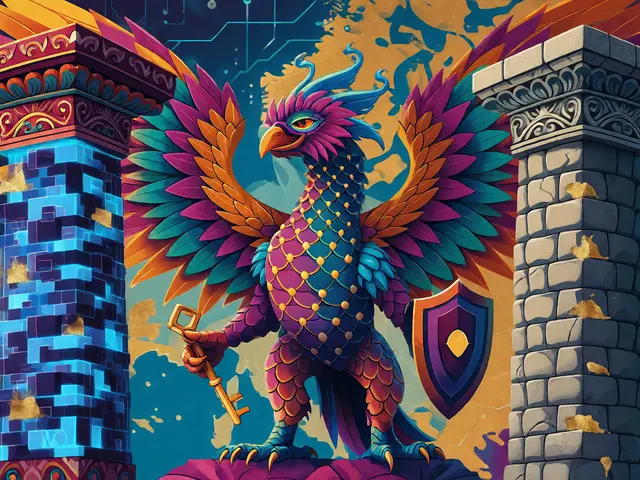
Splash doesn't have that kind of pedigree yet. It did undergo a review by the Traders Union in February 2026, which is a start, but there is a glaring lack of deep, third-party security audits. Because it is a DEX, you aren't worried about the exchange "going bankrupt" and taking your funds with them-since they never had your funds to begin with. However, you are exposed to smart contract risk. If the code powering Splash has a bug or a backdoor, a hacker could potentially drain your wallet the moment you connect it.

Missing Features: What's Not There
If you're looking for a full-service trading suite, you won't find it here. Most modern traders expect a few specific tools to maximize their gains. For instance, Binance and others offer margin trading with leverage up to 125x and staking yields that can hit 22% APY. Splash offers none of this. No futures, no leverage, and no integrated staking rewards.
It is essentially a basic swapping tool. For some, this simplicity is a feature (no distractions, just trades). For others, it's a limitation that makes the platform feel like a beta version of a real exchange.
Is Splash Right For You?
Whether this platform works for you depends entirely on your goals. If you are a "degens" trader who loves testing new, low-cap projects and you absolutely refuse to give your ID to a corporation, Splash might be a playground worth visiting. You get the privacy and the control that only a decentralized setup provides.
But for the average person? The risks likely outweigh the rewards. When you can use Uniswap for decentralized trading with massive liquidity and thousands of coins, or use a regulated CEX for a smoother, insured experience, Splash feels like a very small boat in a very big ocean. Unless they massively expand their coin list and publish comprehensive security audits, it remains a niche tool for a very specific type of user.
Does Splash require KYC?
No. Because Splash is a decentralized exchange (DEX), it does not require account registration or Know Your Customer (KYC) documentation. You simply connect your crypto wallet to start trading.
How many coins can I trade on Splash?
As of early 2026, Splash supports a very limited selection of approximately 9 coins and 12 trading pairs, which is significantly lower than most industry-standard exchanges.
Is my money safe on Splash?
Since it is non-custodial, Splash never holds your funds. However, you are responsible for your own private keys. Additionally, you face "smart contract risk," meaning a vulnerability in the platform's code could potentially jeopardize your assets during a transaction.
Can I do margin trading or staking on Splash?
No. Splash currently lacks advanced trading features like margin trading, futures contracts, or staking rewards that are common on larger platforms.
How does Splash compare to Uniswap?
While both are DEXs, Uniswap is a global leader with immense liquidity and thousands of supported tokens. Splash is a much smaller, newer entrant with significantly fewer assets and less market adoption.






17 Comments
Oh great, another DEX with like ten coins. Groundbreaking stuff right here. 🙄
ARE YOU KIDDING ME?! Only 12 pairs in 2026?? This is literalley a joke. I can't believe anyone would even think about using this garbage when we have real platforms out there! This is an absolute disaster waiting to happen and honestly just insulting to the intellegence of crypto traders everywhere!
Non-custodial is key!!! Smart contract risk is real... stay safe!!!
I think it's actually kind of cool that they're starting small. It's better to have a few stable pairs than a thousand scam tokens that rug-pull everyone in a week. They just need to grow organically.
Actually, the 'small boat' analogy is totally wrong. Being niche is a strategy. Why would anyone want a bloated exchange where you can't find anything? Small is a feature, not a bug.
Exactly! 🚀 Sometimes starting small is the best way to ensure the community actually cares about the project! Let's give them a chance to innovate! 💎🙌
I don't get the hype. Just use Uniswap.
It's funny how we all just accept the binary of 'big vs small' in these digital ecossystems without really thinking about the philosophicall implication of a curated tradeing experience... like maybe the limitation is actually a way to protect users from the sheer chaos of the altcoin jungle which is honestly just a mirror of our own fragmented societal state where we crave choice but are paralyzed by too much of it and end up just following the herd anyway regardless of the actual utility of the tool we're using lol.
The level of ignorance in this thread is staggering. If you actually understood how liquidity pools work, you would realize that a limited set of pairs is often a sign of a more focused liquidity strategy, though it's unlikely that most of you would grasp such a concept given your preference for mindless speculation.
I'm just saying, we should really be focusing on the ethics of these platforms. If a DEX doesn't have audits, it's basically just gambling with your life savings and it's kind of gross that people are defending it. Also, does anyone else feel like the UI on these new sites is always trying too hard to look 'futuristic' while actually being barely functional?
Typical Western obsession with 'audits' and 'regulations'. In India, we know how to handle volatility without needing some corporate entity to hold our hand. This exchange is probably just a drop in the bucket compared to what we're seeing locally, but the sheer audacity of calling this a 'review' is laughable.
Everyone needs to remember that using a DEX means you are your own bank. Don't let the excitement of a new platform lead you to forget the basic rule of security. Use a hardware wallet and never share your seed phrase, regardless of how 'small' or 'gem-like' the exchange is.
I agree with the caution. It's just a tool, nothing more.
From a technical standpoint, the slippage on a low-TVL (Total Value Locked) platform like this would be prohibitive for any significant volume. It's essentially a toy for retail traders moving small amounts of capital, not a viable venue for professional market makers.
i think its cute that they are tryin. maybe they just need more time to grow and more people to help them out with the codding stuff
If there's no KYC and no central authority, who actually maintains the smart contracts? Are they truly immutable or is there a multisig admin key that can just rug everyone?
It is truly a tragedy of the modern era that we prioritize the speed of a transaction over the sanctity of the financial soul. One must wonder if the pursuit of decentralization is merely a mask for a deeper fear of accountability. 🧘♂️