

Buying Bitcoin in Casablanca or mining Ethereum in Marrakech is technically illegal. That’s the reality for anyone holding digital assets in Morocco right now. The government declared all cryptocurrency transactions prohibited back in November 2017, and Bank Al-Maghrib, the country's central bank, has enforced this strictly to protect foreign exchange reserves. Yet, if you walk through any university campus or check local online forums, you’ll find thousands of people actively trading crypto. How does a complete ban coexist with high adoption rates? The answer lies in a complex mix of economic pressure, underground networks, and a looming regulatory shift that could change everything by late 2025.
This isn’t just about breaking rules; it’s about survival against inflation and currency devaluation. With the Moroccan dirham losing significant value over the last few years, many citizens turned to stablecoins and Bitcoin as a hedge. But doing so comes with real risks, including frozen bank accounts and legal penalties. As we move into mid-2026, the landscape is shifting. A draft law to regulate these assets is in progress, promising a transition from prohibition to supervision. Understanding where things stand today-and where they are heading-is crucial for anyone involved in the Moroccan digital asset space.
The Official Stance: Why Morocco Banned Crypto
To understand the current situation, you have to look at why the ban was implemented in the first place. In November 2017, the Ministry of Economy and Finance issued a formal statement declaring cryptocurrency transactions illegal. This wasn't a casual warning; it was a definitive legal barrier. Bank Al-Maghrib (BAM) justified this move by citing two main concerns: the risk to financial stability and violations of foreign exchange regulations.
Morocco operates under a managed float exchange rate system. The government needs to control the flow of capital to maintain the value of the dirham. Cryptocurrencies, being decentralized and borderless, allow money to leave the country without passing through traditional banking channels. BAM viewed this as a direct threat to its ability to manage the national currency. Unlike some countries that banned crypto due to religious objections-like Egypt, which issued a fatwa declaring it forbidden-Morocco’s stance is purely economic and regulatory.
The ban covers all aspects of the industry:
- Cryptocurrency Mining: Explicitly illegal since 2017. The government cites energy consumption and lack of oversight as key reasons.
- Commercial Payments: Businesses cannot accept Bitcoin or other tokens for goods or services. All international trade must go through licensed banks.
- Exchanges: No local cryptocurrency exchanges are permitted to operate legally within Moroccan borders.
This strict framework means there is no legal way to buy, sell, or hold crypto on official platforms. However, enforcement has been inconsistent, leading to a gray market that thrives in the shadows.
The Paradox: High Adoption Despite Prohibition
If the ban were effective, you wouldn’t see Morocco ranking as the 21st country globally for cryptocurrency adoption, according to TRM Labs’ 2025 report. This statistic highlights a massive disconnect between policy and practice. While Egypt ranks slightly higher at 20th, both nations show that outright bans often fail to stop public interest when economic conditions drive demand.
Why are Moroccans still buying crypto?
- Inflation Hedge: With annual inflation hitting 6.8% in 2025, many citizens seek assets that preserve purchasing power better than the dirham.
- Currency Devaluation: Between 2020 and 2025, the dirham lost approximately 22% of its value against the US dollar. Stablecoins like USDT offer a way to store wealth in dollars digitally.
- Remittances: Moroccans living abroad send billions in remittances home. Crypto offers faster, cheaper alternatives to traditional wire transfers, despite the risks.
A survey by the Casablanca Digital Institute in May 2025 found that 68% of crypto users aged 18-35 consider digital assets essential for wealth preservation. The demographic is young, tech-savvy, and increasingly frustrated with traditional banking limitations. The underground market is estimated to serve 1.2 million active users, representing about 3.2% of the adult population. This isn’t a niche hobby; it’s a significant part of the informal economy.
How People Trade Crypto in Morocco Today
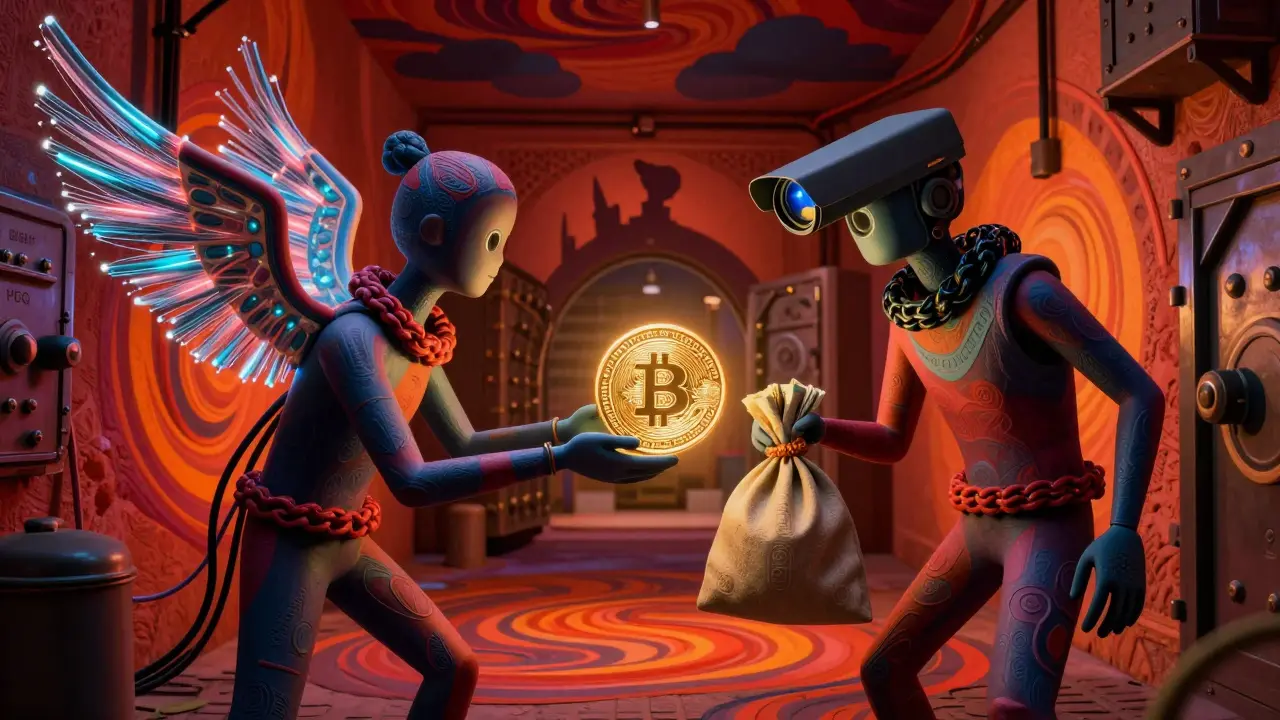
Since centralized exchanges like Binance or Coinbase block Moroccan IP addresses or refuse to issue cards to residents, traders rely on peer-to-peer (P2P) methods and over-the-counter (OTC) dealers. This creates a risky but functional ecosystem.
Here is how most transactions happen:
| Method | Description | Risk Level |
|---|---|---|
| P2P Platforms | Using global P2P sections of exchanges to find local buyers/sellers who transfer funds via bank wire or mobile payment. | High (Scams, Account Freezes) |
| Local OTC Dealers | Trusting individuals found on social media or Telegram groups to exchange cash for crypto. | Very High (Fraud, Legal Exposure) |
| Crypto ATMs | Using rare, unregulated ATMs if available in major cities (extremely limited). | Medium (Fees, Availability) |
| Offshore Accounts | Holding accounts in countries with friendly crypto laws and transferring funds internationally. | Medium (Complexity, Tax Issues) |
The dangers are real. The same Casablanca Digital Institute survey reported that 42% of users experienced bank account freezes after their institutions flagged suspicious crypto-related transactions. Banks are required to monitor for money laundering, and sudden large transfers to unknown entities trigger alerts. Additionally, 31% of users reported falling victim to fraud when dealing with unverified OTC traders. Trust is scarce, and there is no consumer protection if a deal goes wrong.
The Turning Point: Regulatory Changes in 2025-2026
For years, the message from Rabat was clear: stay away. But in November 2024, Governor Abdellatif Jouahri of Bank Al-Maghrib announced a significant pivot. He stated that a draft law to regulate and legalize cryptocurrency was in the adoption process. This marked the beginning of the end for the total ban.
By mid-2026, the government aims to roll out a comprehensive regulatory framework. What does this mean for users?
- Licensing Requirements: Crypto exchanges will need licenses from Bank Al-Maghrib to operate legally in Morocco.
- KYC and AML Compliance: Strict Know Your Customer and Anti-Money Laundering protocols will be mandatory, reducing anonymity but increasing security.
- Taxation: Profits from cryptocurrency trades will likely be subject to a 15% capital gains tax.
- Legal Protection: Users on regulated platforms will have recourse in case of disputes or hacks, unlike the current wild west scenario.
This shift aligns Morocco with global trends. Countries like Kazakhstan and Canada have embraced crypto mining and trading, attracting investment and innovation. By regulating rather than banning, Morocco can bring the estimated USD 292.4 million underground market into the formal economy, generating tax revenue and protecting consumers.
The Future: CBDC and Financial Inclusion
While regulating private cryptocurrencies, Bank Al-Maghrib is also developing its own digital currency. A Central Bank Digital Currency (CBDC) would be a digital version of the dirham, issued and controlled by the central bank. Governor Jouahri has confirmed active exploration of CBDC implementation for cross-border payments, working closely with the International Monetary Fund (IMF), the World Bank, and even Egypt’s central bank.
A CBDC differs fundamentally from Bitcoin. It is not decentralized, and it does not offer privacy from the state. Instead, it aims to improve payment efficiency, reduce costs for remittances, and enhance financial inclusion. The World Bank estimates that a successful dual approach-regulating crypto while launching a CBDC-could bring 3.2 million unbanked Moroccans into the formal financial system by 2030.
For the average user, this means the future of money in Morocco will likely be hybrid. You might use a regulated exchange to buy Bitcoin for long-term savings, while using a digital dirham for daily purchases and sending money to family abroad. The days of relying solely on risky OTC deals may soon be over.
Practical Advice for Navigating the Current Landscape
Until the new laws are fully enacted and enforced, caution is paramount. If you are currently holding or trading crypto in Morocco, keep these points in mind:
- Protect Your Bank Account: Avoid making large, irregular transfers that could trigger anti-money laundering flags. Use small, consistent amounts if possible.
- Verify Counterparties: When using P2P platforms, only trade with users who have high feedback scores and long histories. Never meet strangers in isolated locations for cash exchanges.
- Stay Informed: Follow updates from Bank Al-Maghrib and reputable news sources. The regulatory landscape is changing rapidly, and what is risky today may become legal tomorrow.
- Consider Offshore Options: If you have access to banking relationships in countries with favorable crypto laws, consider using those channels to minimize local risk.
The learning curve for secure crypto usage in Morocco is steep. Beginners should expect to spend 8-12 weeks mastering privacy tools and understanding the nuances of OTC trading before engaging with significant sums. There are no shortcuts when operating in a prohibited environment.
Is it illegal to own cryptocurrency in Morocco?
Yes, owning and trading cryptocurrency is currently illegal under the November 2017 decree by the Ministry of Economy and Finance. Bank Al-Maghrib enforces this ban to protect foreign exchange reserves. However, enforcement varies, and many citizens participate in an underground market.
When will the new crypto regulations take effect?
The government plans to issue a comprehensive regulatory framework by the end of 2025. This includes licensing requirements for exchanges, KYC/AML compliance, and a 15% capital gains tax. Full implementation and widespread availability of legal exchanges may extend into 2026.
Can I use Binance or Coinbase in Morocco?
Officially, no. These platforms restrict services to Moroccan residents due to the ban. Many users attempt to bypass this using VPNs or offshore accounts, but this carries legal and financial risks, including potential account closures and fund seizures.
What happens if my bank account gets frozen?
If your bank suspects crypto-related activity, they may freeze your account pending investigation. According to surveys, 42% of users have faced this. Resolving it requires proving the source of funds, which can be difficult if transactions were made through informal channels. Prevention through careful transaction management is key.
Is cryptocurrency mining allowed in Morocco?
No, cryptocurrency mining has been explicitly illegal since November 2017. The government cites high energy consumption and lack of regulatory oversight as primary reasons. Engaging in mining activities can result in severe penalties, including equipment confiscation and fines.