
The lights go out in Tehran. Again. It’s mid-July, the heat is suffocating, and millions of Iranians are sweating through another scheduled blackout. Meanwhile, deep underground in military-controlled facilities, rows of humming ASIC miners never stop working. This isn’t a conspiracy theory; it’s the reality of Iranian energy subsidies for crypto mining, which create a highly profitable but controversial economic model that prioritizes digital currency production over civilian power stability. By 2025, this system generated an estimated $1.5 billion annually for the state, yet it consumed nearly 5% of the country’s total electricity output, leaving ordinary citizens to cope with daily outages.
How Cheap Is Power Really?
To understand why mining thrives in Iran, you have to look at the numbers. The cost difference between Iran and other global hubs is staggering. In Italy, mining one Bitcoin costs approximately $306,000 due to high industrial electricity rates. In Iran, that same coin costs roughly $1,300 to produce. That is a 235-fold difference. How? Because the government provides heavily subsidized electricity.
Licensed miners pay industrial tariffs ranging from $0.04 to $0.07 per kilowatt-hour (kWh). Unlicensed or illegal operators often tap into household grids where rates drop as low as $0.01 to $0.02 per kWh. For context, when global Bitcoin prices hovered between $30,000 and $40,000 in late 2024, Iranian miners enjoyed profit margins of 20 to 30 times their production cost. This arbitrage opportunity attracted hundreds of thousands of participants, turning Iran into one of the world’s most efficient-and contentious-mining jurisdictions.
| Country | Est. Cost per BTC | Electricity Rate ($/kWh) | Primary Constraint |
|---|---|---|---|
| Iran | $1,300 | $0.01 - $0.07 | Grid instability & periodic bans |
| Italy | $306,000 | High industrial rates | Regulatory pressure |
| Kazakhstan | $5,000 | Moderate | Infrastructure limits |
The Scale of Consumption
Cheap power comes with a massive footprint. Mining a single Bitcoin requires over 300 megawatt-hours (MWh) of electricity. To put that in perspective, that amount of energy powers approximately 35,000 Iranian households for a single day. According to Mohammad Allahdad, deputy director of power generation at Tavanir (the national transmission company), legal and illegal mining operations combined consume nearly 2,000 MW of electricity. This represents about 5% of Iran’s total consumption but accounts for 15-20% of the country’s electricity imbalance.
The scale becomes even clearer during crises. During a nationwide internet outage linked to regional conflicts in mid-2025, power consumption dropped by 2,400 MW almost instantly. Why? Because over 900,000 illegal mining devices were temporarily shut down. The Iranian Energy Ministry estimates that illegal miners alone use up to two gigawatts of power daily-equivalent to the entire electricity usage of Tehran, a city of 9 million people. Former Energy Minister Reza Ardakanian warned in 2024 that these operations could be using up to 10% of the nation’s total generation capacity.
Who Controls the Mines?
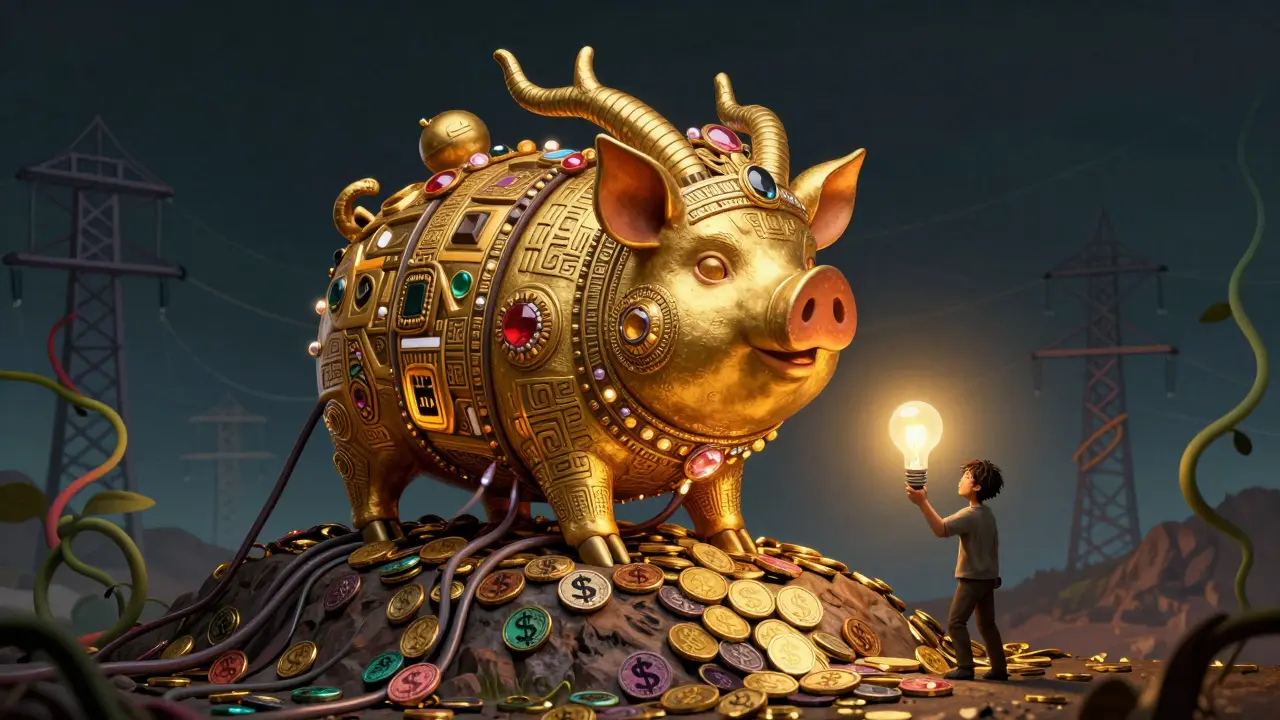
You cannot discuss Iranian crypto mining without addressing the role of the Islamic Revolutionary Guard Corps (IRGC), which controls a significant portion of the country's illicit and sanctioned mining infrastructure. Reports indicate the IRGC controls approximately 60% of illegal mining operations. These aren’t small basement setups; they are large-scale farms, including one discovered in the tunnels beneath Ahvaz Stadium in April 2025.
This concentration of power creates what Dr. Saeed Laylaz, an economic advisor, described as a "parallel economy." The IRGC controls both the energy supply and the cryptocurrency output, effectively bypassing Central Bank oversight. While the government publicly cracks down on illegal miners to appease angry citizens, critics argue these crackdowns are selective, targeting small-time operators while protecting state-affiliated mega-farms. The IRGC reportedly generates $400-$500 million annually from these activities, funding its operations outside the official budget.
Restrictions and Regulatory Whiplash
If the profits are so high, why isn’t everyone mining? Because the rules change constantly. The Iranian government employs a strategy of "regulatory whiplash," alternating between legalization, subsidization, and sudden bans. Here is how the landscape looks as of 2025:
- Seasonal Bans: During summer months, when air conditioning demand surges by 30-40%, the government frequently shuts down mining operations to prevent total grid collapse. This happened repeatedly in 2021, 2022, and 2023.
- Licensing Hurdles: Legal miners must obtain approval from the Ministry of Industry, register with Tavanir for electricity quotas, and get authorization from the Central Bank of Iran (CBI) to export coins. This process takes 3-6 months, with approval rates below 40%.
- Smart Meter Mandates: Early 2025 regulations required all operations to install smart meters for real-time monitoring, making it harder to hide usage spikes.
- Domestic Payment Ban: You cannot buy bread or rent an apartment with Bitcoin in Iran. The CBI prohibits domestic cryptocurrency payments, forcing mined coins to be sold for foreign trade settlement or on black markets.
This inconsistency makes long-term planning difficult. Miners operate best in winter when demand is low, but they face existential threats every summer. The government’s goal is clear: extract hard currency revenue from mining while minimizing the political fallout of power shortages.
The Human Cost
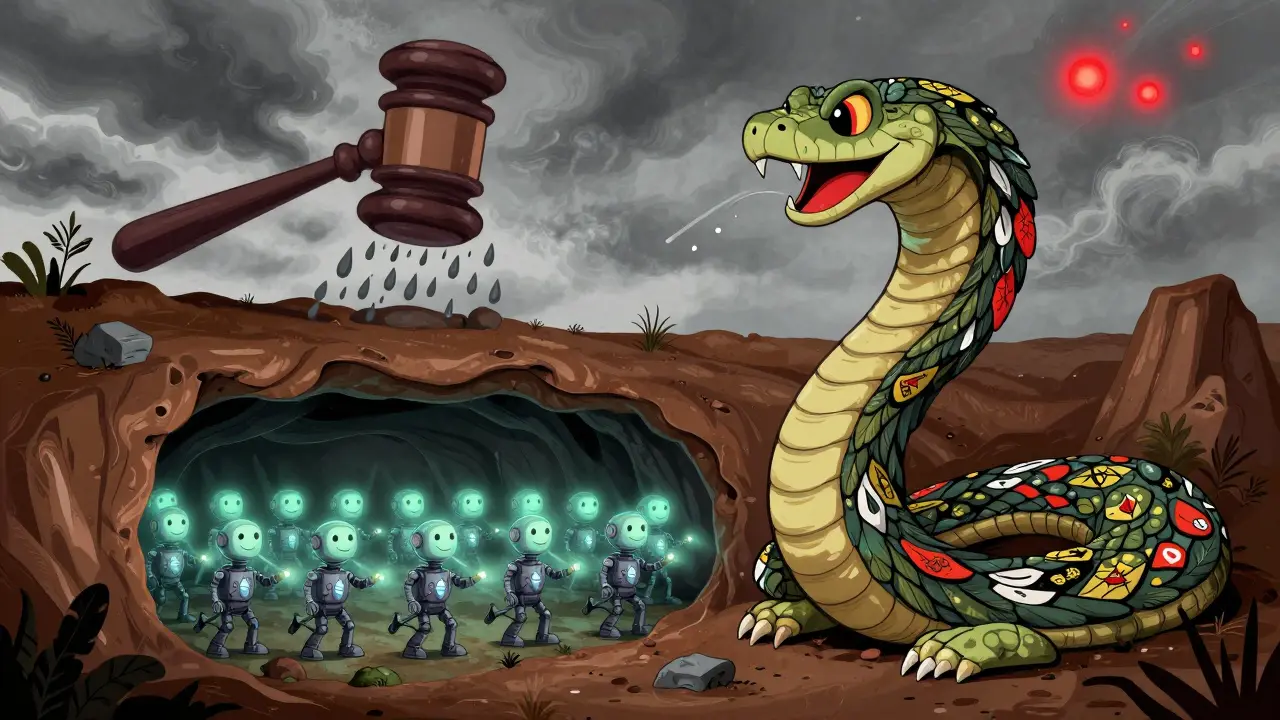
The abstract economics of Bitcoin mining translate into very concrete suffering for ordinary Iranians. Social media platforms are filled with frustration. On Twitter, users documented 21 hours of blackouts in a single week while mining farms ran 24/7. A sentiment analysis of 1,450 comments on Reddit’s r/Iran subreddit in June 2025 found that 92% blamed cryptocurrency mining for the outages.
Tehran residents report average daily blackouts of 8-12 hours during peak summer months. Telegram channels like 'Iran Electricity Crisis' share real-time maps correlating outage patterns with known mining locations. One administrator noted that every time Bitcoin prices surge, blackouts increase by 30-40% within 48 hours. The government has tried to mitigate public anger by offering a 10% reward of recovered electricity costs to citizens who report illegal miners, resulting in over 8,000 reports and 2,000 shutdowns in early 2025. But for many, this feels like treating symptoms rather than curing the disease.
Future Outlook: A Fragile Balance
Looking ahead, the situation remains precarious. The International Energy Agency predicts that without significant grid upgrades, power shortages could increase by 25-30% by 2027. Iran’s energy infrastructure is already operating at only 60-70% of required capacity due to decades of underinvestment. The Carnegie Endowment describes this dilemma as a microcosm of broader energy policy challenges: short-term economic gains versus long-term sustainability.
The likely outcome is not a complete ban, nor unrestricted growth. Instead, expect continued periodic bans during peak demand periods, coupled with tighter control over legal operations. The government will continue to use crypto mining as a sanctions-busting mechanism, channeling revenues toward importing essential goods. However, the tension between the need for foreign currency and the inability to keep the lights on for its citizens will remain the defining feature of Iran’s crypto policy for the foreseeable future.
Is cryptocurrency mining legal in Iran?
Yes, but with strict conditions. The government legalized mining in 2018 and allows licensed operators to sell mined coins for cross-border trade settlements. However, domestic payments using cryptocurrency are prohibited. Additionally, the government frequently imposes temporary bans on mining during summer months to manage power shortages.
How much does it cost to mine Bitcoin in Iran compared to other countries?
It is significantly cheaper. As of 2025, the estimated cost to mine one Bitcoin in Iran is around $1,300, thanks to subsidized electricity rates of $0.04-$0.07/kWh for licensed miners. In contrast, mining in Italy can cost over $306,000 per coin due to high industrial energy prices.
Why does the Iranian government restrict mining despite the profits?
The primary reason is grid instability. Mining consumes nearly 5% of Iran's total electricity, contributing significantly to power imbalances. During hot summer months, high demand for air conditioning combined with mining load leads to widespread blackouts. The government restricts mining to prevent total grid failure and maintain public order.
Who controls the majority of mining operations in Iran?
Reports suggest the Islamic Revolutionary Guard Corps (IRGC) controls approximately 60% of illegal mining operations and holds significant influence over legal ones. They operate large-scale farms, often in hidden locations, generating hundreds of millions of dollars annually in revenue.
Can I use Bitcoin to buy goods in Iran?
No. The Central Bank of Iran prohibits the use of cryptocurrency for domestic transactions. Mined coins must be sold for foreign currency to settle international trade debts or exchanged on black markets, where premiums can reach 25-35%.