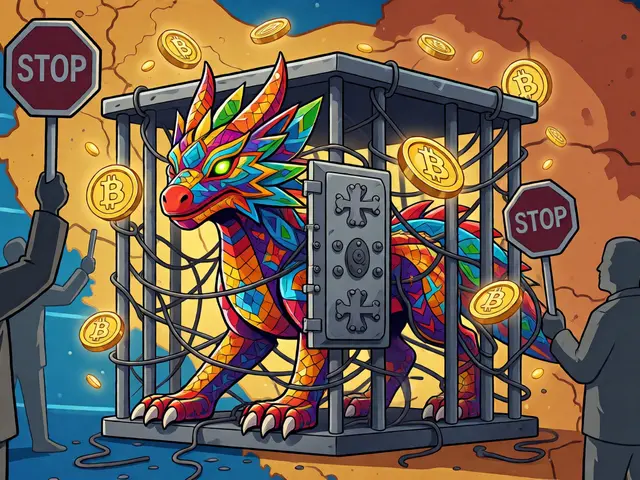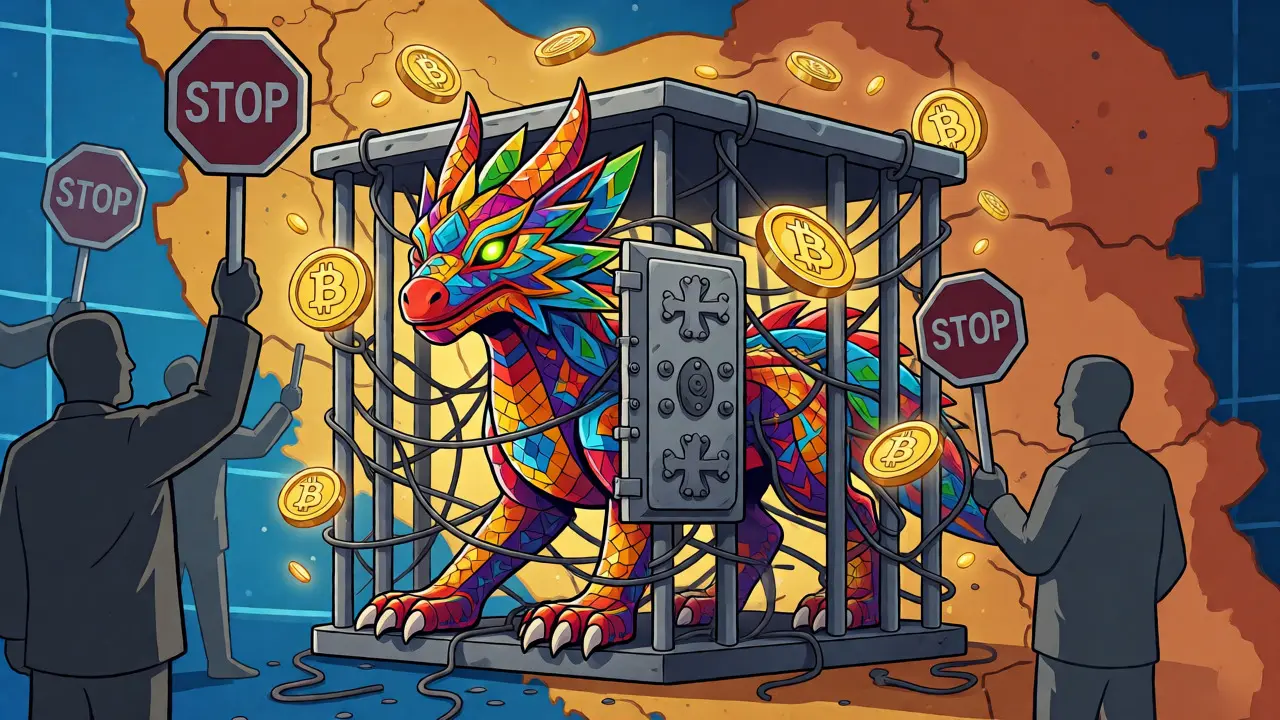

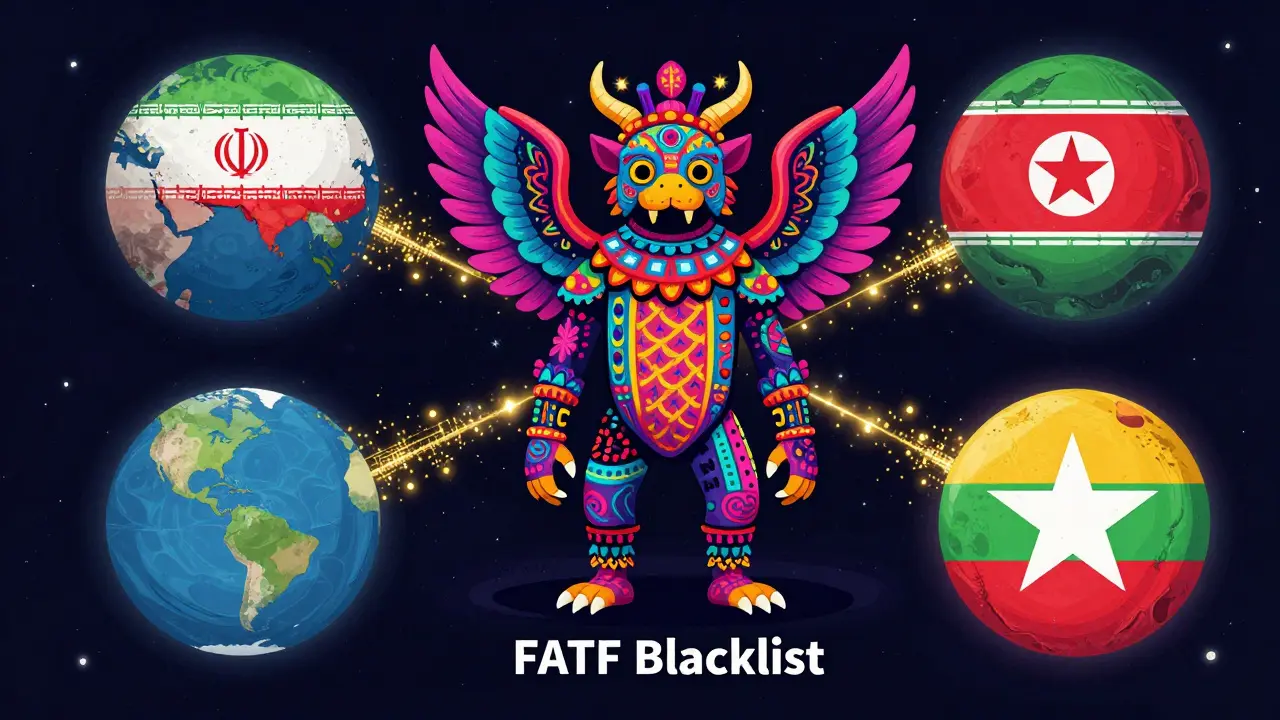

Imagine trying to buy a laptop online, but your bank card is rejected because the merchant’s country is flagged by global regulators. Now multiply that frustration by millions of people, add a layer of government surveillance, and throw in a volatile currency crisis. That is the daily reality for Iranian crypto users operating under the shadow of the Financial Action Task Force (FATF) blacklist. Since October 2019, Iran has been one of only two jurisdictions-alongside North Korea-subjected to FATF’s highest level of scrutiny, known as the "Call for Action." This designation hasn't just slowed down banking; it has fundamentally reshaped how ordinary Iranians interact with money, pushing them toward cryptocurrency not out of ideological love for blockchain, but out of sheer necessity.
If you are an investor looking at emerging markets, or a developer building tools for sanctioned regions, understanding this dynamic is critical. The data tells a stark story: while traditional correspondent banking relationships between Iran and the world plummeted from 28 in 2018 to just 3 in 2025, cryptocurrency adoption surged. According to Chainalysis, sanctioned jurisdictions received $15.8 billion in crypto transactions in 2024 alone, with Iran accounting for nearly 60% of that total. But here is the catch: every transaction comes with a heavy price tag, both financially and operationally. Let’s break down exactly how the FATF blacklist impacts these users, why their experience differs so wildly from someone in New York or London, and what the future holds for this unique digital economy.
The Mechanics of Financial Isolation
To grasp the impact, you first need to understand what the FATF blacklist actually does. It isn’t a law passed by a single country; it’s a global standard-setter’s warning label. When a country like Iran fails to implement adequate Anti-Money Laundering (AML) and Counter-Terrorist Financing (CFT) frameworks, FATF urges all member countries to apply enhanced due diligence. In practice, this means major banks become terrified of touching anything related to Iran. They don’t want to risk fines or losing access to the US dollar system.
This fear creates a chokehold on conventional finance. For an Iranian business wanting to import machinery from Germany, the old SWIFT payment route is effectively dead. Banks refuse to process the transfers. So, where does the money go? It goes digital. Cryptocurrency becomes the bridge. However, this bridge is fragile. Because Iranian entities are high-risk, global exchanges must monitor them intensely. This leads to a paradoxical situation: using crypto allows Iranians to bypass local banking restrictions, but it exposes them to stricter international compliance checks that can freeze their funds instantly.
| Feature | Traditional Banking (SWIFT) | Cryptocurrency Channels |
|---|---|---|
| Accessibility | Extremely Low (3 active correspondent banks) | High (18.7 million active users) |
| Transaction Speed | Weeks (if possible) | Minutes to Hours |
| Cost/Premium | N/A (Often blocked) | 15-20% Premium on P2P trades |
| Regulatory Risk | Bank Account Closure | Exchange Account Freezes |
| Primary Use Case | Domestic Salaries | International Remittances & Import Payments |
The Rise of Necessity-Driven Adoption
You might think crypto adoption in Iran is driven by tech enthusiasts chasing gains. Think again. It is driven by survival. With inflation eating away at savings and the rial fluctuating wildly, citizens look for stable stores of value. Bitcoin accounts for 78% of all crypto activity in sanctioned jurisdictions, largely because it is seen as digital gold. Unlike local currencies, Bitcoin doesn’t devalue overnight due to political decisions.
Chainalysis reports show a 63% surge in transaction volume on Iranian centralized exchanges between early and late 2024. Monthly outflows hit $480 million by December 2024. This isn’t speculation; it’s capital flight. People are moving wealth out of the national banking system into assets they control. But there is a technical hurdle. Domestic exchanges like Nobitex and Wallex operate under strict local regulations. They often prohibit direct cross-border transfers to comply with local laws. This forces users to move their coins to offshore platforms like Binance or Bybit. And that is where the trouble starts.
The Compliance Trap and Account Freezes
Here is the biggest pain point for Iranian users: the Travel Rule. Under FATF recommendations, financial institutions must share sender and receiver information for crypto transfers above certain thresholds. Global exchanges, eager to stay compliant, aggressively screen Iranian IPs and account histories. If you sign up for Binance with an Iranian passport, you might pass initial KYC (Know Your Customer). But if you try to withdraw large amounts, or if your wallet history shows connections to other sanctioned entities, your account could be frozen.
User testimonials paint a grim picture. One trader reported having $8,200 frozen after making three small transactions under $1,500. Why? Because the pattern looked suspicious to automated compliance bots designed to detect structuring. A survey of domestic users found a 33% account freeze rate among those using global exchanges. It’s a game of cat and mouse. Users fragment their transactions into tiny chunks to avoid detection thresholds, which ironically makes their behavior look even more erratic to AI-driven monitoring systems.
Infrastructure Challenges: Firewalls and Mobile Wallets
Accessing these platforms is another battle. Iran’s internet infrastructure includes sophisticated filtering systems. Many global sites are throttled or blocked. To cope, 92% of Iranian crypto transactions originate from mobile wallets like Trust Wallet or Exodus rather than desktop interfaces. Mobile apps are harder to block comprehensively than specific websites.
But using a mobile wallet isn’t without risks. Seed phrase management is a common failure point. Surveys indicate that 61% of new users need technical help managing their private keys. If you lose your phone or forget your seed phrase, your money is gone forever. There is no customer support hotline in Tehran that can reset your password. Furthermore, many users rely on anti-surveillance apps to maintain anonymity locally, adding another layer of complexity. If these apps fail, users risk exposure to domestic authorities who may view unregulated crypto holdings with suspicion.
Economic Impact: The Sanctions Evasion Engine
It’s easy to dismiss crypto in sanctioned nations as a black market tool. While some illicit activity exists, most usage is mundane. Dr. Reza Vafadari, an expert at the Middle East Institute, notes that 61% of these transactions facilitate payments for prohibited goods like medical equipment or electronics. It’s not always about smuggling drugs; sometimes it’s about buying insulin.
However, the scale is significant. Iran’s crypto activity now serves primarily as a sanctions evasion mechanism. This has drawn the attention of US regulators. In September 2025, the Office of Foreign Assets Control (OFAC) designated 13 new cryptocurrency mixers targeting Iranian flows. Mixers are services that obscure the trail of coins, making them popular for users wanting privacy. But each OFAC designation ripples through the ecosystem. Exchanges panic, delist tokens, or freeze accounts associated with those mixers. This volatility creates a hostile environment for long-term holding.
Local Solutions and the Halal Stablecoin Experiment
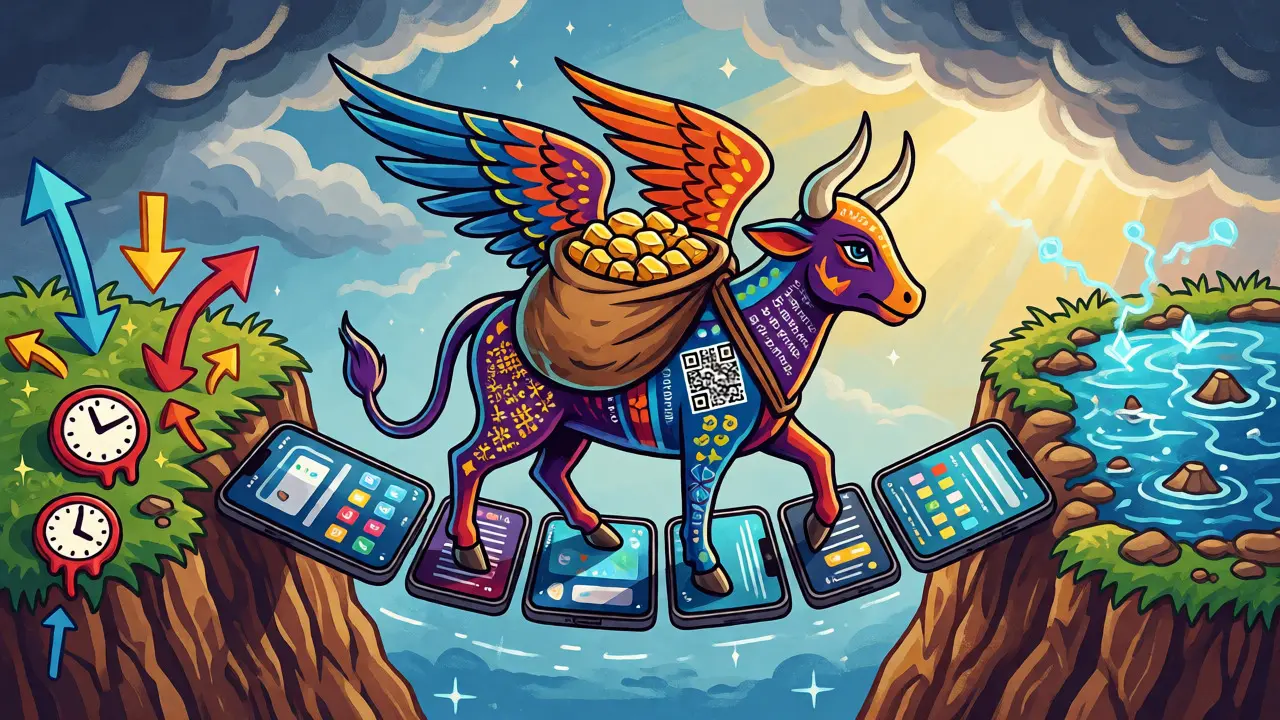
In response to these pressures, local innovators have tried to build alternatives. One notable attempt is the "Halal Stablecoin" (HSC), piloted by the Central Bank of Iran in August 2025. Pegged to gold, this token aims to provide stability without the volatility of Bitcoin. Early metrics showed 4.2 million users transacting $280 million in its first month. Sounds promising, right?
Not quite. The HSC remains isolated from global liquidity pools. Because it is state-controlled and Iran is still blacklisted, you can’t easily swap HSC for USDT or USD on major international exchanges. It works within a closed loop. Meanwhile, peer-to-peer networks like "HalalChain" allow users to move Bitcoin across borders without KYC, but they charge premiums of 15-20%. You pay for freedom from intermediaries with cash. For a student sending tuition fees abroad, that premium is a significant burden.
What Does This Mean for Investors and Developers?
If you are building decentralized applications (dApps), consider the user constraints. High gas fees on Ethereum might deter average Iranian users who prefer cheaper chains like BNB Smart Chain (where PancakeSwap sees high traffic despite slippage issues). User experience must prioritize simplicity and low costs. Complex DeFi protocols will struggle to gain traction when basic remittance is hard enough.
For investors, the Iranian market represents a massive, underserved demographic. Over 42% of the adult population uses crypto. Yet, enterprise adoption lags behind, with only 0.3% of registered businesses using crypto for B2B transactions. This gap suggests huge potential for fintech solutions tailored to SMEs once regulatory clarity improves-or if alternative payment rails mature.
The Future Outlook: Stalemate or Shift?
Will Iran come off the blacklist? Experts remain skeptical. Despite ratifying some conventions, full compliance seems distant. FATF President Raja Kumar maintains that countermeasures must include increased supervisory scrutiny. Without removal from the list, the status quo persists: crypto remains the de facto international payment infrastructure for Iran.
Some models predict a systemic collapse if exchange liquidity evaporates further, while others foresee sustained growth exceeding 25 million users by 2027. The reality likely lies in adaptation. Users will continue to refine their techniques-using non-custodial wallets, leveraging P2P markets, and navigating firewalls. The FATF blacklist has inadvertently created one of the most resilient and creative crypto communities in the world, born not from hype, but from the urgent need to keep commerce alive.
Why is Iran on the FATF blacklist?
Iran was placed on the blacklist in 2019 for failing to implement necessary reforms in its anti-money laundering and counter-terrorist financing laws. Specifically, it had not ratified key UN conventions required by FATF standards, leading to a "Call for Action" designation.
Can Iranian users use major global exchanges like Binance?
Yes, but with significant restrictions. Many global exchanges require identity verification that flags Iranian residents. Accounts are frequently subject to freezes or limits due to compliance algorithms detecting Iranian IP addresses or transaction patterns linked to sanctioned entities.
What is the most popular cryptocurrency in Iran?
Bitcoin is the dominant asset, accounting for approximately 78% of crypto transactions in sanctioned jurisdictions. Its censorship-resistant nature and perceived stability make it preferable for preserving wealth against local currency inflation.
How do Iranian users bypass banking restrictions?
They primarily use peer-to-peer (P2P) trading platforms and decentralized exchanges. By converting local currency to crypto via P2P markets, they can then transfer value internationally without relying on traditional SWIFT banking channels, which are largely inaccessible.
Is the Iranian Halal Stablecoin usable globally?
Currently, no. The Halal Stablecoin is pegged to gold and used domestically, but it lacks integration with major global liquidity pools. Due to FATF restrictions, it cannot be easily exchanged for fiat currencies or major cryptocurrencies on international platforms.