

Imagine trying to buy groceries when the store keeps changing its hours, locking the doors, or demanding your ID at the entrance. For Iranian citizens looking to trade digital assets in 2026, accessing a Decentralized Exchange is often that experience. The landscape has shifted dramatically since early 2025, with tighter government oversight and aggressive international sanctions creating a maze of restrictions. Yet, despite these hurdles, many Iranians are finding ways to maintain financial autonomy by pivoting to decentralized protocols. This guide breaks down how you can access DEXs from Iran, what risks you face, and which networks offer the best balance of speed and privacy.
The Current Regulatory Landscape in Iran
To understand why DEX access is tricky, you first need to look at who is pulling the strings. In January 2025, President Masoud Pezeshkian issued directives that placed the Central Bank of Iran (CBI) as the sole authority over the cryptocurrency market. This wasn't just a bureaucratic shuffle; it gave the CBI unrestricted access to all data and records related to crypto activities. If you hold assets on a centralized platform, they likely have your KYC details, making you visible to regulators. Decentralized exchanges, however, operate without a central point of control, which makes them harder for the CBI to monitor directly. But "harder" doesn't mean "invisible." The law now requires all participants to obtain licenses, a requirement that technically extends to anyone using crypto services within the country, though enforcement against individual wallet holders remains inconsistent.
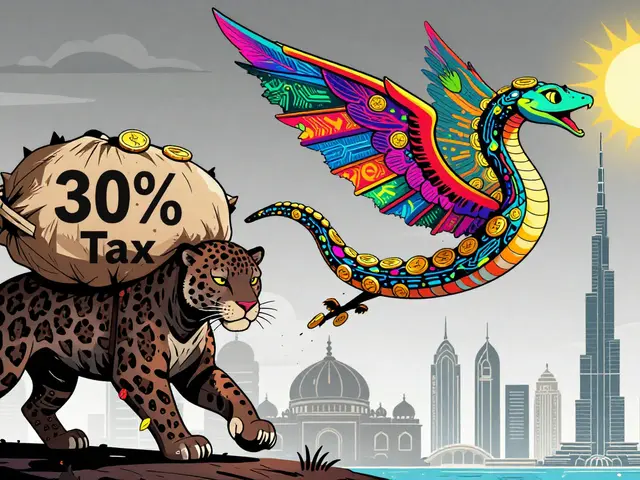
Adding to the complexity, the Law on Taxation of Speculation and Profiteering, enacted in August 2025, introduced capital gains tax on crypto trading. This signals Tehran's intent to treat digital assets like gold or real estate-taxable and regulated. While this primarily targets large-scale traders and businesses, it creates an atmosphere of scrutiny where any significant movement of funds could attract attention. For the average user, the goal isn't to evade taxes but to ensure their daily transactions don't get flagged by algorithms monitoring for suspicious activity.
Why Centralized Exchanges Are Risky Right Now
You might wonder why not just use a local exchange like Nobitex? For years, Nobitex was the go-to platform, handling over 87% of domestic crypto transactions and claiming more than 11 million users. However, two major events in mid-2025 changed the calculus. First, in June 2025, Nobitex suffered a security breach worth over $90 million, eroding trust in its infrastructure. Second, and more critically, Tether froze 42 cryptocurrency addresses in July 2025 linked to Iranian entities. More than half of these addresses had substantial exposure to Nobitex. This freeze disrupted transaction patterns and highlighted the risk of relying on platforms that interact with sanctioned stablecoins like USDT.
The issue isn't just about hacks; it's about sanctions enforcement. The U.S. Treasury has been actively targeting Iranian shadow banking networks. In September 2025, OFAC sanctioned networks facilitating over $100 million in crypto purchases. If your funds sit on a centralized exchange that uses USDT, you are one administrative decision away from having your assets frozen. This is why many savvy users are moving toward decentralized solutions where no single entity holds the keys to your wallet.
How to Access DEXs from Iran: Practical Steps
Accessing a DEX from Iran requires a bit more technical know-how than clicking a button on an app store. Here is the step-by-step process most experienced users follow:
- Set Up a Reliable VPN: Internet censorship in Iran can block foreign websites. A robust Virtual Private Network (VPN) is essential to reach global DEX interfaces. Look for providers with servers in neighboring countries like Turkey or UAE for lower latency, or further away for better IP masking if you suspect deep packet inspection.
- Choose the Right Wallet: You need a non-custodial wallet that supports the specific blockchain you intend to use. Popular choices include MetaMask for Ethereum-compatible chains and Trust Wallet for broader multi-chain support. Make sure your wallet allows custom RPC nodes if you need to connect to specific network endpoints.
- Select a DEX Platform: Not all DEXs are created equal. You want platforms with high liquidity and low gas fees. Uniswap, PancakeSwap, and SushiSwap are common choices, but you must select the correct network version (e.g., Uniswap on Arbitrum vs. Uniswap on Polygon).
- Bridging Assets: Getting funds onto the right chain is often the hardest part. Many users start with USDT on Tron or Ethereum and need to bridge to Polygon or another low-cost network. Use reputable bridges like Stargate or Wormhole, but always verify contract addresses to avoid scams.
- Execute Trades: Once connected, you can swap tokens directly. Since there is no KYC, you remain pseudonymous. However, keep your transaction history organized, as you may still be liable for taxes under the new Iranian laws.

Best Networks for Iranian Users in 2026
Not all blockchains work well under sanctions pressure. Speed, cost, and resistance to censorship matter. Based on recent trends, particularly the mass migration following the Tether freezes, here is how different networks compare for users in Iran:
| Network | Average Transaction Fee | Speed | Sanctions Risk | Best For |
|---|---|---|---|---|
| Polygon | < $0.10 | ~2 seconds | Low-Medium | High-frequency swaps, DAI holdings |
| Arbitrum | $0.05 - $0.20 | ~1 second | Low | DeFi yield farming, complex strategies |
| Ethereum Mainnet | $2 - $10+ | ~12 seconds | Medium-High | Large value transfers, blue-chip DeFi |
| BNB Chain | $0.03 - $0.05 | ~3 seconds | Medium | Cheapest entry point, meme coins |
Polygon has emerged as a favorite among Iranian users after the July 2025 shift from USDT to DAI. Why? Because DAI is an algorithmic stablecoin not directly controlled by a single corporate issuer like Tether. Moving to Polygon-based DAI allowed users to bypass some of the friction associated with USDT freezes. The low fees make it viable for smaller trades, which is crucial in an economy where purchasing power fluctuates rapidly.
Navigating Sanctions and Privacy Risks
Using a DEX doesn't automatically grant you total privacy. Blockchains are public ledgers. If you deposit funds from a centralized exchange to your personal wallet, that link is visible forever. To mitigate this, consider using mixing services or atomic swaps, though these come with their own counterparty risks. Another strategy is to use privacy-focused features where available, such as shielded pools on certain DeFi protocols, although adoption is still growing.
Be wary of "sanction-proof" marketing claims. No token is truly immune to enforcement. However, assets that are widely distributed and have no central treasury (like Bitcoin or fully decentralized stablecoins) are generally safer than those controlled by a single company subject to US jurisdiction. Keep your on-chain footprint clean: avoid linking your main wallet to identifiable social media accounts or frequenting controversial projects.

Common Pitfalls to Avoid
- Ignoring Gas Fees: On Ethereum mainnet, a simple swap can cost more than the amount you're trading. Always check the fee estimate before confirming.
- Using Wrong Network Standards: Sending ERC-20 tokens via BNB Chain will lose them unless the recipient also uses the same standard. Double-check the network selector in your wallet.
- Overlooking Local Laws: Even if you're using a DEX, the CBI can still track large inflows/outflows. Keep records of your trades for potential tax reporting.
- Falling for Phishing Scams: With higher stakes comes higher scam activity. Always bookmark official DEX URLs and verify contract addresses on trusted explorers like Etherscan or Polygonscan.
Future Outlook: What to Expect in Late 2026
The tension between regulatory control and user innovation will likely continue. The Iranian government wants to capture tax revenue and control capital flight, while citizens seek stability in a volatile currency environment. We can expect more targeted sanctions on specific wallets and possibly stricter internet filtering. However, the success of the Polygon migration shows that users adapt quickly. As Layer-2 solutions become cheaper and faster, the barrier to entry for DEX usage will drop, making decentralized finance an even more attractive alternative to centralized exchanges.
Is it legal to use a DEX in Iran?
Legally, it is a gray area. The Central Bank of Iran requires licensing for crypto participants, but enforcement against individual retail users on decentralized platforms is difficult. Most users operate under the radar, but you should be aware of the new capital gains tax laws that apply to all crypto trading.
Which stablecoin is safest for Iranian users?
DAI on the Polygon network is currently considered one of the safest options due to its decentralized nature and lower susceptibility to unilateral freezes compared to USDT. However, diversification across multiple assets is always recommended.
Do I need a VPN to use a DEX in Iran?
Yes, a reliable VPN is almost mandatory. Many global DEX websites are blocked or slow without a proxy. Choose a provider with strong encryption and servers outside the region to minimize latency and detection risks.
What happened to Nobitex users in 2025?
Nobitex suffered a $90 million hack in June 2025. Additionally, many of its users' funds were indirectly affected when Tether froze addresses linked to the exchange in July 2025, prompting a mass migration to decentralized alternatives.
Are there any completely anonymous DEXs?
No DEX is 100% anonymous because blockchains are public. However, using privacy tools, avoiding KYC-linked deposits, and using less traceable networks can significantly reduce your visibility. True anonymity requires additional steps like coin joining or using privacy coins.