
Iran isn’t mining Bitcoin because it’s trendy. It’s doing it because it has to.
Since the U.S. pulled out of the Iran nuclear deal in 2018, the country has been locked out of the global banking system. SWIFT cuts, frozen assets, blocked dollar transactions - it all added up to an economic chokehold. But Iran didn’t sit still. Instead, it turned its cheap electricity and vast natural gas reserves into a digital lifeline: Bitcoin mining.
By 2025, Iran accounted for 4.5% of the world’s total Bitcoin mining power. That’s more than Russia, more than Canada, and rivals entire continents. And it’s not accidental. This isn’t a few hobbyists running rigs in garages. This is a state-backed, industrial-scale operation designed to sidestep sanctions one block at a time.
How Bitcoin Mining Bypasses Sanctions
Sanctions work by cutting off access to traditional finance: banks, wire transfers, credit cards, SWIFT. But Bitcoin doesn’t need any of that. It runs on a decentralized network. You don’t need a bank to send or receive Bitcoin - just an internet connection and a wallet.
Here’s how Iran uses it:
- They mine Bitcoin using surplus electricity - mostly from natural gas plants that would otherwise go unused.
- The mined Bitcoin is sold on international exchanges for stablecoins or other crypto.
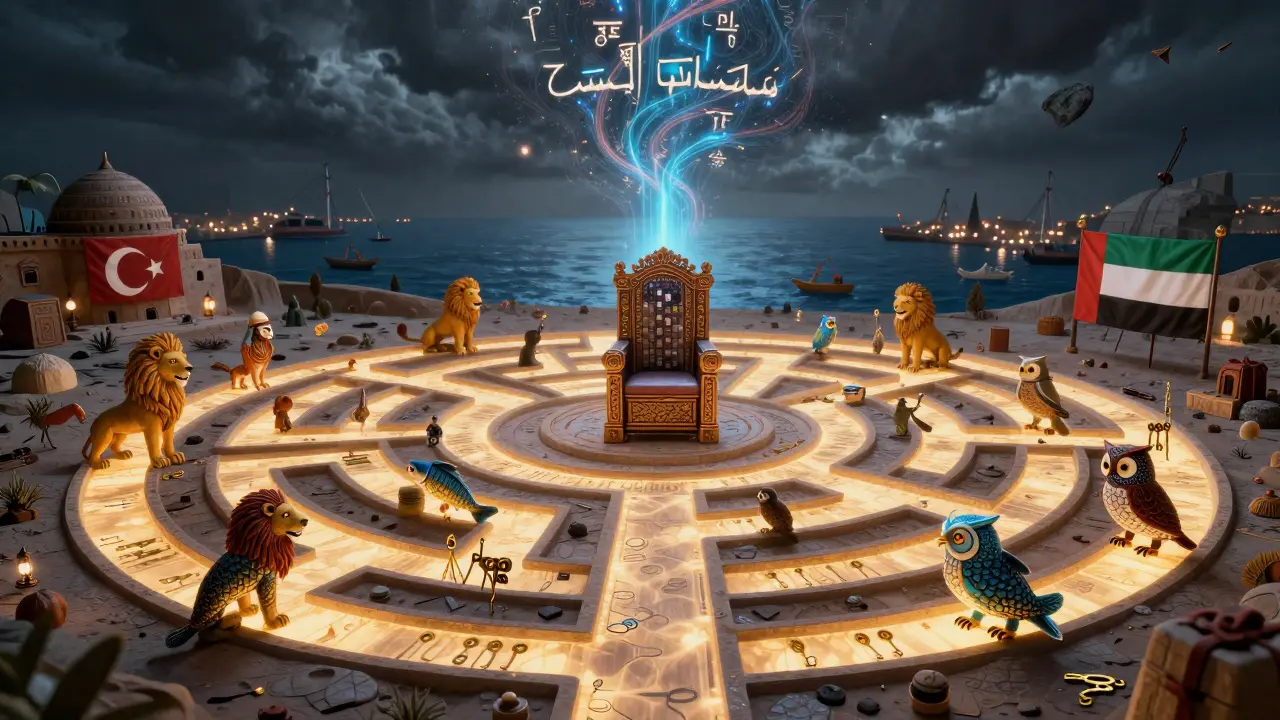
- Those crypto assets are then converted into goods, services, or cash through intermediaries in Turkey, the UAE, or Russia.
- No banks. No SWIFT. No U.S. oversight.
Think of it like bartering - but with blockchain. Instead of trading oil for wheat, Iran trades electricity for Bitcoin, then Bitcoin for medicine, food, or machinery. The system works because Bitcoin doesn’t care where you’re from. It only cares if you have the keys.
The Infrastructure: Power, Politics, and Profit
The heart of Iran’s mining operation isn’t in Tehran. It’s in Rafsanjan, Kerman province - a desert city with one of the largest Bitcoin farms in the world: a 175-megawatt facility run by IRGC-linked companies.
These aren’t mom-and-pop operations. They’re massive, government-backed industrial complexes. Some sit on military bases. Others are owned by religious foundations like Astan Quds Razavi, which controls billions in assets and operates with near-total immunity from oversight.
Electricity here costs pennies - sometimes effectively free. Why? Because the government doesn’t charge these mining farms. They’re given priority access to power grids, often at the expense of homes and hospitals. In 2023, reports showed entire neighborhoods in Tehran going dark for hours while mining rigs in the south kept running 24/7.
The hardware? Mostly Chinese-made ASIC miners. But getting them isn’t easy. Sanctions block direct imports. So Iran uses smuggling networks, fake end-user certificates, and shell companies in Malaysia and Turkey to route equipment in. Some miners pay triple the market price just to get a single S19 Pro unit.
By 2024, over 10,000 licensed mining farms were operating across Iran. That’s not counting the unlicensed ones. Estimates suggest the real number is closer to 25,000. And the government? It’s not just tolerating this - it’s encouraging it. In 2022, the Central Bank of Iran officially recognized cryptocurrency as a tool for trade. By 2023, it had licensed 90 domestic crypto exchanges.
The Numbers Don’t Lie
Here’s what the data shows:
- Over $4.18 billion in cryptocurrency flowed out of Iran in 2024 - up 70% from the year before.
- Iran’s mining operations consume roughly the same amount of electricity as 10 million barrels of crude oil per year. That’s 4% of Iran’s total oil exports - but without the sanctions.
- Since 2018, Iranian-linked wallets have processed over $8 billion in transactions on Binance alone.
- The first official Iranian import paid in crypto? A $10 million order of medical equipment in August 2021.
These aren’t small transactions. This is how a country keeps its economy alive when the world says no.
Why Iran’s Strategy Works - And Why It’s Dangerous
Iran’s approach is unique. Other sanctioned nations tried crypto - Venezuela with its Petro, North Korea with its hacks. But those failed. The Petro was worthless. North Korea stole crypto, not mined it.
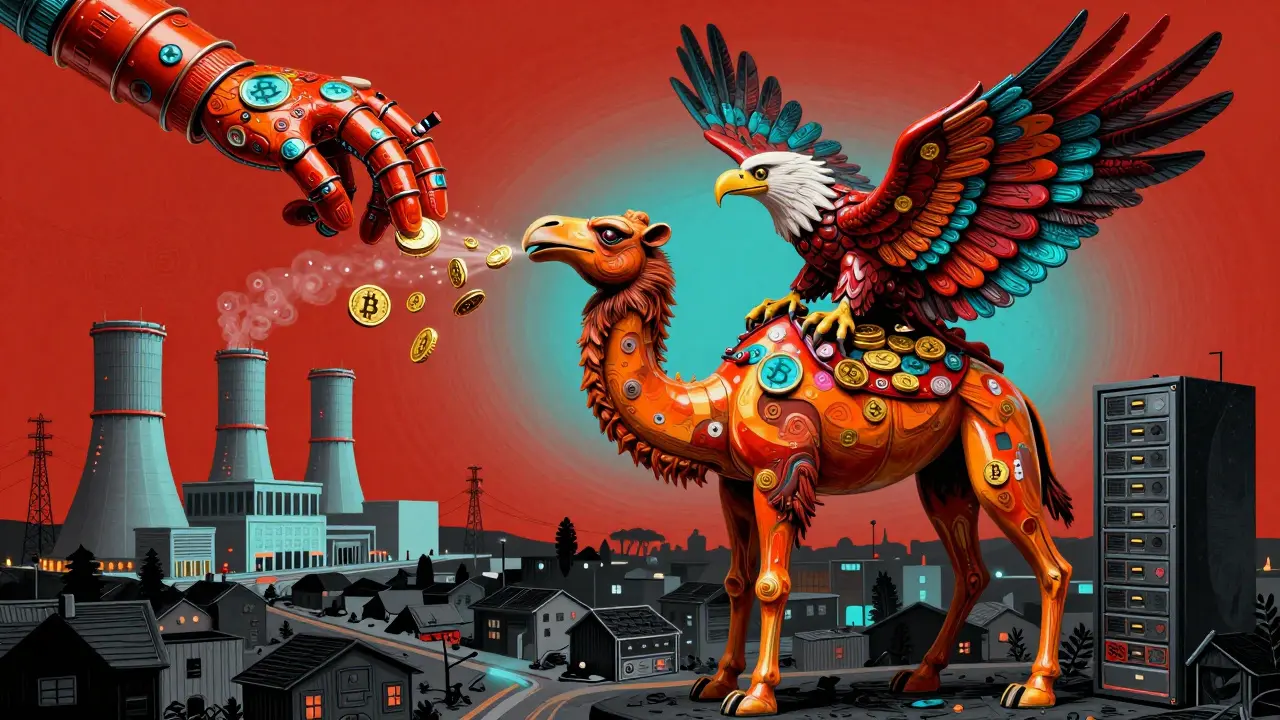
Iran did something smarter: it mined Bitcoin legally, at scale, and with state backing. It turned a global network designed for decentralization into a national tool for survival.
Here’s why it works:
- Energy advantage: Iran’s electricity costs are 10x lower than in the U.S. or Germany. Miners there pay less than $0.005 per kWh. In Texas? $0.06.
- State protection: IRGC-linked farms don’t get shut down. They get power lines.
- Global demand: Bitcoin is liquid. You can sell it anywhere. You can’t sell oil if you can’t get paid.
But it’s not without risk.
- Power shortages: Mining is draining the grid. In 2024, winter blackouts hit 12 cities. People froze. Hospitals lost backup power.
- Equipment shortages: Sanctions make it hard to upgrade hardware. Many rigs are outdated, inefficient, and breaking down.
- International pressure: The U.S. Treasury and EU regulators now flag any Bitcoin transaction that passes through Iranian mining pools. Exchanges like Coinbase and Kraken block Iranian IPs. Chainalysis and Elliptic track these flows.
- Funding the IRGC: A 2025 FinCEN report linked over $1.2 billion in Iranian crypto proceeds directly to IRGC-linked entities. That includes funding for Hezbollah, Houthi rebels, and missile programs.
So while Iran gains access to foreign currency, it also deepens its isolation - and fuels global instability.
Who Really Benefits?
This isn’t a national project. It’s a regime project.
The average Iranian citizen doesn’t profit from Bitcoin mining. They don’t own rigs. They don’t get paid in crypto. They pay higher electricity bills and endure rolling blackouts.
The real winners? The IRGC. The religious foundations. The state-owned energy conglomerates. And the Chinese and Russian companies that supply the hardware and help launder the proceeds.
On Telegram channels in Persian, ordinary Iranians complain about the power cuts. On Twitter, Iranian crypto traders brag about their profits. But the gap between the two is huge. The system isn’t designed to help the people. It’s designed to help the state survive.
The Bigger Picture: What This Means for the World
Iran’s Bitcoin mining strategy isn’t just a workaround - it’s a warning.
It shows that financial sanctions, once seen as ironclad, are becoming obsolete in a world of decentralized networks. You can freeze a bank account. You can’t freeze a blockchain.
Other nations are watching. Venezuela is experimenting again. Russia is expanding its mining footprint. Even Belarus and Syria are exploring similar models.
For the first time, a country isn’t just evading sanctions - it’s building a parallel economy on top of Bitcoin’s infrastructure. And it’s working.
The challenge for the West? How do you stop something that doesn’t belong to anyone? How do you sanction a network that runs on code, not borders?
Right now, the answer is: you can’t - not completely. But you can make it harder. By tracking wallets. By pressuring exchanges. By cutting off access to hardware. And by recognizing that Bitcoin, for all its ideals, is now being used as a weapon.
What’s Next?
Iran plans to double its mining capacity by 2027. It’s building new data centers in Bushehr and Khuzestan. It’s negotiating crypto partnerships with Russia, China, and even some EU countries.
Meanwhile, global regulators are scrambling. The U.S. Treasury is pushing for mandatory blockchain analytics. The FATF is drafting new rules for crypto exchanges. The EU is considering a “sanctions compliance” flag on all crypto transactions.
But here’s the truth: as long as Iran has cheap power and global demand for Bitcoin, it will keep mining. The question isn’t whether this strategy will end. It’s whether the world is ready to adapt - or if it’s still clinging to a financial system that no longer works.







13 Comments
Let us not mince words: this is not innovation-it is institutionalized economic warfare cloaked in blockchain aesthetics. Iran has weaponized a decentralized protocol to circumvent a global financial order that, frankly, was never designed to withstand such subversion.
The notion that Bitcoin is ‘neutral’ is a myth peddled by libertarians who’ve never seen a blackout. This is state-sponsored asset laundering with ASICs.
When a nation redirects power from hospitals to mining rigs, it ceases to be a utility-it becomes a military supply chain. And the West? We’re still debating whether to regulate crypto while Iran builds its own parallel central bank on SHA-256.
It’s not just clever. It’s terrifyingly efficient.
Sanctions are now relics. The future belongs to those who control energy, not SWIFT codes.
Okay but like… 🤯
Bitcoin isn’t just money anymore-it’s a *metaphysical* rebellion against the carceral architecture of global finance. Iran didn’t ‘bypass’ sanctions-they transcended them. Like, Nietzsche meets Nakamoto.
Imagine: a decentralized ledger becomes the new sovereign territory. No borders. No IMF. Just hash power and will.
Meanwhile, the West is still trying to ‘regulate’ it like it’s a TikTok trend. Bro. You’re fighting a ghost with a spreadsheet.
Also, IRGC mining rigs are basically crypto temples. 🕊️⛏️
The structural logic of Iran’s Bitcoin mining operation reveals a profound inversion of conventional economic theory: rather than exporting commodities to acquire foreign currency, it exports energy in the form of computational work, which is then monetized via a global, permissionless asset class.
This is not evasion-it is reconfiguration. The state has effectively converted its excess capacity into a non-sovereign, non-transactional medium of exchange. The implications for international law are profound: if value can be generated and transferred without reference to any territorial jurisdiction, then the very concept of economic sovereignty becomes obsolete.
Moreover, the use of religious endowments as corporate vehicles for mining infrastructure demonstrates a sophisticated fusion of theological legitimacy and technological pragmatism-a phenomenon absent in all other sanctioned economies.
One must conclude: this is not an anomaly. It is the first successful model of a post-sanction state.
Y’all act like this is some kind of genius move… but let’s be real-this is just desperation with a GPU.
People in Tehran are freezing because some dude in Rafsanjan is grinding S19s 24/7 on power that should be heating hospitals.
And you think this is ‘smart’? Nah. It’s tragic. It’s the kind of thing that happens when a regime runs out of ideas and starts betting its people’s warmth on blockchain.
It’s not liberation. It’s a slow, electric chokehold. And we’re all just watching it livestream.
I’ve been following this for years and I just want to say-this is one of the most fascinating real-world experiments in human adaptation.
Imagine turning a punishment into a superpower. Sanctions were meant to break Iran. Instead, they forced it to build something new.
Not perfect? No. But it’s alive. People are getting medicine. Food is moving. The economy hasn’t collapsed.
Maybe the lesson isn’t about Bitcoin. Maybe it’s about how people find a way-even when the world says ‘no.’
Respect.
It is not merely a matter of economic strategy-it is a metaphysical assertion of sovereignty against the hegemonic structures of Western financial imperialism. The Iranian state, through its calculated deployment of computational resources, has effectively rendered the dollar obsolete within its borders-not through force, but through systemic redundancy. This is not evasion; it is evolution. The West clings to outdated paradigms of currency, banking, and jurisdictional authority, while Iran, with quiet, relentless pragmatism, has constructed an alternative ontology of value-one that operates beyond the reach of sanctions, beyond the gaze of the IMF, beyond the moral posturing of Western media. The fact that this is not celebrated as a triumph of non-aligned innovation speaks volumes about the intellectual stagnation of the global north.
While Iran’s use of Bitcoin mining is technically impressive, it raises serious ethical and humanitarian concerns. The prioritization of mining operations over civilian energy needs constitutes a violation of basic human rights. Access to heat and electricity is not a luxury-it is a necessity.
Furthermore, the integration of IRGC-linked entities into this infrastructure directly links state-sponsored violence to cryptocurrency flows. This is not economic resilience-it is institutional corruption disguised as innovation.
Regulators must treat this not as a technical loophole, but as a national security threat requiring coordinated international response.
There is a line between adaptation and exploitation. Iran has crossed it.
Interesting read. I didn’t realize how much of Iran’s mining is tied to religious foundations. That’s wild.
Kinda makes you wonder if this is the first time a theocracy has used crypto to fund its own survival. Kinda poetic, in a twisted way.
You’re right to highlight the IRGC connection. But let’s not forget-the same infrastructure that fuels the regime also enables ordinary Iranians to receive remittances from abroad. Some families rely on crypto transfers to get medicine from Turkey.
It’s messy. It’s not clean. But it’s real.
Maybe the answer isn’t to shut it down-but to find ways to separate the people from the regime’s grip.
Iran didn’t ‘bypass’ sanctions. They hacked the global economy. 💥
And now everyone’s watching. Russia’s next. China’s already in. The dollar’s dead. 🏴☠️
Get ready for the crypto Cold War. It’s here.
Look, I’m not here to judge. But if you’ve ever been without power in winter-you know what this means.
People aren’t just mining Bitcoin. They’re mining survival.
And yeah, the IRGC profits. But so do the nurses who get their insulin. So do the kids who get their heater.
There’s no clean answer here. Just hard choices.
Let’s not pretend we’re morally superior. We’re just scared of what happens when the system breaks.
It is a disgrace that the Western world, which preaches freedom and innovation, now seeks to suppress a nation’s ingenuity merely because it dares to defy economic coercion. Iran’s miners are not criminals-they are pioneers of a new economic paradigm. The very infrastructure of Bitcoin, built on decentralization and permissionless access, was meant to empower the oppressed. And yet, the same powers that once championed the free market now demand control over hash power. This is not regulation. It is colonialism with a blockchain logo.
Of course it’s state-backed. Did you really think the IRGC doesn’t own every rig? 😂
And yes-the blackouts are real. But guess what? They’re not even trying to hide it.
It’s all part of the plan.
They want you to panic.
They want you to think this is ‘brilliant.’
It’s not.
It’s a trap.
And we’re falling for it.