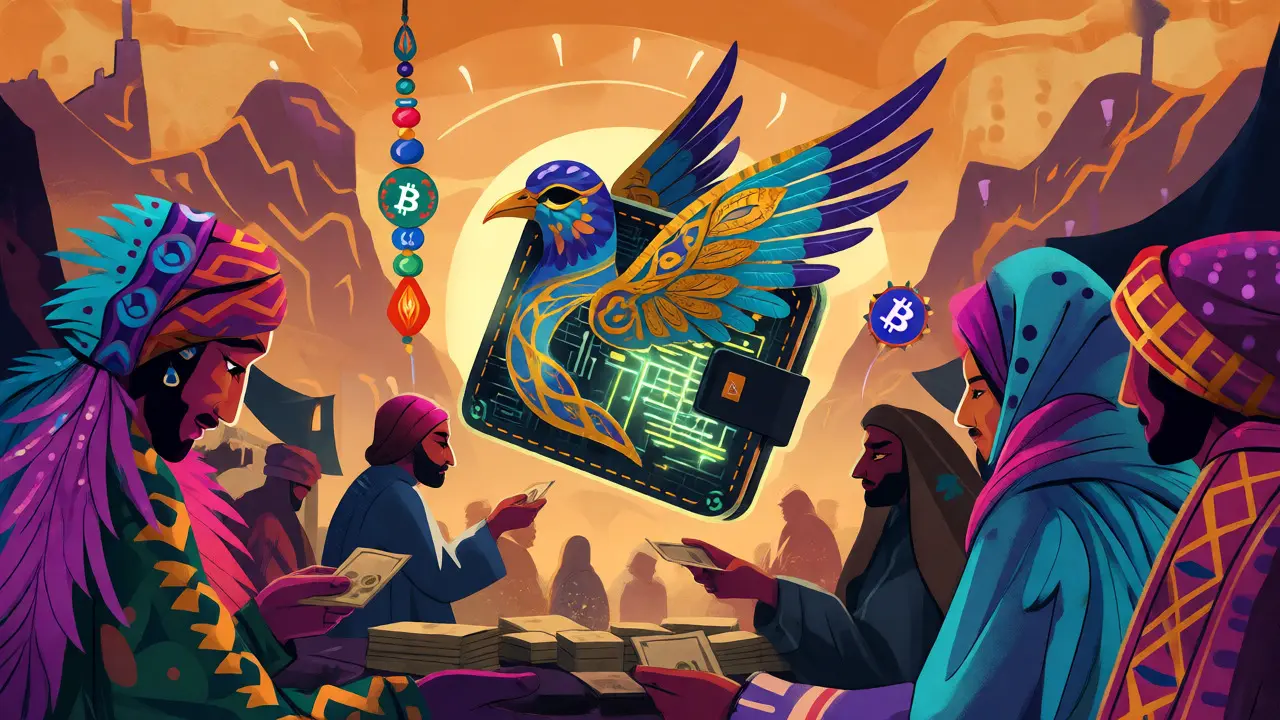


Imagine trying to feed your family while the government hunts you down for using a digital wallet. That is the reality for thousands of Afghans today. While the rest of the world debates whether Cryptocurrency is an asset or a bubble, the Taliban has turned it into a crime. Since their takeover in August 2021, the regime has moved from confusion to aggressive enforcement, arresting traders, shutting down exchanges, and imprisoning ordinary citizens who just want to send money home.
This isn't just a regulatory hiccup; it is a humanitarian crisis wrapped in legal ambiguity. You might wonder why a country with one of the highest grassroots adoption rates per capita would ban the very tool its people rely on most. The answer lies in a mix of religious interpretation, control over the economy, and fear of unmonitored capital flows. But as we will see, banning Bitcoin doesn't stop the flow of money-it just drives it underground, making life harder for the poor while leaving the wealthy largely untouched.
The Ban That Started It All
It didn't happen overnight. When the Taliban first seized Kabul, there was a strange window where crypto seemed to be thriving. With banks frozen by international sanctions and cash physically scarce, Afghans flocked to digital assets. By late 2021, Chainalysis ranked Afghanistan as the 20th highest adopter of cryptocurrency globally. People were using USDT and Bitcoin not for speculation, but for survival. They needed a way to receive remittances from relatives abroad when Western Union and banks simply weren't working.
Then came June 2022. The Da Afghanistan Bank, the central bank under Taliban control, issued a blanket ban on all cryptocurrency trading. At first, many thought this was just talk. The initial decree focused heavily on online foreign exchange trading, which officials labeled "illegal and fraudulent." A spokesman explicitly told Bloomberg that "there is no instruction in Islamic law to approve it." This wasn't just about economics; it was framed as a moral imperative.
But the gap between the written law and street-level reality was huge. For months, enforcement was inconsistent. Some provinces ignored the ban because local commanders benefited from the fees generated by crypto exchanges. Others cracked down hard. This inconsistency created a false sense of security for traders who kept operating, thinking the worst had passed. It hadn't.
Herat Becomes the Battleground
If you want to understand the severity of the crackdown, look at Herat. As Afghanistan's third-largest city and a major trade hub near Iran, Herat became the epicenter of enforcement actions. In September 2023, police forces shut down 16 cryptocurrency exchanges in a single sweep. Sayed Shah Sa'adat, head of the counter-crime unit, confirmed these closures were part of a nationwide push to enforce the ban.
The stakes got higher quickly. By May 2023, authorities weren't just closing shops; they were arresting people. Eight traders were detained in Herat, spending 28 days in central prison before being released on bail. Authorities hinted that continued violations could lead to sentences of up to six months. Imagine losing half a year of income-often your entire annual earnings-because you facilitated a peer-to-peer transfer of $500 for a neighbor.
The rationale given by officials often cites fraud and gambling. Sa'adat stated that "digital currency trading has caused a lot of problems and is scamming people." There is truth here; the lack of regulation did allow some bad actors to exploit vulnerable users. However, the broad-brush approach punishes legitimate businesses alongside scams. One trader reported to local media that he used to earn modest margins from USDT transactions but couldn't afford to feed his family after the ban took effect. He wasn't running a Ponzi scheme; he was providing a service.

Religious Justification vs. Economic Reality
The Taliban's primary defense for the ban rests on Islamic finance principles, specifically the concept of gharar (uncertainty) and prohibitions against gambling. Many conservative scholars argue that because cryptocurrencies are volatile and not backed by physical assets, they resemble gambling more than currency. Therefore, trading them is haram (forbidden).
However, this view is not universal among Islamic finance experts. Other scholars argue that if a community accepts a token as a medium of exchange, it can be permissible. The Taliban's stance is rigid, ignoring the nuance that exists in broader Islamic jurisprudence. More importantly, it ignores the economic desperation driving demand. With World Bank data indicating that 97% of Afghans live below the poverty line, the choice isn't between traditional banking and crypto. It's between crypto and having no access to funds at all.
| Factor | Pre-Ban Context (2021) | Post-Enforcement Context (2023-2024) |
|---|---|---|
| Primary Use Case | Remittances and savings preservation | Risk-heavy underground transfers |
| Legal Status | Tolerated/Gray area | Criminal offense with potential imprisonment |
| Access to Funds | High via P2P networks | Limited due to fear of arrest |
| Economic Impact | Provided liquidity during banking collapse | Increased transaction costs and delays |
The Human Cost of Enforcement
Behind the headlines of arrests are families struggling to survive. Consider the case of a young man whose brother works in the United States. Before the ban, the brother would buy USDT and send it to a local agent in Kabul, who would then give the family cash. After the crackdown, this simple pipeline became dangerous. Agents started charging higher fees to cover the risk of getting caught, or they stopped operating altogether.
For many, there is "no other way," as one citizen put it. Traditional banks remain unreliable. Cash couriers are slow and risky. Cryptocurrency was the only bridge connecting the diaspora to those back home. Now, that bridge is under fire. UNICEF reported in 2023 that over one million children were at risk of severe malnutrition. Cutting off efficient remittance channels exacerbates this crisis, hitting the most vulnerable hardest.
There is also a paradoxical element to the enforcement. While the Taliban claims to protect people from fraud, the crackdown has actually increased vulnerability. When markets go underground, transparency disappears. Scams thrive in the shadows because victims cannot report losses to authorities without incriminating themselves. So, the very tool meant to reduce financial exclusion has become a source of anxiety and additional cost.

Security Concerns and Terrorist Financing
We must acknowledge that the Taliban's concerns aren't entirely baseless. International reports, including those from TRM Labs, highlight the use of cryptocurrency by groups like the Islamic State Khorasan Province (ISKP). ISKP has utilized crypto for small-scale financing, ranging from $100 to $15,000 per transaction. These funds help sustain operations outside the formal banking system.
However, the scale of terrorist usage is minuscule compared to everyday commercial activity. Most crypto transactions in Afghanistan involve individuals sending money to family members, not funding explosives. The Taliban's broad enforcement nets catch the grandmother receiving a birthday gift from her grandson in Germany just as easily as they catch a mid-level financier. This suggests the motivation is less about targeted anti-terrorism efforts and more about maintaining total state control over monetary flows.
By restricting crypto, the Taliban ensures that any movement of value remains visible-or at least, they hope it does. If people use gold, livestock, or informal hawala networks, the state has established mechanisms to monitor or tax those flows. Crypto, being borderless and decentralized, represents a loss of sovereignty for a regime that struggles with legitimacy internationally.
What Comes Next?
Is the ban sustainable? History suggests no. Prohibition rarely eliminates demand; it usually creates black markets. We are already seeing signs of adaptation. Traders are moving away from fixed locations and using encrypted messaging apps to coordinate deals. Privacy-focused coins and mixing services are gaining traction among those who can afford the technical know-how.
Furthermore, the economic pressure is mounting. With inflation high and the Afghan dollar weak, preserving wealth is critical. If the Taliban wants to stabilize the economy, they need functional payment systems. Banning the most efficient one available seems counterintuitive unless political control outweighs economic efficiency. For now, the enforcement continues, with periodic raids and arrests serving as reminders that the digital frontier is still very much under siege.
If you are tracking global crypto trends, keep an eye on Afghanistan. It serves as a stark reminder that technology does not exist in a vacuum. Local laws, cultural norms, and political stability dictate how-and whether-people can use digital assets. The story of crypto in Afghanistan is not just about blockchain; it is about human resilience in the face of systemic restriction.
Why did the Taliban ban cryptocurrency?
The Taliban banned cryptocurrency primarily citing Islamic law interpretations regarding uncertainty (gharar) and gambling. They also expressed concern over fraud and the inability to regulate cross-border flows that bypass state-controlled banking channels.
Are people actually going to jail for using crypto in Afghanistan?
Yes. While early penalties involved fines or business closures, enforcement escalated in 2023. In Herat province, traders have been arrested and detained for nearly a month, with authorities warning of sentences up to six months for repeat offenses.
How do Afghans send money without crypto now?
Many rely on the traditional Hawala network, which uses trust-based informal transfers. Others use physical cash couriers or hold onto US dollars and euros. However, these methods are slower, more expensive, and carry their own risks of theft or loss.
Did the crypto ban reduce fraud in Afghanistan?
Not necessarily. By driving the market underground, transparency decreased. Victims of scams are less likely to report issues because doing so admits to participating in an illegal activity, potentially allowing fraudsters to operate with impunity.
Is cryptocurrency completely gone from Afghanistan?
No. Activity has shifted to peer-to-peer transactions conducted discreetly via mobile phones and encrypted chat apps. While public exchanges are closed, private trades continue, albeit with higher premiums and greater legal risk.









11 Comments
Oh my gosh, this is absolutely heartbreaking but so important to read! 🥺 It’s wild how we sit here debating NFTs while people are literally going to jail for trying to feed their kids. The part about the Herat raids really hit me hard. Imagine losing your entire income because you helped a neighbor send $500 home? That’s not just a regulation; that’s cruelty wrapped in religious justification. 😤 We need to stop looking at crypto as just 'tech' and start seeing it as a lifeline for the unbanked. This article is a total wake-up call for everyone who thinks blockchain is only for Wall Street bros. Let’s keep sharing this so more people understand the human cost behind the code!
Because apparently, if you can't control it with a stamp and a signature, it must be illegal. Classic authoritarian move: ban what you don't understand, then blame the poor for using it.
The analysis regarding the divergence between Islamic jurisprudence nuances and the Taliban's rigid interpretation is astute. However, one must consider that state sovereignty often supersedes economic efficiency in such regimes. The loss of monetary control is existential for them.
I appreciate the detailed breakdown of the humanitarian impact. It is truly distressing to witness how well-intentioned regulatory frameworks, when applied without nuance, can devastate vulnerable populations. The comparison to historical prohibitions is valid, yet the speed of digital adoption makes enforcement uniquely difficult. I hope international bodies take note of these grassroots realities rather than focusing solely on macro-economic indicators.
this hits different honestly its crazy how they banned it cause of gambling but regular banks are barely working lol people just want to eat
The epistemological crisis here is palpable. When the state defines reality through decree, technology becomes an ontological threat. The Taliban’s approach reflects a fundamental misunderstanding of decentralized value transfer, treating it as a moral failing rather than a structural adaptation to institutional failure. It raises profound questions about the nature of money itself-is it law, or is it consensus?
This is such a vital perspective. It’s easy to get lost in the technical jargon of blockchain, but you’ve highlighted the very real human stories underneath. I’m curious, do you think there are any NGOs or local organizations currently working to bridge this gap, perhaps by offering education on safer P2P methods or advocating for policy changes? It feels like we need both top-down pressure and bottom-up support to make a difference here. Thanks for shedding light on this!
Sad reality. No other way to send money home.
Great post. While the situation is dire, history shows black markets always win against prohibition. The tech adapts, the people adapt, the regime eventually cracks or gets ignored. Don't lose hope.
I completely agree with the points raised regarding the economic desperation driving this demand. It is crucial, however, to maintain a balanced view... The religious arguments, while rigid, do stem from genuine concerns about volatility and fraud... which are indeed prevalent in unregulated markets. Nevertheless, the punitive measures seem disproportionate given the lack of alternatives... One hopes that future policies might incorporate more nuanced approaches, rather than blanket bans... Thank you for bringing attention to this critical issue...
It is inspiring to see the resilience of the Afghan people despite these harsh restrictions. They find ways to survive and connect, proving that human ingenuity cannot be fully suppressed by bureaucratic overreach. We should support these communities by raising awareness and advocating for financial inclusion policies that respect local realities.