




Imagine walking into a bank where the walls are blank, there are no tellers, and nobody knows who owns the building. You hand over your life savings anyway because the door was open. That is exactly what signing up for ZZEX a centralized cryptocurrency exchange with virtually no public data regarding its operations, team, or regulatory status feels like in 2026.
You might have seen an ad for it on social media, or perhaps a friend mentioned it. The promise is usually simple: low fees, high rewards, or access to new coins. But when you start digging for the basics-like who runs the place or if they are licensed-you hit a wall. Silence. This article cuts through the noise to tell you whether ZZEX is a hidden gem or a dangerous trap for your digital assets.
The Red Flag of Total Opacity
In the world of finance, transparency isn't just a nice-to-have; it's the foundation of trust. When we look at established players like Binance the largest cryptocurrency exchange by trading volume globally or Coinbase a publicly traded US-based cryptocurrency exchange, we know their headquarters, their CEOs, and their legal teams. We can read their quarterly reports. We can see their security audits.
Now, look at ZZEX. As of mid-2026, there is almost nothing verifiable about this platform. Here is the breakdown of what is missing:
- No Founding Team: There are no LinkedIn profiles, no press releases, and no interviews with founders. In crypto, "doxxed" (publicly identified) teams are standard for reputable projects. Anonymous teams are common in DeFi, but rare and risky for centralized exchanges holding your funds.
- No Regulatory Licenses: Legitimate exchanges display their licenses prominently. Coinbase holds licenses from FinCEN and the FCA. Kraken has banking charters. ZZEX? Nothing. No registration in the US, EU, UK, or Singapore. This means if they steal your money, you have zero legal recourse.
- No Physical Address: While some companies operate remotely, a complete lack of a registered business address is a major warning sign for a financial institution.
This opacity suggests one of two things: either ZZEX is so new that it hasn't built any infrastructure yet, or it is deliberately hiding to avoid scrutiny. Given the history of crypto scams, assuming the worst is the safest bet.
Security and Fund Safety: The Unknown Risk
Your biggest fear with any exchange is not losing money to bad trades-it’s losing everything because the platform gets hacked or shuts down overnight. Let’s talk about how ZZEX handles this compared to industry standards.
| Feature | Established Exchanges (e.g., Kraken, Coinbase) | ZZEX |
|---|---|---|
| Cold Storage Policy | 95%+ of funds in offline cold storage | Unknown / Not Disclosed |
| Proof of Reserves | Regular third-party audits (Merkle Tree proofs) | None Found |
| Insurance Coverage | Often insured against hacks (e.g., Lloyd's of London) | None Mentioned |
| Two-Factor Authentication (2FA) | Mandatory hardware key or authenticator app support | Unclear |
| Bug Bounty Program | Active programs on Immunefi or HackerOne | None Found |
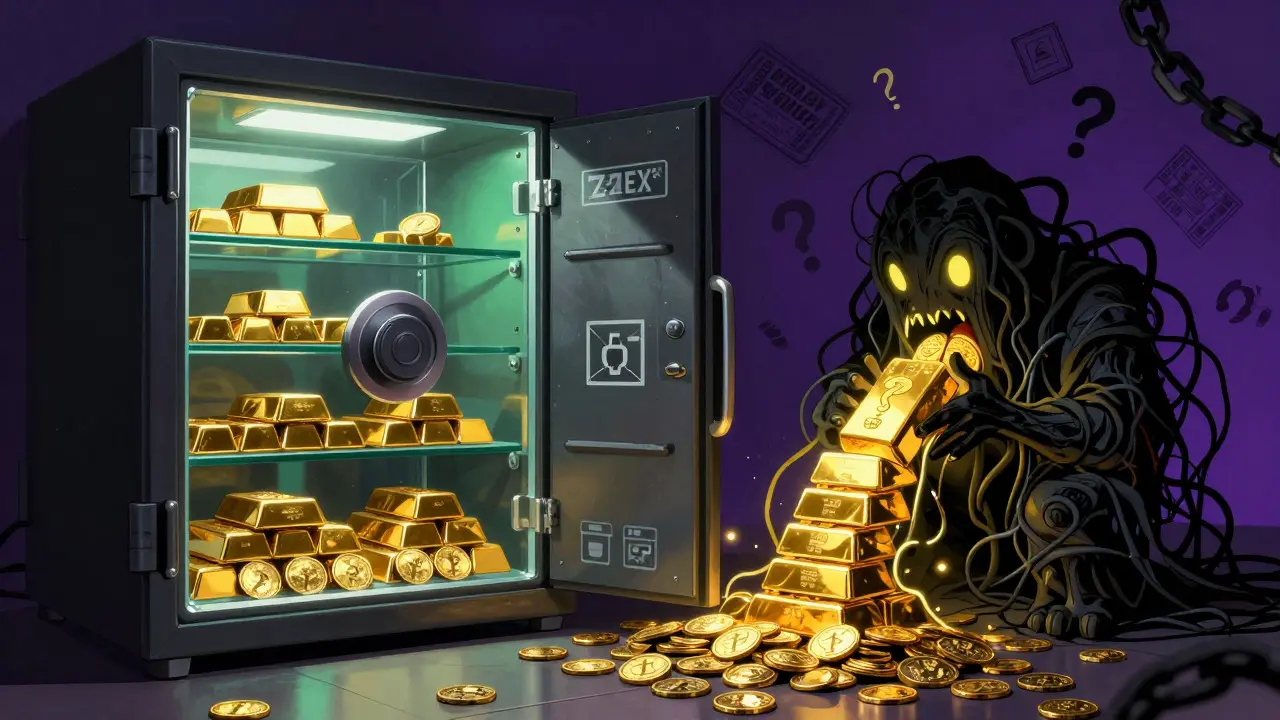
Without a Proof of Reserves an audit method showing an exchange holds 1:1 backing for user assets, you are gambling. Many "centralized" exchanges actually lend out user funds or use them for proprietary trading. If the market crashes, they go bankrupt. Look at FTX in 2022-they looked professional, had celebrity endorsements, and then vanished. ZZEX lacks even the basic veneer of professionalism that FTX had.
If ZZEX does not publish regular Merkle Tree proofs allowing users to verify their own balances against the exchange's total holdings, treat your deposit as gone the moment it leaves your wallet.
User Experience and Community Feedback
A healthy crypto exchange has a noisy community. People complain about slow withdrawals, praise new features, or discuss bugs on Reddit, Twitter, and Trustpilot. This feedback loop is vital for improvement.
Search for "ZZEX review" or "ZZEX withdrawal issues" and you will find... silence. Or worse, generic, bot-generated positive reviews on obscure sites. There is no organic discussion on r/CryptoCurrency or major Telegram groups. This absence of community voice is deafening. It suggests very low adoption, which leads to another critical problem: liquidity.
Liquidity determines how easily you can buy or sell without moving the price. On a thin platform like ZZEX likely is, trying to sell $1,000 worth of Bitcoin might drop the price significantly, costing you money instantly. This is known as slippage. Major exchanges have deep order books; unknown platforms often have empty ones.
Fees and Hidden Costs
New exchanges often lure users with "0% fees." Sounds great, right? But in finance, someone always pays. If they aren't charging you a trading fee, they are likely making money elsewhere:
- High Withdrawal Fees: They let you trade for free but charge exorbitant amounts to get your crypto out.
- Spread Manipulation: The difference between the buy and sell price is wider than market average.
- Ponzi Dynamics: Some shady platforms pay early users with deposits from later users until they run out of victims.
Since ZZEX has no published fee schedule that is independently verified, assume the costs are higher than advertised. Always check the fine print before depositing.

Regulatory Status in 2026
The regulatory landscape for crypto has tightened significantly since 2023. In the US, the SEC and CFTC are cracking down on unregistered securities exchanges. In Europe, MiCA (Markets in Crypto-Assets regulation) requires strict compliance. Asia, particularly Singapore and Japan, has rigorous licensing requirements.
ZZEX appears to operate in a gray area, possibly offshore in jurisdictions with lax laws. This is common for scam platforms. If regulators decide to shut them down tomorrow, your account could be frozen indefinitely. Unlike regulated entities, ZZEX has no obligation to return your funds if they cease operations.
Verdict: Proceed with Extreme Caution
So, should you use ZZEX? Based on the available evidence, the answer is a strong **no** for anyone serious about protecting their wealth. The lack of transparency, regulatory oversight, security audits, and community presence creates a perfect storm for potential loss.
You are better off using established platforms that have survived multiple market cycles. If you are determined to try ZZEX, follow these rules:
- Use a Burner Wallet: Never transfer funds directly from your main cold storage.
- Treat Deposits as Lost: Only put in money you are 100% okay with never seeing again.
- Withdraw Immediately: Test the withdrawal process with a small amount first. If it takes more than 24 hours, consider it a red flag.
- Check Liquidity: Try to place a small market order. If the price slips wildly, stay away.
In crypto, trust is earned through code and transparency, not marketing hype. ZZEX has neither. Stick to platforms that respect your intelligence and your security.
Is ZZEX a legitimate crypto exchange?
There is no concrete evidence to prove ZZEX is legitimate. It lacks regulatory licenses, a known founding team, and independent security audits. These are standard requirements for trustworthy exchanges. The absence of this information makes it highly suspect.
Where is ZZEX based?
The exact location of ZZEX is undisclosed. Rumors suggest Asian origins, but without a registered business address or legal entity information, its jurisdiction remains unknown. This makes legal recourse difficult if issues arise.
Are my funds safe on ZZEX?
Fund safety cannot be guaranteed. ZZEX does not publish Proof of Reserves or details about cold storage practices. Without these safeguards, there is no way to verify if they actually hold your assets or if they are solvent.
What are safer alternatives to ZZEX?
Consider regulated and well-established exchanges like Coinbase, Kraken, Binance, or KuCoin. These platforms have transparent fee structures, active communities, regulatory compliance in major jurisdictions, and proven security records.
Why are there no reviews for ZZEX?
The lack of reviews indicates very low user adoption or a brand-new launch. It could also mean that negative experiences haven't been documented yet, or that the platform is too obscure to attract attention from major review aggregators like Trustpilot.





10 Comments
look i know the hype is real but honestly just stick to coinbase or kraken unless you want to lose your shirt
the lack of proof of reserves is a massive red flag that even newbies should see coming
The globalist elite are using these shadow exchanges to launder money while keeping the masses in the dark. It is not an accident that no one knows who runs ZZEX. They are hiding from the truth. We must remain vigilant against this digital deception. The system is rigged against us all.
You guys are so boring 🙄 Everyone says it's a scam but have you considered that maybe they are just innovating? Maybe the silence is strategic genius? Probably not, but saying 'it's a scam' is such a mainstream take 😒 I'm putting my life savings in just to prove you wrong 💀
It is truly disheartening to observe the sheer lack of due diligence displayed by the average retail investor. One would assume that basic financial prudence is ingrained in society, yet here we are, blindly trusting anonymous entities with our hard-earned capital. It is a testament to the decline of intellectual rigor in modern discourse. Please, for the sake of your own solvency, educate yourselves before parting with your assets.
listen up folks if you dont understand cold storage and merkle trees you dont deserve to hold crypto
i've been trading since 2013 and i can tell you that any exchange without public audits is basically a ponzi scheme waiting to collapse
do your homework or get rekt
What fascinates me about this situation is how fear drives our decisions more than facts. When we look at the absence of information, what does it say about our trust in institutions? Perhaps we need to rethink what safety means in a decentralized world. Let us explore the philosophy of risk together. Are we safe because we are regulated, or are we safe because we are aware?
you think regulation protects you? naive
FTX was regulated too until it wasn't
the only true freedom is chaos and ZZEX might be the purest form of that
i feel like everyone is sleeping on the potential here but also kinda scared
its like walking into a dark room hoping there isnt a bear
maybe try a tiny deposit first? just to test the waters? dont put your rent money in though that would be tragic
Oh my gosh!! I was just reading this and I totally agree!!! 😱 It’s so scary how easy it is to get scammed these days!!! But hey, stay positive!! 💖 Just make sure you double check everything!! You got this!! 🌟 Don’t let the haters get you down!! Keep shining!! ✨
Typical foreign scam platform. If it were made in America, it would have proper oversight and transparency. These offshore operations are why our economy suffers. Stick to US-based exchanges like Coinbase where we know the rules apply. Importing crypto risks is importing failure.