![What Is [Fake]COINBASE (COIN)? Understanding the Scam and Protecting Your Assets](/uploads/2026/03/what-is-fake-coinbase-coin-understanding-the-scam-and-protecting-your-assets.webp)

You might have seen a ticker symbol labeled COINBASE or [Fake]COINBASE (COIN) on a list of assets, hoping it represents a share in the famous exchange. Here is the hard truth you need to hear before risking a single dollar: this coin is a scam. It does not represent ownership in the company known as Coinbase, Inc.. The real Coinbase trades as stock, not as a digital token you can hold in a wallet. If you find yourself wondering about this asset, you are likely being targeted by one of the most aggressive fraud operations in the crypto space. We are going to break down exactly why this asset is dangerous, how scammers create it, and how you can spot these traps before your funds vanish.
Why Does a '[Fake]COINBASE' Token Exist?
The existence of a token explicitly calling itself "fake" might seem like a joke, but in the world of decentralized finance, it is a sophisticated trap. Scammers register contracts on blockchains like Ethereum using names that mimic established brands. The inclusion of the word "Fake" in the listing isn't usually an honest admission; it is often part of the manipulation strategy or a tag added by price trackers to warn users after the damage is done. Research from 2023 highlighted that legitimate projects never self-identify as fake. When you see a token naming itself "[Fake]COINBASE," it is a definitive signal of fraud. These tokens are designed to capitalize on the reputation of the actual Coinbase platform.
The mechanics of this specific scam rely on confusion. Many new investors conflate the public stock of a company with a proprietary cryptocurrency token. Just as Amazon did not issue a coin called "AMZ," Coinbase has no official "COINBASE Coin." Their actual stock ticker is COIN, which operates on the Nasdaq stock market, not on a blockchain network. Fraudsters exploit this gap in knowledge. They launch a cheap contract on a blockchain, set up a fake listing on data aggregators, and flood social media channels with promises of massive returns. In 2023, reports showed that these impersonation schemes were responsible for over $139 million in consumer losses within just the first quarter of the year alone.
The Technical Differences: Real Stock vs. Fake Token
To navigate the crypto landscape safely, you need to distinguish between regulated financial instruments and unverified blockchain tokens. The comparison below highlights the fundamental differences between the legitimate investment vehicle and the fraudulent scheme targeting users.
| Feature | Coinbase Stock (COIN) | [Fake]COINBASE Token |
|---|---|---|
| Platform | Nasdaq (Regulated Exchange) | Public Blockchains (Unregulated) |
| Issuer | Coinbase, Inc. | Unknown/Anonymous Scammers |
| Ownership Proof | Brokerage Account Statement | Wallet Address (Often Irredeemable) |
| Liquidity Risk | Low (Highly Liquid) | Extremely High (Liquidity Drained Immediately) |
| Legal Status | Compliant with SEC Regulations | Fraudulent / Illegal |
This structural disparity is key to understanding why these tokens fail. Real stocks offer dividends, voting rights, and legal recourse. A fake cryptocurrency like [Fake]COINBASE offers none of these protections.
When you purchase a token labeled as such, you are essentially sending funds to a private wallet controlled by the scammers. There is no underlying value, no development team to speak of, and no roadmap other than the theft of user capital. Technical audits often reveal that the contract allows the owner to mint unlimited supply or drain the liquidity pool instantly. This mechanism is commonly referred to as a "rug pull" in the industry.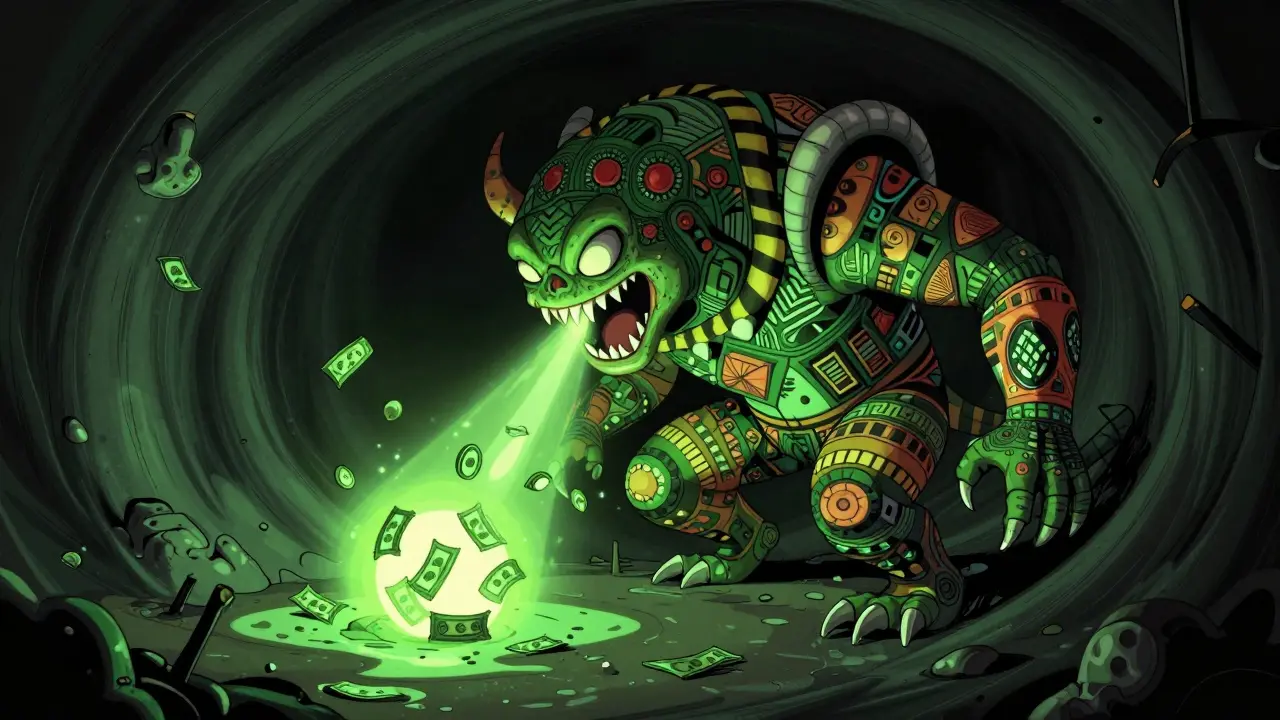
Analyzing the Red Flags on Market Data Sites
Before 2023, many people trusted price aggregation sites blindly. By the time this became widely documented, data quality had improved, but gaps remain. You can often spot the deception by looking at the numbers on sites like CoinMarketCap. If a project claims to be affiliated with a major brand but shows impossible metrics, it is a lie. For instance, listings for [Fake]COINBASE often display contradictory data. One record might claim a market cap of billions, while another lists the circulating supply as zero.
Here is what to check when you encounter suspicious assets:
- Volume Discrepancies: Look at the trading volume. If the daily volume is zero for days but the chart looks active, someone is faking the data.
- Supply Issues: A circulating supply of 0 is physically impossible for a tradeable asset. This happens because the token was created but never genuinely distributed; it sits entirely in the scammer's hand.
- Future Dated History: Some scam listings predict "all-time high" dates in the future. Legitimate charts only record past performance. Seeing a date like August 2025 marked as a peak on a 2026 view suggests pre-scripted lies.
- Description Plagiarization: Copy-pasted descriptions from the real company's website (e.g., "building the cryptoeconomy") used to describe a random contract address are a dead giveaway.
Security researchers noted that identical scam patterns appeared across different tokens. They often share the same developer wallets or code structures. Even if the name changes slightly from "COINBASE" to "FAKE COINBASE TOKEN," the underlying code is often identical to previous confirmed scams. Blockchain forensics firms have tracked hundreds of these variants using shared smart contract bytecode.

How the Liquidity Trap Works
You might wonder how the price even goes up initially. This involves what experts call "wash trading." Scammers simulate their own buying and selling activity to make the token look popular. This artificial demand tricks genuine buyers into joining. Once enough real money enters the ecosystem, the liquidity pool is drained.
In typical scenarios documented by forensic firms, the lifespan of these scams is incredibly short. Most disappear within 26 hours of launching. Victims attempt to sell their holdings, only to find that there is no more money in the pool to take out against their tokens. The smart contract locks everything in place. Recovery rates for these incidents are abysmal. Forensic investigations suggest less than 5% of victims ever recover stolen funds through legal or technical means.
The cycle continues because the domain costs almost nothing. Setting up a deceptive listing on a minor aggregator costs fractions of a dollar compared to the millions taken in. With the rise of AI-generated marketing materials, scammers can now produce deep-fake videos of executives promoting these fake assets. The sophistication of these attacks increased significantly around late 2023, making vigilance harder but more necessary than ever.
Recovering From Exposure and Preventing Future Losses
If you already purchased this token, acting fast is critical. Unfortunately, once a transaction is confirmed on a blockchain like Ethereum, it cannot be reversed. There is no customer support button for a decentralized scam. However, you can file reports with authorities. The FTC tracks crypto fraud complaints and aggregates data to build cases against large networks. Documenting your transaction hash and screenshots of the listing helps investigators link different scam groups together.
For prevention, the best defense is verification. Always check the official website of the company you are interested in. If Coinbase issued a token, it would be announced on their verified security blog and main homepage. Relying on third-party news or social media hype is where risk begins. Use hardware wallets for storage, enabling you to sign transactions only after verification. Never connect your wallet to unknown contract interfaces, and treat any "guaranteed return" promise as immediate proof of fraud.
Education is your strongest shield. Understanding that major exchanges generally do not compete with themselves via tokens prevents you from falling for bait. Stick to regulated investment vehicles for long-term holding and treat every unknown token as high-risk speculation until proven otherwise.


11 Comments
🚨 everyone needs to wake up regarding this token mess 🚨 these scammers are absolutely crazy 🤯 dont trust anyone with your hard earned cash 🔥 it looks so obvious when you see the word fake right there 💀 the market is full of trash like this 🗑️ just walk away before you get burned 😡 safety is number one priority always 🛡️
Scam or not people will still lose money anyway.
The fundamental issue with trust in decentralized environments requires a deep dive into human psychology. We often mistake convenience for security in modern financial systems. History has shown us repeatedly that greed blinds the rational mind during speculative bubbles. When a project brands itself as fake, the irony suggests a deliberate psychological trap for the unwary investor. Legitimate institutions work tirelessly to avoid negative branding or public distrust. This specific token strategy relies entirely on confusion rather than actual utility or value creation. The absence of regulatory oversight creates a vacuum where predators thrive without consequence. Investors frequently ignore basic due diligence in favor of potential high returns. Understanding contract mechanics is essential for anyone operating in this volatile space. Without proper verification steps, funds become irrecoverable once sent to the blockchain. The technical architecture of these contracts allows for immediate liquidity drainage. Smart contracts execute exactly as written regardless of ethical considerations. Protecting oneself means understanding the underlying code before executing transactions. Regulatory frameworks exist to prevent exactly this type of systemic fraud and theft. Real ownership rights require legal backing which digital tokens currently lack. Until laws catch up to technology, caution remains the only viable defense against these schemes.
You have articulated the risks very clearly here and I appreciate that perspective. Staying informed is the best way to keep your portfolio safe from such manipulations. Always verify source material before trusting any external listing or claim. Your analysis highlights exactly what new investors tend to miss completely. Keep spreading awareness because it helps others avoid making costly mistakes today.
I love how detailed the breakdown was regarding the stock versus token differences. It really clears up a lot of confusion for beginners entering the space. Great effort putting together all those facts about the liquidity traps. Sharing this info widely could save someone thousands of dollars right now. Thanks for keeping the community educated and safe overall.
i feel sory for teh victims thier money is gowe and cant get back :( so scamy of the bad peopl doing this stuff :// hope they go to jail soon for taking all ur hard work mannnn
This is so sad i am crying rn 😭 why do bad guys do this to poor people trying to invest their life savings??? I cannot believe how low these criminals have sunk for profit. My heart hurts for the families losing everything to this fake coin. Nobody deserves to have their trust broken like this in such a cruel way. Please stay safe out there while we wait for justice to prevail someday.
security is paramount you must protect self always remember to check official channels first before buying anything online verification saves lives literally nobody likes getting robbed blindfolded so please stay vigilant and sharp
maybe we just dont care about your problems anymore american way is better than chasing junk coins on foreign chains why do people think rich people want to help them it is pure stupidity most of the time lol
its okay to feel down but you gotta keep pushing forward friendssss 💪 learning from pain makes you stronger in the end hope you find better paths ahead never give up on yourself okie dokie things get better sometimes ✌️
Whilst the situation appears dire, vigilance remains our primary tool for mitigation against such fraudulent activities. Education serves as the strongest barrier against future exploitation by malicious actors. We must remain composed and analytical when evaluating new asset classes presented in the market. Adhering to established protocols ensures long-term preservation of capital for all participants involved.