Proof of Work: How Bitcoin Mining Actually Works and Why It Still Matters
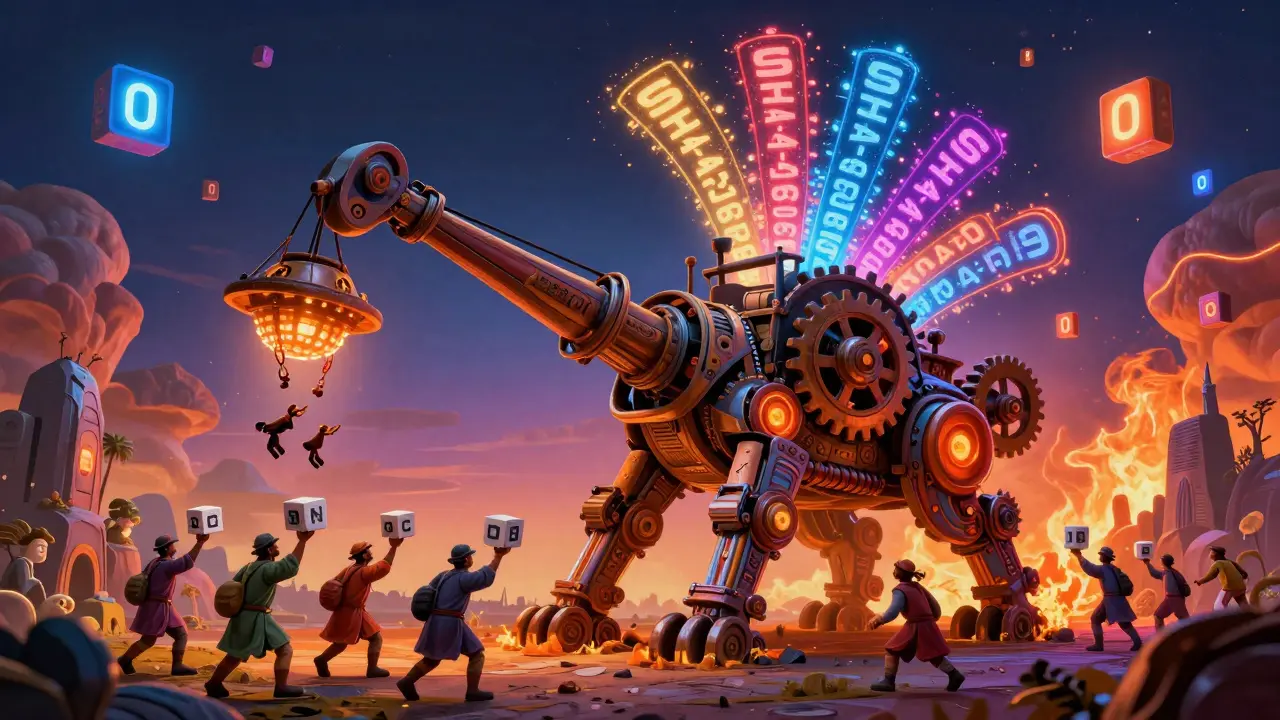
When you hear Proof of Work, a consensus mechanism that secures blockchain networks by requiring computational effort to validate transactions. Also known as PoW, it’s the original engine behind Bitcoin and the reason why mining exists at all. It’s not magic—it’s math, electricity, and hardware working together to stop fraud. Every time a new block is added to Bitcoin’s chain, miners compete to solve a complex puzzle. The first one to crack it gets rewarded in Bitcoin. This process isn’t just about rewards—it’s about security. Without Proof of Work, anyone could rewrite history on the blockchain. With it, tampering requires more computing power than the entire network combined, which is nearly impossible.
Proof of Work doesn’t exist in a vacuum. It’s tied to Bitcoin mining, the process of using specialized hardware to validate transactions and earn new Bitcoin as a reward, which has become a global industry dominated by massive data centers in places like Texas and Kazakhstan. For most people, mining Bitcoin with a regular computer is pointless now. The hardware—ASIC miners, specialized machines built only for mining cryptocurrencies using Proof of Work—cost thousands and use as much power as a small appliance. That’s why many newer blockchains, like Ethereum after its 2022 upgrade, ditched Proof of Work entirely for something less energy-heavy. But Bitcoin holds on. Why? Because it’s proven. No one has hacked it. No one has tricked it. And it’s still running after 15 years.
Proof of Work also connects to how people trade and store value in places where banks won’t help. In countries like Russia, Iran, or Algeria, where banking systems are restricted or broken, crypto mining and trading become survival tools. Miners in these regions often use cheap electricity or hidden P2P networks to keep going. Meanwhile, scams try to copy the idea—fake mining apps, fake airdrops, fake tokens that promise easy rewards. But real Proof of Work doesn’t give away free coins. It demands work. And that’s why it still works. The posts below show you how mining is changing, where it’s still profitable, and what alternatives are rising. You’ll see real examples of people mining altcoins like Monero, how energy bans in Kosovo affected miners, and why North Korea steals crypto instead of mining it. This isn’t theory. It’s what’s happening right now.