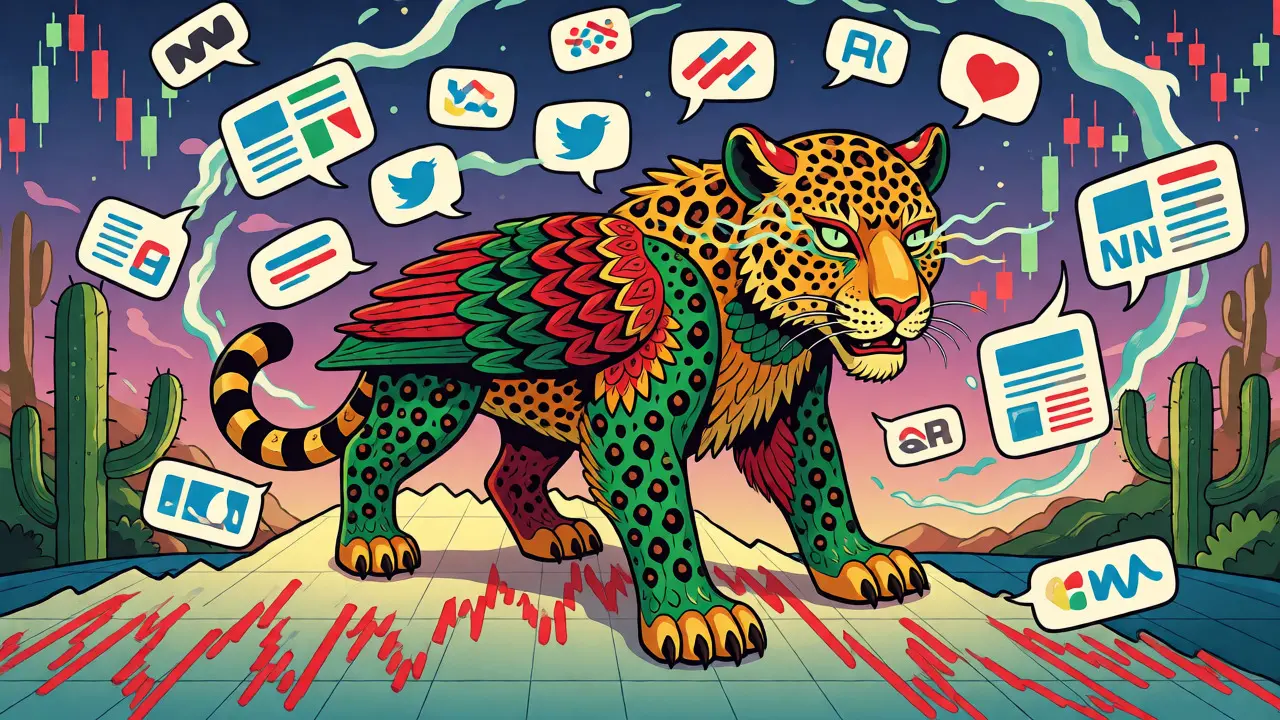

Imagine you are watching a stock chart. The price is flat, but something feels off. Then, suddenly, it crashes. If you were relying solely on moving averages or RSI, you likely missed the warning signs because those indicators lag behind reality. But what if you could hear the market whispering its fears before they screamed? That is the promise of sentiment analysis. It is the computational process of scanning millions of words-from tweets to news articles-to determine whether investors feel optimistic or pessimistic about an asset. Unlike traditional technical analysis that looks at what happened, sentiment analysis tries to predict what will happen by measuring human emotion.
Why Emotions Move Markets More Than Math
Markets are not efficient machines; they are collections of humans making decisions based on fear and greed. When you strip away the algorithms, trading is psychological. Sentiment analysis quantifies this psychology. For instance, research from Charles Schwab shows that when the American Association of Individual Investors (AAII) reports bullish sentiment above 55%, the market hits a top in nearly 78% of cases between 2000 and 2022. This isn't just noise; it's a pattern. By tracking these emotional extremes, traders can spot inflection points before they appear on a candlestick chart.
The core value here is early detection. Traditional fundamental analysis tells you if a company is healthy. Technical analysis tells you where the price has been. Sentiment analysis tells you how people feel about the future. In the crypto world, this is even more critical. Bitcoin and altcoins often move based on hype cycles rather than earnings reports. A sudden spike in positive mentions on Reddit or Twitter can precede a price surge by days. Remember the GameStop squeeze? Retail sentiment on WallStreetBets hit extreme bullish levels 14 days before the stock surged 1,700%. If you had been monitoring that sentiment stream, you wouldn't have been left holding the bag-or worse, shorting into a hurricane.
How the Technology Actually Works
You might wonder how a computer understands sarcasm or hype. It uses Natural Language Processing (NLP). Tools like NLTK, spaCy, and TensorFlow break down text into tokens, identify entities (like "Bitcoin" or "Tesla"), and assign a numerical score to the mood. Positive scores indicate bullishness; negative scores indicate bearishness.
Vendors like Sentdex and PsychSignal process massive volumes of data. Sentdex, for example, analyzes about 4,000 news sources and 10 million social media posts daily. They generate sentiment scores for over 5,000 U.S. equities with a latency of under five minutes. This speed matters. In high-frequency trading, being five minutes late means missing the move entirely. These systems create date-entity-sentiment tuples, which are essentially timestamps linked to specific assets and their emotional weight. This structured data allows algorithms to trigger buy or sell orders automatically when sentiment crosses predefined thresholds.

Key Metrics and Where to Find Them
You don't need to build your own NLP engine to use sentiment analysis. Several established metrics help gauge market mood. Here is a breakdown of common tools and what they tell you:
| Indicator | Source Type | Best Use Case | Reliability Note |
|---|---|---|---|
| CNN Fear & Greed Index | Composite (Volatility, Momentum) | Identifying extreme market tops/bottoms | Readings >80 preceded S&P 500 corrections in 83% of cases since 2015 |
| AAII Sentiment Survey | Weekly Investor Poll | Contrarian trading at extremes | Bullish readings >55% often signal market tops |
| VIX (Volatility Index) | Options Pricing | Measuring immediate fear | Spikes above 30-40 indicate panic; useful for timing entries |
| Social Media Volume | Twitter/X, Reddit, Telegram | Crypto-specific hype cycles | High volume + positive tone = potential breakout; beware bots |
Notice the difference between the VIX and social media volume. The VIX measures institutional fear through options pricing, while social media captures retail enthusiasm. In crypto, retail drives the bus more often than institutions do. Therefore, ignoring social sentiment in favor of only traditional indices can lead to missed opportunities in digital assets.
Strategies That Actually Work
Blindly buying when sentiment is high usually leads to losses. You end up buying at the top. Instead, successful traders use sentiment as a contrarian indicator or a confirmation tool. Dr. Richard Peterson, CEO of MarketPsych, emphasizes that sentiment works best at extremes. When everyone is euphoric, be cautious. When everyone is terrified, look for bargains.
One effective method is the "sentiment divergence" strategy. This occurs when the price makes a new high, but sentiment fails to reach new bullish extremes. This disconnect suggests the rally is running out of steam. Backtests on S&P 500 futures from 2015 to 2022 showed a 62% win rate for trades entered on this signal. Another approach is mean reversion. If sentiment drops into the bottom 10% percentile, historical data suggests prices often bounce back. A user on Reddit documented a strategy using Sentdex data that generated 18.7% annualized returns by buying stocks with the lowest sentiment scores and selling those with the highest.
However, context is king. During major macroeconomic shifts, like the March 2020 crash, sentiment indicators failed. Fear remained high, but markets kept falling due to fundamental uncertainty. In such cases, sentiment becomes noise. Always combine sentiment signals with price action confirmation. Don't trade sentiment alone; trade sentiment plus support/resistance levels.
Pitfalls and How to Avoid Them
Not all data is created equal. Social media is rife with bots and coordinated manipulation. A 2023 MIT study found that 41% of retail investor sentiment on social platforms is manipulated by coordinated groups. If you see a sudden spike in positive tweets about a small-cap coin, check who is tweeting. Are they real users or sock puppets? Advanced tools now incorporate fraud detection, but manual verification helps.
Another trap is overfitting. It is easy to tweak your algorithm until it looks perfect on past data. You might set a threshold of 75.2% bullish sentiment to trigger a buy. But next month, that number might be irrelevant. Keep your rules simple. Use broad percentiles (top 10%, bottom 10%) rather than precise decimal points. Also, consider the cost. Premium feeds like Sentdex can cost $499 per month. For a beginner, free indicators like the Fear & Greed Index or basic Twitter searches provide sufficient insight without breaking the bank.
The Future of Sentiment in Crypto
We are entering an era of multimodal analysis. It’s no longer just about text. J.P. Morgan launched Speech Analytics that analyzes CEO tone during earnings calls, improving prediction accuracy by 12%. In crypto, this translates to analyzing Discord voice chats or YouTube influencer videos. Generative AI models like Accern’s SentimentGPT claim 28% higher accuracy in detecting nuanced sentiment. As these tools become cheaper and more accessible, the edge provided by sentiment analysis may diminish. However, the ability to interpret cross-asset contagion-how bad news in tech stocks affects Bitcoin-will remain valuable.
For now, sentiment analysis is a powerful co-pilot. It won't replace your risk management plan, but it adds a layer of behavioral insight that pure numbers miss. Start small. Track one asset. Monitor its social mentions alongside its price. Look for divergences. Over time, you’ll develop an intuition for when the crowd is wrong-and when they’re right.
Is sentiment analysis better than technical analysis?
Neither is strictly "better." They serve different purposes. Technical analysis tracks price history, which lags. Sentiment analysis tracks current emotions, which can lead price changes. The most robust strategies combine both. Use technicals for entry/exit points and sentiment for confirming the trend strength or spotting reversals.
Can I use free tools for sentiment analysis?
Yes. The CNN Fear & Greed Index, AAII surveys, and VIX are free. For crypto, you can manually monitor Twitter hashtags or Reddit threads. While paid services offer faster data and deeper coverage, free tools are sufficient for swing traders who don't need millisecond latency.
How does bot manipulation affect sentiment signals?
Bots can create false positives by spamming positive comments. This inflates sentiment scores artificially. To mitigate this, look for quality over quantity. Check if the accounts posting are established users or new accounts. Some advanced vendors filter out low-quality accounts, but manual scrutiny remains important for smaller assets.
Does sentiment work for long-term investing?
Less so. Sentiment is noisy in the short term. For long-term investing, fundamentals matter more. However, extreme sentiment levels can still signal multi-year tops or bottoms. For example, extreme euphoria in 2017 and 2021 marked significant cycle peaks for Bitcoin. Use sentiment for tactical adjustments, not strategic allocation.
What is the biggest mistake beginners make with sentiment?
Chasing the herd. Beginners often buy when sentiment is already extremely positive, assuming the momentum will continue. Historically, extreme positivity often precedes a correction. Sentiment is most profitable when used as a contrarian indicator-buying when others are fearful and selling when others are greedy.