

You probably saw the notification pop up on your phone or social feed: Pax.World is dropping NFTs. Maybe you clicked through, followed their Twitter, joined the Discord, and connected your Polygon wallet, hoping for a slice of the next big metaverse pie. But before you get too excited about free money or digital land, let’s pause. The reality of Pax.World (PAXW) in late 2026 looks less like a booming startup and more like a ghost town. If you are wondering whether this airdrop is worth your time or if it signals a revival, the answer requires digging past the marketing hype into cold, hard data.
What Actually Happened With Pax.World?
Pax.World launched with high ambitions back in April 2022, pitching itself as a decentralized virtual world where users could own, build, and govern their own internet space. They held an Initial Coin Offering (ICO), selling 10% of their total supply-100 million tokens-at $0.049 each. That raised just $50,000. To put that in perspective, legitimate metaverse competitors like The Sandbox raised millions in similar phases. This low raise was the first red flag, but at the time, the promise of early access to "Citizens" kept hopes alive.
The core idea was simple: use the PAXW token within a blockchain-based ecosystem running on the Polygon network. Users were promised staking rewards, governance rights, and eventually, NFTs representing land or assets. However, fast forward to today, October 2026, and the situation has deteriorated significantly. According to ICO Drops data, the project showed "no activity on social networks" since July 1, 2023. That is over three years of silence from a team that claimed to be building the future of the web.
The NFT Airdrop: Real Opportunity or Zombie Protocol?
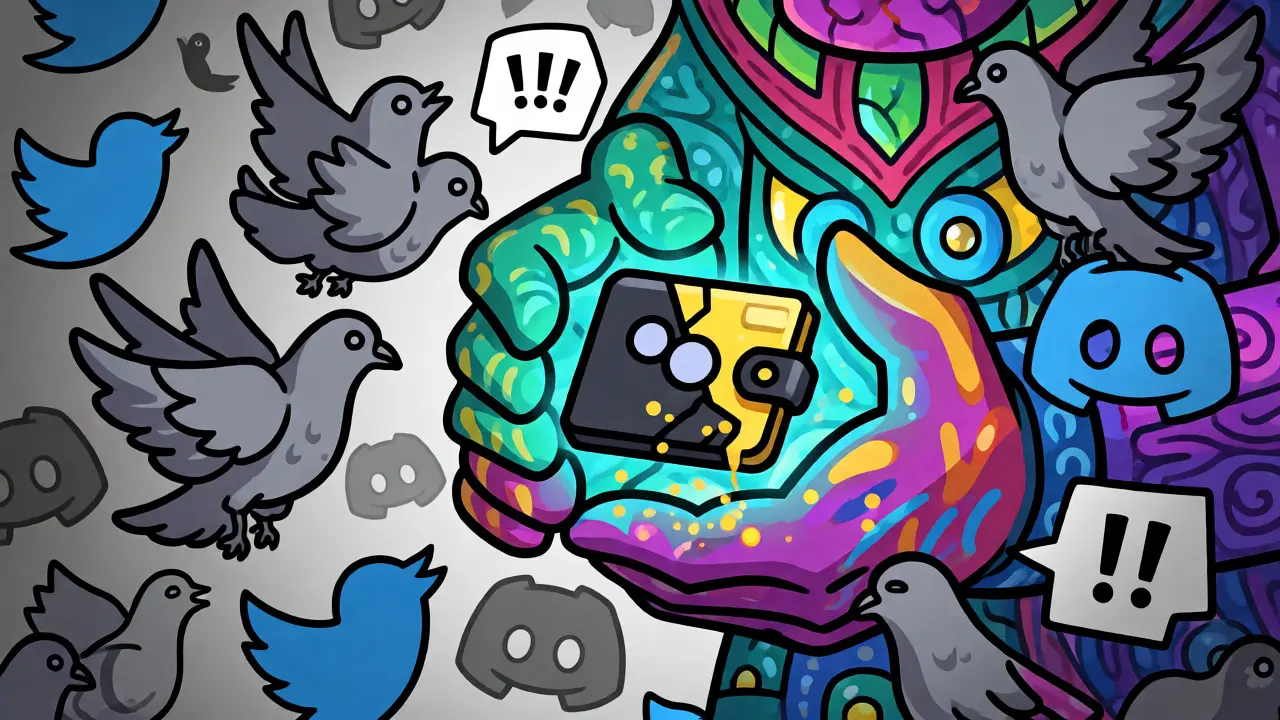
So, why are people still talking about a Pax.World NFT airdrop? Some listings, including those on CoinMarketCap Academy, mentioned a campaign offering 1,050 NFTs to engaged users. Participants were told they could win up to one NFT by completing tasks. These tasks typically involved following @PAXworldteam on Twitter, retweeting posts, joining their Discord and Telegram channels, and submitting a Polygon wallet address.
But here is the catch: many of these listings appear outdated or disconnected from actual development progress. There is no verifiable evidence that these NFTs ever landed in user wallets in any meaningful quantity. Community feedback from platforms like Reddit and Trustpilot paints a grim picture. One user on r/CryptoAirdrops noted, "Avoided Pax.World - never received promised tokens after completing all airdrop tasks," a sentiment echoed by dozens of others. The project currently holds a dismal 1.2/5 rating on Trustpilot, with common complaints labeling it a "Ghost project" or "Wasted time."
| Feature | Pax.World (PAXW) | Decentraland (MANA) | The Sandbox (SAND) |
|---|---|---|---|
| Initial Funding Raised | $50,000 | $29.6 Million | $93 Million |
| Development Activity (2023-2026) | None / Silent | Active Updates | Active Updates |
| Token Price Decline (from ICO) | >98% | Variable | Variable |
| User Sentiment | Negative / Skeptical | Mixed / Active | Mixed / Active |
Why Did the Project Stall?
Several factors contributed to Pax.World's stagnation. First, the lack of transparency. The team behind the project remained anonymous, with no verifiable founder information or public GitHub repositories for independent code review. In the crypto world, "trust but verify" is the golden rule. When you can't verify the code or the team, risk skyrockets.
Second, the market shifted. The metaverse boom of 2021-2022 cooled rapidly during the 2022 crypto winter. Investors became skeptical of projects without functional products. While Decentraland reported thousands of daily active users in 2024, Pax.World had zero verifiable user metrics. Dr. Michael Le, a blockchain security expert, noted in a 2024 interview that projects with under $1 million in initial funding and no technical documentation rarely deliver functional products. Pax.World fits this description perfectly.
Third, the token economics failed. The PAXW token price crashed from its ICO price of $0.049 to roughly $0.0007182 by mid-2024, a decline of over 98%. Without liquidity or trading volume, the token became virtually untradeable on major exchanges. For participants who bought in expecting short-term gains, this was a painful lesson in illiquidity.
Should You Participate in Current Airdrops?
If you see a new listing for a Pax.World airdrop today, proceed with extreme caution. Here is a quick checklist to help you decide:
- Check the Source: Is the airdrop listed on official exchange pages like Binance or Coinbase? Or is it only on third-party aggregator sites? Third-party listings often recycle old campaigns.
- Verify Wallet Connections: Never connect your main hardware wallet to unknown dApps. Use a fresh, empty hot wallet for airdrop interactions to limit exposure to phishing attacks.
- Look for Recent News: Has the project posted anything on Twitter or Discord in the last six months? If not, assume it is inactive.
- Assess Time vs. Reward: Spending 15 minutes clicking buttons for a chance at a worthless token might not be worth it when you consider the mental load and potential security risks.
The primary risk isn't just losing money; it's losing time and exposing your wallet to potential malicious contracts. Since Pax.World lacks a functional platform, there is no "in-world" utility for the tokens or NFTs yet. You aren't buying into a working economy; you're speculating on a revival that hasn't happened in three years.

Lessons from the Pax.World Case Study
Pax.World serves as a textbook example of what happens when hype outpaces substance. It highlights the importance of due diligence in crypto investing. Don't just look at the whitepaper promises; look at the developer activity. Look at the community engagement. Look at the funding sources.
For beginners, this reinforces a key heuristic: if a project raises very little capital ($50k is negligible for a tech startup) and remains silent for long periods, it likely won't survive. Legitimate projects communicate regularly, even when things are tough. Silence usually means trouble.
As of October 2026, industry analysts categorize projects like Pax.World as "zombie protocols." Messari’s Ryan Selkis noted that projects with no development activity for 18+ months have a 99.7% failure rate for revival. Unless Pax.World suddenly announces a major partnership or a fully functional beta launch, treat any remaining airdrop claims with healthy skepticism.
Frequently Asked Questions
Is Pax.World a scam?
While not necessarily a traditional "scam" where funds were stolen immediately, Pax.World exhibits many characteristics of a failed venture or "rug pull" by neglect. The project raised minimal funds, delivered no functional product, and abandoned communication channels. Many users report never receiving promised airdrops, leading to widespread accusations of deceptive practices.
Can I still trade PAXW tokens?
Trading PAXW is extremely difficult. The token has negligible liquidity and is not listed on major centralized exchanges like Binance or Coinbase. It may appear on smaller decentralized exchanges (DEXs) on Polygon, but slippage and low volume make buying or selling large amounts impractical. Most holders are effectively stuck with their tokens.
Did the Pax.World NFT airdrop actually happen?
There is limited evidence of successful, widespread NFT distribution. While some promotional campaigns listed 1,050 NFTs for CoinMarketCap users, many participants reported non-delivery. Without a functioning marketplace or clear proof-of-ownership records on-chain, verifying receipt of these NFTs is challenging for the average user.
What blockchain does Pax.World use?
Pax.World operates on the Polygon blockchain network. This choice was made to leverage lower transaction fees compared to Ethereum Mainnet. Participants in the airdrop needed a Polygon-compatible wallet, such as MetaMask configured for the Polygon network, to receive rewards.
Is there any hope for a Pax.World revival?
The chances are slim. The project has been silent since mid-2023. In the fast-moving crypto sector, three years of inactivity is essentially fatal. Unless the anonymous team returns with significant new funding and a transparent roadmap, a revival is unlikely. Treat any news of a comeback as highly speculative until proven by code commits and community activity.


1 Comments
Great article, saved me the trouble of checking their Discord myself.