

Remember when you could trade crypto without jumping through five hoops of identity verification? For a while, that dream seemed alive on platforms like xExchange, which is the upgraded version of Maiar DEX (Maiar DEX 2.0) built by the team behind MultiversX. It promised speed, privacy, and a bridge to the next billion users in the digital economy. But after a massive security breach and a complete rebuild, the question isn't just whether it works-it's whether it still fits your needs in 2026.
If you are looking for a place to buy Bitcoin with a credit card or trade stocks alongside crypto, stop reading now. This platform is not for you. xExchange is a specialized tool for people who already live in the MultiversX ecosystem and want to trade decentralizedly with minimal friction. Here is what you need to know before you connect your wallet.
The Short Version: Who Should Use xExchange?
- Best for: Existing MultiversX users who want fast, low-fee swaps within the ecosystem.
- Avoid if: You need mobile access, fiat on-ramps, or support for major coins like BTC and ETH directly.
- Key Risk: The platform suffered an $113 million loss in a previous hack; while rebuilt, trust takes time to restore.
- Fees: Competitive at 0.3% per transaction, but watch out for the 1% early withdrawal penalty.
What Exactly Is xExchange?
xExchange is not a standalone startup. It is the evolution of Maiar DEX, the original decentralized exchange on the MultiversX blockchain. Think of it as a major software update-version 2.0-that keeps the core mission but changes how things work under the hood. The developers, led by the same team that created the MultiversX protocol (formerly known as Elrond Network), wanted to solve two big problems: speed and scalability.
Most decentralized exchanges (DEXs) choke when traffic spikes. Transactions slow down, fees skyrocket, and the user experience becomes painful. xExchange avoids this by using State Sharding, which is a technology that splits the network into smaller parts to process transactions in parallel. Imagine a highway where instead of one lane handling all cars, there are ten lanes working simultaneously. That is state sharding. It allows the network to handle thousands of transactions per second without clogging up.
The platform is secured by 3,200 nodes, which is a robust number for a Layer 1 blockchain. This means the network is decentralized enough to resist attacks but coordinated enough to move fast. However, this technical strength comes with a trade-off: complexity. You cannot just download an app and start trading. You need to understand wallets, gas fees (called "gas" or transaction costs here), and the specific tokens available on MultiversX.
The Elephant in the Room: Security and the $113 Million Hack
We cannot talk about xExchange without addressing the incident that shook the community. In the past, a vulnerability in the original Maiar DEX contract led to a loss of approximately $113 million worth of EGLD tokens. For any investor, hearing that number makes you nervous. It is valid to be cautious.
However, context matters. The MultiversX labs did not sweep this under the rug. They paused operations, conducted extensive audits, and rebuilt the core infrastructure. The current xExchange is technically a new product running on hardened code. Experts from firms like BitEdge have noted that the post-hack security measures are among the most comprehensive in the DeFi space right now. Phishing warnings are prominently displayed, and the smart contracts have been re-verified by multiple third-party auditors.
Does this mean it is 100% safe? No crypto platform is. But it does mean the team has skin in the game and has demonstrated the ability to respond critically to failures. When you use xExchange today, you are using a system designed specifically to prevent the type of exploit that caused the previous loss.

User Experience: Simple Setup, Steep Learning Curve
Let’s be honest about the interface. If you are used to Coinbase or Binance, xExchange will feel sparse. There is no flashy dashboard showing your net worth across multiple chains. There is no customer support chatbot waiting to help you reset your password. Instead, you get a clean, functional window for swapping tokens.
The setup process is straightforward if you already have a Web3 wallet compatible with MultiversX, such as the Maiar Wallet or Ledger. You connect your wallet, select the token pair, and confirm the swap. The documentation provided by xExchange is actually quite good, offering step-by-step guides for newcomers. But "newcomer" here means someone new to *this* platform, not necessarily new to crypto.
Here is where many users hit a wall: the lack of a mobile application. As of mid-2026, xExchange operates primarily through web browsers. While the site is responsive, managing complex DeFi positions on a phone screen without a dedicated app is cumbersome. If you trade on the go during your commute, this limitation might dealbreaker for you.
Fees and Costs: What You Actually Pay
One of the strongest arguments for using xExchange is the cost structure. Traditional centralized exchanges often charge between 0.1% and 1% for trades, plus hidden fees for withdrawals and deposits. xExchange charges a flat 0.3% fee per transaction. This is competitive, especially when you factor in that you are avoiding the spread markup that centralized exchanges often hide in their prices.
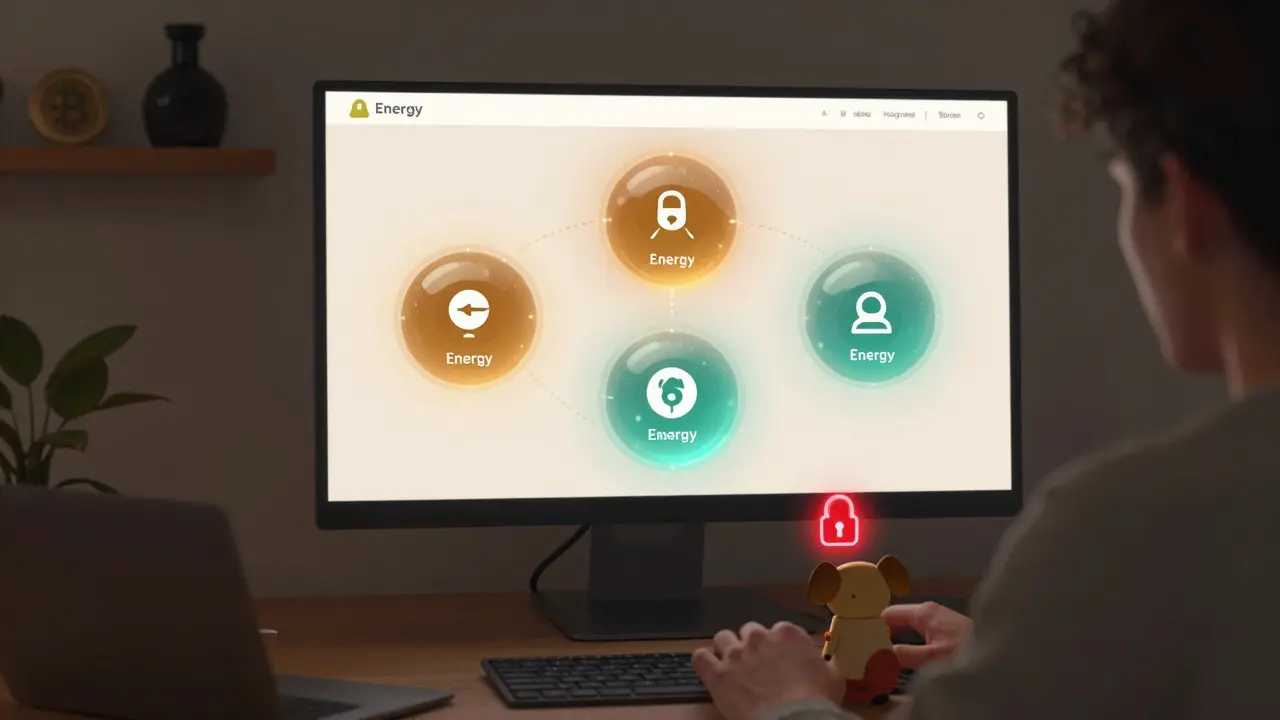
However, there is a catch. The platform introduces a concept called "Energy" tied to its governance token, EGLD. To earn rewards or access certain features, you may need to stake or lock up tokens. If you withdraw these locked assets early, you face a 1% penalty. This is significant. If you are planning to park funds for a quick flip, calculate whether the potential gains outweigh this penalty. For long-term holders, the energy mechanism can boost yield, but it requires patience.
| Feature | xExchange (DeFi) | Coinbase (CeFi) | Binance US (CeFi) |
|---|---|---|---|
| Trading Fee | 0.3% | 0.5% - 1.49% | 0.1% - 0.5% |
| Crypto Selection | Limited (MultiversX Ecosystem) | 235+ Coins | 158+ Coins |
| KYC Required? | No (Non-custodial) | Yes | Yes |
| Mobile App | No (Web Only) | Yes | Yes |
| Margin Trading | No | Yes | Yes |
| Asset Custody | You hold keys | Exchange holds keys | Exchange holds keys |
Limited Coin Selection: A Niche Play
This is the biggest drawback for mainstream traders. xExchange does not list Bitcoin, Ethereum, or Solana natively in the way you expect. It focuses on tokens within the MultiversX ecosystem. You will find EGLD, various DeFi governance tokens, and project-specific assets launched on the chain.
Why do they do this? Because bridging assets from other chains adds complexity and risk. By staying native, xExchange ensures maximum speed and lower fees. But if your portfolio is heavy on BTC or ETH, you will first need to bridge those assets to MultiversX using a separate bridge service. This extra step introduces another point of failure and additional learning. For a beginner, this friction is often too much. For a DeFi veteran, it is a manageable inconvenience for better rates.
The "Energy" Concept: More Than Just Hype
xExchange introduced a unique mechanic called "Energy." In traditional finance, you earn interest on cash. In DeFi, you earn yield by providing liquidity or staking. Energy ties these concepts together with a time-lock mechanism. Essentially, the longer you commit your tokens to the ecosystem, the more "energy" you generate, which can unlock higher yields or governance power.
This discourages short-term speculation and rewards loyalty. It aligns the interests of traders with the health of the network. However, it also means your capital is less liquid. You cannot instantly pull out and run if the market dips without potentially losing value due to the early withdrawal penalty. Understand this before you lock in large amounts.
Verdict: Is xExchange Right for You?
xExchange is a powerful tool for a specific audience. If you are deeply invested in the MultiversX ecosystem, want to avoid KYC checks, and prioritize low fees and high speed, it is one of the best options available. The rebuild after the hack has strengthened its reputation, and the state sharding technology delivers on its promise of performance.
But if you are a casual trader who wants to buy Bitcoin with a debit card, trade on your phone, or access hundreds of different coins, look elsewhere. Platforms like Coinbase, Kraken, or Uphold offer the convenience and breadth you need, even if they charge higher fees and require identity verification. xExchange is not trying to be everything to everyone. It is a specialist, and like all specialists, it excels in its lane but fails outside of it.
Is xExchange safe after the hack?
While no platform is immune to risks, xExchange has undergone a complete rebuild following the previous security incident. MultiversX Labs implemented enhanced security protocols, third-party audits, and improved smart contract architecture. The current version is considered secure by industry standards, but users should always practice good hygiene, such as using hardware wallets and verifying URLs.
Can I trade Bitcoin or Ethereum on xExchange?
Not directly. xExchange focuses on the MultiversX ecosystem. To trade BTC or ETH, you would first need to bridge these assets to the MultiversX chain using a cross-chain bridge. This adds steps and potential risks. For direct BTC/ETH trading, centralized exchanges or DEXs on Ethereum/Layer 2 networks are more suitable.
Does xExchange require KYC (Know Your Customer)?
No. As a decentralized exchange (DEX), xExchange is non-custodial. You connect your own wallet, so you retain control of your private keys. There is no need to submit ID documents or personal information, offering greater privacy compared to centralized exchanges like Coinbase or Binance.
Why is there no mobile app for xExchange?
Currently, xExchange is optimized for web browsers. The development team has prioritized core functionality and security over mobile development. Users can access the platform via mobile browsers, but the experience is not as seamless as a native app. This remains a common complaint among users seeking on-the-go trading capabilities.
What is the 1% early withdrawal penalty?
This penalty applies to the "Energy" feature, where users lock tokens to earn rewards. If you withdraw your staked or locked tokens before the designated time period ends, a 1% fee is deducted. This mechanism encourages long-term holding and stability within the ecosystem. Always check the lock-up terms before committing funds.
How does State Sharding improve trading?
State Sharding divides the network into smaller segments (shards) that process transactions in parallel. This prevents congestion and allows for faster transaction speeds and lower fees, even during high demand. For traders, this means quicker swaps and reduced slippage compared to non-sharded blockchains.