
You might have stumbled upon the name Rook while scrolling through old DeFi charts or digging into niche cryptocurrency lists. It’s a name that carries a heavy history. Back in early 2021, ROOK was one of the most expensive tokens on the market, briefly trading for over $800 per coin. Today, it looks like a completely different story. If you are wondering what this project actually does, why it crashed so hard, and whether there is any life left in it, you are not alone. Many investors find themselves looking at these "zombie" projects-tokens that once promised to revolutionize finance but now sit in obscurity.
To understand Rook, you have to look past the price chart and look at the technology behind it. This isn’t just another meme coin; it was built for a very specific, complex job in the decentralized finance (DeFi) world. Let’s break down what KeeperDAO is, how the ROOK token works, and why the market has largely moved on from it.
The Core Concept: What is KeeperDAO?
KeeperDAO is an open settlement protocol designed to coordinate algorithmic traders, known as 'keepers,' across decentralized finance protocols to maximize transaction value extraction. Also known as Rook Protocol, it aims to solve a common problem in blockchain networks called the 'prisoner's dilemma' among automated traders.
In simple terms, DeFi relies on bots (keepers) to keep things running smoothly. These bots handle tasks like arbitrage (buying low on one exchange and selling high on another), liquidations (closing undercollateralized loans), and providing liquidity. The problem is that these bots often compete against each other fiercely. They race to be first, burning gas fees and leaving less profit for everyone involved. This competition is inefficient.
KeeperDAO was created to fix this. Instead of letting bots fight in a chaotic free-for-all, the protocol coordinates them. It uses game theory to encourage cooperation. When keepers work together through KeeperDAO, they can extract more value from transactions collectively than they could individually. This extra value comes from something called MEV (Maximal Extractable Value).
Understanding MEV and the Role of ROOK
MEV stands for Maximal Extractable Value. It’s a fancy term for the profit miners or validators make by reordering, inserting, or excluding transactions within a block. For regular users, MEV often shows up as "slippage" or higher costs when you trade large amounts. For sophisticated traders, it’s pure profit.
ROOK Token is the native ERC-20 governance and utility token of the KeeperDAO ecosystem, used for coordinating keepers and distributing profits from MEV opportunities. Built on the Ethereum blockchain, it serves as the incentive layer for the network.
Here is how ROOK fits into the picture:
- Governance: Holders of ROOK can vote on key parameters of the KeeperDAO protocol. This includes setting keeper fees, adjusting liquidity incentives, and deciding on future upgrades. It’s a democratic way to manage the system.
- Profit Distribution: When keepers cooperate and successfully extract MEV, the profits aren’t just pocketed by the fastest bot. A portion is distributed back to the participants in ROOK tokens. This aligns everyone’s interests.
- Coordination Games: The token enables "hiding and coordination games." These are mechanisms that prevent keepers from cheating or free-riding on others’ work. If you want to participate in the profitable coordinated actions, you need to stake or hold ROOK.
The idea was brilliant on paper. By turning competitive MEV extraction into a cooperative effort, KeeperDAO aimed to make DeFi more efficient and profitable for all parties involved, including the protocols themselves.
Tokenomics and Supply Details
If you are considering buying ROOK, understanding its supply dynamics is crucial. Unlike Bitcoin, which has a fixed cap of 21 million, ROOK’s numbers are smaller and have been subject to some confusion across different data providers.
| Metric | Value / Description |
|---|---|
| Blockchain | Ethereum (ERC-20) |
| Total Supply | Approximately 1,226,310 ROOK |
| Circulating Supply | ~617,636 ROOK (as of mid-2024 data) |
| Maximum Supply | Reports vary between 800,000 and 1,500,000 depending on the source |
| Contract Address | 0xfa50...313d4a (on Ethereum) |
The discrepancy in maximum supply figures highlights a common issue with older, less actively maintained projects. Some platforms list 1.5 million as the max, while others say 800,000. However, the circulating supply is relatively consistent around 617k tokens. This means roughly half of the total tokens are in active circulation, while the rest may be locked, burned, or held by the team/foundation.
The low supply was initially seen as a bullish factor. With only ~600k tokens, if demand surged, the price could skyrocket. And indeed, it did-at least for a short time.
Price History: From 0 Highs to Near-Zero Lows
The price action of ROOK is one of the most dramatic stories in crypto history. It’s a classic case of "what goes up must come down," but taken to an extreme.
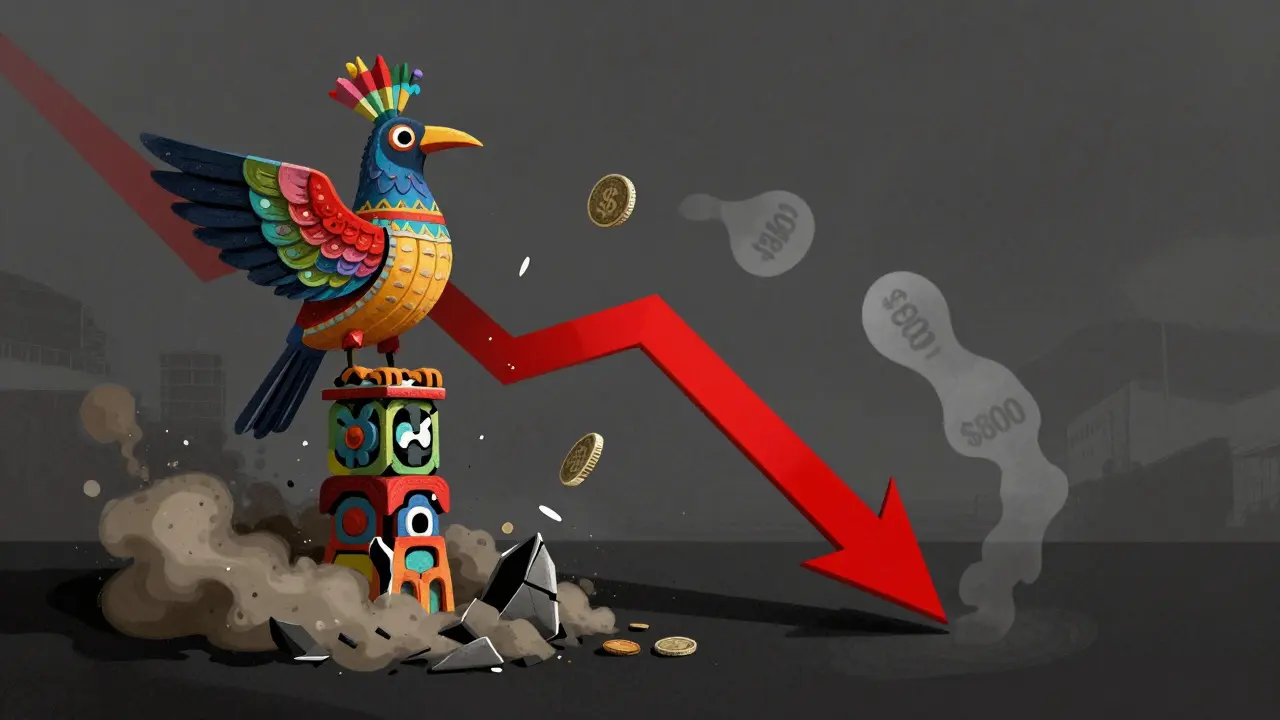
Launched in early 2021 during the peak of the DeFi summer boom, ROOK saw explosive growth. On February 14, 2021, it hit an all-time high of $831.80. At that point, it was one of the highest-priced cryptocurrencies by unit cost. The market capitalization soared to nearly $500 million. Investors were excited about the novel MEV coordination narrative.
Then, the bubble burst. As the broader crypto market cooled down in late 2021 and throughout 2022, ROOK didn’t just dip-it collapsed. Several factors contributed to this:
- Market Sentiment Shift: Risk-on assets like niche DeFi governance tokens were the first to sell off.
- Technical Obsolescence: The Ethereum network evolved. Solutions like Flashbots and EIP-1559 changed how MEV was handled. Many protocols began integrating their own MEV protection, reducing the need for third-party coordinators like KeeperDAO.
- Liquidity Crunch: As interest waned, trading volume dried up. Without buyers, sellers had to accept lower prices, creating a death spiral.
By mid-2024, ROOK was trading for fractions of a cent. Prices ranged between $0.13 and $0.55 depending on the exchange, representing a decline of over 99.9% from its peak. In November 2025, it even touched an all-time low of $0.08. To put that in perspective, if you bought $1,000 worth of ROOK at its peak, it would be worth less than $1 today.
Current Market Status and Liquidity Issues
As of 2026, ROOK is considered a micro-cap asset with extremely low liquidity. Here’s what that means for you as a potential investor:
Trading Volume is Negligible: Recent data shows 24-hour trading volumes as low as $14 to $338. That’s right-a few hundred dollars a day. If you tried to buy or sell a significant amount, you would experience massive slippage. Your order could move the price drastically, resulting in a terrible entry or exit price.
Minimal Community Engagement: The social media presence of KeeperDAO has faded. Twitter accounts show little activity, and Reddit discussions from 2021 are silent. There are only about 16,000 holders left, many of whom are likely "bag holders"-people who bought high and are waiting for a recovery that may never come.
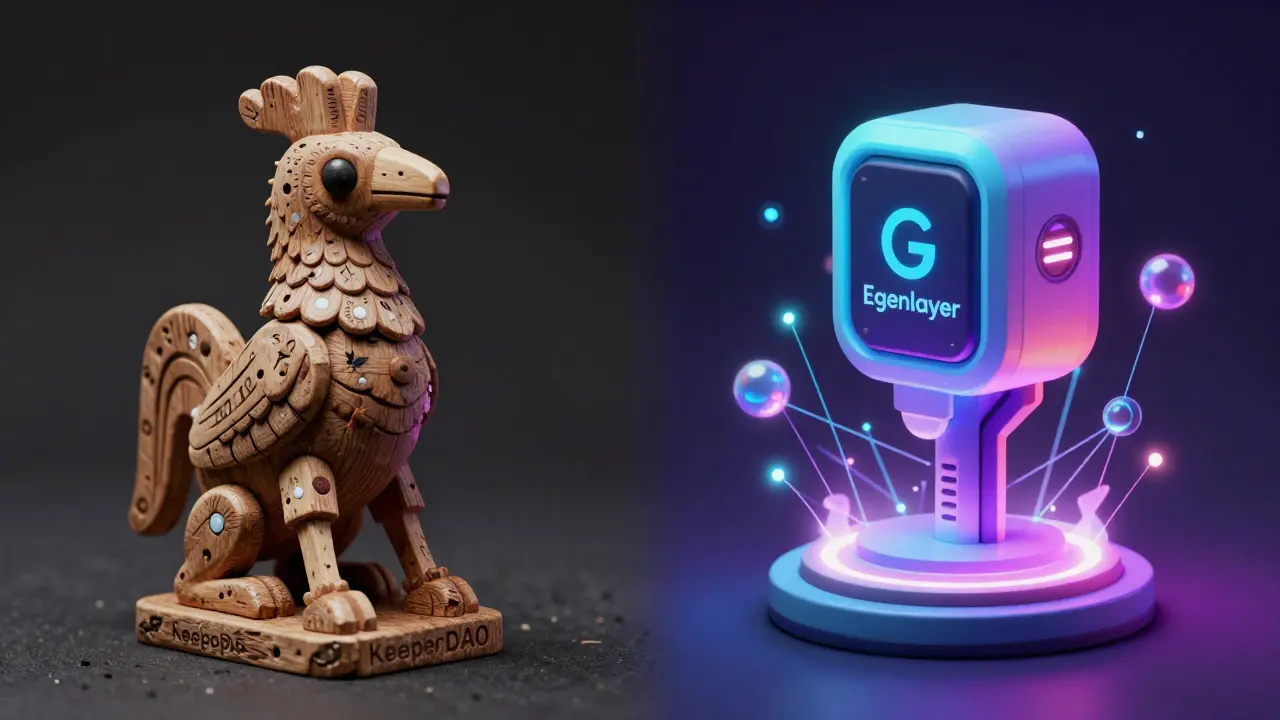
No Active Development: GitHub repositories associated with KeeperDAO show minimal recent updates. In the fast-moving world of DeFi, silence usually means abandonment. Newer projects like EigenLayer have captured the attention of developers and investors interested in restaking and MEV optimization.
Is ROOK Still Relevant? Comparing to Modern Alternatives
If you are interested in MEV and DeFi infrastructure, ROOK is no longer the go-to choice. The landscape has shifted dramatically. Let’s compare ROOK to modern alternatives to see where it stands.
| Feature | Rook (KeeperDAO) | EigenLayer | Flashbots |
|---|---|---|---|
| Primary Function | Coordinated MEV extraction via keepers | Restaking and shared security | Private transaction relay (MEV mitigation) |
| Market Cap | ~$200,000 (Micro-cap) | >$2 Billion (Large-cap) | N/A (Non-tokenized service) |
| Adoption | Very Low / Stagnant | High / Growing rapidly | Industry Standard for Ethereum |
| Development Activity | Minimal / Inactive | High / Active | High / Active |
| Risk Level | Extremely High (Near-zero) | Moderate (Established) | Low (Infrastructure) |
EigenLayer, for example, has become a dominant force in the Ethereum ecosystem by allowing validators to restake their ETH and secure additional services. It captures value through a different mechanism but addresses similar needs for network efficiency and security. Flashbots provides the infrastructure that makes MEV transparent and safer for users, effectively reducing the predatory aspects that ROOK tried to manage.
ROOK’s model of coordinating independent keepers has largely been replaced by protocol-native solutions. Most major DeFi apps now build their own MEV protection directly into their smart contracts, making external coordinators unnecessary.
How to Buy or Sell ROOK (If You Must)
While I generally advise caution with tokens of this profile, some users still hold ROOK or wish to acquire it for speculative reasons. If you decide to proceed, here is what you need to know.
Where to Find It: ROOK is an ERC-20 token, meaning it lives on the Ethereum network. You will need a wallet that supports Ethereum, such as MetaMask or Trust Wallet. Due to its low liquidity, it is rarely listed on major centralized exchanges like Coinbase or Binance anymore. You may find it on smaller DEXs (Decentralized Exchanges) like Uniswap or SushiSwap.
Steps to Swap:
- Connect your Ethereum wallet to a DEX like Uniswap.
- Paste the official ROOK contract address (
0xfa50...313d4a) to ensure you are swapping the correct token. Beware of fake tokens with similar names. - Set your slippage tolerance. Because liquidity is so low, you may need to set this to 5% or higher to execute a trade. Be aware this means you might get fewer tokens than expected.
- Confirm the transaction. Expect high gas fees relative to the value of the ROOK you are buying.
Warning: Buying ROOK today is akin to gambling. The likelihood of significant appreciation is low given the lack of development and adoption. Only invest money you are prepared to lose entirely.
Final Thoughts on Rook (ROOK)
Rook (ROOK) serves as a fascinating case study in the lifecycle of DeFi tokens. It started with a strong technical premise-using game theory to solve the inefficiencies of MEV extraction. For a brief moment in 2021, it was a star player in the crypto arena. However, failure to adapt to changing market conditions, technological shifts in Ethereum, and a lack of sustained community engagement led to its downfall.
Today, it remains a ghost of the DeFi summer. While the concept of coordinated MEV is still valid, KeeperDAO lost the race to newer, more integrated solutions. For most investors, ROOK is best viewed as a historical artifact rather than a viable investment opportunity. If you are new to crypto, focus on established projects with active development, clear use cases, and healthy liquidity. The graveyard of dead tokens is full of lessons, but it’s not a place you want to park your savings.
What is the current price of Rook (ROOK)?
As of mid-2026, the price of ROOK is extremely low, typically ranging between $0.10 and $0.50 USD depending on the exchange. However, due to negligible trading volume, the price can fluctuate wildly with small trades. Always check real-time data on aggregators like CoinGecko or CoinMarketCap before attempting any transaction.
Is KeeperDAO still active?
KeeperDAO appears to be largely inactive. There are no significant updates on their official channels, and GitHub development has stalled. While the smart contracts may still be deployed on Ethereum, the project lacks the community engagement and developer activity required to remain relevant in the competitive DeFi space.
Why did ROOK drop from $800 to near zero?
The drop was caused by a combination of factors: the bursting of the 2021 DeFi bubble, increased competition from better-integrated MEV solutions like Flashbots, and a failure to maintain user adoption. As liquidity dried up, the price entered a downward spiral, eventually losing over 99% of its value.
Can I mine Rook (ROOK)?
No, you cannot mine ROOK. It is an ERC-20 token on the Ethereum network, which means it was pre-mined or distributed through initial offerings and staking rewards. New tokens are generated based on the protocol's tokenomics, not through proof-of-work mining.
Is ROOK a good investment in 2026?
Most analysts consider ROOK a high-risk, likely unviable investment. With near-zero liquidity, no active development, and a 99%+ decline from its peak, the chances of recovery are slim. It is generally recommended to avoid such "zombie" tokens and focus on projects with active ecosystems and clear utility.